🌍 Destination Features What Makes a Place Worth Visiting?
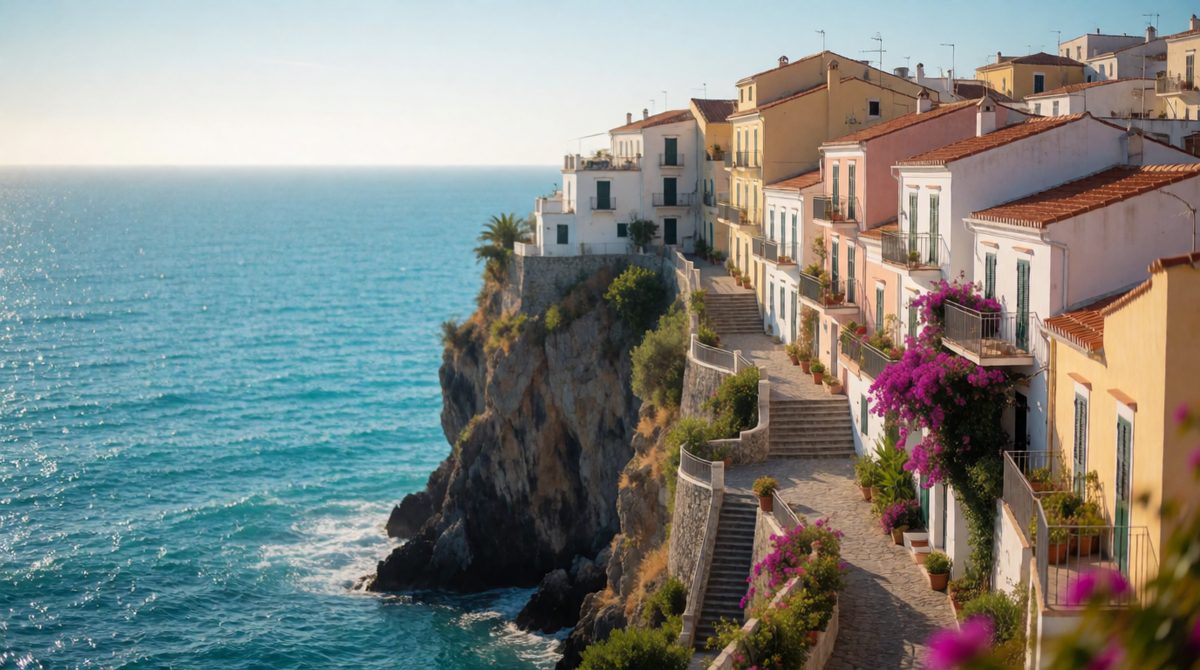
Destination features attract tourists
Every tourist destination has a mix of features that attract visitors. These can be natural (beaches, mountains, wildlife) or built (theme parks, historic buildings, resorts). Understanding these features helps you explain why tourists choose one place over another which is a classic exam question!
Key Definitions:
- Tourist destination: A place that people travel to for leisure, business or other purposes.
- Attractions: The features of a destination that draw tourists in both natural and man-made.
- Amenities: Services and facilities that make a stay comfortable, such as hotels, restaurants and transport links.
- Accessibility: How easy it is to reach a destination by air, road, rail or sea.
- Image: The reputation or perception of a destination shaped by marketing, media and word of mouth.
🌞 Natural Features
These are features created by nature not humans. They include beaches, coral reefs, rainforests, mountains, volcanoes, lakes and wildlife. Countries like Kenya (safaris), the Maldives (coral reefs) and Switzerland (Alps) rely heavily on their natural features to attract tourists.
🏛 Built Features
These are man-made attractions theme parks, historic sites, museums, stadiums and resorts. Examples include the Eiffel Tower in Paris, the Colosseum in Rome and Disneyland in Florida. Cities like London and Dubai are famous for their built attractions.
📍 The 4 A's Framework
Geographers and tourism experts use the "4 A's" to analyse what a destination offers. This is a really useful framework for exam answers!
⭐ Attractions
The things that pull tourists in natural scenery, heritage sites, events, culture, wildlife.
🏠 Accommodation
Where tourists stay hotels, hostels, campsites, resorts, Airbnb. Quality and range matter a lot.
✈ Access
How tourists get there airports, motorways, rail links, ports. Poor access can limit tourist numbers even if a place is beautiful.
The fourth "A" is Amenities restaurants, shops, entertainment, medical facilities and other services that make a stay enjoyable and safe.
🔍 Case Study: Dubai Built for Tourism
Dubai in the UAE is a brilliant example of a destination built almost entirely around man-made attractions. In the 1970s it was a small trading port. Today it attracts over 16 million visitors a year. Key features include the Burj Khalifa (world's tallest building), Palm Jumeirah (artificial island), world-class shopping malls and luxury hotels. The government invested billions in infrastructure airports, roads and resorts to make Dubai one of the world's top destinations. This shows how built features + investment + accessibility can transform a destination rapidly.
🏢 Types of Tourist Destinations
The iGCSE syllabus expects you to know the different types of tourist destinations and be able to give examples of each. Here's a clear breakdown:
🏖 Coastal Resorts
Located by the sea. Tourists come for sun, sand and water sports. Examples: Benidorm (Spain), Phuket (Thailand), Cancún (Mexico). These are among the most popular destination types worldwide.
🏔 Mountain & Ski Resorts
Found in highland areas. Popular for skiing in winter and hiking in summer. Examples: Chamonix (France), Zermatt (Switzerland), Aspen (USA).
🏙 Cities & Cultural Destinations
Urban destinations famous for history, culture, food and entertainment. Examples: Paris, Rome, Tokyo, New York, London. Often attract both leisure and business tourists.
🌿 Wildlife & Nature Destinations
Focused on natural environments and wildlife. Examples: Serengeti (Tanzania), Galápagos Islands (Ecuador), Amazon Rainforest (Brazil). Often linked to ecotourism.
🏢 Tourism Organisations Who's in Charge?
Tourism doesn't just happen by itself. It's managed and promoted by a range of organisations at different scales from local councils to international bodies. Understanding who does what is important for the exam.
Key Definitions:
- National Tourism Organisation (NTO): A government body responsible for promoting and managing tourism within a country.
- Tourist Board: A regional or national body that markets destinations and supports the tourism industry.
- International organisation: A body that works across multiple countries to support global tourism.
🌎 International Tourism Organisations
These organisations work at a global level to support, regulate and promote tourism around the world.
🌎 UNWTO
The United Nations World Tourism Organisation is the leading international body for tourism. It collects global tourism data, promotes sustainable tourism and helps developing countries benefit from tourism.
✈ IATA
The International Air Transport Association regulates the airline industry. It sets safety standards, ticketing rules and helps airlines work together making international travel safer and more efficient.
🏢 UNESCO
The United Nations Educational, Scientific and Cultural Organisation designates World Heritage Sites places of outstanding value that deserve protection. This status often boosts tourism significantly.
🏠 National & Local Tourism Organisations
At a national level, most countries have a government-backed tourism body. In the UK, this is VisitBritain which promotes the UK to international visitors. In Spain it's Turespaña. These bodies run advertising campaigns, produce tourism statistics and support businesses in the tourism sector. At a local level, tourist information centres help visitors find accommodation, attractions and transport.
🔍 Case Study: VisitBritain
VisitBritain is the UK's national tourism agency. It markets Britain to overseas visitors and works with airlines, travel agents and tour operators to grow inbound tourism. In 2019 (pre-pandemic), the UK received 40.9 million overseas visits, generating £28.4 billion for the economy. VisitBritain runs campaigns like "GREAT Britain" which highlight British culture, heritage and landscapes to potential visitors in countries like the USA, China and Germany. This shows how a well-funded NTO can directly boost tourist numbers and income.
📈 Factors Affecting Tourism Development
Why does tourism grow quickly in some places but stay small in others? Several key factors determine how tourism develops in a destination. These are essential for exam answers especially for longer "explain" or "evaluate" questions.
Key Definitions:
- Tourism development: The growth and improvement of tourism in a destination over time.
- Infrastructure: The basic systems a place needs to function roads, airports, water supply, electricity, internet.
- Political stability: A country that is safe and has a stable government is far more likely to attract tourists.
📌 Physical Factors
The natural environment plays a huge role in whether tourism can develop. A beautiful coastline, a warm climate, stunning scenery or unique wildlife can all attract tourists. However, physical factors can also limit development extreme heat, flooding, earthquakes or remote locations can put tourists off or make development expensive.
📌 Economic Factors
Wealthier countries can invest more in tourism infrastructure airports, hotels, roads and marketing. Developing countries may struggle to fund this, even if they have amazing natural attractions. Foreign investment (money from overseas companies) can help, but profits may leave the country rather than benefiting local people this is called economic leakage.
📌 Political Factors
Political stability is crucial. Countries affected by war, terrorism or political unrest see tourist numbers drop sharply. For example, tourism in Egypt fell dramatically after the Arab Spring unrest in 2011. In contrast, countries with stable, tourist-friendly governments invest in promotion and make it easy for visitors to get visas.
🔍 Case Study: The Gambia Factors Affecting Development
The Gambia is a small West African country that has tried to develop tourism based on its warm climate, beaches and wildlife. Positive factors include a sunny climate, English-speaking population and relatively low costs. However, development has been limited by: poor infrastructure (limited roads and unreliable electricity), political instability (a dictatorship ruled until 2017), economic leakage (large hotel chains take profits abroad) and a lack of skilled tourism workers. This case study shows how multiple factors interact to shape tourism development it's rarely just one thing.
📌 Social & Cultural Factors
Local culture can be a major attraction festivals, food, traditions and heritage all draw visitors. However, rapid tourism growth can damage local culture if it's not managed carefully. Communities may feel their way of life is being commercialised or disrupted. Destinations that celebrate and protect their culture (like Japan with its geisha traditions or Morocco with its medinas) tend to attract more respectful, higher-spending tourists.
📌 Technological Factors
Technology has transformed how destinations develop and market themselves. Online booking platforms (Booking.com, Airbnb), social media (Instagram, TikTok) and review sites (TripAdvisor) mean that even small, remote destinations can reach millions of potential visitors. A single viral photo or video can put an unknown place on the map overnight this is sometimes called the "Instagram effect".
📌 Butler's Tourism Area Life Cycle (TALC)
Butler's model describes how tourist destinations develop over time through stages: Exploration → Involvement → Development → Consolidation → Stagnation and then either Rejuvenation or Decline. This is a key model for the iGCSE you should be able to describe each stage and give examples.
📈 TALC Stages Quick Guide
- Exploration: Few visitors, unspoilt, little infrastructure
- Involvement: Locals start providing services
- Development: Rapid growth, outside investment
- Consolidation: Growth slows, destination well-established
- Stagnation: Numbers plateau, image may decline
- Rejuvenation/Decline: Either reinvention or falling visitor numbers
🔍 Case Study: Benidorm TALC in Action
Benidorm on Spain's Costa Blanca is a textbook example of Butler's TALC model. In the 1950s it was a tiny fishing village (Exploration). By the 1960s–70s package holidays brought mass tourism (Development). By the 1990s it was one of Europe's most visited resorts (Consolidation/Stagnation). In recent years, Benidorm has tried to rejuvenate by attracting new markets younger visitors, entertainment tourism and year-round visitors to avoid decline. This shows how destinations must constantly adapt to stay competitive.
✍ Exam Practice: Pulling It All Together
For your iGCSE exam, you need to be able to combine knowledge of destination features, organisations and development factors in your answers. Here are some typical exam question styles and how to approach them:
📝 Exam Question Types
📋 Define / State (1–2 marks)
Give a clear, concise definition or fact. No need for examples. E.g. "State one role of the UNWTO." Answer: It collects global tourism statistics.
📋 Describe / Explain (3–6 marks)
Give detail and reasons. Use the word "because" to force yourself to explain, not just describe. Use a named example where possible.
📋 Evaluate / Discuss (6–8 marks)
Give both sides of an argument. Consider positive and negative points. Use case studies. End with a conclusion that makes a clear judgement.
💡 Top Exam Tips for This Topic
- ✅ Always use named examples vague answers lose marks.
- ✅ Learn the 4 A's (Attractions, Accommodation, Access, Amenities) they're incredibly useful for structuring answers.
- ✅ Know at least two international tourism organisations (UNWTO, IATA, UNESCO) and what they do.
- ✅ Be able to explain Butler's TALC model with a real example.
- ✅ For development factor questions, always consider physical, economic, political and social factors.
- ✅ Remember: economic leakage is a key concept it explains why tourism doesn't always benefit local people.
📚 Quick Revision Summary
- Destinations attract tourists through natural and built features use the 4 A's framework to analyse them.
- Types of destination include coastal, mountain, urban and wildlife destinations.
- Tourism is managed by organisations at international (UNWTO, IATA, UNESCO), national (VisitBritain) and local levels.
- Tourism development is shaped by physical, economic, political, social and technological factors.
- Butler's TALC model shows how destinations evolve through stages from exploration to possible decline or rejuvenation.
- Economic leakage means profits from tourism can leave a destination rather than benefiting local communities.
- Case studies to know: Dubai (built features), VisitBritain (NTO), The Gambia (development factors), Benidorm (TALC).