✈ The Building Blocks of a Holiday Package
A tour operator is a company that puts together different travel products and sells them as one combined deal a package holiday. But not every holiday is a full package. Some tourists prefer to book just one or two components on their own. Understanding what these components are and how they combine, is essential for your iGCSE exam.
Key Definitions:
- Package Holiday: A holiday where at least two components (e.g. transport and accommodation) are sold together at an inclusive price by a tour operator.
- Component: A single element of a holiday, such as a flight, hotel, transfer, or excursion.
- Ancillary Services: Extra add-ons that support the main holiday, such as travel insurance, car hire, or airport parking.
- Independent Travel: When a tourist arranges each component separately, rather than buying a pre-packaged deal.
📋 Why This Matters for Your Exam
The iGCSE syllabus asks you to identify and explain the components of different holiday packages. You need to know what each component is, give examples and explain why tourists might choose one type of holiday over another. Real-world examples will help you score top marks.
📦 The Core Components of a Holiday Package
Whether a holiday is a simple two-night city break or a three-week world cruise, it is built from the same basic components. Tour operators mix and match these to create different products for different markets.
✈ Transport
Transport is usually the most expensive component of a holiday. It gets tourists from their home country to the destination. The type of transport used depends on the destination, the budget and the type of holiday.
✈ Air Transport
The most common form of transport in package holidays. Can be charter flights (booked exclusively by a tour operator) or scheduled flights (regular airline services). TUI Airways and Jet2 operate charter flights for their own packages.
🚍 Coach Transport
Used in coach holidays and touring holidays across Europe. Companies like Shearings and National Express offer coach-based packages. Popular with older travellers who prefer a relaxed, guided journey.
🚉 Rail Transport
Used in rail holidays and touring packages. Eurostar and Interrail are well-known examples. Rail holidays are growing in popularity due to their lower carbon footprint compared to flying.
🏢 Accommodation
Accommodation is the second major component. Tour operators negotiate bulk deals with hotels, resorts and self-catering properties to keep costs low. The type of accommodation chosen shapes the entire character of the holiday.
🏢 Hotel Accommodation
The most common type in package holidays. Hotels are rated using a star system (1–5 stars). A 3-star hotel in Majorca included in a TUI package is a typical example. Meals may be included as bed and breakfast (B&B), half board, full board, or all-inclusive.
🏠 Self-Catering Accommodation
Tourists stay in an apartment, villa, or cottage and prepare their own meals. This is popular with families who want flexibility and cost savings on food. Companies like Interhome and Airbnb offer self-catering options. It suits tourists who want to live more like a local.
🌍 Meal Board Basis Quick Reference
Room Only (RO): No meals included. | Bed & Breakfast (B&B): Breakfast only. | Half Board (HB): Breakfast and dinner. | Full Board (FB): All three meals. | All-Inclusive (AI): All meals, snacks and usually drinks included.
🚌 Coach Holidays A Complete Package in One Vehicle
Coach holidays are a great example of a fully inclusive package where transport, accommodation and sometimes meals are all bundled together. The coach is both the transport and the organising thread of the whole trip.
📋 Case Study: Shearings Coach Holidays
Shearings (now part of the Leger Holidays group) was one of the UK's largest coach holiday operators before its collapse in 2020. It offered tours around the UK and Europe, picking passengers up from local departure points, driving them to hotels and including guided excursions along the way.
- Typical customers: retired travellers aged 60+
- Typical package: 7-night UK tour with hotel stays, dinner each evening and a driver-guide
- Price advantage: very competitive because the operator owns the coaches and has long-term hotel contracts
- Key appeal: no need to drive, navigate, or plan everything is handled
Coach holidays show how a single transport mode can define the entire holiday experience. The journey itself becomes part of the product.
🚢 Cruise Holidays The Ultimate Package
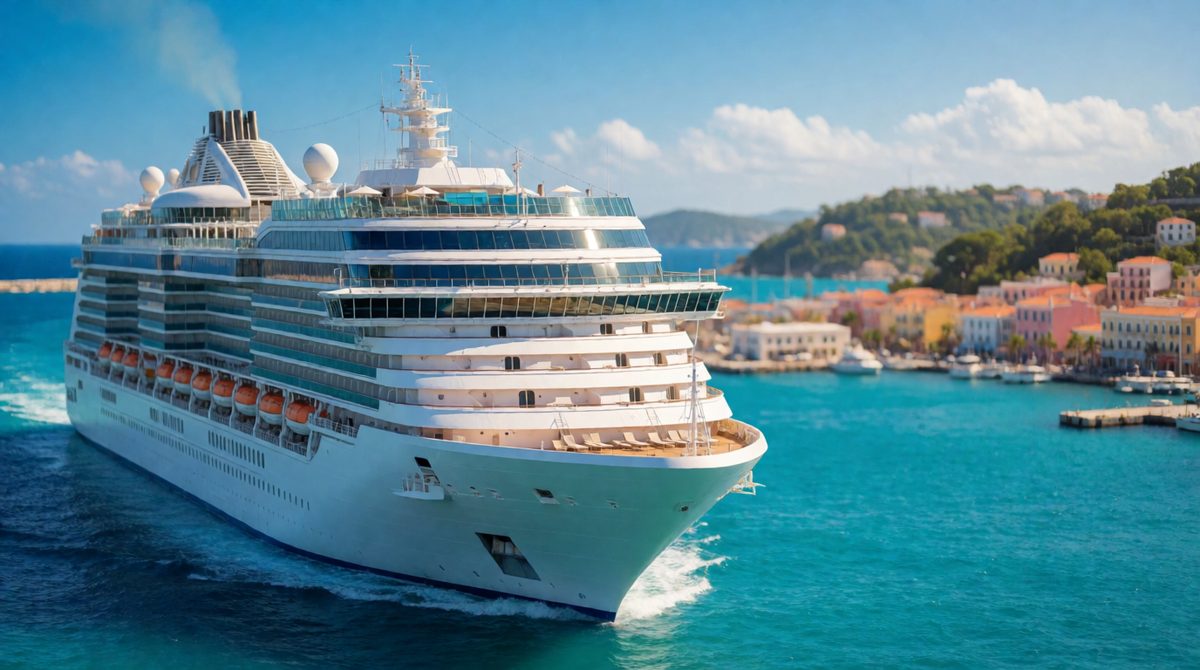
Cruises are the ultimate package holiday
A cruise is arguably the most complete package holiday available. The ship is the hotel, the restaurant, the entertainment venue and the transport all in one. Cruise companies like Royal Caribbean, P&O Cruises and MSC Cruises sell holidays where almost everything is included in one price.
What's typically included in a cruise package:
- Cabin accommodation (ranging from inside cabins to luxury suites)
- All meals in the main dining room
- Entertainment (shows, cinemas, sports facilities)
- Transport between ports (the ship itself)
- Some shore excursions (though many are extra)
👍 Advantages of Cruises
- Unpacking once the ship moves to you
- Visit multiple destinations in one trip
- Wide range of on-board facilities
- Strong financial protection (ABTA/ATOL)
- Good value when all costs are considered
👎 Disadvantages of Cruises
- Limited time in each port can feel rushed
- Environmental concerns (fuel emissions, waste)
- Can feel crowded, especially on large ships
- Extras (drinks packages, excursions) add up quickly
- Not suitable for people who get seasick
📈 The Cruise Market is Booming
In 2019, over 30 million people took a cruise worldwide. The UK is one of the largest cruise markets in Europe, with P&O Cruises and Cunard (both owned by Carnival Corporation) being the most popular British brands. River cruising on rivers like the Rhine, Danube and Nile is also growing rapidly, especially among older travellers.
🏠 Self-Catering and Villa Holidays
Self-catering holidays give tourists much more freedom and flexibility than a standard hotel package. Instead of eating in a hotel restaurant, tourists cook for themselves in a fully equipped kitchen. This type of holiday is especially popular with families and groups of friends.
📋 Case Study: Owners Direct and HomeAway (now Vrbo)
Before online platforms changed the market, self-catering villas were mainly booked through specialist operators. Today, platforms like Vrbo (formerly HomeAway and Owners Direct) allow property owners to rent directly to tourists. A family might rent a 4-bedroom villa in the Algarve, Portugal, for two weeks with a private pool, kitchen and garden for less than the cost of equivalent hotel rooms.
- The family saves money on food by cooking at home
- Children can eat at their own pace without restaurant rules
- The villa provides more space than a hotel room
- However, there is no hotel service, no daily cleaning and no on-site entertainment
🚌 Transfers and Ground Handling
A transfer is the journey between the airport and the accommodation. It sounds simple, but it is a crucial component of a package holiday. Without a smooth transfer, the whole experience can fall apart.
- Private transfer: A taxi or minibus just for your group faster and more comfortable, but more expensive.
- Shared coach transfer: A coach picks up multiple groups from the airport and drops them at different hotels. Cheaper, but can take a long time.
- Public transport: Tourists make their own way using buses or trains. Cheapest option, but requires local knowledge.
Tour operators like TUI and Jet2holidays include a shared coach transfer as standard in most packages. Tourists can usually upgrade to a private transfer for an extra fee.
📄 Ancillary Services The Add-Ons That Complete the Package
Ancillary services are the extras that tourists can add to their holiday. They are not always included in the base price, but they are an important source of revenue for tour operators and they can make a big difference to the tourist's experience.
📄 Travel Insurance
Covers medical emergencies, cancellations, lost luggage and delays. Tour operators often sell insurance as an add-on. It is strongly recommended for all holidays and is sometimes a legal requirement for certain visa applications.
🚗 Car Hire
Allows tourists to explore independently at the destination. Companies like Hertz, Europcar and Sixt operate at most major airports. Tour operators often partner with car hire companies and earn commission on bookings.
🏝 Excursions
Day trips and guided tours sold at the destination. These might include a boat trip, a city tour, or a theme park visit. Resort representatives (reps) often sell excursions on behalf of the tour operator during welcome meetings.
📋 Comparing Holiday Package Types
The table below summarises the key features of the main holiday package types you need to know for your exam. Use this to help you compare and contrast in exam answers.
🔎 Holiday Type Comparison
✈ Flight + Hotel Package
Example: Jet2holidays to Tenerife
Transport: Charter flight
Accommodation: Hotel (B&B or AI)
Best for: Sun and beach tourists, families
Flexibility: Low fixed dates and hotel
🚢 Cruise Package
Example: P&O Mediterranean Cruise
Transport: Ship (+ flights to port)
Accommodation: Cabin on ship
Best for: Couples, older travellers, multi-destination
Flexibility: Very low fixed itinerary
🚌 Coach Holiday
Example: Leger Holidays, Scottish Highlands tour
Transport: Coach
Accommodation: Hotels en route
Best for: Older travellers, solo tourists
Flexibility: Low guided itinerary
💡 Key Exam Tips
- Always name real companies when giving examples TUI, Jet2, P&O, Shearings, Club Med.
- Know the difference between charter flights and scheduled flights tour operators mainly use charter flights to keep costs down.
- Remember that ancillary services are a major profit source for tour operators they make money on insurance, car hire and excursions.
- Be able to explain why different tourists choose different packages a retired couple and a young family have very different needs.
- The word "component" is key exam vocabulary use it in your answers.
📚 Quick Recap The Big Ideas
- A package holiday combines at least two components usually transport and accommodation into one price.
- The main components are: transport, accommodation, transfers, meals, excursions and ancillary services.
- Cruises are the most complete package the ship provides transport, accommodation, meals and entertainment.
- Coach holidays bundle transport, accommodation and guiding into one product, popular with older tourists.
- Self-catering gives families flexibility and cost savings on food, but lacks hotel services.
- Ancillary services (insurance, car hire, excursions) are extras that add value and generate profit for operators.
- Different tourists choose different package types based on age, budget, interests and travel style.