🏠 Homestays
A homestay is when a tourist stays in a local person's home, usually as a paying guest. It's not just about having a bed it's about experiencing real, everyday life in another culture. Think of it like being a temporary member of someone's family.
Key Definitions:
- Homestay: Accommodation where a tourist lives with a local host family, often sharing meals and daily routines.
- Cultural immersion: Deeply experiencing another culture from the inside, rather than just observing it.
- Host family: The local family who provides accommodation and often meals to the guest.
👍 Why Tourists Choose Homestays
- Authentic cultural experience you eat local food, speak the language, live the routine
- Usually cheaper than hotels
- Personal connection with locals
- Popular with language learners and students
- Often includes meals (bed and breakfast style)
👎 Limitations of Homestays
- Less privacy than a hotel room
- Quality varies hugely between hosts
- May not suit tourists wanting independence
- Language barriers can be challenging
- Not always regulated or inspected
🌎 Case Study: Airbnb and the Rise of Homestays
Airbnb, founded in 2008 in San Francisco, revolutionised homestays globally. By 2024, Airbnb had over 7 million listings in more than 220 countries. Many listings are rooms in a host's actual home a modern version of the traditional homestay. In Japan, the government introduced the Minpaku Law (2018) to regulate homestay-style rentals, showing how popular and significant they've become. Tourists using Airbnb in Tokyo or Kyoto often report feeling far more connected to Japanese culture than those staying in international hotel chains.
🏫 Who Uses Homestays?
Homestays appeal to a very specific type of traveller. Understanding the tourist profile helps in exam answers.
🏫 Language Students
Students learning Spanish, French or Mandarin often do homestays to practise the language daily. Organisations like EF Education arrange thousands of these each year.
🌎 Cultural Travellers
Tourists who want to go beyond the tourist trail. They prefer eating home-cooked meals and joining local festivals over visiting theme parks.
💰 Budget Travellers
Homestays are often cheaper than hotels, making them popular with backpackers and gap year students who want to stretch their money further.
🏕 Camping
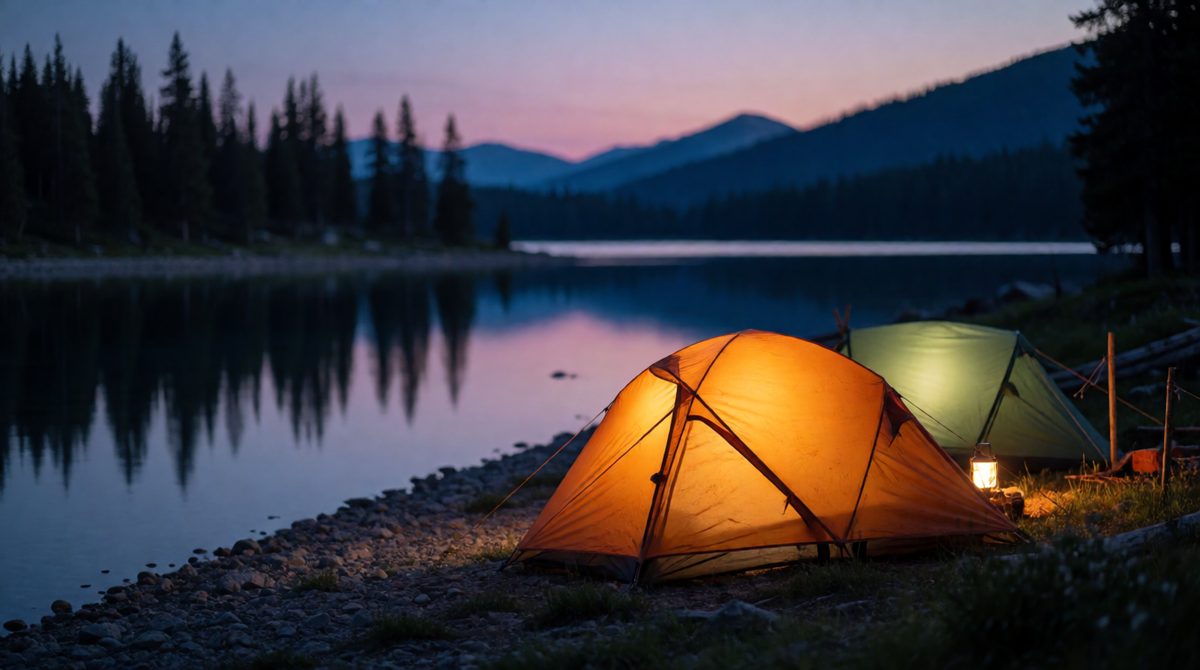
Camping is a popular budget holiday
Camping means sleeping outdoors, usually in a tent, caravan, or motorhome. It's one of the oldest and most widespread forms of tourism accommodation. From a basic field in Wales to a luxury safari tent in Kenya camping covers a huge range of experiences.
Key Definitions:
- Campsite: A designated area where people can pitch tents or park caravans, often with shared facilities like toilets and showers.
- Glamping (glamorous camping): Upmarket camping with luxury features such as proper beds, electricity and en-suite bathrooms in a natural setting.
- Wild camping: Camping in non-designated areas, away from official campsites. Legal in Scotland, but restricted in England and Wales.
🏕 Case Study: Glastonbury Festival Camping, UK
Glastonbury Festival in Somerset is one of the world's most famous temporary camping events. Around 200,000 people camp on-site each year, making it one of the UK's largest temporary accommodation setups. Campers bring their own tents and stay for up to 5 nights. The festival generates over £100 million for the local economy. It perfectly illustrates how camping can be a major driver of tourism, even if it's temporary and basic.
✨ Glamping The Luxury Side of Camping
Glamping has exploded in popularity since the 2010s. It combines the appeal of being in nature with the comfort of proper accommodation. It's particularly popular in the UK, where rainy weather makes traditional camping less appealing!
🏭 Types of Glamping
- Bell tents large circular canvas tents with proper beds
- Yurts traditional Mongolian-style circular structures
- Treehouses elevated wooden cabins in woodland
- Safari tents large canvas tents used in African game reserves
- Pods and cabins small wooden structures with insulation and heating
🌎 Global Glamping Example
In Maasai Mara, Kenya, luxury safari camps like Angama Mara charge over $1,500 per night. Guests sleep in tented suites with panoramic views of the savannah, private decks and gourmet meals. This is glamping at its most extreme combining wildlife tourism with five-star comfort.
👑 Luxury Accommodation
Luxury accommodation is at the very top end of the market. It's defined not just by comfort, but by exceptional service, exclusive locations, unique experiences and attention to every tiny detail. Guests pay a premium and expect perfection.
Key Definitions:
- Luxury accommodation: High-end lodging offering superior facilities, personalised service and exclusive experiences, typically priced well above average.
- Butler service: A personal attendant assigned to a guest to handle all their needs from unpacking luggage to booking restaurants.
- Concierge: A hotel staff member who arranges services for guests such as tours, transport and reservations.
🏢 Case Study: Burj Al Arab, Dubai
The Burj Al Arab in Dubai is often called the world's only 7-star hotel (though this isn't an official rating). Built on an artificial island and shaped like a sail, it opened in 1999. Every room is a suite, with the cheapest starting at around $1,000 per night. Guests arrive by helicopter or Rolls-Royce. It has 9 restaurants, a private beach and a butler for every room. The Burj Al Arab is a perfect example of how luxury accommodation becomes a tourist attraction in itself people visit Dubai partly just to see it.
📈 Features of Luxury Accommodation
Luxury isn't just about expensive furniture. Examiners want you to understand what genuinely separates luxury from standard accommodation.
🌟 Exceptional Service
High staff-to-guest ratios. Personal butlers, 24-hour room service and staff who remember your name and preferences.
🏠 Unique Location
Overwater bungalows in the Maldives, mountain lodges in the Swiss Alps, or private island resorts in the Caribbean.
🍽 Exclusive Experiences
Private dining, spa treatments, helicopter tours and curated cultural experiences not available to regular tourists.
💰 Budget Accommodation
Budget accommodation is affordable lodging that focuses on providing the basics a clean, safe place to sleep without the extras. It's not about being uncomfortable; it's about being smart with money. Budget travel is one of the fastest-growing sectors in tourism.
Key Definitions:
- Budget accommodation: Low-cost lodging that provides essential facilities without luxury extras.
- Economy hotel: A hotel chain focused on low prices and standardised, no-frills rooms. Examples include Premier Inn, Travelodge and ibis.
- Capsule hotel: A Japanese innovation where guests sleep in small, pod-like spaces very cheap and very efficient.
👍 Why Budget Accommodation Works
- Makes travel accessible to more people
- Standardised quality you know what you're getting
- Often well-located near transport hubs
- Great for business travellers who just need a bed
- Chains like Premier Inn offer consistent cleanliness and Wi-Fi
🌎 Case Study: ibis Hotels
ibis is owned by the French company Accor and is one of the world's largest budget hotel chains, with over 1,200 hotels in 60 countries. A typical ibis room costs between £50–£90 per night in the UK. Rooms are small but clean, with Wi-Fi, a private bathroom and a simple breakfast option. ibis targets business travellers, city-break tourists and anyone who wants reliability without paying for luxury.
🏭 Capsule Hotels Japan's Clever Solution
Japan's capsule hotels were invented in Osaka in 1979. Each guest gets a small pod roughly 2m x 1m with a mattress, TV screen and light. Shared bathrooms and lounges are provided. Prices can be as low as £20–£30 per night in Tokyo. They're popular with salarymen who miss the last train, budget tourists and travellers who enjoy the novelty. The 9h (Nine Hours) chain in Tokyo is a modern, design-led version that has made capsule hotels fashionable again.
🌿 Eco-Friendly Accommodation
Eco-friendly accommodation (also called sustainable accommodation) is designed to minimise its impact on the natural environment. As climate change becomes more urgent, this sector is growing rapidly. It's not just a trend it's becoming a key part of responsible tourism.
Key Definitions:
- Eco-lodge: Accommodation built and operated with minimal environmental impact, often in or near natural areas.
- Sustainable tourism: Tourism that meets the needs of current tourists without damaging the environment or local communities for future generations.
- Carbon footprint: The total greenhouse gas emissions caused by an activity eco-accommodation aims to reduce this.
- Green certification: An official award given to accommodation that meets environmental standards, such as the Green Key or EarthCheck certification.
🌿 What Makes Accommodation Eco-Friendly?
It's not just about having recycling bins. Truly eco-friendly accommodation goes much further.
☀ Energy
Solar panels, wind turbines and energy-efficient lighting. Some eco-lodges are completely off-grid, generating all their own power from renewable sources.
💧 Water
Rainwater harvesting, low-flow showers and greywater recycling systems. In drought-prone areas like South Africa, this is critical.
🌿 Local Community
Hiring local staff, buying local food and supporting local conservation projects. True eco-tourism benefits the people who live there, not just the environment.
🌿 Case Study: Feynan Ecolodge, Jordan
Feynan Ecolodge in the Dana Biosphere Reserve, Jordan, is widely regarded as one of the world's best eco-lodges. It is 100% solar powered, lit by candles at night and has no TVs or air conditioning. All food is locally sourced and the lodge employs only people from the surrounding Bedouin communities. Guests can go stargazing, hike with local guides and learn about traditional Bedouin culture. It has won multiple international awards for sustainable tourism. Nightly rates are around $100–$150 proving eco-friendly doesn't have to mean expensive.
📊 Comparing All Five Types
In your exam, you may be asked to compare accommodation types. Here's a clear summary to help you structure your answers.
📋 Quick Comparison Table
🏠 Homestay vs Camping
Homestay: Cultural immersion, indoors, host family.
Camping: Outdoor, independent, nature-focused. Both can be budget-friendly, but homestays offer more human connection.
👑 Luxury vs Budget
Luxury: High cost, exceptional service, exclusive experiences.
Budget: Low cost, basic facilities, standardised quality. Both serve their markets well just very different tourists.
🌿 Eco vs Others
Eco-friendly accommodation can overlap with luxury (e.g. Feynan) or budget (e.g. simple eco-campsites). The defining feature is environmental responsibility, not price.
📚 Exam Tip ✏
When comparing accommodation types in an exam, always think about: cost, location, facilities, target market and environmental impact. Use real examples to back up your points examiners love specific case studies like Feynan Ecolodge or the Burj Al Arab. If asked to evaluate, always give both advantages AND disadvantages before reaching a conclusion.
💡 Quick Recap Key Points to Remember
- 🏠 Homestays offer cultural immersion and are popular with students and budget travellers
- 🏕 Camping ranges from basic tents to luxury glamping Glastonbury and Maasai Mara are great examples
- 👑 Luxury accommodation is defined by exceptional service, exclusive locations and unique experiences Burj Al Arab is the ultimate example
- 💰 Budget accommodation provides clean, reliable basics at low cost ibis and capsule hotels are key examples
- 🌿 Eco-friendly accommodation minimises environmental impact and supports local communities Feynan Ecolodge is a world-class example
- ✏ Always use specific examples and compare using cost, facilities, target market and environmental impact