🏕 Self-Catering Accommodation: The Basics
Self-catering accommodation is any place to stay where guests prepare their own meals. There is no chef, no restaurant, no waiter bringing you breakfast in bed. Instead, you get a kitchen (or kitchenette) and you sort yourself out. This makes it very different from serviced accommodation like hotels, where meals and services are provided for you.
Self-catering is hugely popular worldwide. Families, groups of friends and long-stay travellers often prefer it because it gives them freedom, flexibility and value for money. You eat what you want, when you want and you can nip to a local supermarket rather than paying hotel prices for every meal.
Key Definitions:
- Self-catering accommodation: A type of accommodation where guests cook and cater for themselves using facilities provided on-site.
- Serviced accommodation: Accommodation where meals and other services (cleaning, reception, etc.) are provided by staff.
- Kitchenette: A small, basic cooking area usually with a hob, microwave, fridge and sink rather than a full kitchen.
- Occupancy rate: The percentage of available accommodation that is actually being used (occupied) during a given period.
💡 Did You Know?
The self-catering market in the UK alone is worth over £3 billion per year. Websites like Airbnb, Sykes Cottages and Vrbo have made booking self-catering properties easier than ever, driving massive growth in this sector since the 2010s.
🏠 Types of Self-Catering Accommodation
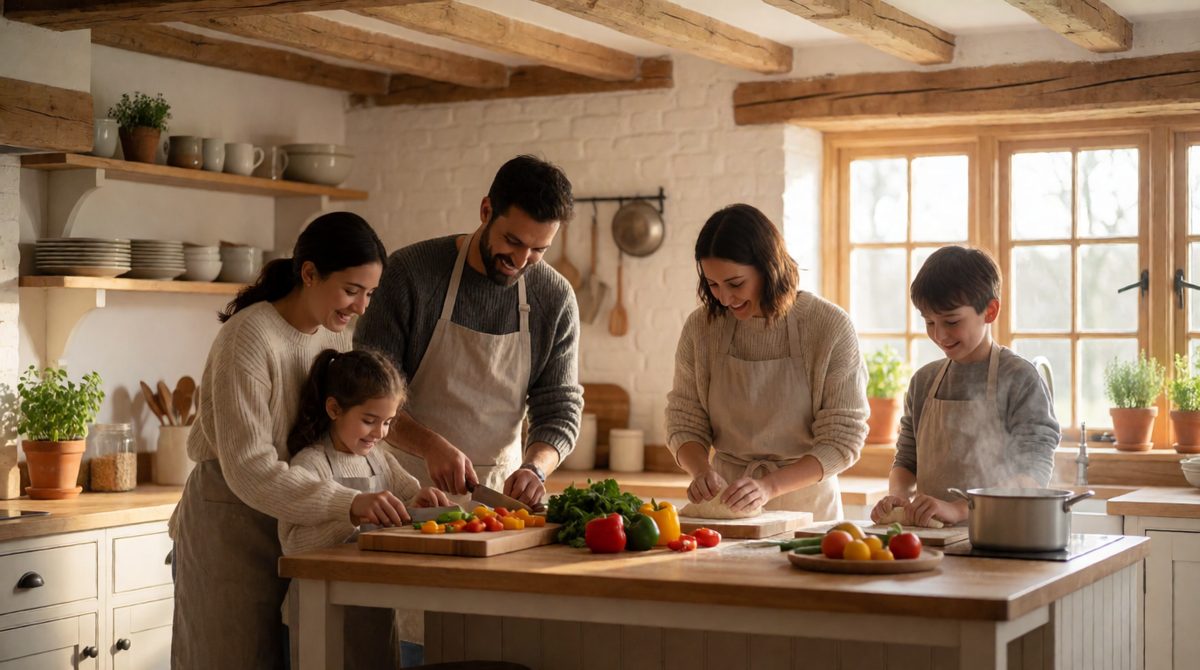
Self-catering gives tourists more freedom
Self-catering comes in many shapes and sizes. From a basic studio flat to a luxury villa with a private pool, the range is enormous. Here are the main types you need to know for your iGCSE exam.
🏠 Holiday Cottages & Villas
Entire properties rented out to tourists, usually by the week. Very popular in rural and coastal areas. Guests have full use of the property living room, bedrooms, garden and kitchen. Villas are typically larger and found in warmer destinations like Spain, Greece and the Caribbean.
🏢 Holiday Apartments & Flats
Smaller self-contained units, often in urban areas or resort complexes. Popular with city-break travellers and couples. Many apartment complexes also have shared facilities like a pool or gym. Found in cities like Barcelona, Amsterdam and Dubai.
🏭 Holiday Parks & Chalets
Large sites with static caravans, chalets, or lodges. Often include entertainment, swimming pools and activities on-site. Center Parcs and Haven are well-known UK examples. These blur the line between self-catering and resort-style holidays.
🚗 Caravans & Motorhomes
Mobile self-catering! Travellers bring their own accommodation with them. Touring caravans and motorhomes allow complete flexibility park up wherever you like (within reason). Very popular in Australia, New Zealand and across Europe.
🌎 Case Study: Center Parcs, UK
Center Parcs is one of the UK's most successful self-catering holiday park operators. With five UK villages (including Sherwood Forest and Elveden Forest), it offers self-catering lodges and villas in a forest setting. Guests cook their own meals but have access to restaurants, a subtropical swimming pool and hundreds of activities on-site.
💰 Price Range
A 3-night short break for a family of four can cost between £500 and £2,000+ depending on lodge size and season. Peak weeks (school holidays) sell out months in advance.
📈 Occupancy Success
Center Parcs consistently achieves occupancy rates of over 97% one of the highest in the UK hospitality industry. This is achieved through year-round appeal and a loyal repeat customer base.
🌟 Why It Works
By combining self-catering freedom with resort-style facilities, Center Parcs appeals to families who want flexibility without sacrificing entertainment. No passports needed a huge draw for UK families.
📈 What Are Occupancy Rates?
Occupancy rate is one of the most important measures in the accommodation industry. It tells you how full an accommodation provider is over a period of time. A high occupancy rate means the business is doing well. A low one means rooms or units are sitting empty and that means lost revenue.
Occupancy rates apply to all types of accommodation hotels, hostels, holiday parks and self-catering properties. They are used by managers to make decisions about pricing, staffing and marketing.
The Formula:
🧮 Occupancy Rate Formula
Occupancy Rate (%) = (Number of units occupied ÷ Total number of units available) × 100
Example: A holiday cottage company has 40 cottages. On a particular week in July, 34 are booked.
Occupancy rate = (34 ÷ 40) × 100 = 85%
Another Example: In January, only 12 of those 40 cottages are booked.
Occupancy rate = (12 ÷ 40) × 100 = 30%
📋 Why Occupancy Rates Matter
For accommodation providers, occupancy rates directly affect profit. Fixed costs (mortgage, insurance, maintenance) must be paid whether the property is full or empty. So the more units that are occupied, the more revenue comes in to cover those costs and generate profit.
💰 Revenue
Higher occupancy = more income. A self-catering cottage earning £800/week generates £41,600/year at 100% occupancy, but only £12,480 at 30% occupancy. The difference is enormous.
📊 Planning
Managers use occupancy data to plan staffing, maintenance schedules and marketing campaigns. If January is always quiet, that's when you redecorate not in August.
🎯 Pricing Strategy
Low occupancy periods trigger lower prices (discounts, deals) to attract bookings. High occupancy periods allow premium pricing. This is called dynamic pricing.
🌱 Seasonal Variation and Occupancy Rates
One of the biggest challenges for self-catering providers is seasonality the fact that demand changes dramatically throughout the year. Most self-catering accommodation is in tourist destinations that are far busier at certain times of year.
🌎 Case Study: A Cornish Holiday Cottage
Imagine a holiday cottage in St Ives, Cornwall. In August (peak season), it might be booked every single week occupancy rate of 100%. In November, it might only be booked for one week out of four occupancy rate of 25%. The owner earns most of their annual income in just 10–12 weeks of summer. This is a classic example of seasonal variation affecting occupancy rates.
📅 Factors That Affect Occupancy Rates
☀️ Factors That INCREASE Occupancy
- School holiday periods (half-term, summer, Easter)
- Good weather or warm climate
- Local events and festivals
- Competitive pricing and special offers
- Positive online reviews and ratings
- Easy access and good transport links
- Proximity to popular attractions
❌ Factors That DECREASE Occupancy
- Off-peak seasons (winter for beach resorts)
- Poor weather or natural disasters
- Economic recession people cut back on holidays
- Competition from new accommodation providers
- Negative reviews or bad publicity
- Political instability or safety concerns
- Global events (e.g. the COVID-19 pandemic)
💡 How Providers Boost Occupancy in Quiet Periods
Smart accommodation providers don't just accept low occupancy in the off-season they actively try to fill their properties. Here are the main strategies used in the self-catering sector:
🌟 Strategies to Improve Occupancy Rates
💲 Discounted Pricing
Offering lower rates in quiet months. A cottage that costs £900/week in August might drop to £350/week in January. This attracts budget-conscious travellers and retired couples who have flexible schedules.
🎁 Short Breaks
Instead of requiring week-long bookings, providers offer 2 or 3-night stays in the off-season. A weekend break is much easier to sell in February than a full week. This fills gaps in the booking calendar.
📱 Online Marketing
Using platforms like Airbnb, Booking.com and social media to reach new audiences. Professional photography, detailed listings and prompt responses to enquiries all help boost bookings year-round.
👥 Targeting Niche Markets
Marketing to specific groups walkers, cyclists, dog owners, remote workers ('workcations'). A cottage that welcomes dogs fills up in October when regular tourists have gone home.
🌟 Loyalty Schemes
Encouraging repeat bookings by offering returning guests a discount. A family that loved their summer stay might be tempted back for a cheaper Easter break if offered a loyalty discount.
🏭 Adding Facilities
Installing a hot tub, log burner, or games room makes a property appealing all year round not just in summer. Properties with hot tubs consistently achieve higher occupancy rates in winter months.
🌎 Case Study: Airbnb and Occupancy Rates
Airbnb provides hosts with a dashboard showing their occupancy rate compared to similar properties in their area. Hosts who price competitively, respond quickly to messages and maintain high review scores typically achieve occupancy rates of 60–80% annually well above the industry average for private rentals. Airbnb also uses Smart Pricing, an algorithm that automatically adjusts nightly rates based on local demand, helping hosts maximise revenue during busy periods and attract bookings during quiet ones.
👍 Advantages and Disadvantages of Self-Catering
Self-catering suits some tourists perfectly and doesn't suit others at all. Here's a balanced look at both sides, from the tourist's perspective and the provider's perspective.
👍 Advantages for Tourists
- Flexibility: Eat when you want, what you want.
- Cost savings: Cooking your own meals is cheaper than eating out every day.
- Space: Cottages and villas offer more room than a hotel room great for families.
- Home comforts: Washing machines, living rooms, gardens feels more like home.
- Privacy: No shared dining rooms or communal spaces if you don't want them.
- Pet-friendly: Many self-catering properties accept dogs.
👎 Disadvantages for Tourists
- No meals included: You still have to shop, cook and wash up even on holiday.
- Variable quality: Unlike hotel star ratings, self-catering quality can vary hugely.
- No daily cleaning: Most self-catering properties are not cleaned daily.
- Upfront costs: Security deposits and cleaning fees can add significantly to the price.
- Isolation: Rural cottages can feel remote, especially without a car.
📈 Advantages for Providers
- Lower staffing costs: No need for chefs, waiters, or housekeeping teams.
- Passive income: Once set up, a well-managed property can earn income with minimal daily involvement.
- Growing market: Demand for self-catering has grown significantly, boosted by Airbnb and similar platforms.
- Flexibility: Owners can use the property themselves during gaps in bookings.
👎 Disadvantages for Providers
- Seasonality: Many self-catering properties struggle to fill during off-peak months.
- Maintenance costs: Kitchens and appliances need regular upkeep and replacement.
- Guest damage: Guests may not treat the property with the same care as their own home.
- Platform fees: Airbnb and similar sites charge commission of 3–15% per booking.
- Competition: The self-catering market is increasingly crowded.
📋 Self-Catering vs Serviced: A Quick Comparison
📋 Feature
Meals
Cleaning
Cost
Flexibility
Space
Staffing
🏕 Self-Catering
Guests cook own meals
Guests clean (or end-of-stay clean)
Generally lower overall
Very high
Usually more spacious
Minimal staff needed
⭐ Serviced (e.g. Hotel)
Meals provided by staff
Daily housekeeping
Higher (meals included)
Less flexible
Typically smaller rooms
Large staff teams required
📚 Exam Tip ✏️
In the exam, you may be asked to calculate an occupancy rate so make sure you can use the formula: (Units occupied ÷ Units available) × 100. You might also be asked to suggest reasons why occupancy rates vary between seasons or between different types of accommodation. Always try to give specific examples (e.g. Center Parcs, Airbnb, Cornish cottages) rather than vague answers. Examiners love real-world detail!
Also remember: self-catering is NOT just about saving money. For many tourists, it's about freedom and flexibility that's an important point to make in evaluation questions.
💡 Quick Recap Key Points to Remember
- 🏕 Self-catering accommodation = guests cook for themselves; no meals are provided by the host.
- 🏠 Main types include: holiday cottages, villas, apartments, holiday parks, caravans and motorhomes.
- 📈 Occupancy rate = (units occupied ÷ units available) × 100.
- 📅 Occupancy rates vary with the seasons peak periods see high rates, off-peak periods see low rates.
- 💰 Providers use discounts, short breaks, online marketing and niche targeting to boost off-peak occupancy.
- 👍 Self-catering offers tourists flexibility, space and cost savings but no daily cleaning or meals.
- 📊 Center Parcs achieves over 97% occupancy by combining self-catering with resort-style facilities.
- 📱 Platforms like Airbnb use dynamic pricing algorithms to help hosts maximise their occupancy rates.