🍕 Introduction to Food and Drink Providers
Food and drink is a massive part of tourism. Think about it whenever you go on holiday, visit a theme park, or explore a new city, eating and drinking is always part of the experience. In fact, for many tourists, trying local food is the attraction! The travel and tourism industry depends heavily on food and drink providers to keep visitors happy, fed and coming back for more.
Food and drink providers are businesses or organisations that supply meals, snacks and beverages to customers including tourists. They range from a tiny beach-side café to a five-star hotel restaurant. Understanding the different types helps us see how tourism works as a whole industry.
Key Definitions:
- Food and Drink Provider: Any business or organisation that prepares and sells food or drink to customers.
- Commercial Catering: Food and drink services run to make a profit (e.g. restaurants, fast food chains).
- Non-Commercial Catering: Food and drink services that are not primarily run for profit (e.g. hospital canteens, school cafeterias, staff restaurants).
- Hospitality: The friendly and generous reception of guests, including providing food, drink and accommodation.
- Catering: The business of providing food and drink services, especially at events or in public places.
- Table Service: When a waiter or waitress brings food directly to your table.
- Counter Service: When customers order and collect food at a counter (like McDonald's or a café).
💰 Commercial Catering
These providers exist to make money. They charge customers for food and drink and aim to make a profit. Examples include restaurants, fast food chains, hotel restaurants, pubs and coffee shops. Most food providers tourists encounter are commercial.
- Restaurants 🍽
- Fast food outlets 🍔
- Cafés and coffee shops ☕
- Pubs and bars 🍻
- Hotel restaurants 🏢
- Takeaways 📦
🏭 Non-Commercial Catering
These providers offer food and drink but profit isn't the main goal. They often serve a captive audience people who have to eat there, like workers or patients. Tourists are less likely to use these, but they still exist in tourism settings like visitor centre cafeterias.
- Staff canteens 🥤
- Hospital cafeterias 🏥
- School dining halls 🏫
- Charity event catering ❤
- Visitor centre cafés (subsidised) 🏛
🍽 Types of Food and Drink Providers A Closer Look
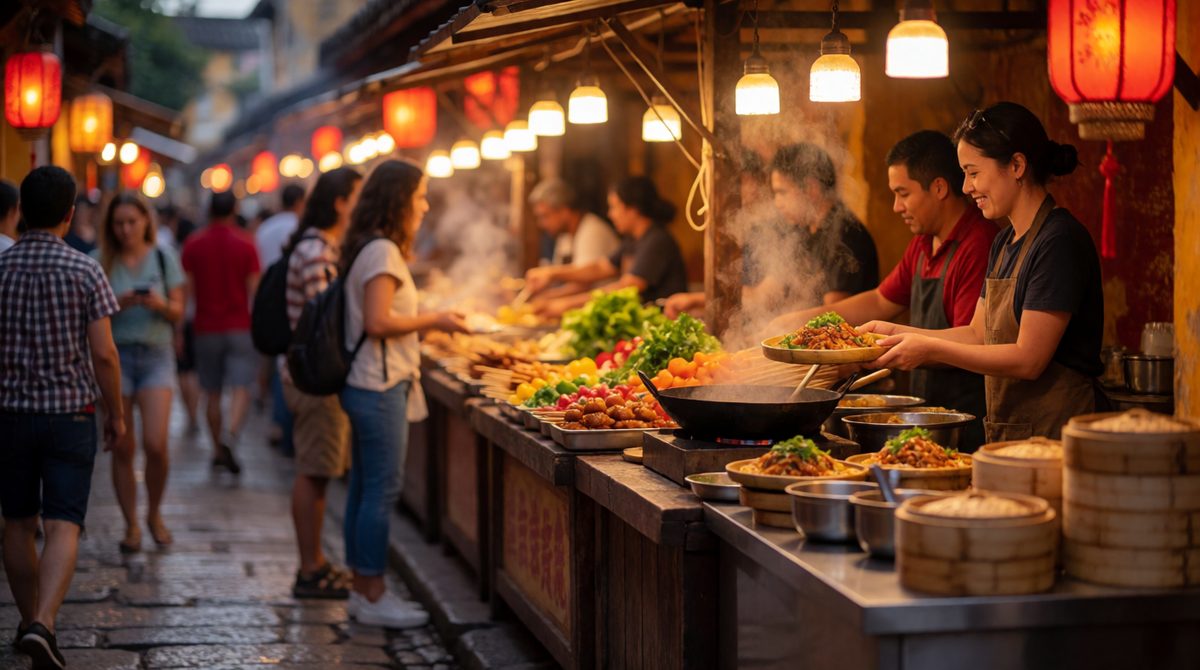
Food and drink providers range from cafes to fine dining
Now let's break down each type of food and drink provider in detail. Each one has different features, target customers, price ranges and links to tourism.
🍕 1. Restaurants
Restaurants are probably the most well-known type of food provider. They offer a full menu, usually with table service and cater for a wide range of customers. Restaurants can be fine dining (very expensive, formal), mid-range (everyday dining), or budget (cheap and cheerful). They are a key part of the tourism experience tourists often choose destinations based on the restaurant scene!
⭐ Fine Dining
Expensive, formal restaurants with high-quality food and service. Examples: The Ritz in London, Gordon Ramsay restaurants. Often linked to luxury tourism.
😊 Mid-Range
Everyday restaurants for families and tourists. Examples: Harvester, Nando's, Wagamama. Popular with domestic tourists and families.
💰 Budget
Cheap, cheerful and quick. Examples: Wetherspoons, local curry houses, greasy spoon cafés. Popular with backpackers and budget tourists.
🔍 Case Study: Nando's A Mid-Range Restaurant Chain
Nando's is a South African-Portuguese restaurant chain famous for its peri-peri chicken. It has over 1,000 restaurants in the UK alone. Nando's uses a counter service model you order at the counter, get a table number and food is brought to you. It's affordable, family-friendly and hugely popular with tourists visiting UK cities. It's a great example of a commercial, mid-range restaurant that serves both locals and tourists.
🍔 2. Fast Food Outlets
Fast food is all about speed, low prices and convenience. These outlets use counter service or drive-throughs and the menu is usually standardised meaning the same food wherever you go in the world. This is actually a big draw for some tourists who want something familiar when abroad!
- McDonald's over 1,300 UK locations, serves millions of tourists daily
- KFC Kentucky Fried Chicken, popular globally
- Subway customisable sandwiches, popular with health-conscious tourists
- Burger King another global chain found in airports, motorway services and city centres
- Greggs a UK favourite for sausage rolls and cheap snacks, especially in train stations
Fast food outlets are especially important in transport hubs like airports, train stations and motorway service areas, where tourists need quick, easy meals on the go.
☕ 3. Cafés and Coffee Shops
Cafés are relaxed, informal places that serve hot drinks, snacks, light meals and cakes. They're a huge part of British tourism culture think of a traditional tearoom in the Cotswolds or a trendy coffee shop in Shoreditch, London. Coffee shop chains have exploded in popularity over the last 20 years.
☕ Coffee Shop Chains
Large commercial chains found in most UK high streets, airports and tourist areas. They offer consistency and familiarity.
- Costa Coffee ☕
- Starbucks ☕
- Caffè Nero ☕
- Pret A Manger 🥗
🍵 Independent Cafés & Tearooms
Unique, locally-owned cafés that offer a more authentic experience. Often found in tourist villages, heritage sites and seaside towns.
- Traditional British tearooms 🍵
- Artisan coffee shops 🏭
- Museum and gallery cafés 🏛
- Farm shops with cafés 🌿
🍵 Case Study: The Bettys Café Tea Rooms, Yorkshire
Bettys is a legendary tearoom chain based in Yorkshire, with locations in Harrogate, York and Ilkley. Founded in 1919, it's famous for its Fat Rascal scones, Yorkshire Tea and beautiful Edwardian interiors. Bettys is a visitor attraction in its own right tourists travel specifically to visit it! This shows how a food and drink provider can become a tourist attraction. It's a brilliant example of how independent, heritage catering adds to a destination's appeal.
🍻 4. Pubs and Bars
The British pub is iconic! Pubs (public houses) serve alcoholic and non-alcoholic drinks and most now serve food too. They're a key part of UK tourism culture and are often listed in tourist guides as "must visit" spots. Bars tend to be more modern and urban, focusing more on drinks than food.
- Traditional pubs: Real ales, pub grub (burgers, pies, fish and chips), cosy atmosphere very popular with overseas tourists
- Gastro pubs: High-quality food in a pub setting a step up from standard pub grub
- Sports bars: Focus on watching live sport, popular with groups of tourists
- Cocktail bars: Trendy, urban, popular in cities like London, Manchester and Edinburgh
💡 Did you know? There are around 47,000 pubs in the UK. Many tourists from overseas visit specifically to experience a "proper British pub"!
🏢 5. Hotel Restaurants and Room Service
Hotels often have their own restaurants, bars and room service options. These are primarily for hotel guests (a captive market) but many hotel restaurants are open to non-guests too. Hotel food ranges from a simple continental breakfast buffet to a full fine-dining experience.
- Breakfast buffets included in many hotel packages, very popular with tourists
- All-inclusive resorts food and drink included in the holiday price (e.g. resorts in Tenerife, Turkey, or Egypt)
- Room service food delivered directly to your room, common in mid-range and luxury hotels
- Hotel bars convenient for guests, often with a premium price
🏢 Case Study: All-Inclusive Resorts in Tenerife
Tenerife is one of the UK's most popular holiday destinations. Many resorts there operate on an all-inclusive basis, meaning tourists pay one price upfront and all meals, snacks and drinks are included. This is hugely popular with British families as it removes the worry of extra costs. However, it can be bad for local restaurants, as tourists rarely leave the resort to eat out. This shows how hotel food provision can impact the local economy an important tourism issue!
🏛 6. Visitor Attraction Catering
Many visitor attractions like theme parks, museums, zoos and heritage sites have their own food and drink facilities. This is a major source of income for attractions and keeps visitors on-site longer. The quality and variety of food at attractions has improved massively in recent years.
🎪 Theme Parks
Alton Towers, Thorpe Park and Legoland all have multiple food outlets from fast food to sit-down restaurants. Food is a big revenue stream for theme parks.
🏛 Museums & Galleries
The British Museum, Natural History Museum and Tate Modern all have cafés and restaurants. Many are run by external catering companies under contract.
🌿 Heritage Sites
National Trust properties often have tea rooms and cafés. These are carefully designed to match the character of the site think scones at a country house!
📦 7. Takeaways and Street Food
Takeaways are a huge part of British food culture and tourism. From the classic fish and chip shop to modern street food markets, takeaway food is quick, affordable and often reflects local culture. Street food has had a massive boom in the UK over the last decade.
- Fish and chip shops: A British institution especially in seaside towns like Whitby, Brighton and Scarborough
- Chinese, Indian and Turkish takeaways: Hugely popular with tourists exploring multicultural UK cities
- Street food markets: Borough Market in London, Digbeth Dining Club in Birmingham popular tourist destinations in themselves!
- Food trucks and vans: Common at festivals, events and tourist hotspots
🍟 Case Study: Borough Market, London
Borough Market in Southwark, London, is one of the UK's most famous food markets. It has been trading for over 1,000 years and is now a major tourist attraction, drawing over 6 million visitors a year. It offers street food, artisan produce and international cuisine from dozens of traders. It's a brilliant example of how food provision can become a visitor attraction in its own right. It also supports local and independent food producers a great example of sustainable tourism.
📊 Comparing Food and Drink Providers
It's important to be able to compare different types of providers. The table below summarises the key differences:
| Provider Type |
Service Style |
Price Range |
Tourist Appeal |
| ⭐ Fine Dining Restaurant |
Table service |
££££ |
Luxury tourists |
| 🍔 Fast Food Outlet |
Counter service |
£ |
Budget tourists, families |
| ☕ Café / Coffee Shop |
Counter service |
££ |
All tourist types |
| 🍻 Pub / Bar |
Counter / table |
££ |
Cultural tourists, groups |
| 🏢 Hotel Restaurant |
Table service / buffet |
£££ |
Hotel guests |
| 📦 Takeaway / Street Food |
Self-service |
£ |
All tourist types |
🌎 Food and Drink as Part of the Tourism Experience
Food tourism (also called culinary tourism or gastronomic tourism) is when people travel specifically to experience local food and drink. This is a growing trend worldwide. Destinations now actively promote their food scenes to attract visitors.
- 🏭 Scotland promotes whisky distillery tours as a major tourist attraction
- 🌿 Cornwall is famous for its pasties, cream teas and fresh seafood
- 🍕 France is globally renowned for its cuisine food is central to French tourism
- 🍟 Japan has more Michelin-starred restaurants than any other country a huge draw for food tourists
🏭 Case Study: Scotch Whisky Experience, Edinburgh
The Scotch Whisky Experience on the Royal Mile in Edinburgh is a brilliant example of a food and drink provider that is also a visitor attraction. Tourists pay to take guided tours, learn about whisky production and taste different varieties. It receives over 300,000 visitors a year and is one of Edinburgh's top-rated attractions. It perfectly shows how food and drink can be the main reason someone visits a destination.
💡 Key Points to Remember
- Food and drink providers are split into commercial (profit-making) and non-commercial (not primarily for profit)
- Main types include: restaurants, fast food outlets, cafés, pubs/bars, hotel restaurants, visitor attraction catering and takeaways
- Service styles include table service, counter service, buffet and self-service
- Food and drink providers can become visitor attractions in their own right (e.g. Bettys, Borough Market)
- Food tourism is a growing trend destinations promote their food scenes to attract visitors
- All-inclusive hotels can negatively impact local food providers as tourists don't leave the resort
- Transport hubs (airports, train stations) rely heavily on fast food and café chains