🌎 Natural Attractions
Created by natural processes over thousands or millions of years. Examples include the Grand Canyon, Niagara Falls, the Amazon Rainforest and the Northern Lights. They often require conservation and careful management.
Sign up to access the complete lesson and track your progress!
Unlock This CourseA natural visitor attraction is a place that people travel to because of its natural features things created by nature, not by humans. Think mountains, waterfalls, beaches, caves, forests and wildlife. These are very different from man-made attractions like theme parks or museums.
Natural attractions are one of the most powerful reasons people choose a destination. A stunning beach in Thailand, a safari in Kenya, or a hike through the Scottish Highlands nature pulls tourists in from all over the world.
Key Definitions:
Created by natural processes over thousands or millions of years. Examples include the Grand Canyon, Niagara Falls, the Amazon Rainforest and the Northern Lights. They often require conservation and careful management.
Built by people to entertain, educate, or commemorate. Examples include Disneyland, the Eiffel Tower and the British Museum. They can be maintained, rebuilt and expanded unlike natural sites.
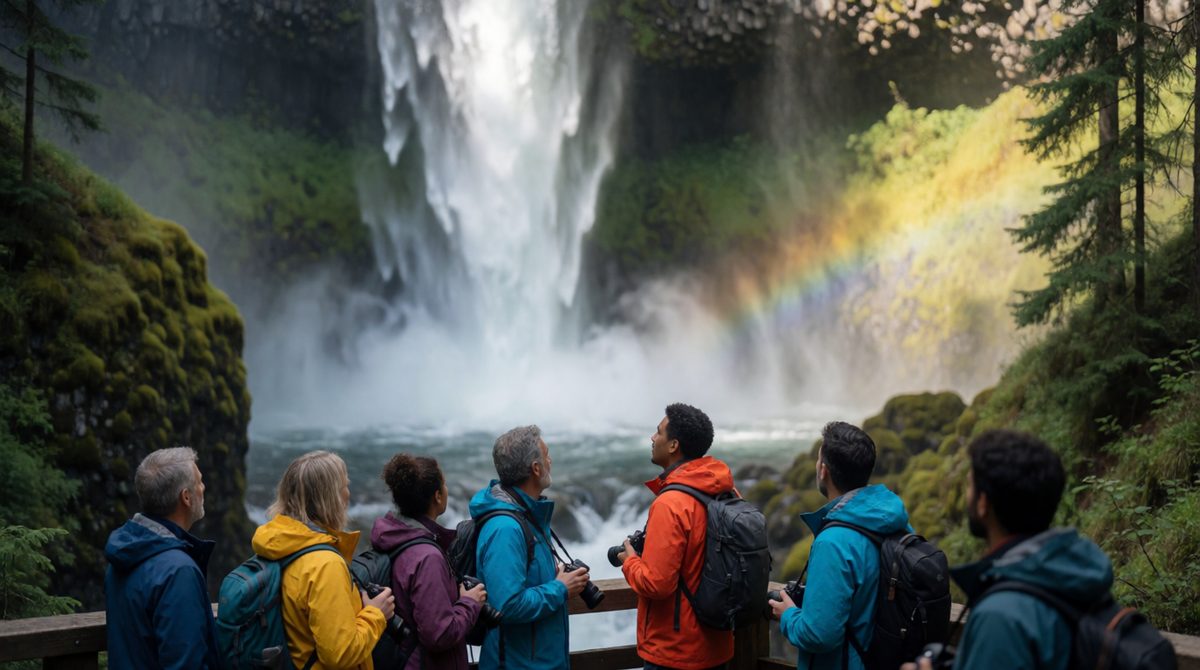
Waterfalls and mountains are natural attractions
Natural attractions come in many different forms. Each type appeals to different kinds of tourists and requires different types of management. Here's a breakdown of the main categories:
Beaches, coral reefs, sea caves, cliffs and marine wildlife are among the most visited natural attractions on Earth. Coastal tourism is huge millions of people head to the seaside every year for relaxation, water sports and wildlife watching.
Sandy or pebble shores attract sun-seekers and families. Examples: Bondi Beach (Australia), Whitehaven Beach (Queensland), Bournemouth Beach (UK).
Underwater ecosystems teeming with marine life. The Great Barrier Reef in Australia is the world's largest coral reef system and a UNESCO World Heritage Site.
Whale watching, dolphin spotting and diving with sharks draw specialist tourists. The Galápagos Islands are famous for unique marine and land species.
Mountains attract hikers, climbers, skiers and those simply wanting dramatic scenery. They are found on every continent and are often protected as national parks or UNESCO sites.
Forests and wildlife reserves attract nature lovers, birdwatchers and ecotourists. They are often home to rare and endangered species that people travel specifically to see.
The Serengeti's Great Migration involves over 1.5 million wildebeest, plus hundreds of thousands of zebras and gazelles, moving across Tanzania and Kenya every year. It's considered one of the Seven Natural Wonders of Africa and is a massive draw for safari tourism.
Caves, gorges, volcanoes, geysers and rock formations are fascinating natural features that attract curious visitors. They often have scientific and cultural significance too.
Different tourists visit natural attractions for very different reasons. Understanding why people go helps tourism planners manage visitor numbers and improve the experience.
These visitors want to do something hiking, climbing, surfing, skiing, kayaking, or wildlife safaris. They often choose natural attractions specifically for the physical challenge or adventure on offer.
These visitors want to see and enjoy the scenery without strenuous activity. Sightseeing, photography, birdwatching and relaxing on a beach are typical activities. They still need facilities like car parks, cafés and viewpoints.
Other motivations include:
The Lake District National Park in Cumbria is England's largest national park and a UNESCO World Heritage Site. It receives around 19 million visitors per year, making it one of the most visited natural attractions in the UK.
Why do people visit? Hiking (Scafell Pike is England's highest mountain), boating on the lakes, cycling, wildlife watching and enjoying the stunning scenery made famous by poets like William Wordsworth.
Economic impact: Tourism brings in over £1.2 billion to the local economy each year and supports around 18,000 jobs.
Management challenges: Traffic congestion, footpath erosion, litter and pressure on local housing are all serious issues. The National Park Authority manages visitor flow, maintains paths and runs conservation programmes.
Natural attractions face a real problem: the more popular they become, the more damage visitors can cause. This is called the tourism impact paradox tourism brings money but can also destroy the very thing people come to see.
Key management strategies include:
The Great Barrier Reef is the world's largest coral reef system, stretching over 2,300 km along the Queensland coast. It is a UNESCO World Heritage Site and one of the most biodiverse marine environments on Earth.
Tourism value: The reef generates around AUD $6.4 billion per year and supports 64,000 jobs through diving, snorkelling tours, glass-bottom boat trips and island resorts.
Threats: Climate change is causing coral bleaching (where rising sea temperatures kill the coral). Pollution from sunscreen, boat anchors and tourist waste also damages the reef. Crown-of-thorns starfish, which eat coral, are another major threat.
Management: The Great Barrier Reef Marine Park Authority controls activities on the reef. Certain zones are off-limits to tourists. Reef-safe sunscreen is encouraged and boat anchoring is banned in many areas. Visitor fees contribute to conservation funding.
Natural attractions bring both benefits and problems. The iGCSE exam often asks you to evaluate these impacts so make sure you know both sides.
Tourism creates jobs for local people as guides, park rangers, hotel staff and in transport. Entrance fees and taxes fund conservation projects.
Revenue from tourism pays for habitat restoration, anti-poaching patrols and scientific research that protects the natural environment.
Visitors who experience natural wonders first-hand often become passionate about protecting them. Tourism raises awareness of environmental issues globally.
In your exam, you may be asked about carrying capacity the maximum number of visitors a site can handle without being damaged. When visitor numbers exceed carrying capacity, the site suffers environmental degradation. Good management keeps visitor numbers within sustainable limits. Always link this to specific examples in your answers!
Ecotourism is a growing type of tourism that focuses on visiting natural areas in a responsible, low-impact way. It aims to benefit local communities and fund conservation, rather than simply exploiting the environment for profit.
Key principles of ecotourism include:
Examples of ecotourism destinations include the Costa Rican rainforests, the Galápagos Islands and Borneo (famous for orangutan conservation tourism).
Bwindi Impenetrable Forest in Uganda is home to around half the world's remaining mountain gorillas. Tourists pay up to $700 per person for a one-hour gorilla trekking permit. Only eight visitors are allowed per gorilla group per day to minimise stress on the animals.
This is a brilliant example of ecotourism working well the high price limits visitor numbers, the money funds conservation and anti-poaching efforts and local communities benefit through employment as guides, porters and lodge staff. The gorilla population has actually increased since ecotourism began here.