🏛 What Are Built Visitor Attractions?
A built visitor attraction is a place that has been purposely constructed or developed by humans to attract visitors. Unlike natural attractions (mountains, beaches, etc.), built attractions are man-made. They can range from ancient castles to modern theme parks and from art galleries to sports stadiums.
Built attractions are a huge part of the tourism industry. They give people a reason to travel, spend money and stay overnight boosting local economies and creating jobs.
Key Definitions:
- Built Visitor Attraction: A man-made site or facility designed to attract tourists and visitors, either for entertainment, education, culture or heritage.
- Heritage Site: A place of historical or cultural importance, often protected and managed for visitors.
- Event: A planned, organised occasion that draws visitors to a specific location for a limited time.
- Footfall: The number of visitors entering an attraction or event.
🏛 Purpose-Built Attractions
These are attractions built specifically for tourism and leisure. Examples include theme parks like Alton Towers, purpose-built museums like the Natural History Museum in London and entertainment complexes. They are designed from scratch to entertain, educate or excite visitors.
🏭 Converted Attractions
These are places that were originally built for a different purpose but have been converted into visitor attractions. Examples include old factories turned into museums (like Tate Modern, a former power station), or historic castles now open to tourists. The original building gives them character and history.
🏢 Types of Built Visitor Attractions
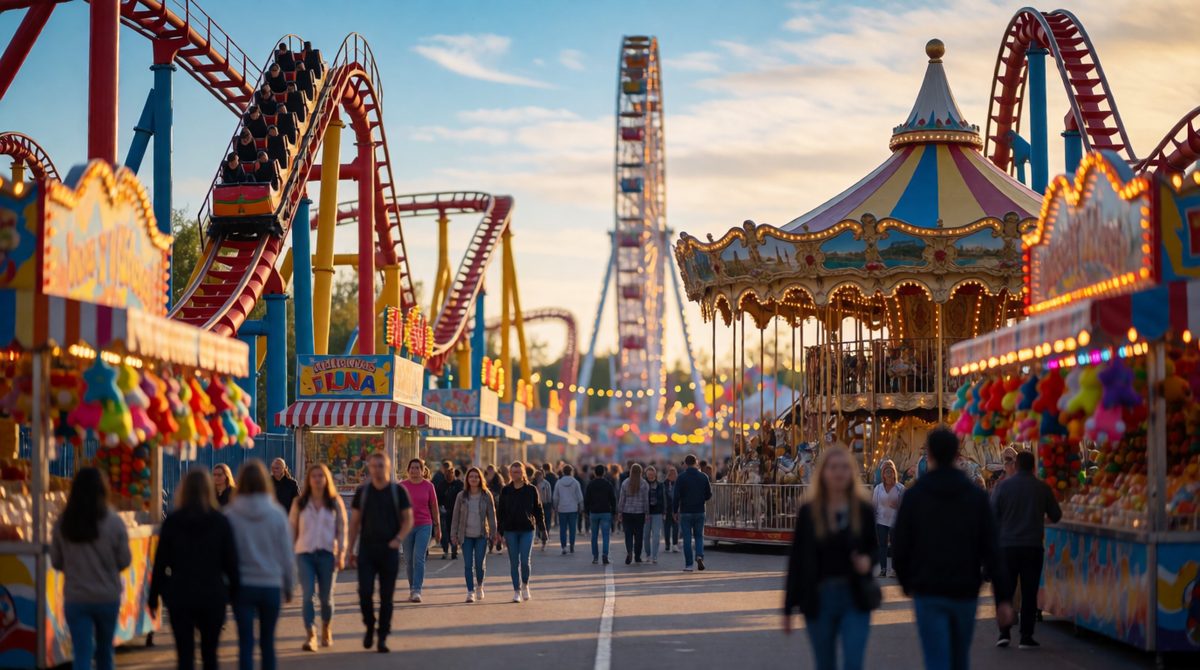
Theme parks and museums are built attractions
Built attractions come in many different shapes and sizes. Here is a breakdown of the main categories you need to know for your iGCSE exam:
🎪 1. Theme Parks and Amusement Parks
Theme parks are large entertainment complexes with rides, shows, themed areas and food outlets. They are designed purely for fun and excitement. They attract millions of visitors each year and are often major employers in their region.
- Examples: Disneyland Paris (France), Alton Towers (UK), Universal Studios (USA/Japan), PortAventura (Spain)
- They rely heavily on repeat visitors and families with children
- Many have on-site hotels to encourage overnight stays and increase spending
🎉 Case Study: Disneyland Paris
Location: Marne-la-Vallée, near Paris, France
Opened: 1992
Visitors: Around 9–10 million per year (one of Europe's most visited attractions)
Economic Impact: Employs over 15,000 people and contributes billions of euros to the French economy annually. The resort includes 2 theme parks, 7 hotels, a shopping village and a golf course.
Tourism Multiplier: Visitors also spend money in nearby Paris staying in hotels, eating in restaurants and visiting other attractions. This is the multiplier effect in action.
🏭 2. Museums and Art Galleries
Museums and galleries attract visitors interested in culture, history, science and art. Many are free to enter (especially in the UK), which makes them accessible to all types of tourists. They are often found in cities and help drive cultural tourism.
- Examples: The British Museum (London), The Louvre (Paris), The Smithsonian (Washington D.C.), Te Papa (New Zealand)
- The Louvre is the world's most visited museum, with around 9 million visitors per year
- Museums often have cafés, gift shops and event spaces to generate extra income
🏛 3. Heritage and Historic Sites
These are places with significant historical or cultural value. They may be ancient ruins, castles, religious buildings or preserved towns. Many are protected by UNESCO as World Heritage Sites.
🏛 Castles & Palaces
Examples: Edinburgh Castle, Buckingham Palace, Versailles. These attract visitors curious about royal history and architecture.
⛪ Religious Sites
Examples: Notre-Dame Cathedral (Paris), St Peter's Basilica (Rome), the Taj Mahal (India). These attract both pilgrims and general tourists.
🏭 Ancient Ruins
Examples: Stonehenge (UK), the Colosseum (Rome), Machu Picchu (Peru). These are among the world's most iconic tourist destinations.
🏑 4. Sports Stadiums and Arenas
Major sports venues attract visitors for matches, concerts and stadium tours. They are important for sports tourism where people travel specifically to watch or take part in sport.
- Examples: Wembley Stadium (London), Camp Nou (Barcelona), the Melbourne Cricket Ground (Australia)
- Stadiums can host multiple events football matches, rugby, concerts, athletics making them multi-purpose venues
- Stadium tours (e.g. Old Trafford, Manchester) are popular tourist activities even on non-match days
🌿 5. Gardens and Zoos
Botanical gardens and zoos are built attractions that combine nature with education and entertainment. They appeal to families, school groups and nature lovers.
- Examples: Kew Gardens (London), Chester Zoo (UK), Singapore Zoo, San Diego Zoo (USA)
- Many zoos now focus on conservation breeding endangered species and educating visitors
🌿 Case Study: The Eden Project, Cornwall, UK
What is it? A series of giant biomes (dome-shaped greenhouses) built in a former clay pit in Cornwall. It houses plants from around the world, including tropical rainforest and Mediterranean environments.
Visitors: Around 1 million per year
Economic Impact: Has generated over £2 billion for the Cornish economy since opening in 2001. Cornwall was previously a declining industrial area the Eden Project helped regenerate the local economy through tourism.
Sustainability: The Eden Project is committed to environmental education and sustainable practices a great example of a built attraction with an eco-friendly message.
🎉 What Are Events?
An event is a planned occasion that takes place at a specific time and location. Events are a major driver of tourism people travel locally, nationally and internationally to attend them. Events can be one-off occasions or annual fixtures.
Key Definitions:
- Hallmark Event: A recurring event closely associated with a particular place, e.g. the Notting Hill Carnival or the Glastonbury Festival.
- Mega Event: A very large, one-off international event that attracts massive global attention, e.g. the Olympic Games or the FIFA World Cup.
- Local/Community Event: Smaller events aimed at local residents and nearby visitors, e.g. a village fête or local food festival.
🌟 Hallmark Events
These events happen regularly and become strongly linked to a place. They give a destination a unique identity and attract loyal repeat visitors. Examples include the Edinburgh Festival Fringe (world's largest arts festival), the Chelsea Flower Show and the Tour de France. They boost local businesses every time they occur.
🏆 Mega Events
Mega events are huge, rare and globally broadcast. They require enormous investment in infrastructure, security and accommodation. Examples include the Olympic Games, the FIFA World Cup and the Commonwealth Games. They can leave a lasting legacy or cause problems if facilities are not used afterwards (known as white elephants).
🏆 Case Study: The 2012 London Olympic Games
The London 2012 Olympics is one of the best examples of a mega event and its tourism impacts.
💰 Economic Impacts
Generated an estimated £9.9 billion for the UK economy. Thousands of jobs were created in construction, hospitality and security. Hotel occupancy rates soared during the Games.
🏛 Infrastructure Legacy
The Olympic Park in Stratford, East London was transformed from a derelict industrial area. It is now a thriving park with sports venues, housing, shops and the London Stadium (home to West Ham United FC).
🔴 Negative Impacts
Some local residents were displaced during construction. Ticket prices were high, excluding some locals. Some venues were underused after the Games the velodrome being a notable exception as it remains popular.
📊 Why Are Built Attractions and Events Important to Tourism?
Built attractions and events are central to the tourism industry. Here is why they matter so much:
- 💰 They generate income for local businesses hotels, restaurants, transport and shops all benefit
- 👥 They create jobs both directly (staff at the attraction) and indirectly (supply chain, hospitality)
- 🏛 They regenerate areas run-down locations can be transformed (e.g. the Eden Project, London Olympic Park)
- 🌎 They promote culture and heritage helping preserve history and educate visitors
- 📌 They extend tourist seasons indoor attractions and events can attract visitors year-round, not just in summer
📌 Exam Tip: The Multiplier Effect
When a visitor spends money at a built attraction, that money doesn't just stay there. The attraction buys supplies from local businesses, pays wages to local staff and those staff spend their wages locally too. This is called the multiplier effect one tourist pound can generate more than one pound of economic activity in the local area. This is a key concept for your exam!
⚠️ Positive and Negative Impacts of Built Attractions and Events
Like all forms of tourism, built attractions and events bring both benefits and problems. You need to be able to discuss both sides.
🟢 Positive Impacts
- 💰 Boosts local economy through visitor spending
- 👥 Creates employment opportunities
- 🏛 Regenerates derelict or declining areas
- 🏭 Preserves and promotes cultural heritage
- 🌎 Raises international profile of a destination
- 📌 Improves local infrastructure (roads, transport, hotels)
🔴 Negative Impacts
- 🚨 Overcrowding and congestion, especially at peak times
- 🌿 Environmental damage litter, pollution, habitat loss
- 💰 Rising prices for local residents (housing, food)
- 🏛 White elephant facilities left unused after events
- 👥 Jobs may be seasonal or low-paid
- 🔴 Local communities may be displaced during development
🏛 Case Study: Overcrowding at Stonehenge, UK
Stonehenge in Wiltshire is one of the UK's most iconic heritage sites, attracting over 1.5 million visitors per year. However, its popularity has created serious management challenges.
- Visitors used to be able to walk among the stones this is now restricted to protect them from erosion and damage
- English Heritage manages the site and has invested in a new visitor centre (opened 2013) located away from the stones to reduce pressure on the immediate area
- At the summer solstice, up to 30,000 people gather requiring major crowd management and security operations
- The nearby A303 road causes noise and visual pollution a tunnel has been proposed (and controversially approved) to improve the setting
This case study shows that even the most famous built/heritage attractions need careful visitor management strategies to balance tourism with conservation.
🎉 Events and Their Role in Destination Marketing
Events are not just fun they are a powerful marketing tool for destinations. Hosting a major event puts a city or country on the global map, attracting media coverage and future tourists.
- 🌎 The FIFA World Cup 2022 in Qatar introduced millions of viewers to a country many had never considered visiting
- 🎉 Edinburgh's Festival Fringe has made Edinburgh one of the world's top cultural tourism destinations
- 🏆 The Commonwealth Games 2022 in Birmingham showcased the city to a global audience and boosted visitor numbers
🎉 Case Study: Edinburgh Festival Fringe
What is it? The world's largest arts festival, held every August in Edinburgh, Scotland. It features thousands of performances across comedy, theatre, music, dance and more.
Visitors: Around 3 million tickets sold each year, with visitors from over 70 countries
Economic Impact: Generates approximately £200 million for the Edinburgh economy annually
Why it matters: It is a perfect example of a hallmark event it is so strongly associated with Edinburgh that it has become part of the city's identity and brand. It extends the tourist season into August, filling hotels, restaurants and transport links.
💡 Key Points to Remember
- 🏛 Built visitor attractions are man-made they include theme parks, museums, heritage sites, stadiums, gardens and zoos
- 🎉 Events are classified as mega, hallmark or local each has different scales of impact
- 💰 Both built attractions and events contribute to the multiplier effect in local economies
- 🏛 Built attractions can regenerate declining areas (Eden Project, London Olympic Park)
- ⚠️ Overcrowding, environmental damage and white elephant facilities are key negative impacts to discuss
- 📌 Events are powerful destination marketing tools they raise international awareness of a place
- 🏆 The legacy of mega events (what is left behind) is a key exam topic it can be positive or negative