🚗 Car Hire
Once a tourist arrives at their destination, they still need to get around. That's where car hire comes in. Car hire (also called car rental) is when a traveller pays to use a vehicle for a set period of time from a few hours to several weeks. It gives tourists the freedom to explore at their own pace, especially in places where public transport is limited.
Key Definitions:
- Car Hire: A service where a vehicle is rented to a customer for a short period in exchange for a fee.
- Ancillary Service: An extra service that supports the main travel experience (like a flight or hotel).
- Excess Charge: The amount a customer must pay if the hired car is damaged, before insurance kicks in.
- Drop-off Location: The place where the customer returns the hired car sometimes different from where they picked it up.
🏭 How Car Hire Works
Customers book a car online or at a desk at the airport. They choose a car category (small, medium, large, SUV), pick up the keys and return the car at the end of the rental period. They must have a valid driving licence and usually a credit card for the deposit.
💵 How Car Hire Companies Make Money
Car hire companies charge a daily or weekly rate. They also earn extra revenue from add-ons like GPS navigation, child seats, additional driver fees, fuel packages and insurance upgrades. These extras can sometimes cost more than the base rental!
📌 Types of Car Hire
Not all car hire is the same. There are several different types depending on what the traveller needs:
✈ Airport Car Hire
The most common type. Companies like Hertz and Avis have desks right inside the airport terminal. Very convenient for tourists who land and want to drive straight away.
🏘 City Centre Car Hire
Pick-up points located in town or city centres. Useful for business travellers or tourists already at their destination who need a car for a day trip.
📱 App-Based Car Hire
Modern services like Zipcar or Enterprise CarShare let users book and unlock cars using a smartphone app. Popular in cities where you only need a car occasionally.
🔍 Case Study: Enterprise Rent-A-Car
Enterprise is one of the world's largest car hire companies, with over 10,000 locations in more than 90 countries. Founded in the USA in 1957, it now operates brands including Alamo and National. Enterprise is well known for its "We'll pick you up" service they actually come and collect the customer, making it even more convenient. In the UK, Enterprise has hundreds of branches including locations at major airports like Heathrow, Gatwick and Manchester. They offer everything from small economy cars to vans and luxury vehicles.
👍 Advantages of Car Hire
- Freedom to travel at your own pace
- Access to remote areas not served by public transport
- Can be cheaper than taxis for longer trips
- Wide choice of vehicle types
- Easy to book in advance online
👎 Disadvantages of Car Hire
- Hidden costs (insurance, fuel, extras) can add up quickly
- Driving in an unfamiliar country can be stressful
- Different driving rules (e.g. driving on the right)
- Parking can be difficult and expensive in cities
- Age restrictions many companies won't hire to under-25s
🚲 Bicycle Hire
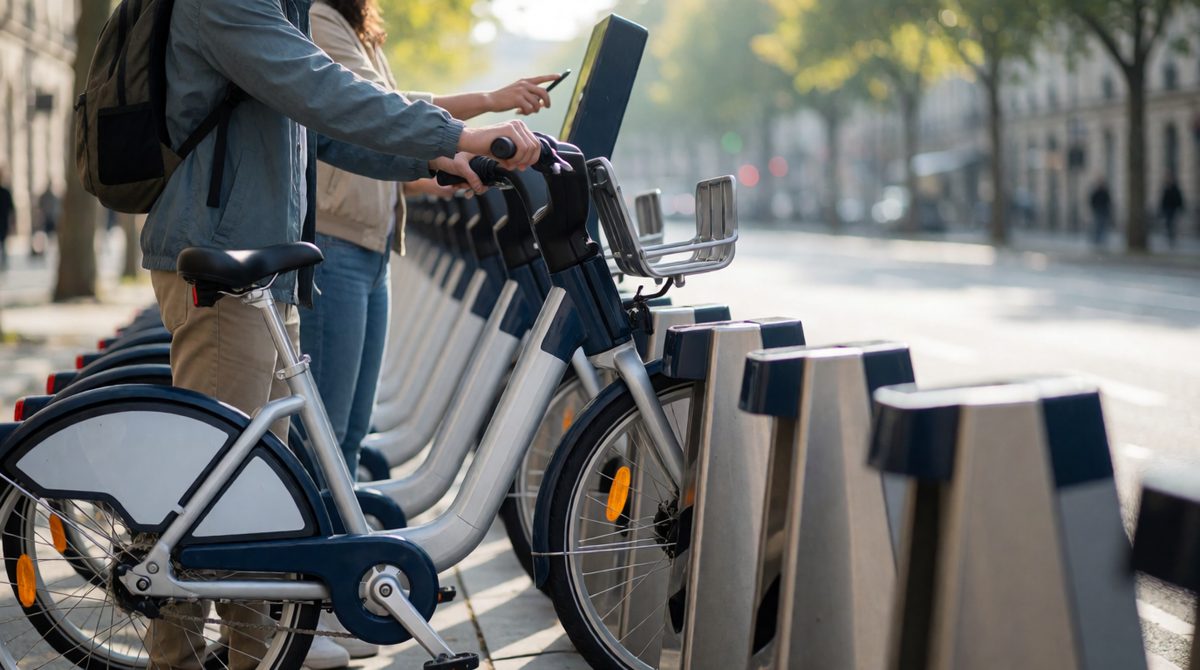
Bicycle hire lets tourists explore sustainably
Bicycle hire is one of the fastest-growing ancillary services in tourism. As more tourists look for sustainable and active ways to explore, cycling has become a brilliant option especially in flat cities, coastal resorts and national parks. Bike hire schemes can be run by local businesses, city councils, or large companies.
Key Definitions:
- Bicycle Hire: A service where bicycles are rented to tourists or locals for a short period, usually by the hour or day.
- Docking Station: A fixed point where bikes in a city scheme can be picked up and returned.
- E-Bike: An electric-assisted bicycle that makes cycling easier, especially on hills.
- Sustainable Tourism: Travel that has a low impact on the environment and local communities.
🔍 Case Study: Santander Cycles, London
Santander Cycles (nicknamed "Boris Bikes") launched in London in 2010. The scheme has over 800 docking stations and 12,000 bikes across central London. Tourists and locals can hire a bike for as little as £1.65 for a single ride. The scheme is operated by Transport for London (TfL) and sponsored by Santander bank. It has been hugely successful with over 10 million journeys made per year. Similar schemes exist in Paris (Vélib'), Amsterdam and New York (Citi Bike).
🌎 Why Bicycle Hire Is Growing
Several trends are driving the growth of bicycle hire around the world:
🌿 Eco-Friendly Travel
Tourists are increasingly aware of their carbon footprint. Cycling produces zero emissions and is seen as a responsible way to explore a destination.
🏃 Health and Wellness Tourism
Many tourists now want active holidays. Cycling tours through vineyards, national parks, or city streets combine sightseeing with exercise.
📱 Smart Technology
Apps make it easy to find, unlock and pay for bikes. GPS tracking means bikes can be left anywhere (dockless schemes) and found via a map on your phone.
👍 Advantages of Bicycle Hire
- Environmentally friendly no emissions
- Cheap compared to car hire or taxis
- Great for exploring cities and scenic routes
- No parking problems
- Healthy and fun for tourists
👎 Disadvantages of Bicycle Hire
- Not suitable for long distances or hilly terrain
- Weather dependent rain puts people off
- Safety concerns in busy traffic
- Limited luggage capacity
- Not accessible for all tourists (e.g. elderly or disabled)
🆕 Other Ancillary Services
Beyond car and bicycle hire, there are several other ancillary services that make a tourist's trip smoother and more enjoyable. These are often booked alongside flights and hotels as part of a package, or purchased separately.
🛬 Travel Insurance
Travel insurance is one of the most important ancillary services. It protects tourists financially if something goes wrong like a cancelled flight, lost luggage, or a medical emergency abroad. Without it, a hospital bill in the USA, for example, could cost tens of thousands of pounds.
- Single-trip insurance: Covers one specific holiday.
- Annual multi-trip insurance: Covers all trips taken within a year great for frequent travellers.
- Specialist insurance: For activities like skiing, scuba diving, or adventure sports.
💡 Did You Know?
The Association of British Insurers (ABI) reports that UK travellers make over 500,000 travel insurance claims every year. The most common claims are for medical treatment, cancellations and lost or stolen belongings. Always read the small print some policies don't cover pre-existing medical conditions!
🚌 Airport Transfers
An airport transfer is a pre-booked transport service that takes a tourist from the airport to their hotel (or vice versa). This is a very popular ancillary service because it removes the stress of figuring out transport in an unfamiliar place.
🚌 Private Transfer
A dedicated car or minibus just for your group. More expensive but very convenient the driver meets you at arrivals with a sign.
🚌 Shared Shuttle
A minibus shared with other tourists going to nearby hotels. Cheaper than private, but can take longer as it drops off multiple passengers.
🚌 Coach Transfer
A large coach used for resort transfers, often included in package holidays. Common in destinations like Majorca, Tenerife and Turkey.
🚗 Airport Car Parking
For tourists who drive to the airport, car parking is a key ancillary service. Options include:
- On-airport parking: Car parks located within the airport grounds. Convenient but expensive.
- Off-airport parking: Car parks located nearby, with a shuttle bus to the terminal. Cheaper but takes more time.
- Meet and greet parking: A valet service where a driver takes your car away and returns it when you land. Premium price for maximum convenience.
Major UK airports like Heathrow and Gatwick earn significant revenue from car parking it is one of their biggest income streams outside of landing fees.
🏪 Accommodation Extras
Hotels and resorts often offer ancillary services of their own, including:
- Room upgrades paying extra for a sea view or a suite
- All-inclusive upgrades adding meals and drinks to a room-only booking
- Spa treatments and gym access
- Airport shuttle services run by the hotel itself
🔍 Case Study: Booking.com Ancillary Services
Booking.com is one of the world's largest travel platforms and a great example of how ancillary services are bundled together. When you book a hotel on Booking.com, you are immediately offered car hire, taxi transfers, travel insurance and attraction tickets. This is called cross-selling offering related products to increase revenue. In 2023, Booking Holdings (the parent company) reported revenues of over $21 billion, with a significant portion coming from ancillary service commissions. This shows just how valuable these extras are to the travel industry.
🏭 Linking Ancillary Services Together
In the real world, ancillary services don't exist in isolation they work together to create a seamless travel experience. Think about a family holiday to Spain:
- They book flights and a hotel ✈
- They add travel insurance at checkout 🛬
- They pre-book an airport transfer from Malaga Airport to their hotel 🚌
- They hire a car for three days to visit Ronda and Gibraltar 🚗
- They hire bicycles on the seafront promenade for a morning 🚲
- They leave their car in airport parking back in the UK 🚗
Every single one of those steps involves an ancillary service provider. That's why this sector is so important to the travel and tourism industry!
💡 Exam Tip: Evaluating Ancillary Services
In the iGCSE exam, you may be asked to evaluate or compare ancillary services. Always think about: cost, convenience, sustainability, accessibility, and suitability for different types of tourist. For example, bicycle hire is great for a young solo traveller in Amsterdam, but not ideal for a family with young children in a hilly city. Tailor your answer to the specific scenario given!
📋 Quick Summary: Car Hire, Bicycle Hire and Other Ancillary Services
🚗 Car Hire
Renting a vehicle for freedom and flexibility. Major providers include Enterprise, Hertz and Avis. Costs can mount up with extras. Essential in rural destinations.
🚲 Bicycle Hire
Eco-friendly, cheap and fun. City schemes like Santander Cycles are hugely popular. Best for flat urban areas. Growing due to sustainable tourism trends.
🆕 Other Services
Travel insurance, airport transfers, car parking and hotel extras all play a vital role. Cross-selling platforms like Booking.com bundle these together for convenience.