🔗 What Is Interdependency?
Imagine you book a holiday. You use a travel agent, who contacts a tour operator, who has deals with an airline, a hotel and a transfer company. If any one of those links breaks say the airline goes bust your whole holiday falls apart. That's interdependency in action.
In travel and tourism, interdependency means that organisations rely on each other to deliver a complete product or service. No single business can do everything on its own. A hotel needs guests to arrive so it needs airlines and tour operators. An airline needs passengers so it needs travel agents and booking platforms to sell its seats.
Key Definitions:
- Interdependency: When two or more organisations rely on each other to operate successfully.
- Supply chain: The chain of businesses involved in delivering a product or service to the customer.
- Principal: A business (like an airline or hotel) whose products are sold by agents on their behalf.
- Agent: A business (like a travel agent) that sells products on behalf of principals, earning commission.
- Destination Management Organisation (DMO): A body that coordinates tourism in a specific area, linking public and private sector businesses together.
💡 Think About It
When you go on a package holiday, you might interact with up to 8 or more different organisations a travel agent, tour operator, airline, airport, transfer company, hotel, local excursion provider and a tourist board. They all depend on each other to make your trip work smoothly.
📈 The Tourism Supply Chain
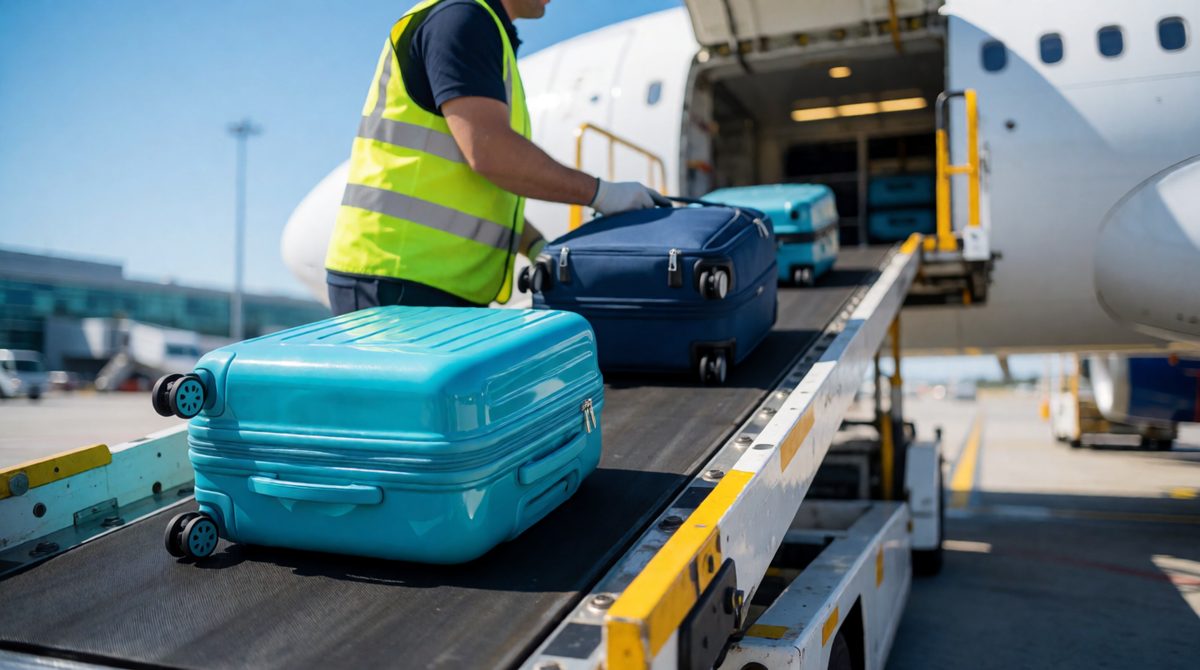
The tourism supply chain links many businesses
The tourism supply chain is the sequence of organisations that contribute to delivering a tourism experience. Each link in the chain depends on the others. If one link weakens or breaks, the whole chain is affected.
🚕 A Typical Package Holiday Supply Chain
Here's how a simple package holiday involves multiple interdependent organisations:
✈ Transport
Airlines, airports, transfer coaches and car hire firms all need passengers. They rely on tour operators and travel agents to fill their seats and vehicles.
🏠 Accommodation
Hotels and resorts rely on tour operators to send them guests. Without a steady stream of bookings, they cannot cover their fixed costs like staff wages and maintenance.
🏞 Attractions
Theme parks, museums and excursion companies depend on tourists arriving in the destination. They often partner with hotels and tour operators to be included in holiday packages.
🌎 How Destinations Depend on Organisations
It's not just individual businesses that are interdependent entire destinations rely on a network of organisations working together. A beach resort in Spain, for example, depends on UK tour operators choosing to include it in their brochures. If those tour operators drop the destination, hotels lose bookings, local restaurants lose customers and taxi drivers lose fares. The whole local economy feels the impact.
🔍 Case Study: Cancún, Mexico
Cancún is one of the world's most visited beach destinations. Its economy is almost entirely built around tourism. The destination depends heavily on:
- International airlines flying tourists in from the USA, UK, Canada and Europe
- Tour operators like TUI and Jet2holidays including it in their packages
- Online Travel Agents (OTAs) like Expedia and Booking.com listing its hotels
- The Mexican government maintaining infrastructure like roads, airports and safety
- Local businesses restaurants, excursion providers and shops that make tourists want to return
During the COVID-19 pandemic (2020–2021), when airlines stopped flying and tour operators cancelled programmes, Cancún's entire tourism economy collapsed almost overnight. This shows just how fragile interdependencies can be.
🏛 The Role of Destination Management Organisations (DMOs)
A Destination Management Organisation (DMO) is a key player in linking all the different tourism businesses in an area together. DMOs are usually funded by a mix of public money (government) and private sector contributions (hotels, attractions, etc.).
Their job is to promote the destination, coordinate tourism activity and make sure all the businesses in the area are working towards the same goals. In doing so, they create and manage interdependencies between public and private sector organisations.
🏰 VisitBritain A National DMO
VisitBritain is the UK's national tourism agency. It promotes Britain to international visitors and works closely with airlines, hotels, attractions and local tourist boards. It depends on private businesses to deliver the tourism product, while those businesses depend on VisitBritain to market Britain abroad and bring tourists in. Neither can succeed without the other.
🏭 Local Tourism Partnerships
In places like the Lake District or Cornwall, local DMOs bring together hotels, B&Bs, activity providers, transport companies and local councils. They create joint marketing campaigns, shared booking systems and coordinated visitor information. This makes the destination stronger as a whole but it means every business is depending on the others to maintain quality and reputation.
📱 Technology and Interdependency
Technology has massively changed how travel and tourism organisations depend on each other. In the past, a travel agent would phone a hotel directly to check availability. Today, complex computer systems called Global Distribution Systems (GDS) connect thousands of airlines, hotels, car hire firms and other suppliers in real time.
Key technology-driven interdependencies:
- Global Distribution Systems (GDS): Systems like Amadeus, Sabre and Galileo connect travel agents and OTAs with airlines, hotels and car hire companies worldwide. If a GDS goes down, thousands of bookings across hundreds of organisations are affected simultaneously.
- Online Travel Agents (OTAs): Platforms like Expedia, Booking.com and Hotels.com act as intermediaries. Hotels depend on them for visibility and bookings; OTAs depend on hotels to have rooms available at competitive prices.
- Channel Managers: Software that lets hotels update their availability across multiple OTAs at once. This creates a technical interdependency if the channel manager fails, the hotel's listings go out of sync across all platforms.
🔍 Case Study: Amadeus GDS
Amadeus is the world's largest Global Distribution System. It processes over 1.8 billion travel bookings per year and connects more than 400 airlines, 900,000 hotel properties and thousands of travel agencies worldwide. In June 2017, a major IT outage at British Airways (which uses Amadeus systems) caused over 400 flight cancellations and affected 75,000 passengers in a single weekend. This perfectly illustrates how deeply interdependent modern travel organisations are a technical failure in one system ripples out to affect airlines, airports, hotels and passengers all at once.
⚠ When Interdependency Goes Wrong
Interdependency brings great benefits but it also brings risk. When organisations are tightly linked, a problem in one can quickly spread to others. This is sometimes called contagion risk in business.
🚫 Knock-On Effects
Here are some real examples of how problems in one organisation have caused serious damage to others:
✈ Airline Failure
When Monarch Airlines collapsed in 2017, over 300,000 passengers were stranded abroad. Hotels that had been waiting for payment from Monarch lost income. Airports lost landing fees. Ground handling companies lost contracts overnight.
🏠 Hotel Overbooking
If a hotel overbooks and cannot accommodate guests sent by a tour operator, the tour operator must find alternative accommodation at short notice. This damages the relationship between the two organisations and can lead to the hotel being dropped from future programmes.
🌍 Natural Disasters
When a volcanic eruption in Iceland in 2010 closed European airspace for six days, airlines, tour operators, hotels and car hire firms all suffered massive losses simultaneously simply because they all depended on the same airspace being open.
👥 Principal–Agent Relationships in Detail
One of the most important interdependencies in travel and tourism is the principal–agent relationship. This is where one business (the principal) produces the tourism product and another business (the agent) sells it on their behalf.
This relationship creates a two-way dependency:
- The principal (e.g. an airline or hotel) needs agents to distribute and sell their product to as many customers as possible.
- The agent (e.g. a travel agent) needs principals to have attractive, competitively priced products to sell otherwise customers will go elsewhere.
💵 Commission and Dependency
Travel agents earn commission typically 10–15% on every booking they make for a principal. This means the agent's income depends entirely on the principal's product being desirable and available. If an airline cuts commission rates (as many did in the 2000s), travel agents lose income and may stop promoting that airline's flights.
📋 Preferred Supplier Lists
Many travel agencies have preferred supplier lists a small number of tour operators and principals they work most closely with. These preferred suppliers get more prominent display space and stronger promotion in return for better commission rates. This creates a deep interdependency: the agent's success is tied to the preferred supplier's success and vice versa.
🌿 Voluntary Sector Interdependencies
The voluntary sector also plays an important role in tourism interdependencies. Charities and non-profit organisations often depend on tourism businesses to help them achieve their goals, while tourism businesses benefit from the positive image that comes from supporting good causes.
🔍 Case Study: The National Trust and Tourism Businesses
The National Trust is a charity that manages over 500 historic houses, gardens and nature reserves across England, Wales and Northern Ireland. It is one of the UK's biggest tourist attractions. The National Trust depends on:
- Tour operators including its properties in guided tour itineraries
- Local hotels and B&Bs whose guests visit National Trust properties
- Transport companies running services to rural properties
In return, local tourism businesses depend on the National Trust to maintain attractive, well-managed properties that draw visitors to the area. A poorly maintained National Trust property means fewer visitors and less income for every business in the surrounding area.
📈 Measuring Interdependency: The Tourism Multiplier Effect
Economists use the concept of the tourism multiplier effect to show how money spent by tourists flows through a local economy, passing from one business to another. This is a powerful illustration of interdependency at work.
When a tourist spends £100 in a hotel, the hotel uses some of that money to pay staff, buy food from local suppliers and pay for local services. Those businesses then spend money with their own suppliers and so on. The original £100 ends up generating far more than £100 of economic activity in total. The more locally sourced the goods and services are, the higher the multiplier effect and the stronger the interdependencies between local businesses.
💡 Exam Tip
In your iGCSE exam, you may be asked to explain why organisations in travel and tourism are interdependent, or to give examples of interdependencies. Always try to give a specific named example for instance, naming an actual airline, hotel chain, or DMO rather than speaking in vague terms. Examiners reward specific, real-world knowledge.
📚 Summary: Interdependencies in Travel and Tourism
Interdependency is at the heart of how the travel and tourism industry works. No single organisation can deliver a complete holiday experience on its own. Airlines need airports, airports need airlines. Tour operators need hotels, hotels need tour operators. DMOs need private businesses, private businesses need DMOs to market their destination. Technology has made these links faster and more efficient but also more fragile. Understanding these interdependencies is essential for anyone working in, or studying, the travel and tourism industry.
- ✅ Interdependency means organisations rely on each other to function successfully
- ✅ The tourism supply chain links transport, accommodation, attractions and intermediaries
- ✅ DMOs coordinate interdependencies across entire destinations
- ✅ GDS technology has created deep technical interdependencies between thousands of organisations
- ✅ Principal–agent relationships create financial interdependencies through commission systems
- ✅ When interdependencies fail, the effects spread rapidly across many organisations
- ✅ The tourism multiplier effect shows how money flows through interdependent local businesses