🏠 Collaboration Within a Destination: The Big Picture

Hotels, buses, museums and cafes all work together to make a city break feel joined up
Imagine you are visiting a city like Edinburgh or Barcelona. You book a hotel, catch a bus, visit a museum, eat at a local restaurant and buy a souvenir. Every single one of those experiences involves a different organisation yet somehow it all feels joined up. That is no accident. Behind the scenes, organisations are actively working together to make your visit smooth, enjoyable and memorable.
This is what destination collaboration is all about. It is when the many different businesses, public bodies and voluntary groups in one place coordinate their efforts so that tourists get a great experience and the destination benefits economically and socially.
Key Definitions:
- Destination Collaboration: When two or more organisations within the same destination work together towards shared tourism goals.
- Stakeholder: Any person, business or organisation that has an interest in how tourism in a destination is managed.
- Joint Marketing: When organisations pool resources to promote a destination together rather than individually.
- Visitor Economy: The total economic value generated by people visiting a destination, including spending on accommodation, food, transport and attractions.
💡 Why Does Collaboration Matter?
No single organisation can deliver a complete tourist experience on its own. A hotel cannot control transport links. A museum cannot build roads. A tour operator cannot run hospitals. Only by working together can organisations create the conditions that make a destination attractive, accessible and safe for visitors.
🏛 Who Are the Key Players in a Destination?
In any tourist destination, there are three broad groups of organisations. Each plays a different role, but all three must collaborate for tourism to thrive.
🏛 Public Sector
Local councils, national governments, tourist boards and transport authorities. They manage infrastructure, set regulations, fund promotion and protect heritage sites.
💵 Private Sector
Hotels, airlines, restaurants, tour operators, travel agents, car hire firms and attractions. They provide the actual services tourists pay for and drive commercial investment.
🌿 Voluntary Sector
Charities, community groups, conservation organisations and heritage trusts. They protect natural and cultural assets, often running attractions or managing green spaces.
👥 How These Groups Collaborate in Practice
Collaboration does not just happen by chance. Organisations use formal and informal structures to work together. These include:
- Tourism Action Plans agreed strategies where all stakeholders commit to shared goals
- Joint Funding Bids organisations pool applications for government or EU grants
- Shared Visitor Information tourist information centres stocking leaflets for all local businesses
- Cross-Promotion a hotel recommending a local restaurant; a museum promoting a nearby castle
- Events Committees public, private and voluntary organisations jointly planning festivals or events
- Training Programmes industry-wide customer service training funded collectively
🔍 Case Study: Edinburgh A Destination That Gets Collaboration Right
Edinburgh is one of the UK's most visited cities, attracting over 4.9 million overnight visitors per year. Its success is built on strong collaboration between many organisations:
- Edinburgh Council (Public Sector) manages transport, planning, roads and funds the Edinburgh Festival infrastructure.
- VisitScotland (Public Sector) promotes Edinburgh nationally and internationally, produces marketing campaigns and visitor guides.
- Edinburgh Tourism Action Group ETAG (Partnership Body) brings together over 100 businesses and organisations to coordinate tourism strategy across the city.
- Historic Environment Scotland (Voluntary/Public) manages Edinburgh Castle and other heritage sites, working with tour operators to create packages.
- Private Hotels and Restaurants contribute funding to joint marketing campaigns and participate in the Edinburgh Festival Fringe, which brings in millions of visitors.
- Lothian Buses (Public/Private) runs tourist-specific bus routes and the Edinburgh Bus Tours open-top service, coordinating with attractions on timetables.
The result? A seamless visitor experience where every part of the destination feels connected even though dozens of separate organisations are involved.
🏭 Formal Collaboration Structures: Tourism Partnerships
Many destinations set up formal partnership structures official bodies where organisations regularly meet, share data, plan together and make joint decisions. These are sometimes called Destination Management Partnerships (DMPs) or Local Tourism Partnerships (LTPs).
✅ What Formal Partnerships Do
- Set a shared vision for tourism in the destination
- Coordinate marketing so organisations do not duplicate effort
- Gather and share visitor data and research
- Lobby government for investment in infrastructure
- Manage quality standards across accommodation and attractions
- Respond collectively to crises (e.g. a natural disaster or pandemic)
📋 Who Sits at the Table?
- Local council representatives
- Hotel and accommodation providers
- Attraction managers
- Transport operators
- Restaurant and retail associations
- Conservation and heritage bodies
- Event organisers
- The national tourist board
🔍 Case Study: The Lake District Collaboration for Sustainable Tourism
The Lake District in Cumbria, England, became a UNESCO World Heritage Site in 2017. Managing millions of visitors while protecting the natural environment requires extraordinary levels of collaboration.
🏭 Lake District National Park Authority
A public body that manages land use, planning and conservation. Works with businesses to ensure tourism does not damage the landscape. Sets rules on where new hotels can be built.
🌿 Fix the Fells (Voluntary)
A charity that repairs footpaths damaged by tourist footfall. Funded jointly by the National Park, Natural England and private donations from tourism businesses and visitors.
💵 Cumbria Tourism (Private/Partnership)
The destination management organisation for the region. Runs joint marketing campaigns, manages the official visitor website and coordinates with hotels, B&Bs and activity providers.
A key example of collaboration here is the Windermere Reflections campaign a joint marketing initiative between Cumbria Tourism, local hotels, boat hire companies and the National Park Authority. Rather than each business advertising separately, they pooled budgets to create one powerful campaign that promoted the whole destination.
Another example is the Go Lakes Travel scheme a partnership between the National Park, local bus companies and cycling hire businesses to encourage visitors to leave their cars behind. This reduced traffic congestion (a public sector concern) while also increasing footfall for businesses along bus routes (a private sector benefit).
💡 Exam Tip
In the exam, when asked about collaboration in a destination, always try to name specific organisations and explain what each one gains from working together. Examiners reward answers that show the benefit to both sides of a partnership not just one.
🌎 Joint Marketing: One of the Most Common Forms of Collaboration
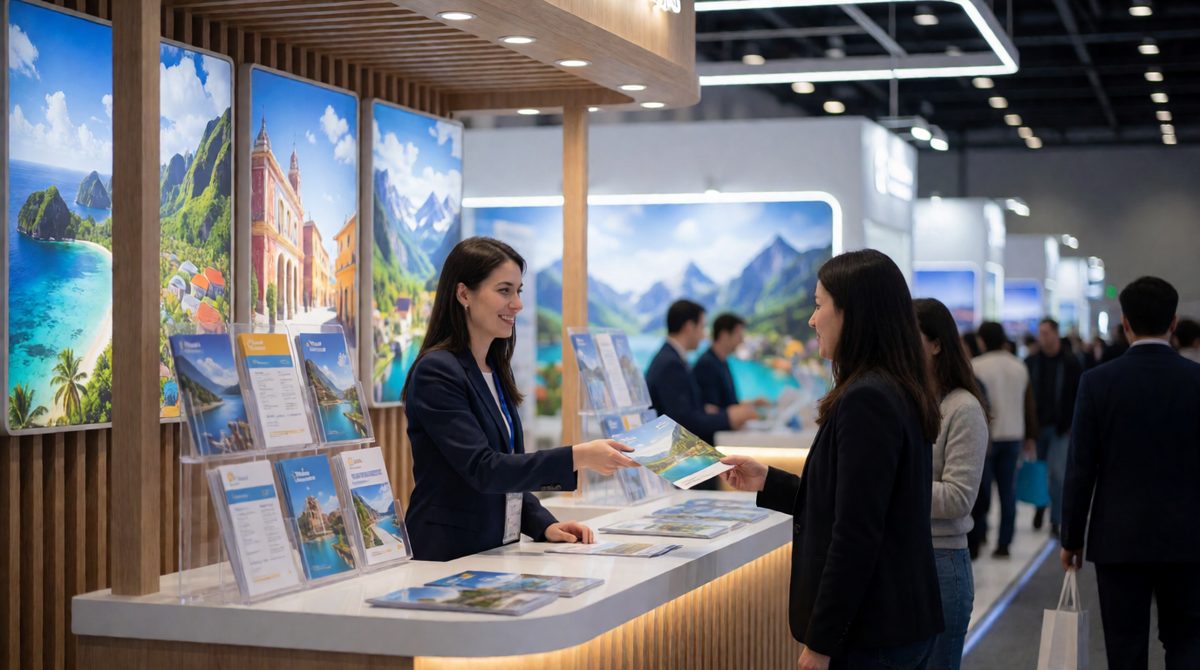
Destinations market themselves jointly
One of the most visible ways organisations collaborate in a destination is through joint marketing. Instead of each business spending its own small budget on advertising, organisations club together to create a bigger, more effective campaign.
- Destination Websites: A single website (e.g. visitbath.co.uk) promotes all hotels, restaurants and attractions in one place funded by contributions from all listed businesses.
- Brochures and Guides: Tourist information centres produce printed guides featuring multiple businesses, often part-funded by the businesses themselves.
- Social Media Campaigns: A destination hashtag (e.g. #LoveLakesDistrict) used by the DMO, hotels, restaurants and attractions together to amplify reach.
- Travel Trade Shows: A destination sends a joint delegation to events like World Travel Market in London, with the DMO and local businesses sharing a stand to attract tour operators and travel agents.
🔍 Case Study: Bath, England Joined-Up Destination Marketing
Bath is a UNESCO World Heritage City famous for its Roman Baths and Georgian architecture. Visit Bath is the official destination management organisation, bringing together over 300 tourism businesses in a formal partnership.
Each member business pays an annual fee to be part of the partnership. In return, they get listed on the Visit Bath website, included in printed guides distributed at airports and train stations and featured in social media campaigns. The collective budget is far larger than any individual hotel or attraction could afford alone.
Visit Bath also works with Great Western Railway (private transport) to promote Bath by Train packages combining rail tickets with hotel stays and attraction tickets. This benefits the railway (more passengers), the hotels (more bookings) and the attractions (more visitors). The city council benefits too, as more visitors means more income from parking, local taxes and a healthier local economy.
⚠ Challenges of Destination Collaboration
Collaboration sounds great in theory, but it is not always easy. Organisations have different priorities, different budgets and sometimes competing interests. Here are the main challenges:
🚫 Common Problems
- Free-riding: Some businesses benefit from joint marketing without contributing to the cost
- Conflicting priorities: A hotel wants more visitors; a conservation charity wants fewer
- Unequal power: Large hotel chains can dominate partnerships, drowning out small B&Bs
- Funding gaps: Public sector budget cuts can leave partnerships underfunded
- Slow decision-making: Getting many organisations to agree takes time
✅ How These Are Overcome
- Formal membership agreements with clear financial contributions
- Elected boards with representation from all sectors
- Clear written strategies with agreed targets
- Independent chairs to manage conflicts of interest
- Regular review meetings to keep all parties engaged
🔍 Case Study: Overtourism in Venice When Collaboration Breaks Down
Venice attracts around 25 million visitors per year far more than the fragile city can comfortably handle. The problem? Different organisations have failed to collaborate effectively on managing visitor numbers.
- The City Council wants to limit day-trippers to protect residents and infrastructure.
- Cruise Companies want to keep bringing large ships into the lagoon it is profitable for them.
- Hotel Owners want more visitors to fill rooms.
- UNESCO has threatened to put Venice on its World Heritage in Danger list if damage continues.
- Local Residents (through community groups) are protesting against mass tourism.
Because these groups cannot agree on a shared strategy, Venice continues to suffer from overcrowding, environmental damage and the displacement of local people. This is a powerful example of what happens when destination collaboration fails.
📈 Measuring the Success of Collaboration
How do we know if collaboration in a destination is actually working? Organisations use several measures:
- Visitor Numbers: Are more tourists coming? Are they staying longer?
- Visitor Spend: Is the average spend per visitor increasing?
- Business Survival Rates: Are local tourism businesses thriving?
- Visitor Satisfaction Scores: Do surveys show tourists are happy with their experience?
- Environmental Indicators: Is the natural environment being protected?
- Resident Satisfaction: Do local people feel tourism benefits them?
👥 Stakeholder Mapping: Understanding Who Needs to Collaborate
A useful tool for understanding collaboration in a destination is a stakeholder map. This identifies all the organisations involved and shows how they connect to each other. In an exam, you might be asked to describe the stakeholders in a destination and explain how they work together.
For example, in a coastal resort destination:
- The local council maintains the beach and promenade
- Lifeguard services (often contracted privately) keep swimmers safe
- Hotels and B&Bs provide accommodation and recommend local activities
- Water sports businesses offer activities and pay the council for beach licences
- The Marine Conservation Society (voluntary) monitors water quality and works with the council on pollution
- The local tourist board promotes the resort nationally
- Transport operators run bus and train services to the resort
Every single one of these organisations depends on the others. If the beach gets polluted (an environmental failure), the hotels lose bookings (private sector loss), the council loses tourism tax income (public sector loss) and the resort's reputation suffers (marketing failure). Collaboration is not optional it is essential.
📚 Summary: How Organisations Collaborate in a Destination
- Destinations involve public, private and voluntary sector organisations all working in the same place
- Collaboration takes many forms: joint marketing, shared funding, formal partnerships, cross-promotion and joint events
- Formal structures like Destination Management Partnerships bring all stakeholders together
- Case studies: Edinburgh, Lake District, Bath and Venice show collaboration in action and what happens when it fails
- Joint marketing is one of the most common and effective forms of collaboration
- Challenges include free-riding, conflicting priorities and funding gaps
- Success is measured through visitor numbers, spend, satisfaction and environmental indicators
- In the exam: always name specific organisations and explain what each gains from working together