✈ Introduction to Air Transport
Air transport is one of the most important parts of modern tourism. Without it, millions of people simply wouldn't be able to travel to the destinations they dream about. Whether it's a family flying to Majorca on a package holiday, a business traveller heading to New York, or a backpacker grabbing a cheap flight to Berlin air travel makes it all possible.
Since the 1950s, air travel has grown massively. Planes have become faster, cheaper to run and more comfortable. This has opened up long-distance travel to ordinary people, not just the wealthy. Today, there are thousands of airports around the world and hundreds of airlines competing for passengers.
Key Definitions:
- Air transport: The movement of passengers or cargo by aircraft from one place to another.
- Airline: A company that operates aircraft to carry passengers and/or freight on a regular basis.
- Hub airport: A major airport that acts as a central connecting point for flights to many other destinations (e.g. Heathrow, Dubai).
- Capacity: The number of passengers an aircraft or airline can carry.
- Deregulation: When governments remove rules that restricted airline competition, allowing more airlines to operate freely this happened in Europe in the 1990s and helped low-cost airlines grow.
📈 Why Air Travel Has Grown
Air travel has boomed because of cheaper fares, more routes, better aircraft technology and rising incomes around the world. In 1970, around 310 million passengers flew globally. By 2019, that figure had risen to over 4.5 billion. That's a massive change in just a few decades!
🌎 Why It Matters for Tourism
Air transport has made it possible for people to visit destinations that would have taken weeks to reach by ship or road. It has helped countries like Thailand, Australia and the Caribbean become major tourist destinations, because tourists can now get there quickly and affordably.
🎤 Scheduled Airlines
Scheduled airlines operate on fixed routes, with set timetables that are published in advance. They fly whether the plane is full or not. These airlines are often called full-service carriers because they offer a wide range of services to passengers.
What Makes Scheduled Airlines Special?
Scheduled airlines offer passengers flexibility and reliability. You can book a seat months in advance, or sometimes just a few hours before departure. Tickets can often be changed or refunded (though fees may apply). These airlines tend to serve both business and leisure travellers.
✅ Advantages
Flexible booking, wide range of routes, frequent departures, loyalty reward schemes and high service standards including meals and checked baggage.
❌ Disadvantages
Generally more expensive than charter or low-cost airlines. Passengers pay for services they may not always want or need.
✈ Examples
British Airways, Lufthansa, Air France, Singapore Airlines, Emirates, United Airlines and Qantas are all well-known scheduled carriers.
🔍 Case Study: British Airways
British Airways (BA) is the UK's flag carrier and one of the world's most recognised scheduled airlines. It operates from its main hub at London Heathrow and flies to over 180 destinations in more than 70 countries. BA offers different classes of travel Economy, Premium Economy, Business (Club World) and First meaning it appeals to budget-conscious travellers as well as premium passengers. BA is a member of the oneworld alliance, which lets passengers earn and use air miles across partner airlines. In 2019, BA carried around 45 million passengers.
🏭 Charter Airlines
Charter airlines are quite different from scheduled airlines. Instead of flying on a fixed public timetable, they are hired (chartered) by tour operators to carry passengers usually as part of a package holiday. The tour operator books the whole plane (or a large block of seats) and then sells seats to holidaymakers as part of a holiday package.
How Charter Flights Work
Imagine a tour operator like TUI wants to send 200 tourists from Manchester to Tenerife every Saturday during the summer. They charter a plane from an airline, fill it with their package holiday customers and fly them out and back. The airline gets guaranteed income; the tour operator gets a cost-effective way to move their customers.
Charter airlines tend to fly to popular holiday destinations Mediterranean resorts, the Canary Islands, Turkey, Egypt rather than business destinations. Flights are often seasonal, running mainly in summer (or winter for ski resorts).
✅ Advantages
Cheaper per seat than scheduled airlines (because planes are usually full). Convenient for package holiday customers everything is arranged together.
❌ Disadvantages
Less flexible departure times and dates are fixed. Fewer routes. Often only available as part of a package deal. Can be delayed if the return flight is late arriving.
✈ Examples
TUI Airways (formerly Thomson), Jet2, Thomas Cook Airlines (now ceased), Condor (Germany) and Sunwing (Canada).
🔍 Case Study: TUI Airways
TUI Airways is one of the UK's largest charter airlines and is part of the TUI Group one of the world's biggest travel and tourism companies. TUI Airways flies millions of British holidaymakers each year to destinations like Majorca, Lanzarote, Corfu and Turkey. Most passengers are on TUI package holidays, meaning their flight, hotel and transfers are all booked together. TUI operates a modern fleet including Boeing 787 Dreamliners for longer routes. Because TUI controls both the airline and the holiday packages, it can keep costs down and offer competitive prices to customers.
💰 Low-Cost Airlines (Budget Carriers)
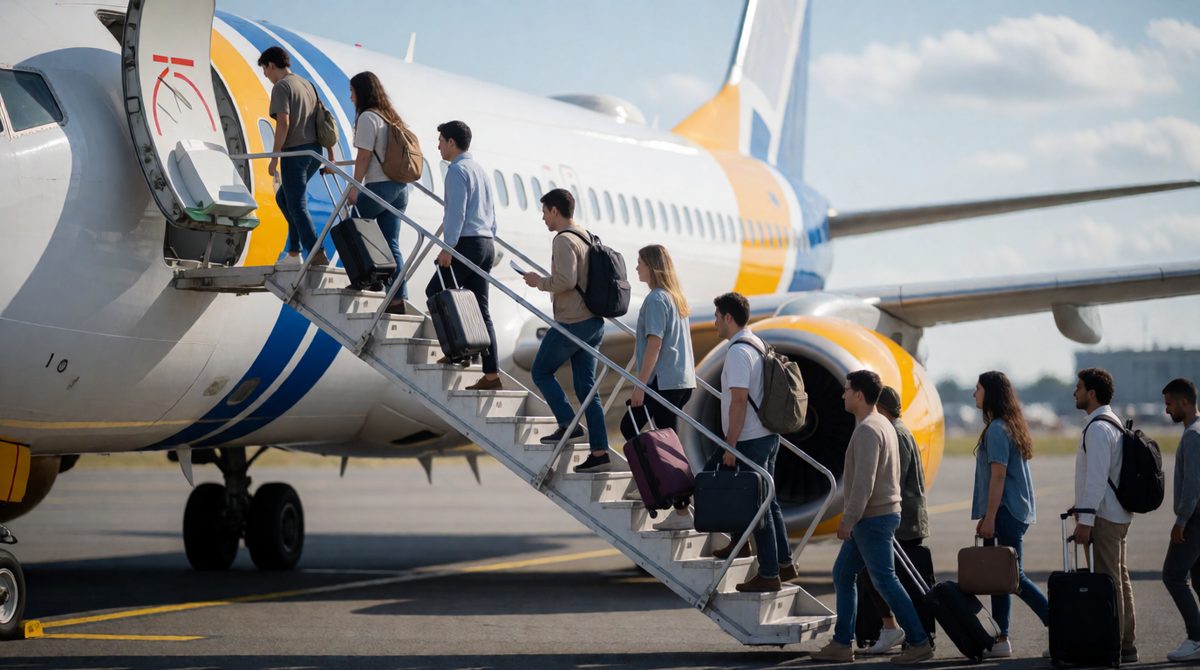
Low-cost airlines changed how people travel
Low-cost airlines (also called budget airlines or no-frills carriers) changed the face of air travel in Europe and beyond. Their whole business model is built around one idea: keep costs as low as possible and pass the savings on to passengers through cheap fares.
The Low-Cost Business Model
Low-cost airlines cut costs in clever ways. They use secondary airports (e.g. Stansted instead of Heathrow) where landing fees are cheaper. They fly one type of aircraft to reduce maintenance costs. They charge extra for everything hold luggage, seat selection, food, priority boarding. They turn planes around quickly so aircraft spend more time in the air earning money.
💷 How They Keep Prices Low
- Use cheaper, less busy airports
- Charge for extras (bags, food, seat choice)
- Online check-in only no paper tickets
- Fast turnaround times (sometimes under 25 minutes)
- Single aircraft type (e.g. all Boeing 737s)
- High seat density more seats per plane
- Sell advertising space on the plane itself
👥 Who Uses Low-Cost Airlines?
- Young travellers and backpackers
- City-break tourists
- Families looking for cheap holidays
- Visiting friends and relatives (VFR travel)
- Increasingly, business travellers on short trips
- People who want flexibility to book independently
🔍 Case Study: Ryanair
Ryanair is Europe's largest low-cost airline by passenger numbers, carrying over 150 million passengers per year (pre-pandemic). Founded in Ireland in 1984, it transformed European air travel by offering extremely cheap fares sometimes as low as £9.99. Ryanair flies to over 200 destinations across Europe and North Africa, mainly using secondary airports (e.g. Frankfurt Hahn instead of Frankfurt Main). Its business model is famously strict: passengers pay for every extra, from hold luggage to printing a boarding pass at the airport. Despite its no-frills reputation, Ryanair has one of the best on-time performance records in Europe. Its success inspired many other low-cost carriers worldwide.
🔍 Case Study: easyJet
easyJet is the UK's largest low-cost airline, founded in 1995 by Sir Stelios Haji-Ioannou. Unlike Ryanair, easyJet often uses primary airports (like Gatwick, Amsterdam Schiphol and Paris CDG), which makes it more convenient for passengers even if slightly pricier. easyJet carries around 90 million passengers per year and is popular for city breaks to destinations like Amsterdam, Barcelona and Rome. It has also targeted business travellers with its "easyJet Plus" membership scheme offering extra flexibility.
🌎 Long-Haul Airlines
Long-haul flights are flights that cover long distances typically over 6 hours in duration, connecting continents. Examples include flights from the UK to the USA, Australia, Japan, or South Africa. Long-haul travel has opened up the world for tourists and is a key part of international tourism.
What Makes Long-Haul Different?
Long-haul airlines need to invest in large, fuel-efficient aircraft like the Boeing 777, Boeing 787 Dreamliner, or Airbus A380. Passengers spend many hours on board, so comfort, entertainment and service become much more important than on a short 2-hour flight. Airlines compete hard on the quality of their long-haul product.
📶 In-Flight Experience
Long-haul flights offer personal entertainment screens, meals, blankets and pillows and often multiple cabin classes. Premium cabins may include lie-flat beds and gourmet dining.
🏠 Hub Airports
Long-haul airlines rely on major hub airports like Dubai (Emirates), Singapore (Singapore Airlines), London Heathrow (BA) and Frankfurt (Lufthansa) to connect passengers from many origins to many destinations.
💳 Cost
Long-haul flights are significantly more expensive than short-haul, due to fuel costs, aircraft size and longer crew hours. However, prices have fallen in real terms over the past 30 years.
🔍 Case Study: Emirates Airlines
Emirates, based in Dubai (UAE), is one of the world's most successful long-haul airlines. Founded in 1985 with just two aircraft, it now operates one of the world's largest fleets, including over 100 Airbus A380 superjumbos. Emirates flies to over 150 destinations in 80+ countries and is famous for its high-quality service its Business and First Class cabins are considered among the best in the world. Dubai's location makes it a perfect hub connecting Europe, Asia, Africa and Australia. Emirates has helped transform Dubai into a major global tourism destination, with millions of passengers stopping over or visiting the city each year.
📊 Comparing the Four Types
It's really important for your exam that you can compare these four types clearly. Here's a summary to help you:
📋 Key Comparisons at a Glance
- Scheduled: Fixed timetable, full service, flexible booking, suits business & leisure
- Charter: Hired by tour operators, seasonal, cheap, mainly leisure/package holidays
- Low-cost: No-frills, very cheap base fares, extras charged, short to medium haul
- Long-haul: Long distances (6+ hours), multiple cabin classes, high quality service, connects continents
👤 Passenger Appeal
- Scheduled: Business travellers, independent travellers wanting flexibility
- Charter: Package holiday families, sun-seekers, cost-conscious tourists
- Low-cost: Young travellers, city-breakers, budget-conscious passengers
- Long-haul: Holiday travellers to far-away destinations, business travellers, VFR travellers
🌎 The Impact of Air Transport on Tourism
Air transport hasn't just changed how we travel it has transformed entire economies and destinations. Here are some of the key impacts:
💰 Economic Benefits
Air transport creates jobs directly (pilots, cabin crew, ground staff) and indirectly (hotels, restaurants, tour operators). Countries with good air links attract more tourists and foreign investment.
🌿 Environmental Concerns
Aircraft produce CO₂ and other greenhouse gases. Aviation accounts for around 2–3% of global CO₂ emissions. This is a growing concern as tourism expands. Airlines are investing in more fuel-efficient aircraft and sustainable aviation fuels (SAF).
🏠 Destination Development
Low-cost airlines have opened up new destinations cities like Krakow, Riga and Porto have boomed as tourist destinations partly because budget airlines started flying there. New airports and expanded terminals follow tourist demand.
💡 Exam Tip: Know Your Airline Types!
In your iGCSE exam, you may be asked to describe a type of airline, explain its appeal to tourists, or compare two types. Make sure you can give real examples (e.g. Ryanair for low-cost, Emirates for long-haul, TUI for charter, British Airways for scheduled). Always try to link your answer to why a particular type of traveller would choose that airline think about cost, flexibility, comfort and convenience.