🚉 Introduction to Rail Transport in Tourism
Rail transport has been moving tourists around the world for nearly 200 years. From the very first steam trains in the 1800s to today's high-speed bullet trains, rail has always played a huge role in tourism. Whether it's a commuter tram in Lisbon, a sleek underground in Tokyo, or a glamorous luxury train crossing the Swiss Alps rail transport offers something for every type of traveller.
For the iGCSE exam, you need to understand the different types of rail transport, who uses them and why they appeal to tourists. You also need to be able to give real examples and explain the impacts of rail travel on tourism destinations.
Key Definitions:
- Rail transport: Any form of transport that runs on tracks or rails, including trains, trams, underground systems and monorails.
- High-speed rail: Train services that travel at speeds above 200 km/h, significantly reducing journey times between cities.
- Tram: A light rail vehicle that runs on tracks laid into city streets, used mainly for short urban journeys.
- Underground/Metro: A rail network that runs beneath a city, used to move large numbers of people quickly through urban areas.
- Luxury rail service: A premium train experience offering high-end food, accommodation and scenery, often marketed as a tourist attraction in itself.
💡 Did You Know?
The world's first passenger railway opened in 1825 in England the Stockton and Darlington Railway. By the late 1800s, rail travel had completely transformed tourism, allowing ordinary people to travel to seaside resorts and cities for the first time.
🚉 Types of Rail Transport in Tourism
Rail transport in tourism is not just one thing. There are several very different types, each with its own purpose, appeal and type of tourist. Let's break them down.
🚉 Intercity and National Trains
These are trains that connect cities and regions within a country. They are used by both business and leisure tourists. Examples include the UK's National Rail network, France's TGV and Germany's ICE trains. They are fast, reliable and often more comfortable than coaches.
⚡ High-Speed Rail
High-speed trains travel at over 200 km/h and have made rail a serious competitor to short-haul flights. Japan's Shinkansen (bullet train) and France's TGV are famous examples. They connect major cities quickly and efficiently, making day trips and city breaks much easier for tourists.
🚊 Trams and Light Rail
Trams run on tracks set into city streets. They are popular in tourist cities like Lisbon, Amsterdam and Melbourne. Trams are often a tourist attraction themselves Lisbon's famous yellow Tram 28 is one of the most photographed sights in Portugal.
⬇ Underground / Metro Systems
Underground rail systems run beneath cities and are essential for moving tourists around large urban areas. London's Tube, the Paris Métro and the New York Subway are iconic examples. They are fast, affordable and help tourists explore cities without needing a car or taxi.
⭐ Luxury and Scenic Rail Services
Some trains are not just a way to get from A to B they are the holiday itself. Luxury rail services offer fine dining, private cabins, stunning scenery and a sense of old-world glamour. These services attract high-spending tourists who want a unique and memorable experience.
🌟 Orient Express
Perhaps the world's most famous luxury train. The Venice Simplon-Orient-Express runs from London to Venice, passing through Paris and the Swiss Alps. Tickets can cost over £3,000 per person. It is marketed as a once-in-a-lifetime experience.
🏔 Glacier Express
Running through the Swiss Alps between Zermatt and St. Moritz, the Glacier Express is known as "the slowest express train in the world." The 8-hour journey passes through 91 tunnels and over 291 bridges. It is a major tourist attraction in Switzerland.
🇮🇳 Maharajas' Express
India's most luxurious train, the Maharajas' Express, takes tourists on week-long journeys across Rajasthan and other iconic Indian regions. It features restaurant cars, a bar lounge and beautifully decorated cabins. It is one of the world's leading luxury train experiences.
🔍 Case Study: Eurostar London to Paris
What is it? The Eurostar is a high-speed passenger train service that runs through the Channel Tunnel, connecting London St Pancras with Paris Gare du Nord and Brussels.
Journey time: London to Paris takes just 2 hours 16 minutes faster than flying when you include check-in and airport travel time.
Why tourists use it: It is fast, comfortable and city-centre to city-centre. Passengers arrive at central stations rather than out-of-town airports. It also has a much lower carbon footprint than flying Eurostar claims its journeys produce around 90% less CO₂ than the equivalent short-haul flight.
Tourism impact: The Eurostar has massively boosted tourism between the UK and France. Since it opened in 1994, it has carried over 200 million passengers. It has made Paris a realistic destination for a weekend break from London.
Limitations: Services were disrupted after Brexit due to passport control changes. Flooding in the Channel Tunnel has also caused cancellations. It only connects a limited number of destinations.
🔍 Case Study: The London Underground The World's First Metro
The London Underground, affectionately known as "the Tube," opened in 1863, making it the world's oldest underground railway. Today it has 11 lines, 272 stations and carries around 1.35 billion passengers per year (pre-pandemic figures).
Why the Tube Matters for Tourism
For tourists visiting London, the Underground is the most practical and affordable way to get around. It connects all the major attractions from the British Museum to Buckingham Palace, from Heathrow Airport to the West End theatres.
👍 Benefits for Tourists
- Connects Heathrow Airport directly to central London
- Affordable with the Oyster card or contactless payment
- Runs frequently trains every 2–5 minutes on busy lines
- Covers all major tourist areas
- The iconic Tube map is recognised worldwide
👎 Challenges for Tourists
- Can be very crowded, especially at rush hour
- Some older stations have no lifts difficult for those with luggage or disabilities
- The network can be confusing for first-time visitors
- No air conditioning on older lines (the Central line can reach 30°C in summer)
- Expensive compared to metros in other European cities
🚊 Trams Slow, Charming and Loved by Tourists
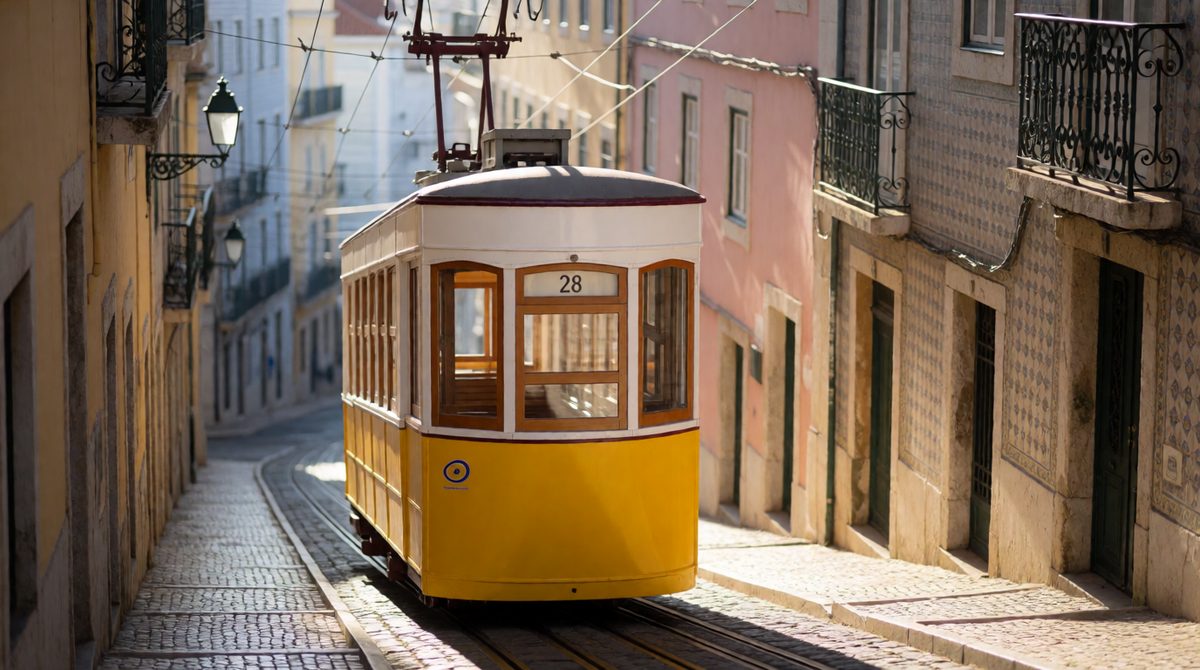
Trams are popular with tourists
Trams are one of the most tourist-friendly forms of urban transport. They are slower than underground systems but offer something the Tube cannot you can see the city as you travel through it. Many tram systems have become tourist attractions in their own right.
🔍 Case Study: Lisbon Tram 28, Portugal
Lisbon's Tram 28 is one of the most famous tram routes in the world. It winds through the narrow, hilly streets of the Alfama district, passing historic churches, viewpoints and colourful buildings. The bright yellow vintage trams have become a symbol of Lisbon and appear on countless postcards and social media posts.
Tourist appeal: The tram is cheap (around €3 per journey), authentic and gives tourists a real feel for the city's historic neighbourhoods. It is a sightseeing experience as much as a transport option.
Problem: It has become so popular with tourists that locals struggle to use it for their daily commute. Pickpocketing on the tram is also a known issue due to the crowded conditions.
Other Notable Tram Systems
🇦🇺 Melbourne, Australia
Melbourne has the largest tram network in the world outside of Europe, with 250 km of track. The City Circle tram is free for tourists and loops around the CBD, stopping at major attractions. It is a key part of Melbourne's tourism offer.
🇨🇭 Hong Kong Trams
Hong Kong's double-decker trams, known as "Ding Dings" (after the sound of their bell), have run since 1904. They travel along the northern shore of Hong Kong Island and are one of the cheapest and most enjoyable ways to see the city. A journey costs just HK$3 (about 30p).
🇳🇱 Amsterdam, Netherlands
Amsterdam's tram network is central to how tourists get around the city. With 16 lines covering the whole city, trams connect the Rijksmuseum, Anne Frank House and the canal districts. The GVB day ticket is popular with tourists and allows unlimited travel.
📊 The Appeal of Rail Transport to Tourists
Why do tourists choose rail over other forms of transport? There are many reasons and they vary depending on the type of rail service.
👍 Advantages of Rail Transport for Tourists
- Speed: High-speed trains like the Shinkansen or TGV can compete with short-haul flights, especially city-centre to city-centre.
- Comfort: Trains generally offer more space than planes or coaches. Passengers can walk around, visit a dining car and enjoy the view.
- Scenery: Rail journeys often pass through beautiful landscapes. The Glacier Express, the West Highland Line in Scotland and the Rocky Mountaineer in Canada are all famous for their stunning views.
- Environmental credentials: Rail produces far less CO₂ per passenger than flying or driving. As tourists become more eco-conscious, this is increasingly important.
- City-centre access: Unlike airports, train stations are usually in the heart of cities, saving tourists time and money on transfers.
- Reliability: Rail is generally less affected by weather than air transport.
- Affordability: Budget rail options (e.g., Interrail passes in Europe) allow tourists to travel across multiple countries cheaply.
👎 Disadvantages of Rail Transport for Tourists
- Limited routes: Trains can only go where tracks exist. Remote destinations are often not accessible by rail.
- Cost: Luxury services and some intercity routes can be expensive, especially if booked last minute.
- Speed over long distances: For very long distances (e.g., London to Sydney), rail is simply not an option air travel is the only realistic choice.
- Strikes and disruption: Rail networks are vulnerable to industrial action. The UK saw significant rail strikes in 2022–2023 which disrupted tourist travel.
- Luggage: Unlike cars, trains have limited luggage space, which can be inconvenient for tourists on longer holidays.
🔍 Case Study: Japan's Shinkansen Tourism by Bullet Train
What is it? Japan's Shinkansen (bullet train) network has been running since 1964. Trains travel at up to 320 km/h and connect major cities including Tokyo, Osaka, Kyoto and Hiroshima.
Why tourists love it: The Shinkansen is famous for its punctuality (average delay is under 1 minute), cleanliness, comfort and speed. It allows tourists to visit multiple Japanese cities in a single trip for example, Tokyo to Kyoto in just 2 hours 15 minutes.
The JR Pass: Foreign tourists can buy a Japan Rail Pass before arriving in Japan, which gives unlimited travel on most Shinkansen and JR trains for 7, 14, or 21 days. This has made rail travel the backbone of tourism in Japan.
Tourism impact: The Shinkansen has opened up regional Japan to tourists who might otherwise only visit Tokyo. Cities like Kanazawa and Nagasaki have seen tourism grow significantly since being connected to the network.
🌎 The Impact of Rail Transport on Tourism Destinations
Rail transport doesn't just move tourists it shapes where they go and how destinations develop. The arrival of a new rail link can transform a destination's fortunes.
🟢 Positive Impacts
- Increases visitor numbers to destinations on the rail network
- Creates jobs in rail and tourism industries
- Reduces road congestion and air pollution in tourist areas
- Encourages spread of tourism to less-visited regions
- Lower carbon emissions compared to air and road travel
- Iconic rail routes become tourist attractions themselves (e.g., Glacier Express)
🔴 Negative Impacts
- Can lead to overtourism in destinations that become easily accessible
- Construction of rail lines can damage landscapes and habitats
- Noise pollution near rail lines affects local residents
- Popular routes can become overcrowded (e.g., Tram 28 in Lisbon)
- High infrastructure costs may mean fares are expensive for local people
🔍 Case Study: HS2 and Tourism in the UK
HS2 (High Speed 2) is a controversial high-speed rail project in the UK, originally planned to connect London with Birmingham, Manchester and Leeds. Supporters argued it would boost tourism and business travel in the Midlands and North of England by cutting journey times significantly. Critics pointed to the enormous cost (estimated at over £100 billion) and environmental damage caused by construction through countryside and ancient woodlands. In 2023, the government cancelled the northern legs of the project, limiting its tourism impact. This case study shows that rail development is never straightforward there are always trade-offs.
📋 Exam Tips: Rail Transport
✍ Know Your Types
Be able to name and describe at least four types of rail transport: intercity trains, high-speed rail, trams, underground systems and luxury/scenic services. Give a real example for each.
🔍 Use Case Studies
The examiner loves specific examples. Learn the Eurostar, Shinkansen, London Underground, Lisbon Tram 28 and the Orient Express. Know key facts speeds, journey times and why tourists use them.
⚖ Impacts Questions
If asked about impacts, always give both positive AND negative impacts. Use the words "however" and "on the other hand" to show balance. This is what examiners look for in higher-mark answers.
💡 Key Things to Remember
- Rail transport includes trains, trams, underground systems, high-speed rail and luxury scenic services
- High-speed rail (e.g., Shinkansen, TGV, Eurostar) competes with short-haul flights for city-to-city travel
- Trams are popular in tourist cities and can become tourist attractions themselves (Lisbon Tram 28)
- Underground systems (e.g., London Tube, Paris Métro) help tourists navigate large cities affordably
- Luxury rail services (Orient Express, Glacier Express) are marketed as experiences, not just transport
- Rail is generally more environmentally friendly than air or road transport
- Rail development can boost regional tourism but may also cause overtourism and environmental damage
✍ Exam Command Words
- Describe: Say what something is like give facts and details.
- Explain: Give reasons say why something happens.
- Assess / Evaluate: Weigh up the good and bad points and reach a conclusion.
- Compare: Look at similarities AND differences between two things.
📚 Quick Recap Rail Transport in Tourism
- 🚉 Rail transport has been central to tourism for nearly 200 years
- ⚡ High-speed trains like the Shinkansen and Eurostar have revolutionised city-to-city travel
- 🚊 Trams offer a charming, scenic way to explore tourist cities
- ⬇ Underground systems are essential infrastructure for urban tourism
- ⭐ Luxury trains like the Orient Express turn the journey into the destination
- 🌿 Rail is the most eco-friendly mass transport option available to tourists
- 📈 Rail investment can transform regional tourism but brings challenges too