✈ Comparing Transport Types and Their Appeal to Tourists
You've now studied road, rail, water and air transport separately. This session brings it all together. The big question in the exam is: why do tourists choose one type of transport over another? The answer depends on lots of factors cost, speed, comfort, convenience, the type of holiday and even the experience itself.
Understanding how to compare transport types is a really important exam skill. You need to be able to explain why a backpacker might choose a coach over a plane, or why a luxury traveller picks a cruise over a ferry. It's not just about listing facts it's about making connections.
Key Definitions:
- Appeal: The features of a transport type that attract tourists to use it.
- Accessibility: How easy it is for people (including those with disabilities) to use a transport type.
- Modal choice: The decision a traveller makes about which type of transport to use.
- Transit time: The total time spent travelling from origin to destination.
- Value for money: Whether the cost of transport feels worth it compared to what you get.
📊 The Four Key Factors That Drive Transport Choice
When tourists decide how to travel, they weigh up four main things. These factors apply to every transport type and every type of tourist.
💰 Cost
Budget is often the deciding factor. A student travelling around Europe on a gap year will look for the cheapest option often a budget airline or coach. A family on a package holiday may have already paid for flights as part of a deal. A business traveller might not care about cost at all if their company is paying. Cost includes the ticket price and hidden extras like baggage fees, transfers and parking.
⏩ Speed
Time matters to tourists. A long-haul flight to Australia takes around 22 hours but driving would be impossible. Japan's Shinkansen bullet train can get tourists from Tokyo to Osaka in 2.5 hours faster than flying once you include airport check-in time. Speed is especially important for business tourists and those with limited holiday time. Leisure tourists may not mind slower travel if the journey itself is enjoyable.
👴 Comfort and Experience
Some tourists want the journey to be part of the holiday. A cruise ship offers restaurants, pools, entertainment and sightseeing all in one. A scenic train through the Swiss Alps is an attraction in itself. Others just want to get from A to B as quickly and cheaply as possible comfort is secondary. The type of tourist (mass market, independent, luxury, adventure) strongly influences this.
📍 Convenience and Accessibility
How easy is the transport to use? Does it go where you need to go? Is it accessible for elderly tourists or those with disabilities? A hire car gives total freedom but requires a driving licence. A hop-on hop-off bus is easy for anyone to use. Air travel requires airports, which are often far from city centres. Rail stations are usually central. Convenience can make or break a tourist's experience.
👥 Different Tourists, Different Choices
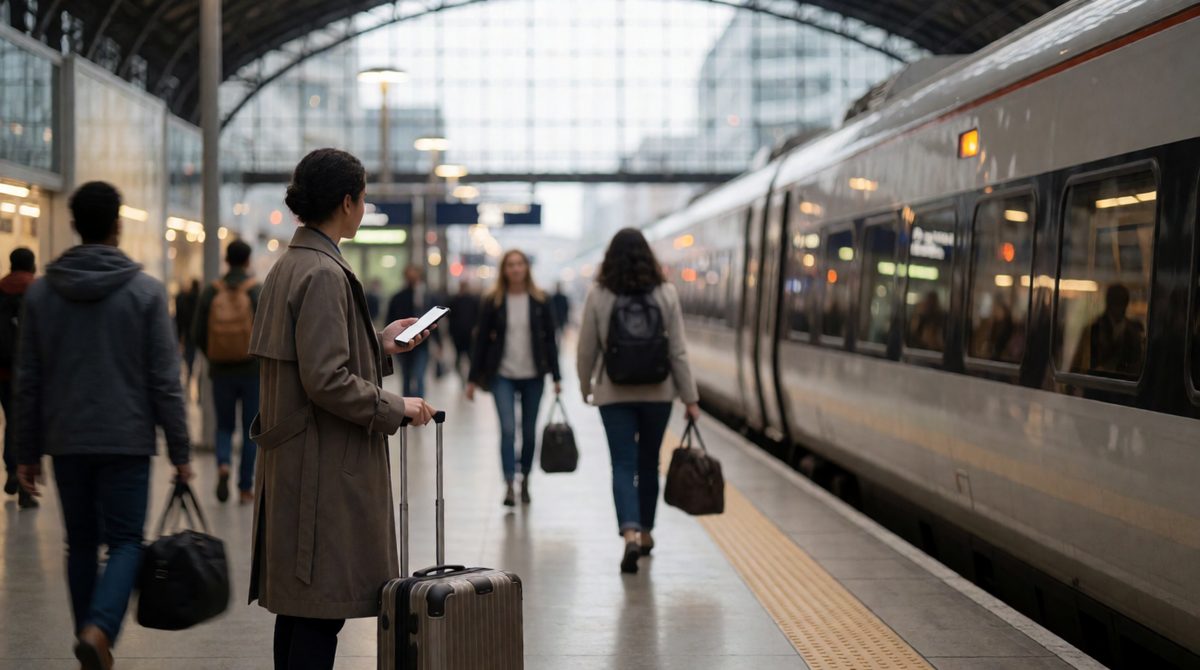
Different tourists choose different transport
Not all tourists are the same. The type of tourist has a huge influence on which transport they choose. Here's how different tourist types tend to travel:
🏫 Budget Travellers
Students, backpackers and young travellers on a tight budget often choose low-cost airlines (like Ryanair), coaches (like FlixBus) or local buses. They prioritise low cost over comfort or speed. They're happy to travel at odd hours or accept basic facilities to save money.
💼 Business Tourists
Business travellers need speed and reliability. They often choose scheduled airlines (like British Airways), high-speed trains (like Eurostar) or taxis. They value punctuality, Wi-Fi and comfort. Cost is less important their employer usually pays.
👑 Luxury Tourists
High-spending tourists choose first-class flights, luxury cruises, private car hire or scenic rail journeys. The journey is part of the experience. They want comfort, exclusivity and high-quality service. Cost is not a concern.
🌎 Family Tourists
Families often choose package holidays with charter flights, or hire a car for flexibility. They need space for luggage, child-friendly facilities and value for money. A hire car lets them travel at their own pace with young children.
🏃 Adventure Tourists
Adventure tourists may use a mix of transport flying to a destination, then using local buses, jeeps or boats to reach remote areas. They value access to unusual places over comfort. They often travel light and independently.
👴 Elderly and Less Mobile Tourists
Older tourists or those with mobility issues often prefer cruises, coach tours or rail travel all of which offer seating, assistance and guided itineraries. They may avoid hire cars or complex metro systems. Accessibility is a top priority.
📋 Side-by-Side Comparison: All Four Transport Types
This is the kind of comparison you need to be able to make in the exam. Study this carefully it brings together everything you've learned.
🚗 Road vs 🚉 Rail vs 🚢 Water vs ✈ Air
💡 Exam Tip
In the exam, you won't just be asked to describe transport types you'll be asked to compare them. Use words like "whereas", "however", "in contrast" and "on the other hand" to show you're making a proper comparison. Always link back to the type of tourist or destination.
Speed Comparison
Air transport is by far the fastest for long distances. A flight from London to New York takes about 7 hours. By ship (the QM2 ocean liner), the same journey takes 7 days. Rail is fastest for medium distances Eurostar gets you from London to Paris in just over 2 hours, which is quicker than flying once you factor in airport time. Road is slowest for long distances but most flexible for short trips.
Cost Comparison
Road transport (especially local buses and coaches) is generally the cheapest. A FlixBus from London to Paris can cost as little as £10. Budget airlines can also be very cheap Ryanair flights sometimes cost less than £20. However, hidden costs (baggage, transfers, car parking) can add up. Rail can be expensive, especially in the UK. Cruises and long-haul flights are the most expensive overall, though they offer the most inclusive experience.
Environmental Impact
This is increasingly important to tourists. Air travel produces the most carbon emissions per passenger. A return flight from London to New York produces around 1.7 tonnes of CO₂ per passenger. Coaches and trains are much greener. A Eurostar journey produces around 90% less CO₂ than the equivalent flight. Cruises are also high polluters large ships can produce as much pollution as thousands of cars. Ferries vary depending on size and fuel type.
🔍 Case Study: Choosing Transport for a Trip to Paris
Imagine three different tourists all want to travel from London to Paris:
- Student on a budget: Takes a FlixBus coach via the Channel Tunnel total cost around £15, journey time about 8 hours. Slow but very cheap.
- Business traveller: Takes the Eurostar cost around £150–£200, journey time 2 hours 15 minutes, arrives in central Paris. Fast, comfortable, central.
- Luxury tourist: Flies business class from Heathrow to Charles de Gaulle cost £400+, but enjoys lounge access, premium seating and a fast journey. Values comfort and status.
Same destination, three completely different transport choices all based on budget, time and the type of experience wanted.
🌎 How Destination Type Affects Transport Choice
The destination itself plays a huge role in which transport tourists use. Some places are only reachable by certain types of transport.
🏖 Remote and Island Destinations
Places like the Maldives, Caribbean islands or the Galapagos can only be reached by air or water. Tourists fly in and then use local boats or ferries to reach their final destination. There's no road or rail option. This makes air and water transport essential not optional.
🏛 City Destinations
Cities like London, Paris, Tokyo and New York have excellent public transport networks metro systems, buses, trams and taxis. Tourists don't need a hire car and often find driving stressful and expensive. Rail and road public transport dominate in cities. Air travel gets tourists to the city, but local transport takes over once they arrive.
🏔 Rural and Countryside Destinations
Areas like the Scottish Highlands, the Australian Outback or rural Tuscany have limited public transport. Hire cars or camper vans are often the only practical option. This gives tourists freedom to explore at their own pace, but it can also cause traffic problems in sensitive areas (like the Lake District).
🚢 Coastal and River Destinations
Destinations like Venice, the Norwegian Fjords or the Amazon River rely heavily on water transport. In Venice, there are no roads vaporetti (water buses) and gondolas are the only way to get around. The Norwegian Fjords are best explored by cruise ship or ferry. Water transport isn't just practical here it's part of the attraction.
📈 Trends Shaping Transport Choices in Tourism
Transport in tourism isn't static it changes over time. Several key trends are currently shaping how tourists travel.
🌿 Sustainable Tourism and Green Travel
More tourists especially younger ones are becoming aware of their carbon footprint. The term "flight shame" (or flygskam in Swedish) describes the guilt some people feel about flying. This has led to a rise in rail travel across Europe, with more tourists choosing the train over the plane for medium-distance journeys. Rail operators like Eurostar and SNCF (France's national rail) have seen increased demand as a result.
💡 Did You Know?
The number of people travelling by train in Europe increased by over 9% between 2021 and 2023, partly driven by environmental awareness and partly by rising flight costs. Countries like France have even banned short domestic flights where a train journey of under 2.5 hours is available.
📱 Technology and the Digital Traveller
Apps like Uber, Bolt and Citymapper have transformed how tourists navigate cities. Real-time transport information, e-tickets and contactless payment make public transport much easier to use even in a foreign country. This has made local buses and metro systems more appealing to independent tourists who might previously have relied on taxis or hire cars.
💪 The Rise of the Experience Economy
Tourists increasingly want the journey to be part of the experience, not just a means to an end. This explains the growth in scenic rail journeys (like the Glacier Express in Switzerland), luxury cruises and even hot air balloon tours. Transport has become a tourism product in its own right not just a way of getting somewhere.
📋 Exam Technique: Comparing Transport Types
In the iGCSE exam, you may be asked to compare transport types or evaluate which is most suitable for a particular tourist or destination. Here's how to structure your answer:
1️⃣ Identify the Context
Who is the tourist? What is the destination? What is the purpose of travel? Always read the question carefully and tailor your answer to the specific scenario given.
2️⃣ Compare at Least Two Types
Don't just describe one transport type. Compare two or more using factors like cost, speed, comfort and accessibility. Use linking words: "whereas", "however", "in contrast", "on the other hand".
3️⃣ Use Named Examples
Always back up your points with real examples Ryanair, Eurostar, Royal Caribbean, Uber. Named examples show the examiner you have genuine knowledge, not just vague generalisations.
✍ Key Exam Command Words
- Compare: Identify similarities AND differences between transport types.
- Evaluate: Weigh up the advantages and disadvantages and reach a conclusion.
- Explain: Give reasons don't just state facts, say WHY.
- Suggest: Give a reasoned recommendation there's no single right answer, but you must justify your choice.
- Assess: Consider different viewpoints and make a judgement.
💡 Key Things to Remember
- No single transport type is "best" it always depends on the tourist, destination and purpose of travel.
- Cost, speed, comfort and convenience are the four main factors driving transport choice.
- Different tourist types (budget, business, luxury, family, elderly) have very different transport needs.
- Some destinations can only be reached by certain transport types this limits tourist choice.
- Environmental concerns are increasingly influencing transport decisions, especially among younger tourists.
- Technology (apps, e-tickets, real-time data) is making public transport easier and more appealing to tourists.
- The journey itself can be a tourist attraction scenic trains, cruises and gondola rides are all examples.
- In the exam, always compare transport types using specific examples and linking language.
📚 Quick Recap Comparing Transport Types
Summary Table
- Air: Fastest for long distances, high emissions, suits business and long-haul tourists.
- Rail: Fast for medium distances, low emissions, suits city-to-city and scenic travel.
- Road: Most flexible, cheapest (coach/bus), suits budget travellers and rural exploration.
- Water: Slowest but most experiential, suits island destinations and luxury/cruise tourists.
- Key factors: Cost 💰 | Speed ⏩ | Comfort 👴 | Convenience 📍 | Environment 🌿
- Key trend: Tourists are increasingly choosing greener, more experiential transport options.