🌎 Introduction: Why Do Transport Emissions Matter?
Every time you hop on a plane, cruise ship, or car, fuel is burned and gases are released into the atmosphere. These gases especially carbon dioxide (CO₂) trap heat around the Earth and contribute to climate change. Tourism is one of the world's biggest industries and transport is responsible for around 8% of global greenhouse gas emissions. That's a huge amount and it's growing every year as more people travel.
Sustainable development in transport means finding ways to move people around the world while causing as little damage to the environment as possible. This is one of the most urgent challenges facing the travel and tourism industry today.
Key Definitions:
- Sustainable Development: Meeting the needs of today's travellers without damaging the environment or resources for future generations.
- Carbon Emissions: Greenhouse gases (mainly CO₂) released when fossil fuels like petrol, diesel, or aviation fuel are burned.
- Carbon Footprint: The total amount of greenhouse gases produced by a person, organisation, or activity.
- Low-Emission Transport: Vehicles or transport systems that produce significantly less pollution than traditional options.
- Zero-Emission Transport: Transport that produces no direct emissions at all such as electric vehicles or hydrogen-powered trains.
- Carbon Offsetting: Compensating for emissions by funding projects that reduce CO₂ elsewhere, such as planting trees.
- Decarbonisation: The process of reducing or eliminating carbon emissions from an industry or economy.
✈ Aviation Emissions
Aviation accounts for roughly 2.5% of global CO₂ emissions, but its total climate impact is much higher when you include contrails and other effects at altitude. A single long-haul flight can produce more CO₂ per passenger than months of driving. The International Air Transport Association (IATA) has pledged to reach net zero carbon emissions by 2050.
🚢 Road Transport Emissions
Cars, coaches and taxis used by tourists are a major source of local pollution, especially in popular destinations. Road transport globally produces around 16% of all greenhouse gas emissions. Switching to electric vehicles (EVs) and hybrid cars is one of the fastest-growing solutions in tourism transport.
🚢 Types of Low and Zero Emission Transport
The good news is that the transport industry is changing fast. New technologies and smarter planning are making it possible to travel with a much smaller environmental impact. Let's look at the main options.
⚡ Electric Vehicles (EVs)
Electric cars, buses and taxis produce zero direct emissions they run on batteries charged by electricity rather than burning petrol or diesel. Many tourist destinations are now introducing electric shuttle buses, taxis and rental cars. For example, the island of Zermatt in Switzerland bans all petrol and diesel vehicles only electric cars and horse-drawn carriages are allowed in the town. This keeps the air clean and protects the stunning Alpine environment that tourists come to see.
✅ Benefits
No exhaust fumes, quieter operation, lower running costs and can be powered by renewable energy sources like wind or solar.
❌ Challenges
Batteries need charging infrastructure, range can be limited and if electricity comes from coal power stations, emissions are just moved rather than eliminated.
🌎 Tourism Example
Electric golf buggies are widely used in eco-resorts and national parks to move tourists around without disturbing wildlife or polluting the air.
👄 Hydrogen-Powered Transport
Hydrogen fuel cells generate electricity by combining hydrogen and oxygen the only by-product is water vapour. This makes hydrogen a very exciting option for zero-emission transport. Hydrogen trains are already running in Germany (the Coradia iLint by Alstom) and hydrogen-powered aircraft are being developed. However, producing clean hydrogen is still expensive and requires significant energy.
🔍 Case Study: Alstom Coradia iLint Germany's Hydrogen Train
In 2022, Germany launched the world's first fleet of hydrogen-powered passenger trains on a regional line in Lower Saxony. The trains replaced old diesel locomotives and produce zero direct emissions only water vapour comes out of the exhaust. Each train can travel up to 1,000 km on a single tank of hydrogen. This is a landmark example of how rail transport can be decarbonised and several other European countries are now planning similar projects.
✈ Sustainable Aviation: Can Flying Go Green?
Flying is one of the hardest transport types to decarbonise because aircraft need enormous amounts of energy. But the aviation industry is working hard on several solutions.
🌿 Sustainable Aviation Fuel (SAF)
SAF is made from renewable sources such as waste cooking oil, agricultural residues, or even captured CO₂. It can be used in existing aircraft engines with little or no modification. SAF can reduce lifecycle carbon emissions by up to 80% compared to conventional jet fuel. Airlines like British Airways and KLM are already using SAF on some flights and the UK government has set a target for SAF to make up 10% of jet fuel by 2030.
🔌 More Efficient Aircraft Design
Modern aircraft like the Airbus A320neo and Boeing 787 Dreamliner use up to 20–25% less fuel than older models. Lighter materials, better aerodynamics and more efficient engines all help to cut emissions. Airlines are also improving how they manage flights for example, flying at optimal altitudes and speeds and reducing time spent idling on the ground.
🌿 Carbon Offsetting in Aviation
Many airlines offer passengers the chance to offset their flight emissions by paying a small extra fee. This money funds projects like reforestation, renewable energy, or methane capture. For example, easyJet previously offset 100% of its flights' carbon emissions. However, critics argue that offsetting is not a long-term solution it's better to actually reduce emissions in the first place.
📈 CORSIA Agreement
The Carbon Offsetting and Reduction Scheme for International Aviation (CORSIA) is a global agreement managed by the International Civil Aviation Organization (ICAO). Airlines must monitor and offset any growth in their CO₂ emissions above 2019 levels. It covers international flights and is a key part of the industry's plan to limit its climate impact.
🚛 Rail: The Greenest Way to Travel Long Distance?
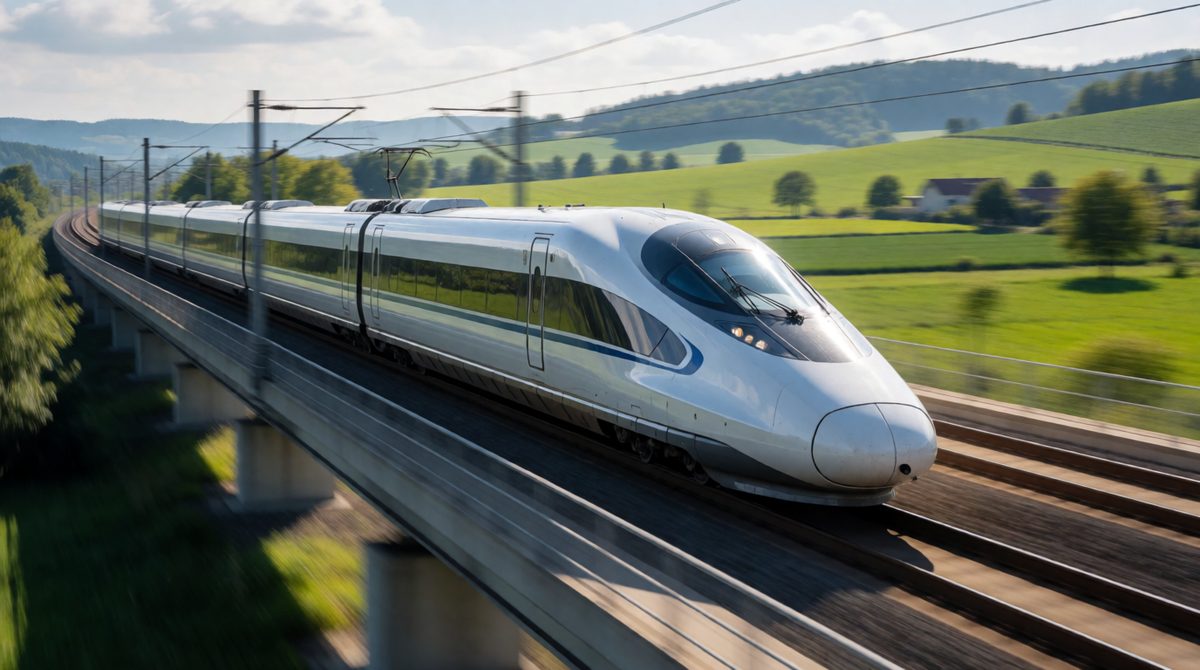
Rail is a greener way to travel
Rail travel is already one of the most environmentally friendly ways to travel. Trains produce far fewer emissions per passenger than planes or cars, especially when powered by electricity from renewable sources. High-speed rail networks in Europe and Asia are actively encouraging people to switch from short-haul flights to trains.
🔍 Case Study: Eurostar Low-Carbon Travel Between the UK and Europe
The Eurostar high-speed train connects London with Paris, Brussels and Amsterdam through the Channel Tunnel. Eurostar claims its trains produce up to 95% less CO₂ per passenger than the equivalent short-haul flight. The trains run on electricity and Eurostar has committed to sourcing 100% renewable electricity. In 2023, France introduced a law banning short-haul domestic flights where a train journey of under 2.5 hours is available a major policy step to shift passengers from planes to trains.
🚢 Sustainable Road Transport in Tourism
Road transport is vital in tourism getting tourists from airports to hotels, on excursions and around cities. Making this greener is a big priority.
🚌 Electric and Hybrid Coaches and Buses
Tour operators and transfer companies are increasingly switching to electric or hybrid coaches. These produce fewer emissions and are quieter, which is especially important in sensitive natural environments. Amsterdam has introduced fully electric ferries and is expanding its electric bus fleet to reduce pollution in the city centre. Many ski resorts in the Alps now run free electric shuttle buses to reduce the number of private cars on mountain roads.
🚲 Active Travel: Walking and Cycling
The most sustainable transport of all produces zero emissions walking and cycling! Many tourist destinations are investing in cycling infrastructure to encourage visitors to explore without using motorised transport. Copenhagen, Denmark is famous for its cycling culture and the city actively promotes cycling tourism. Bike-sharing schemes in cities like Paris (Vélib') and London (Santander Cycles) make it easy for tourists to get around sustainably.
🔍 Case Study: Amsterdam's Sustainable Transport Strategy
Amsterdam is one of the world's leading cities for sustainable tourism transport. The city has invested heavily in cycling infrastructure, with over 800 km of cycle lanes. Electric trams and metro lines crisscross the city and the famous canal boats are being converted to run on electric engines. The city has also introduced zero-emission zones in the city centre, banning diesel vehicles. This approach has significantly reduced air pollution and made Amsterdam a model for sustainable urban tourism.
🚢 The Role of Cruise Ships
Cruise ships are among the most polluting forms of transport in tourism. A large cruise ship can produce as much air pollution as thousands of cars. However, the cruise industry is under increasing pressure to clean up its act.
- Liquefied Natural Gas (LNG): Some new cruise ships run on LNG, which produces significantly less sulphur dioxide and particulate matter than traditional heavy fuel oil.
- Shore Power (Cold Ironing): Ships plug into the local electricity grid while in port instead of running their engines, dramatically cutting emissions in harbour areas.
- Exhaust Gas Cleaning Systems (Scrubbers): These filter harmful pollutants from ship exhaust before they are released into the air.
- Hybrid and Electric Ferries: Norway has pioneered electric ferries on short routes. The MF Ampere, launched in 2015, was the world's first fully electric car ferry and has cut fuel costs and emissions by over 90%.
🌟 Government Policies and International Agreements
Individual companies can only do so much governments and international organisations play a crucial role in pushing the transport sector towards lower emissions.
🏭 Emission Zones
Many cities have introduced Ultra Low Emission Zones (ULEZ) or Low Emission Zones (LEZ) where only clean vehicles are allowed. London's ULEZ charges older, more polluting vehicles to enter the city centre, encouraging a switch to cleaner alternatives.
🌎 International Targets
The Paris Agreement (2015) set global targets to limit temperature rise to 1.5°C. The transport sector must decarbonise significantly to meet these targets. IATA's net zero 2050 pledge and the IMO's shipping emissions targets are key industry commitments.
📈 Fuel Taxes and Incentives
Governments use taxes on aviation fuel and subsidies for electric vehicles to change behaviour. Some countries offer tax breaks for sustainable aviation fuel production to make it more commercially attractive for airlines.
👤 What Can Tourists Do?
It's not just companies and governments individual tourists can make a real difference by making smarter choices about how they travel.
- ✅ Choose train over plane for shorter journeys where possible.
- ✅ Use public transport at your destination rather than hiring a car.
- ✅ Walk or cycle to explore local areas.
- ✅ Offset your flights through reputable schemes if flying is unavoidable.
- ✅ Choose airlines and tour operators with strong environmental policies.
- ✅ Stay longer in fewer destinations to reduce the number of flights you take.
- ✅ Pack light heavier aircraft use more fuel.
💡 Exam Tip: Evaluation Questions
In your iGCSE exam, you may be asked to evaluate the effectiveness of strategies to reduce transport emissions. Remember to consider both advantages and disadvantages. For example, SAF reduces emissions but is currently very expensive and not widely available. Electric vehicles are clean but depend on the electricity grid being powered by renewables. Always try to give a balanced answer with specific examples.
📋 Summary: Key Points to Remember
- Transport is a major source of greenhouse gas emissions and tourism contributes significantly to this.
- Low and zero emission transport options include electric vehicles, hydrogen trains and sustainable aviation fuel.
- Rail travel is generally the most environmentally friendly form of long-distance transport.
- The aviation industry is working towards net zero by 2050 through SAF, more efficient aircraft and carbon offsetting.
- Cruise ships are among the most polluting transport types, but LNG, shore power and electric ferries are helping.
- Governments use policies like emission zones, fuel taxes and international agreements to drive change.
- Individual tourists can reduce their carbon footprint by choosing greener transport options.
- Case studies to know: Zermatt (electric vehicles), Eurostar (low-carbon rail), Amsterdam (sustainable urban transport), Germany's hydrogen trains, Norway's electric ferries.