🌎 Why Tourist Choices Matter
Every time a tourist books a flight, chooses a hotel, or hires a car, they are making a decision that affects the environment. Tourism is one of the world's biggest industries and one of the biggest contributors to carbon emissions. The good news? Individual tourists have real power to make a difference. The choices millions of people make every day add up to something enormous.
This lesson is all about what tourists themselves can do not just governments or big companies. The iGCSE syllabus specifically asks you to understand the sustainable travel choices available to tourists, so let's dig in.
Key Definitions:
- Sustainable travel: Travel that meets the needs of today's tourists without damaging the environment or communities for future generations.
- Carbon footprint: The total amount of greenhouse gases (mainly CO₂) produced by a person's activities, measured in tonnes of CO₂ equivalent.
- Eco-tourist: A tourist who actively chooses travel options that minimise environmental harm and support conservation.
- Slow travel: A philosophy of travel that prioritises quality over speed spending longer in fewer places, using lower-impact transport and engaging more deeply with local culture.
📈 Did You Know?
Tourism accounts for around 8% of global carbon emissions when you include transport, accommodation and activities. Aviation alone makes up about 2.5% of global CO₂ but its high-altitude effects mean its total climate impact is estimated to be 2–4 times greater than the CO₂ figure alone.
✈ Choosing How to Get There: Transport Decisions
The single biggest decision a tourist makes in terms of environmental impact is how they travel. Different modes of transport produce very different amounts of CO₂ per passenger per kilometre.
📈 Comparing Carbon Emissions by Transport Mode
The table below shows approximate CO₂ emissions per passenger kilometre for common forms of tourist transport. These figures help tourists make informed decisions.
✈ Short-Haul Flight
~255g CO₂ per km
One of the most carbon-intensive ways to travel. A return flight from London to Barcelona produces roughly 0.5 tonnes of CO₂ per passenger.
🚛 Eurostar Train
~6g CO₂ per km
The train from London to Paris produces around 96% less CO₂ than the equivalent flight. Rail is consistently the lowest-carbon long-distance option.
🚌 Long-Distance Coach
~27g CO₂ per km
Coaches are surprisingly green. A full coach produces far less per passenger than a car or plane, making them an underrated sustainable choice.
The key message is simple: the lower and slower, the greener. Trains, coaches and ferries are nearly always better choices than flying, especially for shorter distances within Europe or within a country.
🔍 Case Study: The "Flight-Free" Movement
A growing number of tourists especially in Sweden and the UK are pledging to go flight-free for a year or more. The Swedish concept of flygskam (meaning "flight shame") went viral around 2018–2019, encouraging people to feel social responsibility for their flying habits. In Sweden, domestic flight passenger numbers dropped by 9% in 2019 as a direct result. Rail bookings across Europe increased. This shows that changing tourist attitudes can genuinely shift travel behaviour at scale.
🏠 Accommodation Choices: Where You Stay Matters
After transport, accommodation is the next biggest contributor to a tourist's carbon footprint. Large resort hotels use enormous amounts of energy for air conditioning, heating, pools and lighting. Tourists who choose more sustainable accommodation can significantly reduce their impact.
✅ More Sustainable Options
- Eco-lodges: Designed to minimise environmental impact often using solar power, rainwater harvesting and local building materials.
- Locally owned guesthouses: Money stays in the local economy rather than going to a multinational chain.
- Certified green hotels: Look for certifications like Green Key or Travelife these guarantee environmental standards have been met.
- Camping and glamping: Low energy use, minimal infrastructure impact.
❌ Less Sustainable Options
- All-inclusive mega-resorts: High energy use, often import food and can isolate tourists from the local economy.
- Cruise ships used as floating hotels: Very high per-passenger energy use, especially when docked.
- Chain hotels with no green policy: May waste water, use single-use plastics and have no renewable energy.
🔍 Case Study: Feynan Ecolodge, Jordan
Feynan Ecolodge in the Dana Biosphere Reserve, Jordan, is one of the most celebrated eco-lodges in the world. It runs entirely on solar power, uses candles and lanterns in the evenings to reduce energy use, employs local Bedouin staff and serves locally sourced food. Tourists sleep in simple but beautiful rooms and take guided walks with local guides. The lodge is owned by the Royal Society for the Conservation of Nature and reinvests profits into protecting the surrounding wilderness. It shows that sustainable accommodation can be a genuine tourist attraction in itself.
🌿 Slow Travel: A Different Way of Thinking
Slow travel is one of the most important sustainable travel concepts in the iGCSE syllabus. It's not just about going slowly it's a whole philosophy about how we travel and why.
🕐 What Is Slow Travel?
Instead of rushing through ten countries in two weeks, a slow traveller might spend two weeks in just one region. They travel by train or bike rather than plane. They eat in local restaurants, shop in local markets and learn a few words of the local language. The result? A richer experience for the tourist and far less environmental damage.
🌎 Environmental Benefits
Fewer flights and shorter journeys mean a much lower carbon footprint. Staying longer in one place reduces the need for repeated long-distance travel.
💰 Economic Benefits
Slow tourists spend more money locally in small restaurants, independent shops and local tour operators rather than in international chains.
🙂 Social Benefits
Deeper engagement with local culture leads to greater understanding and respect. Tourists are less likely to behave in ways that damage local communities.
🔍 Case Study: The Slow Travel Movement in Italy
Italy's Slow Food movement, which began in the 1980s in Bra, Piedmont, inspired a broader slow travel philosophy. Tourists visiting Tuscany or Umbria on slow travel itineraries travel between villages by bicycle or on foot, stay in family-run agriturismos (farm stays) and eat seasonal local food. The region of Umbria has actively marketed itself as a slow travel destination, reporting that slow tourists spend 40% more per day than standard package tourists and cause significantly less environmental stress on heritage sites.
🚲 Active Travel: Walking and Cycling as Tourist Choices
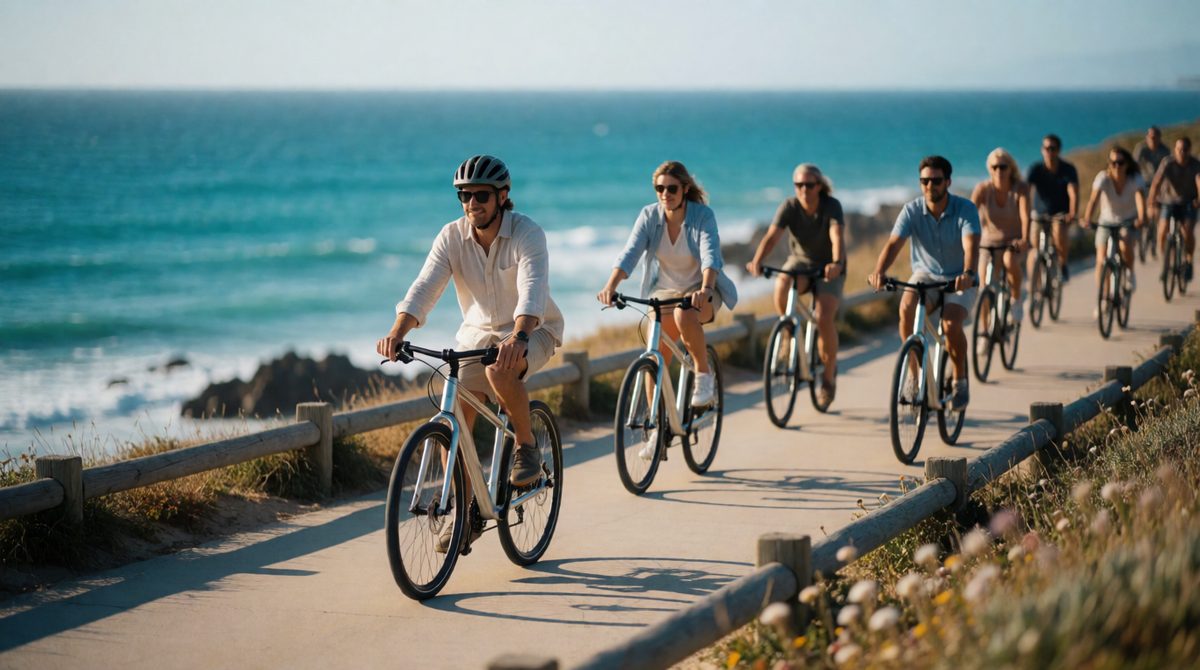
Walking and cycling are sustainable travel choices
One of the most sustainable things a tourist can do is simply leave the car behind and explore on foot or by bike. Active travel has zero direct carbon emissions, keeps tourists healthy and allows them to experience a destination at a human pace.
Many destinations now actively encourage active travel through infrastructure investment:
- The Camino de Santiago, Spain: Hundreds of thousands of pilgrims walk or cycle this ancient route each year a classic example of sustainable active tourism.
- The Sustrans National Cycle Network, UK: Over 16,000 miles of signed cycling and walking routes connecting towns, cities and countryside across the UK.
- Copenhagen, Denmark: Tourists are actively encouraged to hire bikes over 62% of Copenhagen residents cycle to work or school daily and the city's bike-hire schemes are hugely popular with visitors.
💡 Exam Tip: Active Travel in Exam Answers
When asked about sustainable tourist choices, don't forget active travel! It's often overlooked but is one of the most genuinely zero-emission options. Make sure you can explain why it's sustainable (no emissions, supports local economy, low infrastructure cost) and give a real example.
🍽 Food and Shopping: The Smaller Choices That Add Up
Sustainable travel isn't just about how you get there it's also about what you do when you arrive. Food and shopping choices have a real environmental and social impact.
🍽 Sustainable Food Choices
- Eat locally sourced food reduces food miles and supports local farmers.
- Choose seasonal produce avoids energy-intensive greenhouse growing.
- Eat in locally owned restaurants rather than international fast-food chains.
- Reduce food waste buffet-style all-inclusive hotels are notorious for massive food waste.
🎁 Sustainable Shopping Choices
- Buy authentic local crafts made by local artisans not mass-produced imports.
- Avoid buying products made from endangered species (e.g. coral jewellery, ivory, turtle shells).
- Use a reusable bag and refuse single-use plastic bags and bottles.
- Support fair trade shops and cooperatives where profits go directly to producers.
📋 Responsible Tourist Behaviour: The Code of Conduct
Sustainable travel also means behaving responsibly at the destination. Tourists who damage coral reefs, drop litter in national parks, or disrespect local customs cause harm that goes beyond carbon emissions. Many destinations now publish official tourist codes of conduct.
🏈 Examples of Responsible Tourist Behaviour
- Stick to marked paths in national parks and nature reserves to avoid damaging fragile ecosystems.
- Never touch or stand on coral reefs even a single touch can kill coral that took decades to grow.
- Respect wildlife don't feed animals, don't approach nesting birds and never buy wild animals as souvenirs.
- Dress appropriately in religious or culturally sensitive sites many destinations in Southeast Asia and the Middle East have dress codes that tourists frequently ignore.
- Learn basic phrases in the local language a small effort that shows respect and is almost universally appreciated.
- Don't take natural souvenirs removing shells, rocks, or plants from natural areas is often illegal and always harmful.
🔍 Case Study: Palau Pledge
The Pacific island nation of Palau introduced the world's first legal tourist pledge in 2017. Every visitor must sign a pledge in their passport on arrival, promising to act in an environmentally responsible way protecting the natural environment, supporting local businesses and respecting local culture. Children sign a version written for them. The pledge is legally binding. Palau also banned certain types of sunscreen that damage coral reefs. This is a powerful example of a destination taking tourist behaviour seriously and tourists being asked to make a formal commitment to sustainable choices.
📈 Eco-Certification: How Tourists Can Identify Sustainable Options
One of the biggest challenges for tourists who want to travel sustainably is knowing which companies and destinations are genuinely green and which are just using "greenwashing" to appear eco-friendly without making real changes.
Eco-certification schemes help tourists make informed choices by independently verifying that a business meets environmental standards.
- Green Key: An international certification for hotels, campsites and attractions. Over 3,800 establishments in 65 countries hold the Green Key award.
- Travelife: A sustainability certification for tour operators and travel agents, widely used in Europe.
- Rainforest Alliance: Certifies tourism businesses in tropical destinations that meet standards for environmental protection and fair treatment of workers.
- Blue Flag: Awarded to beaches and marinas that meet standards for water quality, environmental management and safety.
💡 Exam Tip: Greenwashing
Greenwashing is when a company claims to be environmentally friendly without making genuine changes just using green language in marketing. Exam questions may ask you to evaluate whether a tourism initiative is genuinely sustainable or just greenwashing. Look for: independent certification, measurable targets, transparent reporting and real changes to operations (not just a recycling bin in the room!).
👤 Who Is Responsible? Tourists vs. Industry vs. Government
A common exam question asks: whose responsibility is it to make tourism sustainable? The honest answer is everyone's. But tourists play a uniquely powerful role because their collective choices drive demand.
👤 Tourists Can...
Choose greener transport, stay in certified eco-accommodation, eat locally, behave responsibly and support sustainable tour operators with their spending.
🏢 Industry Can...
Invest in renewable energy, reduce single-use plastics, pay fair wages to local staff and obtain genuine eco-certification rather than greenwashing.
🏛 Governments Can...
Introduce tourist taxes, limit visitor numbers at fragile sites, invest in sustainable transport infrastructure and enforce environmental regulations.
📋 Summary: Key Points to Remember
- ✈ Transport choice is the single biggest factor in a tourist's carbon footprint trains and coaches are far greener than flying.
- 🏠 Accommodation choice matters eco-lodges, certified green hotels and locally owned guesthouses are more sustainable than large resort hotels.
- 🕐 Slow travel reduces emissions, supports local economies and creates a richer tourist experience.
- 🚲 Active travel (walking and cycling) is the most sustainable way to explore a destination.
- 🍽 Food and shopping choices buying local, seasonal and fair trade have real environmental and economic impacts.
- 📋 Responsible behaviour respecting wildlife, culture and the environment is an essential part of sustainable tourism.
- ✅ Eco-certification schemes like Green Key and Travelife help tourists identify genuinely sustainable businesses.
- ❌ Greenwashing is a real problem tourists should look for independent certification, not just green marketing language.
- 🌎 Sustainability in tourism is a shared responsibility between tourists, the industry and governments.