✈ Introduction: How Transport Methods Work Together
Think about the last time you went on a long journey. Did you just use one type of transport the whole way? Probably not! Most travellers use a combination of transport types maybe a bus to the train station, a train to the airport and then a plane to their destination. This is exactly what interdependency of transport methods is all about.
In travel and tourism, no single type of transport works completely on its own. They all rely on each other to get tourists from A to B efficiently. When transport methods work well together, tourism booms. When they don't connect properly, tourists get frustrated and destinations lose visitors.
Key Definitions:
- Interdependency: When two or more things rely on each other to function properly.
- Transport infrastructure: The physical systems and facilities (roads, railways, airports, ports) that allow people and goods to move around.
- Intermodal transport: Using more than one type (mode) of transport during a single journey.
- Transport hub: A central point where different types of transport meet and connect like a major airport or railway station.
- Domestic travel: Travel within the same country.
- International travel: Travel between different countries.
- Gateway: A point of entry or exit for international travellers, usually an airport or seaport.
✈ Air Transport
Planes are the most common way to travel internationally. But airports don't exist in isolation they need roads, rail links, bus services and taxis to connect them to city centres and tourist destinations. Without these links, even the biggest airport is useless to tourists.
🚛 Rail Transport
Trains are brilliant for medium-distance travel and connecting cities. High-speed rail (like the Eurostar or Japan's Shinkansen) can even compete with short-haul flights. Rail stations often sit at the heart of transport networks, linking to buses, trams and taxis.
🚌 Road Transport
Cars, coaches and buses provide the flexibility that other transport types can't. They reach places trains and planes simply cannot go rural villages, mountain resorts, coastal towns. Road transport is often the final link in a tourist's journey, getting them from a hub to their actual destination.
⚓ Water Transport
Ferries, cruise ships and water taxis play a huge role in tourism, especially for island destinations. Cruise terminals need road and rail links so passengers can reach them easily. Ferries connect islands to mainlands, making otherwise inaccessible places reachable for tourists.
🔗 Why Interdependency Matters
The whole point of transport interdependency is that a tourist's journey is only as good as its weakest link. Imagine flying into a beautiful country but there's no reliable bus or train to get you to your hotel. You'd be stuck! Good transport networks are carefully planned so each method supports the others.
📍 The Tourist Journey: A Chain of Transport
A typical international tourist journey involves multiple transport stages. Each stage depends on the previous one running smoothly. This is called a transport chain.
🏠 Stage 1: Origin
The tourist leaves home. They might walk, cycle, drive or take a bus/taxi to reach their first major transport point usually a train station or airport.
✈ Stage 2: Main Journey
The long-distance part of the trip usually by plane, train or ferry. This is the most obvious part of travel but it depends entirely on the stages before and after it.
🏞 Stage 3: Destination
On arrival, the tourist needs local transport to reach their hotel or attraction. This might be a shuttle bus, taxi, metro, hire car or even a boat for island destinations.
🔍 Case Study: London Heathrow Airport
Heathrow is one of the world's busiest international airports, handling over 79 million passengers per year. It's a perfect example of transport interdependency in action. Passengers arrive at Heathrow by:
- 🚛 The Elizabeth Line (Crossrail) connecting central London in just 26 minutes
- 🚛 The Heathrow Express a fast train to Paddington Station in 15 minutes
- 🚌 The London Underground (Piccadilly Line) slower but cheaper, connecting to the whole Tube network
- 🚌 Coaches and buses National Express coaches connect Heathrow to cities across the UK
- 🚗 Taxis and ride-hailing apps for door-to-door convenience
- 🚗 Private cars and car parks for those driving themselves
Without all these connecting transport options, Heathrow simply couldn't function as a global gateway. The airport and the surrounding transport network are completely interdependent.
🌎 Domestic vs International Transport Networks
Transport infrastructure works differently depending on whether we're talking about travel within a country or between countries. Both types of network need to connect with each other for tourism to work properly.
🏭 Domestic Transport Infrastructure
Domestic transport networks are the internal systems that move people around within a country. For tourism, these are crucial because they connect international gateways (airports, ports) to actual tourist destinations.
- National rail networks e.g. the UK's National Rail, France's SNCF, India's Indian Railways
- Motorway and road networks essential for reaching rural and coastal destinations
- Domestic airports connecting regions within large countries (e.g. internal flights in Australia or the USA)
- Local bus and metro systems getting tourists around cities
🔍 Case Study: Japan's Transport Network
Japan is famous for having one of the world's best integrated transport systems. The Shinkansen (bullet train) network connects major cities at speeds of up to 320 km/h. When international tourists land at Tokyo's Narita or Haneda airports, they can seamlessly connect to:
- Express trains into central Tokyo
- The Shinkansen network to reach Kyoto, Osaka, Hiroshima and beyond
- Local metro and bus systems within each city
- Ferries to reach Japan's many islands
The Japan Rail Pass (available to foreign tourists) allows unlimited travel across most of this network, making Japan extremely accessible. This excellent transport interdependency is a major reason why Japan receives over 31 million international tourists per year.
🕐 Transport Hubs: Where It All Comes Together
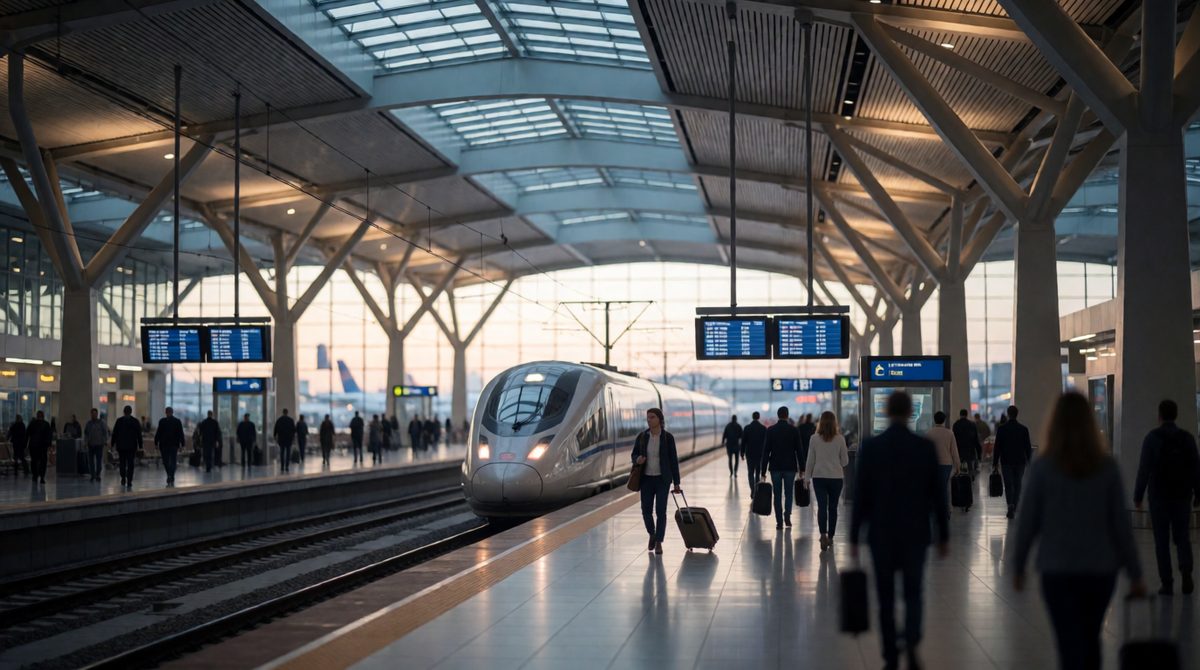
Transport hubs connect different modes
A transport hub is a place where multiple transport methods meet. Hubs are the glue that holds transport networks together. Without them, different transport methods would operate in isolation and tourists would struggle to switch between them.
✈ Airport Hubs
Major airports like Dubai International, Singapore Changi and Frankfurt Airport act as global hubs. They're not just places to catch a flight they're massive interchange points where passengers transfer between long-haul and short-haul flights and then connect to ground transport. Dubai Airport handles over 86 million passengers a year and connects to the Dubai Metro, taxis and coaches.
🚛 Rail Hubs
St Pancras International in London is a brilliant example of a rail hub. It's the terminus for Eurostar services to Paris and Brussels, connects to six London Underground lines, National Rail services to the Midlands and North and is walking distance from King's Cross station. It's a true multimodal hub where international and domestic rail, plus urban transport, all meet.
⚓ Cruise Terminals and Port Interdependency
Cruise tourism is a massive and growing sector. Cruise ships carry over 30 million passengers globally each year. But a cruise terminal is only useful if tourists can actually get to it. Major cruise ports like Southampton (UK), Miami (USA) and Barcelona (Spain) all have strong transport links:
- 🚛 Rail links to major cities
- 🚌 Coach and bus services
- 🚗 Taxi and transfer services
- ✈ Nearby airports for fly-cruise packages
Southampton is the UK's busiest cruise port. It works closely with Southampton Airport and has direct rail links to London Waterloo, making it easy for tourists from across the UK (and international visitors flying in) to board their cruises.
⚡ Key Fact: The Channel Tunnel
The Channel Tunnel (opened 1994) is one of the greatest examples of transport interdependency in Europe. It physically connects the UK and French rail networks, allowing Eurostar passenger trains and freight trains to travel between London and Paris in just 2 hours 16 minutes. The tunnel depends on:
- The UK domestic rail network feeding passengers to St Pancras
- The French TGV network distributing passengers onwards from Paris
- Road connections at both ends for those using the Eurotunnel car shuttle
Without these connecting networks, the Channel Tunnel would be far less useful. It's a perfect example of international and domestic transport working together.
🌎 How Transport Infrastructure Affects Tourism
The quality of transport infrastructure directly affects how many tourists visit a destination and how much they enjoy their trip. Poor transport links = fewer tourists. Great transport links = tourism growth.
📈 The Impact of Good Transport Links
💰 Economic Benefits
Better transport links mean more tourists, which means more money spent locally. New airports, rail lines and roads create jobs and boost local economies. The opening of a new low-cost airline route can transform a quiet destination overnight.
🌎 Accessibility
Good transport makes destinations accessible to more people. When the Eurostar launched, Paris became a realistic weekend break destination for Londoners. When budget airlines expanded, previously remote European cities became popular tourist spots.
⚠ Environmental Concerns
More transport infrastructure can mean more carbon emissions and environmental damage. Sustainable transport options (electric trains, hybrid ferries, cycling infrastructure) are increasingly important in balancing tourism growth with environmental responsibility.
🔍 Case Study: The Impact of Low-Cost Airlines on European Tourism
The rise of low-cost carriers (LCCs) like Ryanair and easyJet from the 1990s onwards completely transformed European tourism. By making air travel affordable for ordinary people, they:
- Opened up previously overlooked destinations (e.g. Krakow, Porto, Riga)
- Increased demand for ground transport at smaller regional airports
- Boosted local economies in destinations that previously had few visitors
- Created new transport interdependencies small airports needed new bus and rail links to handle increased passenger numbers
This shows how a change in one part of the transport network (air travel becoming cheaper) creates a ripple effect across the entire system.
📝 Exam Tips: What to Remember
- ✅ Always think about transport as a system no single method works alone
- ✅ Use specific examples and case studies in exam answers (Heathrow, Japan, Channel Tunnel)
- ✅ Remember the difference between domestic (within a country) and international (between countries) transport
- ✅ Transport hubs are key they're where different transport methods connect
- ✅ Think about the impacts of transport on tourism: economic, social AND environmental
- ✅ The quality of transport links directly affects tourist numbers and satisfaction