🚌 What Is Local Public Transport?
Once a tourist arrives at their destination whether by plane, train, or coach they still need to get around. That's where local public transport comes in. It's the everyday transport that moves people within a town, city, or region. For tourists, it's often the difference between a brilliant trip and a frustrating one.
Key Definitions:
- Local public transport: Transport services available to the general public within a specific area, such as buses, trams, metro systems and ferries.
- Integrated transport: A system where different types of transport (e.g. bus, metro, tram) are linked together so passengers can move between them easily, often using a single ticket.
- Accessibility: How easy it is for all people including those with disabilities, the elderly, or those unfamiliar with the area to use the transport system.
- Last-mile connectivity: The final leg of a journey from a transport hub (like a train station) to the tourist's actual destination (like a hotel or attraction).
💡 Why Does This Matter for iGCSE?
The iGCSE Travel & Tourism syllabus asks you to understand how local transport provision affects the appeal and development of tourist destinations. You need to know the types of local transport, their advantages and disadvantages and how they affect the tourist experience. Real examples and case studies are essential for exam answers.
🚌 Types of Local Public Transport
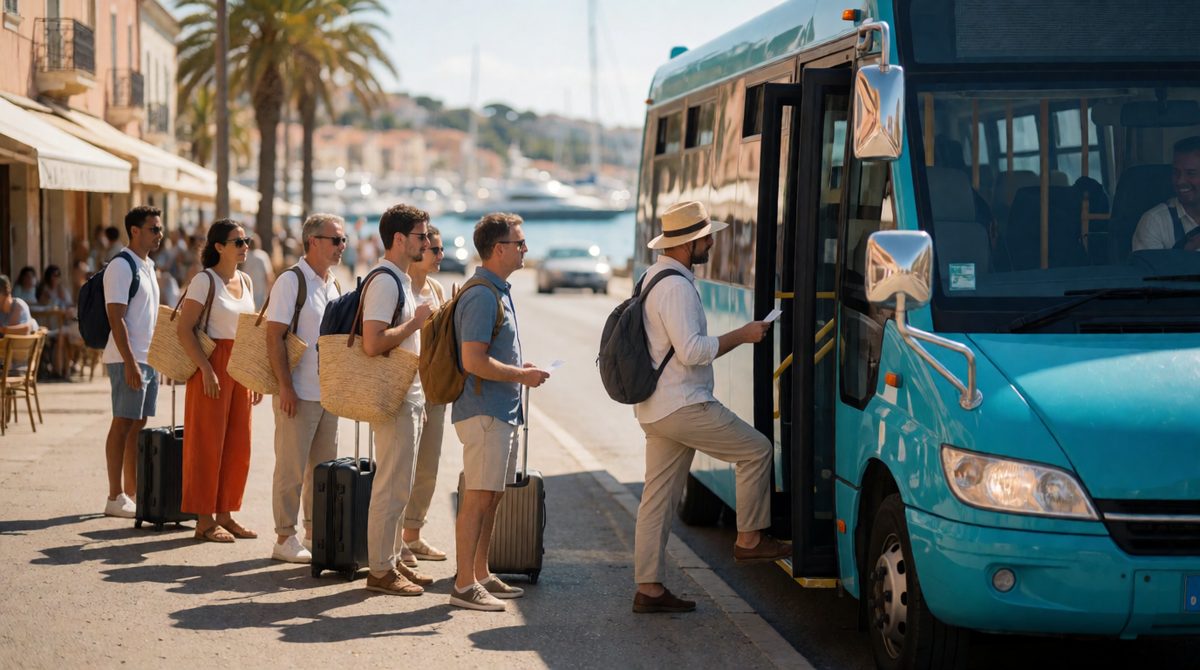
Local buses help tourists get around
There are many different ways tourists get around once they've arrived at a destination. Each type of transport has its own strengths and weaknesses depending on the destination.
🚌 Buses
Buses are the most common form of local public transport worldwide. They are relatively cheap to run and can reach areas that other transport types cannot. For tourists, buses offer an affordable way to explore a destination. However, they can be slow in traffic, confusing for visitors who don't know the routes and unreliable in less developed destinations. Many cities now offer hop-on hop-off tourist buses a popular variation designed specifically for visitors.
🚇 Metro / Underground Rail
Metro systems (also called subways or underground railways) are fast, frequent and avoid road traffic entirely. Cities like London, Paris, Tokyo and New York have extensive metro networks that tourists rely on heavily. They are usually clearly signed, often in multiple languages and easy to navigate. The downside is the huge cost of building and maintaining them meaning they are mostly found in large, wealthy cities.
🚫 Trams and Light Rail
Trams run on tracks built into city streets. They are smoother and more comfortable than buses, produce less pollution and are often seen as more tourist-friendly. Cities like Amsterdam, Lisbon, Melbourne and Edinburgh use trams as a key part of their local transport. In some destinations, historic trams have even become tourist attractions in their own right Lisbon's famous yellow Tram 28 is a great example.
⛴ Water Taxis and Ferries
In coastal cities or those built around rivers and canals, water transport is a vital local option. Venice's vaporetti (water buses) are the main form of public transport in the city. Bangkok uses river boats along the Chao Phraya River. Sydney Ferries connect the harbour suburbs. These services are often scenic and popular with tourists, combining transport with sightseeing.
🚲 Cycling and Micro-Mobility
Many modern cities now offer public bike-hire schemes as part of their local transport network. These are popular with tourists who want to explore at their own pace. Cities like Amsterdam, Copenhagen and London (with its Santander Cycles, nicknamed "Boris Bikes") have well-developed cycling infrastructure. More recently, e-scooters have been introduced in many destinations as a flexible, eco-friendly option.
🚲 Amsterdam
Over 800,000 bicycles in the city. Tourists regularly hire bikes to explore canals and museums. Cycling is deeply embedded in the culture and infrastructure.
🚲 Copenhagen
Voted one of the world's most cycle-friendly cities. The city has over 390 km of dedicated cycle lanes. Free city bikes available in summer months.
🚲 London
Santander Cycles launched in 2010. Over 12,000 bikes at 800+ docking stations. Popular with tourists visiting central London attractions.
🔗 How Local Transport Links to the Wider Network
Local public transport doesn't exist in isolation it has to connect with the bigger picture. When a tourist lands at an airport or steps off a long-distance train, they need local transport to take them the rest of the way. This is called last-mile connectivity and it's crucial for a smooth tourist experience.
A destination with excellent international connections but poor local transport will still frustrate visitors. Imagine arriving at a beautiful coastal resort by plane, only to find there are no buses, no taxis and no clear way to reach your hotel. That's a real problem for tourism development.
🔍 Case Study: Singapore's Integrated Transport System
Singapore is widely regarded as having one of the best local public transport systems in the world. The Mass Rapid Transit (MRT) metro network connects the airport directly to the city centre in around 30 minutes. It links seamlessly with an extensive bus network and passengers use a single EZ-Link card to pay for both. The system is clean, air-conditioned (vital in Singapore's tropical heat), punctual and available in English making it extremely tourist-friendly. As a result, many tourists in Singapore never need to hire a car or take a taxi. This ease of movement encourages tourists to visit more attractions, spend more money and stay longer.
🌎 Local Transport in Different Types of Destinations
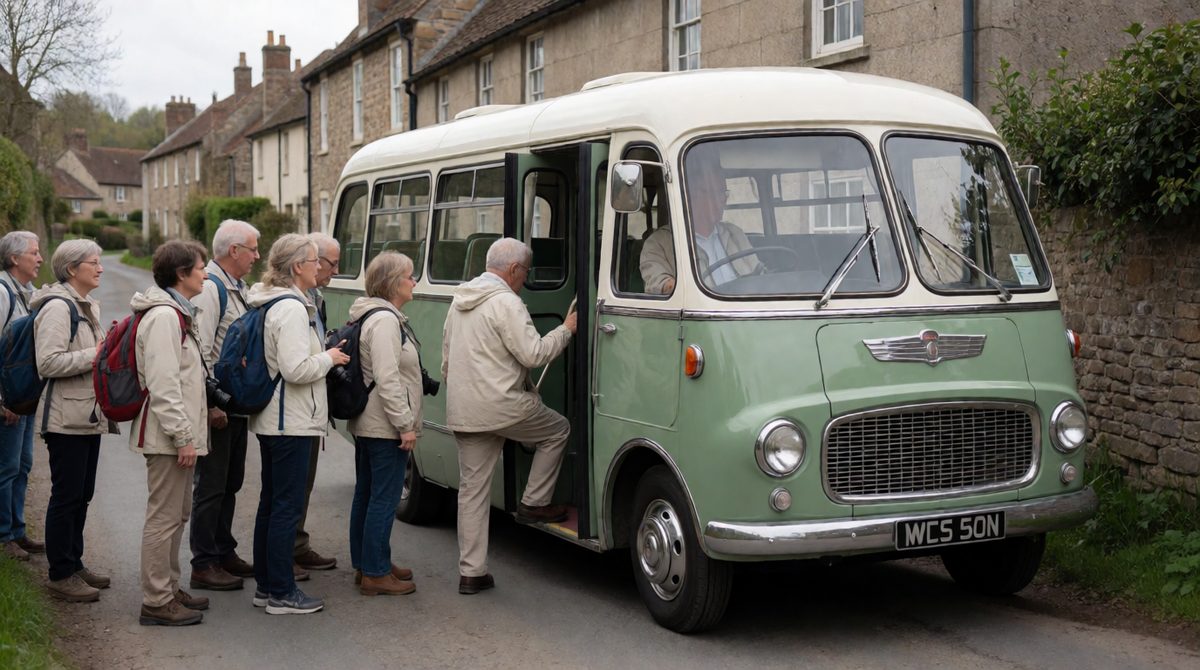
Local transport looks very different in a city centre than in a rural village, and so does the tourist experience
The type and quality of local transport varies enormously depending on the kind of destination. Urban cities, rural areas, island resorts and heritage sites all have very different transport needs and challenges.
🏙 Urban Destinations
Large cities generally have the most developed local transport networks. They have the population density to make metro systems, trams and frequent bus services financially viable. Tourists in cities like Paris, Tokyo, or New York can travel almost entirely by public transport. Cities often invest heavily in tourist-specific transport like hop-on hop-off buses, tourist travelcards and airport express trains.
🌿 Rural and Remote Destinations
Rural areas face much greater challenges. Lower population density means fewer passengers, making it harder to justify the cost of running regular services. Tourists visiting national parks, countryside areas, or small villages often find public transport limited or non-existent. In these areas, tourists typically rely on hired cars, taxis, or organised tours. This can be a significant barrier for tourists who don't drive or can't afford private transport.
Some destinations have found creative solutions for example, the Lake District in England runs seasonal bus services specifically aimed at walkers and tourists, reducing car congestion in the national park while improving access for visitors without cars.
🏖 Island and Beach Resorts
Many popular beach destinations are in island settings where transport options are naturally limited. In places like the Maldives or the Greek islands, boats and small ferries are essential local transport. In larger resort areas like Majorca or Tenerife, tourist bus networks and resort shuttles have been developed to move visitors between hotels, beaches and attractions.
🔍 Case Study: Hop-On Hop-Off Buses in Rome
Rome is one of the most visited cities in the world, but its ancient street layout makes it challenging for conventional transport. The city's regular bus network can be confusing for tourists. In response, several companies operate hop-on hop-off open-top bus services that stop at all the major sights the Colosseum, Vatican, Trevi Fountain and more. Tourists buy a 24 or 48-hour ticket and can board and leave the bus as many times as they like. This type of tourist-specific local transport has become a standard feature of major city tourism worldwide, from London to New York to Cape Town. It solves the problem of navigating an unfamiliar city while also providing commentary and a sightseeing experience.
✅ Factors Affecting the Quality of Local Transport Provision
Not all destinations have equally good local transport. Several key factors determine how good a local transport system is for tourists:
💰 Funding & Investment
Good transport costs money. Wealthier countries and cities can afford to invest in metro systems, modern buses and integrated ticketing. Less developed destinations may struggle to fund even basic services.
📍 Geography
Flat cities are easier to serve with buses and trams. Hilly cities (like Lisbon or Hong Kong) need funiculars or cable cars. Islands need ferries. Geography shapes what's possible.
👥 Population Density
Dense urban areas can support frequent, affordable services. Sparse rural areas cannot. This creates a clear divide in transport quality between cities and the countryside.
Other important factors include government policy (some governments prioritise public transport over private car use), technology (contactless payment, real-time apps and electric vehicles are transforming local transport) and tourist demand (destinations with large numbers of visitors often develop transport specifically for them).
📈 How Local Transport Affects Tourism
The quality of local public transport has a direct impact on a destination's tourism industry. Here's how:
- ✅ Better access = more visitors: If tourists can easily reach attractions, they visit more of them and spend more money.
- ✅ Lower costs for tourists: Good public transport means tourists don't need to hire cars or rely on expensive taxis, making the destination more affordable overall.
- ✅ Environmental benefits: Public transport reduces the number of tourist cars on the road, cutting congestion and pollution especially important in sensitive destinations like national parks.
- ✅ Improved tourist satisfaction: Stress-free travel within a destination leads to better reviews, more repeat visits and positive word-of-mouth recommendations.
- ❌ Poor transport = negative experience: Confusing routes, unreliable services, or lack of English signage can put tourists off and damage a destination's reputation.
🔍 Case Study: Hong Kong's MTR System
Hong Kong's Mass Transit Railway (MTR) is consistently ranked among the world's best urban transport systems. It carries over 5 million passengers per day and has a punctuality rate of over 99.9%. For tourists, the MTR connects the airport to the city in 24 minutes via the Airport Express and the wider network reaches virtually every major tourist attraction from Victoria Peak to Ocean Park to the Star Ferry terminal. Tourists can use an Octopus Card (a rechargeable smart card) across the MTR, buses, trams and even some shops and restaurants. The system is clean, safe and fully signposted in English and Chinese. Tourism experts frequently cite Hong Kong's transport as a major reason why the city attracts tens of millions of visitors annually. It demonstrates how investing in excellent local transport directly supports a thriving tourism industry.
📝 Challenges and Future Trends
Local public transport for tourists faces several ongoing challenges but also exciting new opportunities:
⚠ Challenges
- Overcrowding at peak tourist times (e.g. Venice's vaporetti in summer)
- Language barriers signs and announcements not always in tourist languages
- Funding cuts leading to reduced services in rural areas
- Balancing the needs of local residents and tourists on the same network
- Accessibility for tourists with disabilities or mobility issues
💡 Future Trends
- Electric buses and trams reducing carbon emissions
- Real-time journey planning apps in multiple languages
- Contactless and app-based payment replacing paper tickets
- Autonomous (self-driving) shuttle buses being trialled in some cities
- Greater integration between transport types using a single digital platform
⚡ Key Fact: Venice's Overtourism Problem
Venice receives around 30 million visitors per year yet the city has no roads, only canals. The vaporetti (water buses) run by ACTV are the main public transport. In summer, they become dangerously overcrowded, with tourists and locals competing for space. Venice has had to introduce tourist-only vaporetto services and is experimenting with entry fees to manage the flow of visitors. This is a powerful example of how local transport capacity can limit how many tourists a destination can sustainably handle.
📝 Exam Tips: Local Public Transport
- 👉 Always give specific named examples don't just say "a city in Asia," say "Singapore's MRT" or "Hong Kong's MTR."
- 👉 Link local transport to the wider tourist experience how does it affect satisfaction, spending and repeat visits?
- 👉 Consider both sides good transport helps tourism, but poor transport hinders it. Exam questions often ask you to evaluate.
- 👉 Remember the difference between transport types (bus, metro, tram, ferry) and transport quality (frequency, cost, accessibility, integration).
- 👉 Think about different destination types urban, rural, coastal and island destinations all have different transport challenges.
- 👉 The concept of integrated transport (single ticket, connected services) is a key examiner favourite make sure you can explain and exemplify it.