🚀 Improving Accessibility in Travel and Tourism
Getting to a destination is only half the battle. Once tourists arrive, they need to move around quickly, cheaply and confidently. Governments and transport operators around the world have invested heavily in three big improvements: express links, integrated systems and contactless payments. Together, these changes have transformed how accessible destinations feel and how many tourists they can attract.
Key Definitions:
- Accessibility: How easy it is for people to reach and move around a destination using transport.
- Express link: A fast, direct transport connection between a major hub (like an airport) and a city centre or tourist area.
- Integrated transport system: A network where different types of transport (bus, rail, metro, ferry) are connected and coordinated so passengers can switch between them easily.
- Contactless payment: A way of paying for transport using a bank card, smartphone or smartcard without needing cash or a paper ticket.
- Interoperability: When different transport services accept the same ticket or payment method, making switching between them seamless.
💡 Why This Matters for iGCSE
The iGCSE Travel & Tourism syllabus asks you to understand how transport infrastructure supports tourism development. Improving accessibility is a key part of this it directly affects tourist numbers, tourist satisfaction and the economic success of a destination. Expect exam questions asking you to explain or evaluate how specific improvements benefit tourists and destinations.
⚡ Express Links: Fast Connections That Change Everything
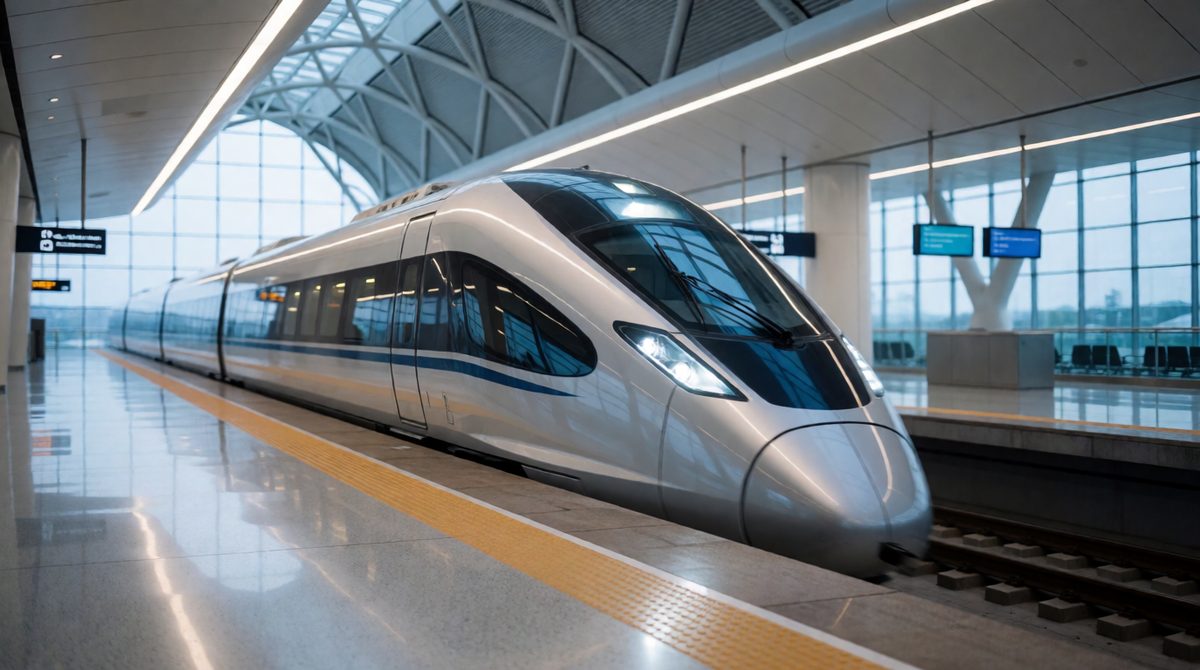
Express rail links connect airports to city centres
An express link is a dedicated, high-speed transport route connecting a major gateway usually an airport directly to a city centre or tourist hub. They cut journey times dramatically, reduce stress for arriving passengers and make a destination feel far more welcoming from the moment you land.
Express links are usually rail-based, though some are bus rapid transit (BRT) routes. They typically run more frequently, make fewer stops and offer more luggage space than standard public transport.
✅ Benefits of Express Links
- Faster journey times from airport to city
- Reduces road congestion and taxi queues
- More reliable not affected by traffic
- Encourages tourists to use public transport
- Reduces carbon emissions compared to private taxis
- Boosts tourist confidence in the destination
❌ Limitations of Express Links
- Expensive to build and maintain
- Only useful if the tourist's hotel is near the city centre stop
- May not serve all parts of a city
- Can be more expensive than regular buses
- Requires ongoing government investment
🔍 Case Study: The Heathrow Express, London
The Heathrow Express connects London Heathrow Airport to London Paddington station in just 15 minutes compared to around 50 minutes by the London Underground (Piccadilly line). It runs every 15 minutes and carries over 5 million passengers per year. For international tourists arriving at one of the world's busiest airports, this express link provides a fast, stress-free entry into the city. The Elizabeth line (opened 2022) now also serves Heathrow, offering a slightly slower but cheaper alternative with more central London stops a great example of improving accessibility at different price points.
🚛 More Express Link Examples Around the World
Express links are not just a European idea they are found across the globe and many have become iconic parts of their city's transport identity.
🇮🇳 Narita Express, Tokyo
The N'EX connects Narita Airport to central Tokyo in around 60 minutes. It offers reserved seating, luggage racks and multilingual information specifically designed with international tourists in mind.
🇨🇳 Gautrain, Johannesburg
South Africa's Gautrain links OR Tambo International Airport to Sandton (the business and hotel district) in just 15 minutes. It transformed accessibility in a city previously dependent on private cars and taxis.
🇫🇮 CDG Express, Paris (Planned)
Paris is developing a dedicated express rail link from Charles de Gaulle Airport to Gare de l'Est in central Paris. It aims to be ready for future major events and will cut journey times to under 20 minutes.
🔗 Integrated Transport Systems: Making the Whole Journey Smooth
An integrated transport system is one where all the different types of transport trains, buses, metros, trams, ferries and even bikes work together as a single, joined-up network. Passengers can switch between modes easily, using the same ticket or payment method, with timetables designed to connect with each other.
For tourists, this is incredibly important. Imagine arriving in a new city and having to buy a separate ticket for the bus, a different one for the metro and yet another for the ferry. It's confusing, time-consuming and off-putting. An integrated system removes that barrier entirely.
🔍 Case Study: Transport for London (TfL)
Transport for London is widely regarded as one of the best examples of an integrated urban transport system in the world. Under one organisation, TfL manages the Underground, Overground, Elizabeth line, buses, river boats (Thames Clippers), the DLR, trams and the cycle hire scheme. A tourist can use a single Oyster card or contactless bank card to travel across all of these services. Timetables are coordinated, maps show all services together and real-time information is available at every stop. This seamless experience makes London far more accessible and enjoyable for the 20+ million international tourists who visit each year.
📍 What Makes a Transport System Truly Integrated?
True integration goes beyond just sharing a ticket. It involves physical, informational and pricing integration working together.
📍 Physical Integration
Transport hubs are designed so that passengers can walk easily between different modes for example, a train station connected directly to a bus terminal and a taxi rank, under one roof.
📝 Informational Integration
Journey planners, apps, maps and signs show all transport options together. Real-time updates tell passengers about delays across all modes in one place.
💰 Pricing Integration
One ticket or payment method covers multiple modes. Tourists don't need to carry different cards or cash for different services reducing confusion and saving time.
🔍 Case Study: Dubai's Integrated Transport Network
Dubai has built one of the most modern integrated transport systems in the world. The Nol card (a smartcard) works across the Dubai Metro, buses, water buses (abras), trams and even some taxis. The metro connects directly to Dubai International Airport one of the world's busiest and runs to major tourist areas including the Dubai Mall, Burj Khalifa and Palm Jumeirah. This integration has been a key factor in Dubai's rise as a top global tourism destination, handling over 14 million tourists annually. The system is also fully air-conditioned, which is essential in a city where summer temperatures exceed 40°C.
📱 Contactless and Smart Payment Systems
One of the biggest barriers for international tourists using public transport has always been payment. In the past, you had to find a ticket machine, understand a complex fare system, use local currency and hope the machine worked. Contactless and smart payment systems have largely solved this problem.
Key Definitions:
- Smartcard: A reusable card loaded with credit that can be tapped on readers to pay for transport. Examples include London's Oyster card and Hong Kong's Octopus card.
- Contactless bank card payment: Using a standard debit or credit card (or phone/watch) to pay for transport by tapping no separate card needed.
- Open-loop payment: A system that accepts standard contactless bank cards directly, without needing a special transport card.
- Closed-loop payment: A system that requires a specific transport card (like an Oyster card) that must be purchased and topped up separately.
- Fare capping: A feature where the system automatically limits how much you pay in a day or week, even if you make many journeys great for tourists who don't know the local fare rules.
📱 Why Contactless Payments Help Tourists
- No need to find a ticket machine or understand fare zones
- Works with cards tourists already carry from home
- Faster boarding reduces queues at barriers
- Fare capping protects tourists from overpaying
- Works 24/7 without needing to visit a ticket office
- Reduces the need to carry local cash
📈 Benefits for Destinations and Operators
- Reduces staffing costs at ticket offices
- Speeds up passenger flow through stations
- Provides data on travel patterns to improve services
- Reduces fraud and fare evasion
- Makes the destination more attractive to international visitors
🔍 Case Study: London's Open-Loop Contactless System
In 2012, Transport for London became one of the first transit systems in the world to accept standard contactless bank cards directly on its network. By 2023, over 50% of all TfL journeys were paid for using contactless bank cards or mobile devices. For international tourists, this is transformative a visitor from Australia, Brazil, or Japan can step off the plane at Heathrow and immediately use their own bank card to travel on the tube, bus, or Elizabeth line without buying any special card. The system also applies daily and weekly fare caps, so tourists automatically get the best value without needing to understand London's complex fare zones.
🌐 Global Examples of Smart Payment in Tourism
Smart payment systems are now found in major tourist destinations worldwide, each adapted to local needs and tourism patterns.
🇭🇰 Octopus Card, Hong Kong
Hong Kong's Octopus card is accepted on the MTR, buses, ferries, trams and even in shops and restaurants. Tourists can buy one at the airport on arrival. It has become a model for integrated smart payment worldwide.
🇯🇵 IC Cards, Japan
Japan's Suica and Pasmo cards work across trains, subways and buses in most major cities. They can now be loaded onto an iPhone, making them even more accessible for international tourists without a physical card.
🇸🇬 EZ-Link, Singapore
Singapore's EZ-Link card covers buses and MRT trains. Singapore has also introduced SimplyGo, allowing tourists to pay directly with contactless bank cards no special card required.
🌎 How These Improvements Affect Domestic vs International Tourism
Express links, integrated systems and contactless payments benefit both domestic and international tourists but in slightly different ways.
Domestic tourists are already familiar with the local transport system, currency and language. For them, these improvements mainly mean convenience and speed getting somewhere faster, paying more easily and switching between transport modes without hassle.
International tourists face much bigger barriers: unfamiliar systems, language barriers, different currencies and no local knowledge. For them, these improvements can be the difference between using public transport confidently or giving up and taking expensive taxis. A well-integrated, contactless-friendly system actively removes these barriers and makes the destination feel welcoming and easy to navigate.
⚡ Key Fact: The Economic Impact of Accessibility
Research by the World Tourism Organisation (UNWTO) has shown that destinations with well-integrated transport systems and easy payment options see higher tourist spending, longer stays and better visitor satisfaction scores. When tourists can move around easily, they visit more attractions, eat in more restaurants and spend more money benefiting the whole local economy. Poor transport accessibility, on the other hand, is consistently cited as one of the top reasons tourists leave a destination earlier than planned or choose not to return.
📈 Challenges in Improving Accessibility
Despite the clear benefits, improving transport accessibility is not straightforward. There are real challenges that destinations must overcome.
- Cost: Building express rail links and upgrading payment systems requires enormous investment. Developing countries may lack the funds to do this.
- Legacy infrastructure: Older cities with historic transport networks (like Rome or Athens) find it very difficult to retrofit modern integrated systems.
- Digital exclusion: Not all tourists have contactless bank cards or smartphones. Elderly tourists and visitors from less developed countries may struggle with fully digital systems.
- Political will: Integrating transport often means different operators (bus companies, rail operators, ferry companies) must cooperate and share revenue which can be politically difficult.
- Rural areas: Express links and integrated systems are mainly found in cities. Rural and remote destinations often remain poorly served, limiting their tourism potential.
🔍 Case Study: Challenges in Italy
Italy is one of the world's top tourist destinations, but its transport accessibility has historically been uneven. Rome, Florence and Milan have reasonable urban transport, but connections between cities and smaller historic towns can be slow and complicated. Unlike London or Singapore, Italy lacks a single integrated ticketing system tourists often need separate tickets for Trenitalia trains, regional buses and urban metros. Efforts to modernise have been slow due to the complexity of coordinating multiple operators across a fragmented network. This is a useful exam example of a destination where lack of integration limits the tourist experience despite the destination's enormous appeal.
📝 Exam Tips: Improving Accessibility
- ✅ Use specific examples name real express links (Heathrow Express, Narita Express), real smartcards (Oyster, Octopus, Nol) and real cities. Vague answers score fewer marks.
- ✅ Link improvements to tourist benefits always explain how the improvement helps tourists, not just what it is.
- ✅ Distinguish between domestic and international tourists they benefit in different ways and exam questions may ask you to compare them.
- ✅ Evaluate, don't just describe for higher marks, discuss both the benefits and the limitations of express links, integrated systems, or contactless payments.
- ✅ Remember the economic angle better accessibility leads to more tourists, longer stays and higher spending. This is a key argument for why governments invest in transport infrastructure.
- ✅ Fare capping is a great specific detail to include it shows you understand how contactless systems are designed with tourists in mind.