🚲 Alternative Transport: Bicycles and Electric Scooters
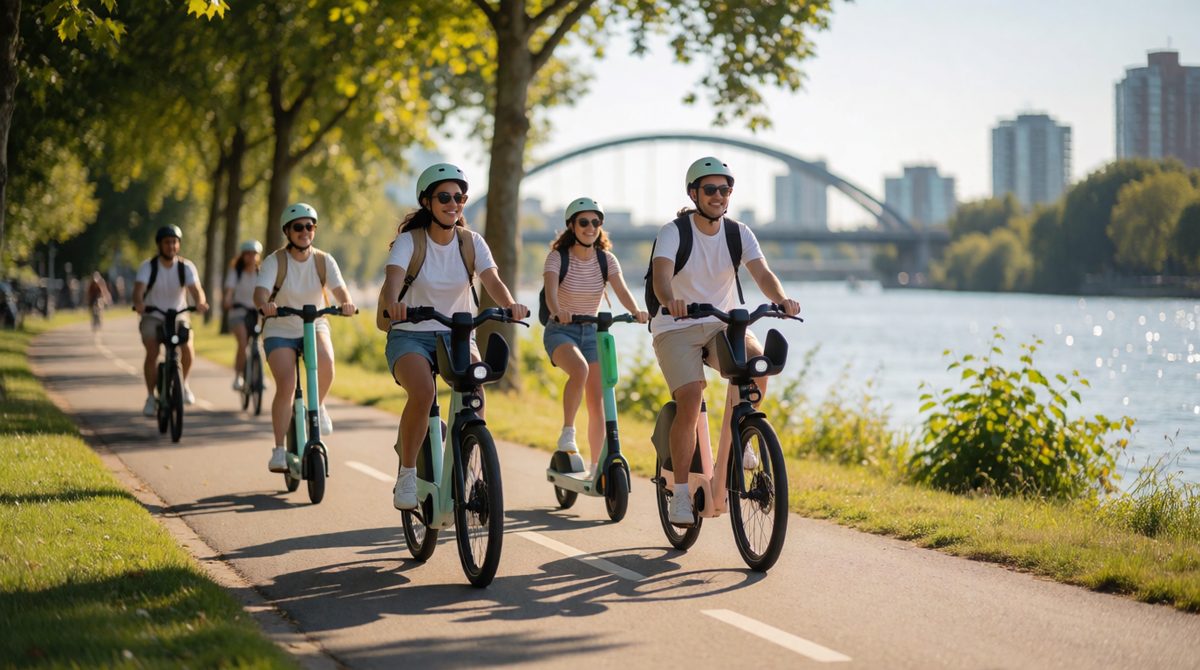
Bike and e-scooter hire help tourists explore cities
Not every journey needs a car, bus, or train. In many cities and tourist destinations around the world, bicycle rental and electric scooter rental have become popular ways for tourists to get around. They're cheap, fun, flexible and crucially much better for the environment than petrol-powered vehicles.
These options are part of a broader movement called micro-mobility small, lightweight transport solutions designed for short trips, usually under 5 km. For tourists exploring a city centre, cycling along a coastal path, or zipping between attractions, micro-mobility can be the perfect solution.
Key Definitions:
- Micro-mobility: Short-distance travel using lightweight vehicles such as bicycles, e-scooters, or e-bikes.
- Bicycle rental scheme: A system where bikes are available to hire for a short period, either from fixed docking stations or via app-based dockless systems.
- Electric scooter (e-scooter): A small, battery-powered scooter ridden standing up, typically hired via a smartphone app.
- Last-mile connectivity: The final short leg of a journey e.g. from a train station to a hotel often solved by micro-mobility.
- Dockless system: A rental scheme where vehicles can be picked up and dropped off anywhere within a defined zone, rather than at fixed stations.
- Docked system: A rental scheme where bikes or scooters must be collected from and returned to specific docking stations.
⚡ Key Fact: The Scale of Micro-Mobility
By 2023, there were over 600 bike-share programmes operating in cities worldwide, with more than 10 million shared bikes in circulation globally. China alone accounts for the majority, but Europe and North America are rapidly expanding their schemes. E-scooter rentals have exploded since 2018, with companies like Lime, Bird and Tier operating in hundreds of cities.
🚲 How Rental Schemes Work
Bicycle and e-scooter rental schemes are designed to be simple and accessible especially for tourists who don't own a vehicle locally. Here's how they typically operate:
📷 The Typical Rental Process
- The tourist downloads an app (e.g. Lime, Santander Cycles, Voi) or visits a docking station.
- They register with a payment method often just a contactless card or phone.
- They scan a QR code or enter a code to unlock the vehicle.
- They ride to their destination.
- They either return the vehicle to a docking station (docked) or park it in a permitted zone and end the trip on the app (dockless).
- The cost is automatically charged usually a small unlock fee plus a per-minute rate.
🚲 Standard Bikes
Pedal-powered bicycles. Cheap to hire, eco-friendly, good for flat terrain. Popular in Amsterdam, Copenhagen and London.
⚡ E-Bikes
Electrically assisted bicycles you still pedal, but a motor helps. Great for hills or longer distances. Increasingly common in tourist areas.
🛴 E-Scooters
Stand-up electric scooters. Fast, fun and very popular with younger tourists. Operated by companies like Lime, Tier and Voi across European cities.
✅ Benefits of Bicycle and E-Scooter Rental in Tourism
These rental schemes offer a wide range of advantages for tourists, for destinations and for the environment. Understanding these benefits is essential for your iGCSE exam.
🌿 Environmental Benefits
- Zero direct carbon emissions no exhaust fumes.
- Reduces congestion and air pollution in tourist hotspots.
- Supports destinations trying to meet sustainability targets.
- E-scooters and e-bikes use rechargeable batteries, often charged with renewable energy.
- Helps cities reduce their reliance on private cars and taxis.
📈 Economic and Tourism Benefits
- Low cost for tourists much cheaper than taxis or car hire.
- Encourages tourists to explore beyond the main attractions, spreading spending.
- Creates local jobs (maintenance, charging, customer support).
- Attracts younger, eco-conscious tourists who prefer sustainable options.
- Reduces pressure on public transport during peak times.
📍 Accessibility and Convenience
- Available 24/7 in many cities no timetables to worry about.
- Solves the "last-mile" problem getting from a station to a hotel.
- Easy to use with a smartphone no local knowledge needed.
- Tourists can stop wherever they like far more flexible than buses.
🌎 Destination Image
- Cycling-friendly cities are seen as progressive and attractive.
- Bike lanes and scooter zones improve the streetscape for all visitors.
- Promotes a healthy, active tourism experience.
- Supports the destination's "green" branding and marketing.
❌ Limitations of Bicycle and E-Scooter Rental in Tourism
These schemes are not without problems. Destinations and tourism planners need to weigh up the downsides carefully.
⚠ Safety Concerns
E-scooters in particular have been linked to accidents. Tourists may be unfamiliar with local traffic rules. Helmets are not always provided or worn. Collisions with pedestrians are a growing issue in busy city centres.
🚫 Pavement Clutter
Dockless scooters and bikes are often left blocking pavements, doorways and cycle lanes. This is a major complaint from local residents and can create hazards for people with disabilities.
🌀 Weather Dependency
Cycling and scooting are far less appealing in rain, cold, or extreme heat. Seasonal demand means schemes may not be viable year-round in all destinations.
📱 Digital Exclusion
Most schemes require a smartphone and a bank card. Older tourists or those from less digitally connected countries may struggle to access these services.
🏗 Infrastructure Needed
Safe cycle lanes, secure parking zones and charging points are needed. Without proper infrastructure, rental schemes can cause more problems than they solve.
🔢 Vandalism and Theft
Shared bikes and scooters are frequently damaged, stolen, or misused. This raises operating costs and reduces the number of vehicles available for tourists.
🔍 Case Study: Santander Cycles, London
London's Santander Cycles scheme (nicknamed "Boris Bikes" after former Mayor Boris Johnson) launched in 2010 and is one of the most recognised bike-share programmes in the world. Run by Transport for London (TfL), it has over 800 docking stations and 14,000 bikes across central London.
How it works for tourists: Visitors pay a small access fee and can take unlimited 30-minute rides throughout the day. The bikes are robust, easy to use and widely available near major attractions like Hyde Park, the South Bank and Covent Garden.
Tourism impact: The scheme is hugely popular with both domestic and international tourists. It allows visitors to explore London at their own pace, reduces pressure on the Underground and supports TfL's sustainability goals. In 2022, over 10 million journeys were made on Santander Cycles.
Limitations: The scheme is limited to central London, so tourists staying further out have less access. The bikes are heavy and not suitable for longer distances. There are no e-bikes in the main fleet yet, which limits appeal for less fit users.
🔍 Case Study: Lime E-Scooters in Paris, France
Paris was one of the first major cities to embrace e-scooter rental on a large scale, with companies like Lime, Bird and Tier flooding the streets from 2018 onwards. At peak, there were over 15,000 e-scooters available across the city.
Tourism use: Tourists loved them they were cheap, fast and a fun way to explore the city. Riders could zip along the Seine, visit Montmartre, or travel between museums without queuing for the Metro.
The problem: Scooters were left blocking pavements, thrown into the Seine and ridden dangerously on busy roads. Pedestrian complaints soared. In April 2023, Paris held a public vote on whether to ban rental e-scooters. The result: 89% voted to ban them. The ban came into force in September 2023.
Lesson for iGCSE: This is a powerful example of how a popular tourism transport option can fail if not properly regulated. The Paris case shows that community acceptance is just as important as tourist demand.
🌎 Bicycle and E-Scooter Rental: Domestic vs International Tourism
These rental schemes affect domestic and international tourists in slightly different ways. It's worth understanding the distinction for your exam.
🏭 Domestic Tourists
- More likely to be familiar with local traffic laws and road layouts.
- May already use bike or scooter apps at home easier to adapt.
- More likely to use schemes for practical travel (commuting to attractions) rather than just leisure.
- Can plan ahead and research schemes before visiting.
🌐 International Tourists
- May be unfamiliar with local cycling rules e.g. which side of the road to ride on.
- Language barriers can make app-based systems harder to use.
- More likely to use schemes for sightseeing and exploration.
- Rental schemes can significantly enhance the tourist experience in cycle-friendly cities like Amsterdam or Copenhagen.
🔍 Case Study: Amsterdam's Cycling Culture and Tourism
Amsterdam is arguably the world's most cycle-friendly city. With over 500 km of dedicated cycle lanes, cycling is the primary mode of transport for locals and tourists alike. The city has numerous bike rental companies, including MacBike and Star Bikes, offering a range of bikes from standard city bikes to e-bikes and cargo bikes.
Tourism impact: Cycling is central to the Amsterdam tourist experience. Visitors can rent a bike for as little as €10 per day and explore the canal rings, Vondelpark and the Jordaan neighbourhood at their own pace. The city actively promotes cycling tourism through its marketing campaigns.
Challenges: The sheer number of tourist cyclists has created tension with locals. Tourists unfamiliar with cycling etiquette cause accidents and block cycle lanes. The city has introduced cycling awareness campaigns specifically targeting tourists, including signs in multiple languages and guided cycling tours.
Key takeaway: Amsterdam shows how cycling infrastructure, when well-developed, can become a major tourism asset but managing tourist behaviour remains an ongoing challenge.
🌿 Sustainability and the Role of Micro-Mobility in Green Tourism
Bicycle and e-scooter rental fits neatly into the broader push for sustainable tourism. Destinations around the world are under pressure to reduce their carbon footprints and micro-mobility is one of the most practical tools available.
♿ How Rental Schemes Support Sustainable Tourism Goals
The United Nations World Tourism Organisation (UNWTO) encourages destinations to develop transport options that minimise environmental impact. Bicycle and e-scooter rental directly supports this by:
- Replacing short car or taxi journeys which account for a significant proportion of urban transport emissions.
- Reducing traffic congestion in historic city centres where large vehicles cause damage to heritage sites.
- Encouraging tourists to slow down and engage more deeply with local neighbourhoods supporting the concept of slow tourism.
- Complementing public transport networks, making the overall journey greener from start to finish.
🔍 Case Study: Seville's Cycling Transformation
In 2006, Seville in southern Spain had almost no cycling infrastructure. By 2011, the city had built 180 km of segregated cycle lanes and launched the Sevici bike-share scheme with 2,500 bikes and 260 stations.
The result was remarkable: cycling's share of urban journeys rose from under 1% to over 7% within five years. Tourist cycling increased significantly, with visitors using the scheme to explore the city's historic centre, including the Alcázar palace and the Cathedral.
Seville's success showed that even cities in hot climates traditionally seen as unsuitable for cycling can build thriving bike cultures with the right investment and political will. The city is now frequently cited as a model for other southern European and developing-world cities.
📝 Regulation and Management of Rental Schemes
One of the biggest challenges facing bicycle and e-scooter rental is regulation. Governments and local authorities must balance the benefits of these schemes with the need to keep streets safe and orderly.
- Speed limits: Many cities cap e-scooters at 15–25 km/h in tourist areas.
- Geofencing: GPS technology is used to slow or stop scooters in pedestrianised zones or near sensitive heritage sites.
- Parking zones: Designated drop-off areas prevent pavement clutter enforced by fines via the app.
- Helmet laws: Some countries require helmets by law; others leave it to the rider. This affects tourist uptake.
- Operator licences: Cities can limit the number of operators and vehicles to prevent oversaturation a lesson learned from Paris.
- Age restrictions: Most schemes require users to be 18+ and hold a valid driving licence for e-scooters in some countries.
⚡ Key Fact: E-Scooters in the UK
In the UK, privately owned e-scooters are illegal to ride on public roads and pavements as of 2024. However, rental e-scooters are permitted in cities participating in government-approved trials, including Liverpool, Manchester and Bristol. This legal distinction is important tourists must use official rental schemes, not bring their own scooters. The UK government has been considering permanent legalisation, but no final decision had been made at the time of writing.
💡 Why This Matters for iGCSE
Bicycle and e-scooter rental sits at the intersection of several key iGCSE Travel and Tourism themes: sustainability, accessibility, transport infrastructure and the tourist experience. Examiners love this topic because it has clear real-world examples and genuine debate there are strong arguments both for and against these schemes.
Make sure you can:
- Define micro-mobility, docked and dockless systems and last-mile connectivity.
- Give at least two named case studies (e.g. Santander Cycles London, Amsterdam, Seville, Paris).
- Evaluate both the benefits and limitations of rental schemes.
- Explain how these schemes support sustainable tourism.
- Discuss the difference in impact on domestic vs international tourists.
- Explain why regulation is essential for these schemes to work.
📝 Exam Tips: Bicycle and E-Scooter Rental
- "Evaluate" questions: Always give both sides benefits AND limitations before reaching a conclusion. Don't just list positives.
- Use case studies: Named examples from real cities will always earn extra marks. Learn at least two in detail.
- "To what extent" questions: Consider who benefits most tourists, locals, operators, or the environment and weigh these up.
- Sustainability angle: If a question mentions sustainable transport, micro-mobility is an excellent example to use.
- Command words: "Describe" = say what it is. "Explain" = say why/how. "Evaluate" = weigh up pros and cons and reach a judgement.
- Don't forget regulation: The Paris ban is a brilliant example of what happens when schemes are not properly managed use it!