✈ What Is Transport Infrastructure at a Major Destination?
When tourists arrive at a destination, they don't just magically appear at their hotel. Getting there and getting around once they arrive depends on a huge network of roads, railways, airports, ports and terminals. This network is called transport infrastructure.
Good transport infrastructure is one of the most important factors that determines whether a destination succeeds as a tourism hotspot. Without it, even the most beautiful place in the world will struggle to attract visitors.
Key Definitions:
- Transport Infrastructure: The physical systems and facilities that allow people and goods to move from place to place including roads, railways, airports, ports, bridges and tunnels.
- Gateway: A major entry point into a destination, such as an international airport or cruise port.
- Hinterland: The area surrounding a gateway that is served by it for example, the region tourists travel to after landing at an airport.
- Connectivity: How well a destination is linked to other places by transport routes.
- Modal shift: When travellers switch from one type of transport to another, for example from a plane to a train.
⚡ Key Fact: Why Infrastructure Matters
According to the World Tourism Organisation (UNWTO), poor transport infrastructure is one of the top three barriers to tourism growth in developing countries. A destination with excellent natural or cultural attractions but poor transport links will always underperform compared to its potential.
🌎 The Components of Transport Infrastructure
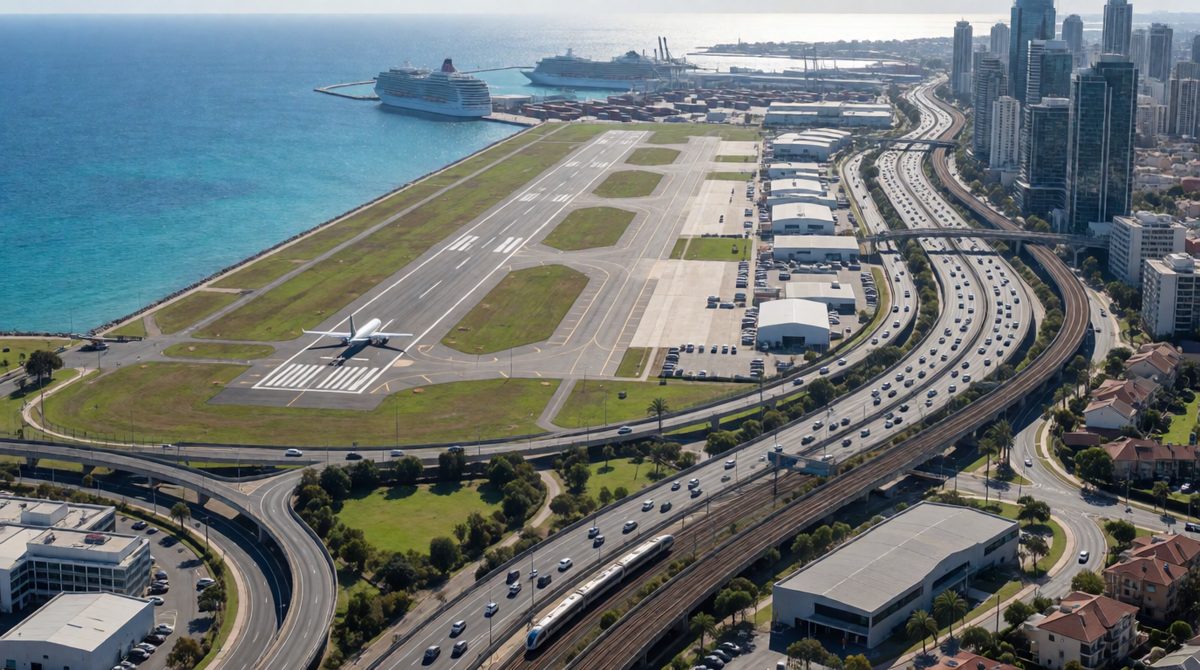
Airports, roads, rail and ports are the components of a destination's transport infrastructure, and each one shapes how easily tourists arrive
Transport infrastructure at a major destination is made up of several layers. Think of it like a chain each link must be strong for the whole journey to work smoothly.
✈ Air Transport Infrastructure
Airports are usually the main gateway for international tourists. Key features include: number of runways, terminal capacity, international routes, duty-free and retail facilities and ground transport connections. A large international airport can handle tens of millions of passengers per year.
🚛 Rail Infrastructure
Rail networks connect airports to city centres and cities to tourist regions. High-speed rail can compete with short-haul flights. Commuter rail moves tourists around urban areas. Rail infrastructure includes stations, tracks, signalling systems and rolling stock (the trains themselves).
🚌 Road Infrastructure
Roads are essential for reaching destinations not served by rail or air. This includes motorways, dual carriageways, rural roads, car parks, coach stations and taxi ranks. Road quality directly affects tourist satisfaction and safety.
⚓ Port and Water Infrastructure
Cruise terminals, ferry ports and marinas form the water transport layer. Cruise ports need deep berths, passenger terminals, customs facilities and good road/rail links to the city. Ferry ports serve both domestic and international travellers.
🔍 Case Study: Dubai World-Class Transport Infrastructure
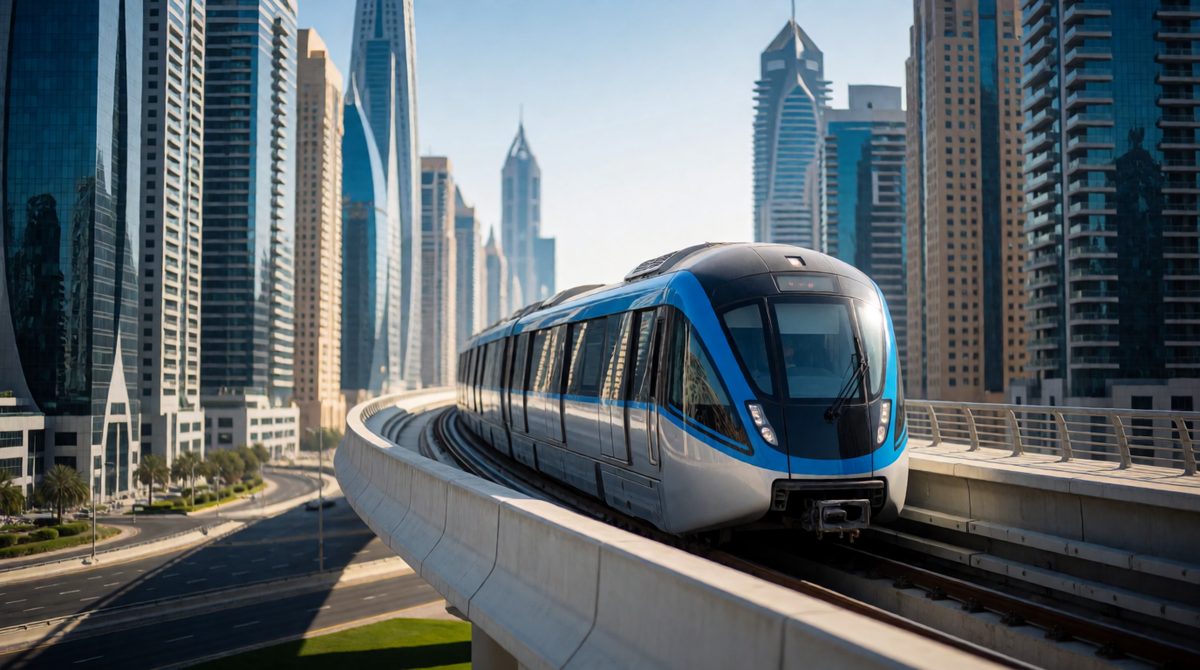
Dubai has built world-class transport for tourists
Dubai is one of the best examples in the world of a destination that has deliberately built outstanding transport infrastructure to attract and grow tourism. In just a few decades, it has transformed from a small trading port into one of the world's top tourist destinations and transport infrastructure has been central to that success.
✈ Dubai International Airport (DXB)
Dubai International Airport is consistently one of the busiest airports in the world for international passenger traffic. In 2023, it handled over 86 million passengers. It serves as a major hub for Emirates Airline, which connects Dubai to over 150 destinations worldwide.
📈 Scale
Three terminals, including the massive Terminal 3 one of the largest airport buildings in the world by floor area. Over 100 airlines operate from DXB.
🔗 Connectivity
Direct flights to every continent. Dubai is within an 8-hour flight of two-thirds of the world's population a huge geographical advantage.
🌟 Facilities
World-class lounges, hotels within the airport, extensive retail and dining and fast immigration processing for frequent travellers.
A second major airport, Al Maktoum International Airport (DWC), is under expansion and is planned to eventually become the world's largest airport, with a capacity of 260 million passengers per year.
🚇 Dubai Metro
The Dubai Metro opened in 2009 and was a game-changer for the city's transport network. It is fully automated (driverless), air-conditioned and connects key tourist areas including the airport, Dubai Mall, Burj Khalifa and the Palm Jumeirah monorail interchange.
- Two main lines: the Red Line and the Green Line
- Over 50 stations across the network
- Integrated with buses, water taxis (abras) and the Palm Monorail
- Uses the Nol card a smart payment card that works across all public transport modes
- Carries over 200 million passengers per year
For tourists, the metro is cheap, reliable and easy to use with English signage throughout and a dedicated Gold Class carriage for premium travel.
⚓ Dubai Cruise Terminal
Dubai has invested heavily in cruise tourism. The Mina Rashid Cruise Terminal (Port Rashid) and Dubai Cruise Terminal at Mina Rashid can accommodate some of the world's largest cruise ships. Dubai received over 1 million cruise passengers in the 2022–23 season, making it the top cruise destination in the Middle East.
The terminals are located close to the historic Al Fahidi district and are well connected by road and taxi to the rest of the city.
🔍 Dubai's Road Network
Dubai has invested billions in its road network. The Sheikh Zayed Road is the main highway running through the city, lined with skyscrapers. The Roads and Transport Authority (RTA) manages an extensive network of motorways, flyovers and tunnels. Taxis are widely available, metered and affordable by international standards. Ride-hailing apps like Careem and Uber also operate across the city.
🌎 How Transport Infrastructure Affects Domestic vs International Tourism
Transport infrastructure doesn't affect all tourists in the same way. Domestic tourists (those travelling within their own country) and international tourists have different needs and use different parts of the infrastructure.
🏭 Domestic Tourists in Dubai
UAE residents travelling within the country rely heavily on road transport and domestic flights between emirates. The Abu Dhabi–Dubai corridor is one of the busiest road routes in the region. Domestic tourists are more likely to use private cars, as car ownership is high in the UAE. The metro and buses are used by residents for daily commuting as well as leisure trips.
🌐 International Tourists in Dubai
International tourists arrive almost entirely by air. They depend on the airport's efficiency, the quality of immigration and customs processing and the ease of getting from the airport to their hotel. The metro's direct airport link (the Red Line to Terminal 1 and Terminal 3) is a major advantage. Many international tourists also use taxis or hotel transfers for convenience.
📈 The Economic Impact of Transport Infrastructure on Tourism
Investment in transport infrastructure has a direct impact on how many tourists visit a destination and how much they spend. This is sometimes called the multiplier effect money spent on transport infrastructure creates jobs, supports businesses and generates tax revenue, which can then be reinvested.
- Dubai's tourism sector contributes around 11.5% of GDP much of this is made possible by world-class transport links.
- Every new airline route opened to Dubai is estimated to bring thousands of additional tourists per year.
- The metro has reduced road congestion, cutting journey times for tourists and residents alike.
- Cruise terminal investment has created thousands of jobs in port operations, retail and excursion services.
⚡ Key Fact: The Hub Model
Dubai operates as a hub-and-spoke model. Emirates Airline flies passengers from all over the world into Dubai (the hub), where they connect to onward flights across the Middle East, Africa and Asia (the spokes). This model means Dubai's airport handles enormous volumes of transit passengers people who aren't even visiting Dubai but are passing through. This transit traffic supports airport retail, hotels and services.
📝 Challenges of Developing and Managing Transport Infrastructure
Building great transport infrastructure is not easy. Even wealthy destinations like Dubai face significant challenges.
⚠ Key Challenges
💵 Cost
Transport infrastructure is enormously expensive. Dubai's metro cost over $7.6 billion USD to build. Airports, ports and motorways require billions in investment and decades of planning. Developing countries often cannot afford this level of spending.
🌿 Environmental Impact
Building roads, airports and ports can destroy habitats, increase pollution and contribute to carbon emissions. Balancing tourism growth with environmental responsibility is a major challenge for destinations worldwide.
👥 Overcrowding
Successful transport infrastructure can attract so many tourists that it causes overcrowding. Dubai's roads suffer from severe traffic congestion during peak hours, despite major investment. Managing capacity is an ongoing challenge.
🌎 Comparing Transport Infrastructure: Developed vs Developing Destinations
Not all destinations have the resources to build infrastructure like Dubai. It is important for iGCSE students to understand the contrast between well-developed and less-developed transport infrastructure.
🌟 Well-Developed Infrastructure (e.g. Dubai, Singapore, Japan)
- Modern, high-capacity airports with multiple terminals
- Integrated metro, bus and rail networks
- Smart payment systems and real-time passenger information
- High-quality roads with clear signage in multiple languages
- Strong private sector investment alongside government funding
📍 Less-Developed Infrastructure (e.g. parts of Sub-Saharan Africa, rural South Asia)
- Limited international flight connections
- Poor road surfaces, especially outside major cities
- Lack of reliable public transport for tourists
- Limited port facilities for cruise ships
- Dependence on informal transport (minibuses, motorbike taxis)
🔍 Mini Case Study: Kenya's Transport Infrastructure
Kenya is a major safari destination, but its transport infrastructure presents real challenges. Jomo Kenyatta International Airport in Nairobi handles international arrivals, but road conditions outside the capital can be poor, making access to national parks like the Maasai Mara difficult. The government has invested in the Standard Gauge Railway (SGR) connecting Nairobi to Mombasa, which has improved domestic tourism links. However, the contrast with a destination like Dubai highlights how infrastructure gaps can limit tourism potential.
💡 Why This Matters for iGCSE
In your iGCSE Travel and Tourism exam, you may be asked to:
- Describe the components of transport infrastructure at a named destination
- Explain how transport infrastructure affects the growth of tourism
- Evaluate the advantages and disadvantages of transport infrastructure development
- Compare transport infrastructure in different types of destinations
- Use a case study to support your answer Dubai is an excellent choice
📝 Exam Tips: Transport Infrastructure
- Name specific examples: Don't just say "a big airport" say "Dubai International Airport, which handled 86 million passengers in 2023."
- Use the word "integrated": Examiners love to see that you understand how different transport modes work together.
- Think about both domestic and international tourists they use infrastructure differently.
- Balance your answers: If asked to evaluate, always include both advantages and disadvantages.
- Link infrastructure to tourism outcomes: More tourists, more spending, more jobs show the chain of cause and effect.
- Remember the challenges: Cost, environmental impact and overcrowding are all valid points to include.