🏞 Tourist Attractions: What Are They?
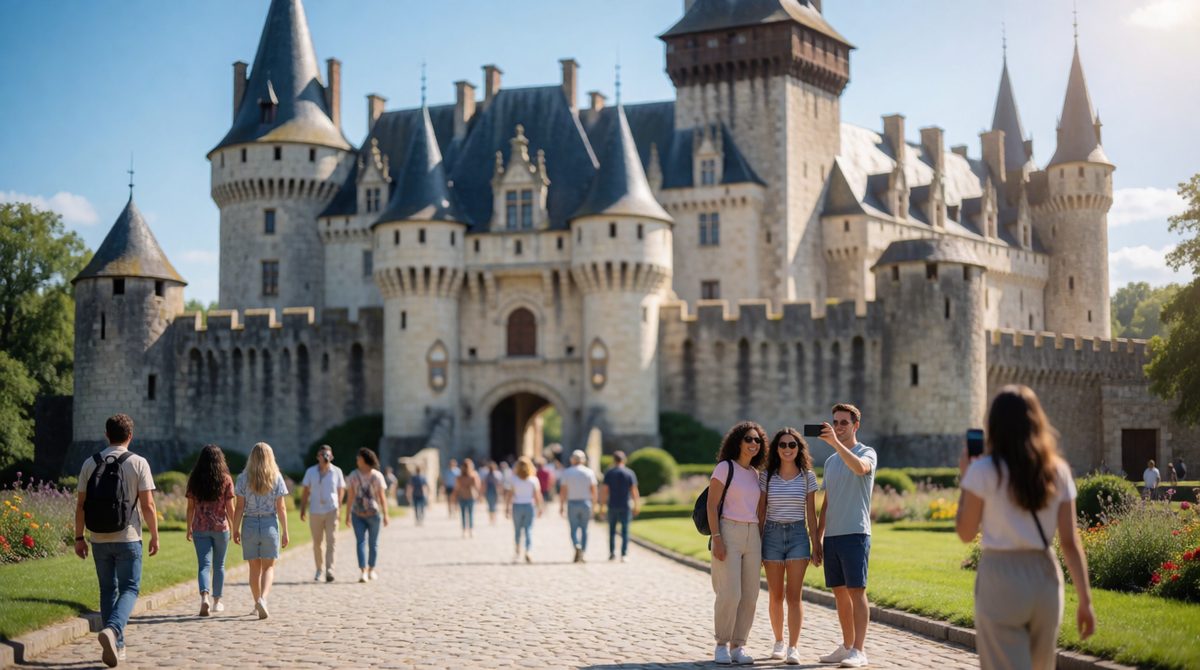
Attractions are a key part of tourism
Tourist attractions are places or events that draw visitors to a destination. They are often the main reason someone decides to travel somewhere. Without attractions, there would be very little tourism at all! Attractions can be natural (like mountains or beaches) or built by people (like theme parks or museums).
Key Definitions:
- Tourist Attraction: A place, feature or event that motivates people to visit a destination.
- Natural Attraction: A feature created by nature, such as the Grand Canyon, Niagara Falls or the Great Barrier Reef.
- Built Attraction: A man-made feature, such as the Eiffel Tower, Disneyland or the Colosseum in Rome.
- Cultural Attraction: Something linked to heritage, history or the arts for example, the British Museum or Machu Picchu.
- Purpose-Built Attraction: Built specifically to attract tourists, such as a theme park or a water park.
🌞 Natural Attractions
These exist without human involvement. Examples include the Northern Lights in Iceland, the Amazon Rainforest in Brazil and the Serengeti in Tanzania. They attract visitors interested in wildlife, adventure and scenery. They can be fragile and need careful management to avoid damage from over-tourism.
🏛 Built & Purpose-Built Attractions
These are designed and constructed to entertain or educate visitors. Examples include the Burj Khalifa in Dubai, Alton Towers in the UK and the Louvre Museum in Paris. They often charge entry fees and invest heavily in marketing to attract visitors year-round.
🏭 How Attractions Are Classified
The iGCSE syllabus asks you to understand how attractions are grouped. Here is a clear breakdown:
🌿 Natural
Beaches, mountains, lakes, forests, wildlife reserves. Example: The Maldives famous for its coral reefs and clear waters.
🏛 Cultural / Heritage
Historic buildings, museums, UNESCO World Heritage Sites. Example: Stonehenge, UK a prehistoric monument attracting over 1 million visitors per year.
🎪 Entertainment
Theme parks, sporting events, concerts, festivals. Example: Glastonbury Festival attracts 200,000+ visitors to Somerset each year.
🔍 Case Study: The Tower of London
The Tower of London is a heritage attraction managed by Historic Royal Palaces. It welcomes around 3 million visitors per year, making it one of the UK's top paid attractions. It offers guided tours, the Crown Jewels exhibition and themed events. Revenue funds conservation work. It works with nearby hotels, transport providers and tour operators to create visitor packages a great example of organisational collaboration in action.
🏭 Ancillary Services: The Hidden Helpers
When people travel, they need more than just a flight and a hotel. They need a whole range of extra services to make their trip possible and enjoyable. These are called ancillary services they support the main travel experience but are not the core product themselves.
Key Definition:
- Ancillary Services: Additional services that support or enhance a tourist's experience. They are not the main reason for travel but are essential to it.
💳 Financial Services
Travellers need money in the right currency. Currency exchange services (like Travelex or Post Office Travel Money) convert pounds into euros, dollars or other currencies. Travel insurance is also a vital ancillary service it covers medical emergencies, cancellations, lost luggage and more. Without insurance, one hospital visit abroad could cost thousands of pounds.
🚗 Transport & Transfer Services
Getting from the airport to the hotel is not always included in a package. Airport transfers, car hire, taxi services and rail passes are all ancillary services. Companies like Hertz (car hire) and National Express (coach transfers) operate specifically in this space. Many tourists book these separately from their main holiday.
🛒 More Ancillary Services You Need to Know
There are many types of ancillary services. The exam may ask you to give examples or explain why they are important. Here are the main ones:
🏤 Visa & Documentation
Some countries require visas. Travel agents and specialist companies help tourists apply. Example: UK citizens visiting the USA need an ESTA (Electronic System for Travel Authorisation).
🏥 Travel Insurance
Covers medical costs, cancellations, delays and lost belongings. Providers include Aviva, Direct Line and specialist firms like Columbus Direct. It is strongly recommended for all international travel.
📱 Tourist Information
Tourist Information Centres (TICs), guidebooks, apps and destination websites all help tourists plan and enjoy their trip. VisitBritain is the UK's national tourism body providing information to overseas visitors.
💡 Why Ancillary Services Matter in the Exam
Exam questions often ask: "Explain two ancillary services a tourist might use when visiting [destination]." Always name the service, explain what it does and say why it helps the tourist. For example: "Travel insurance is an ancillary service. It covers the cost of medical treatment if a tourist becomes ill abroad, which could otherwise be very expensive." That's a full-mark answer!
🤝 Organisational Collaboration: Working Together
No single organisation can provide everything a tourist needs. That is why businesses in the travel and tourism industry collaborate they work together to create better experiences and increase profits. This is one of the most important themes in the iGCSE course.
Key Definitions:
- Collaboration: When two or more organisations work together towards a shared goal.
- Vertical Integration: When a company owns businesses at different levels of the supply chain. Example: TUI owns airlines, hotels AND travel agencies.
- Horizontal Integration: When a company merges with or takes over a similar business at the same level. Example: A large hotel chain buying a smaller hotel chain.
- Public-Private Partnership (PPP): When a government body and a private company work together. Example: A local council and a hotel group jointly promoting a destination.
📈 Types of Collaboration in Tourism
Collaboration can take many forms. Here are the key types you need to understand for the exam:
✈ Airlines & Hotels
Airlines partner with hotels to offer combined deals. Example: British Airways Holidays packages BA flights with hotel stays. Both businesses benefit from increased bookings.
🏞 Attractions & Tour Operators
Theme parks and tour operators often collaborate. Example: Disneyland Paris works with tour operators like Jet2holidays to include park tickets in package deals, boosting visitor numbers.
🏛 Government & Private Sector
National Tourist Boards (public sector) work with hotels and airlines (private sector) to promote destinations. Example: VisitScotland collaborates with VisitBritain and private businesses to market Scotland globally.
🔍 Case Study: Disneyland Paris & Eurostar
Disneyland Paris and Eurostar have a long-standing collaboration. Eurostar offers direct trains from London St Pancras to Disneyland Paris, with ticket packages that include park entry. This benefits both organisations Eurostar fills seats on its trains and Disneyland Paris attracts more UK visitors. Tourists benefit from a seamless, convenient experience. This is a brilliant exam example of horizontal and vertical collaboration creating added value for the customer.
📋 Benefits and Challenges of Collaboration
Collaboration sounds great but it is not always straightforward. The exam may ask you to evaluate collaboration, so you need to know both sides.
✅ Benefits of Collaboration
- Shared marketing costs cheaper for both organisations
- Wider reach access to each other's customers
- Better customer experience seamless, joined-up service
- Increased revenue for all parties involved
- Stronger brand reputation through association
❌ Challenges of Collaboration
- Disagreements over profit sharing
- One partner's poor reputation can damage the other
- Dependence on another business if they fail, you suffer
- Contracts can be complex and expensive to manage
- Cultural or communication differences between organisations
🔍 Case Study: VisitBritain & British Airways
VisitBritain (the UK's national tourism agency, a public sector body) regularly collaborates with British Airways (private sector) on campaigns to attract international tourists to the UK. For example, joint campaigns have targeted the USA and China with advertising showing British landmarks, culture and experiences. BA benefits from increased long-haul bookings; VisitBritain achieves its goal of growing inbound tourism. This is a classic public-private partnership and a strong exam example.
📝 Putting It All Together: Exam Practice
In the exam, questions on this topic often combine attractions, ancillary services AND collaboration in one scenario. Here is how to approach them:
✍ How to Answer a 6-Mark Question
Question example: "Explain how a tourist attraction might collaborate with other organisations to improve the visitor experience."
- Point: A tourist attraction might collaborate with a local hotel chain.
- Explain: This means the hotel can offer discounted entry to the attraction as part of a package deal.
- Example: For instance, Alton Towers Resort owns its own hotels on-site, so guests can stay overnight and get early ride access.
- Evaluate: This benefits both organisations the hotel fills rooms and the attraction increases visitor numbers and spend.
Repeat this structure for a second and third point to hit the top mark band. Always use real examples where you can!
💡 Exam Tip 1
When asked about ancillary services, always explain the purpose of the service, not just name it. "Travel insurance protects tourists from financial loss" is better than just "travel insurance."
💡 Exam Tip 2
For collaboration questions, try to mention both parties and explain the benefit to each. Examiners reward answers that show understanding of mutual benefit.
💡 Exam Tip 3
Don't confuse vertical integration (owning different levels of the chain) with horizontal integration (merging with a similar business). Learn a clear example of each!
🔎 Theme 3 Consolidation: Key Terms Glossary
Make sure you can define and use all of these terms in your exam answers:
- Tourist Attraction: A place or event that motivates people to visit a destination.
- Ancillary Service: A supporting service that enhances the tourist experience (e.g. travel insurance, car hire, currency exchange).
- Collaboration: Two or more organisations working together for mutual benefit.
- Vertical Integration: Owning businesses at different levels of the tourism supply chain.
- Horizontal Integration: Merging with or acquiring a competitor at the same level of the supply chain.
- Public-Private Partnership: Cooperation between a government body and a private company.
- Purpose-Built Attraction: A facility built specifically to attract tourists.
- Heritage Attraction: A site of historical or cultural importance that draws visitors.
- National Tourist Board: A government-funded organisation that promotes a country as a tourist destination.
- Added Value: Extra benefits created through collaboration that neither organisation could provide alone.
🏆 Final Revision Checklist
Before your exam, make sure you can:
- ✅ Name and classify at least three types of tourist attraction with examples
- ✅ List and explain at least four ancillary services with real examples
- ✅ Explain what collaboration means and give two real-world examples
- ✅ Distinguish between vertical and horizontal integration
- ✅ Explain the benefits AND challenges of organisational collaboration
- ✅ Write a well-structured answer using point, explain, example, evaluate