📝 Theme 3 Exam Consolidation: What's Being Tested?
Theme 3 covers a huge range of topics from the impacts of tourism on destinations, to the management of tourist sites, to the role of different organisations. The exam will test whether you can apply your knowledge, not just recall it. That means using real examples, giving balanced arguments and structuring your answers clearly.
Before diving into practice questions, let's remind ourselves of the key concepts examiners expect you to know:
- Economic, social, cultural and environmental impacts of tourism both positive and negative
- Sustainable tourism what it means, how it's managed and real examples
- Tourism management strategies how destinations control visitor numbers and minimise damage
- The Butler Tourism Area Life Cycle (TALC) stages of destination development
- Carrying capacity what it is and why it matters
- Ecotourism and responsible tourism definitions and real-world examples
💡 Examiner's Secret
The most common reason students lose marks is not using examples. Every answer above 2 marks should include at least one named place, organisation, or case study. Saying "a country" instead of "Kenya" or "The Maldives" will cost you marks every time!
📋 Understanding the Command Words
Different command words in exam questions require different types of answers. Getting this wrong is one of the biggest mistakes students make. Here's a clear breakdown:
📄 Lower-Mark Commands (1–2 marks)
"State", "Identify", "Name", "Give" These just need a short, direct answer. No explanation needed. One or two words or a sentence is enough.
Example: "State one negative environmental impact of tourism." → Habitat destruction.
📄 Mid-Mark Commands (3–4 marks)
"Describe", "Explain", "Outline" These need a point AND a reason or development. Think: make a point, then say why or how.
Example: "Explain one way tourism can damage the environment." → Tourism can cause pollution because large numbers of visitors produce litter and waste, which can contaminate rivers and harm wildlife.
📄 High-Mark Commands (5–6 marks)
"Discuss", "Assess", "To what extent" These need a balanced argument with points on both sides, supported by examples and a conclusion. This is where students either shine or fall apart!
💡 The PEEL Structure
Point Make your argument clearly.
Evidence Give a fact, statistic, or named example.
Explain Say why this supports your point.
Link Connect back to the question.
✍ Exam-Style Question Set 1: Impacts of Tourism
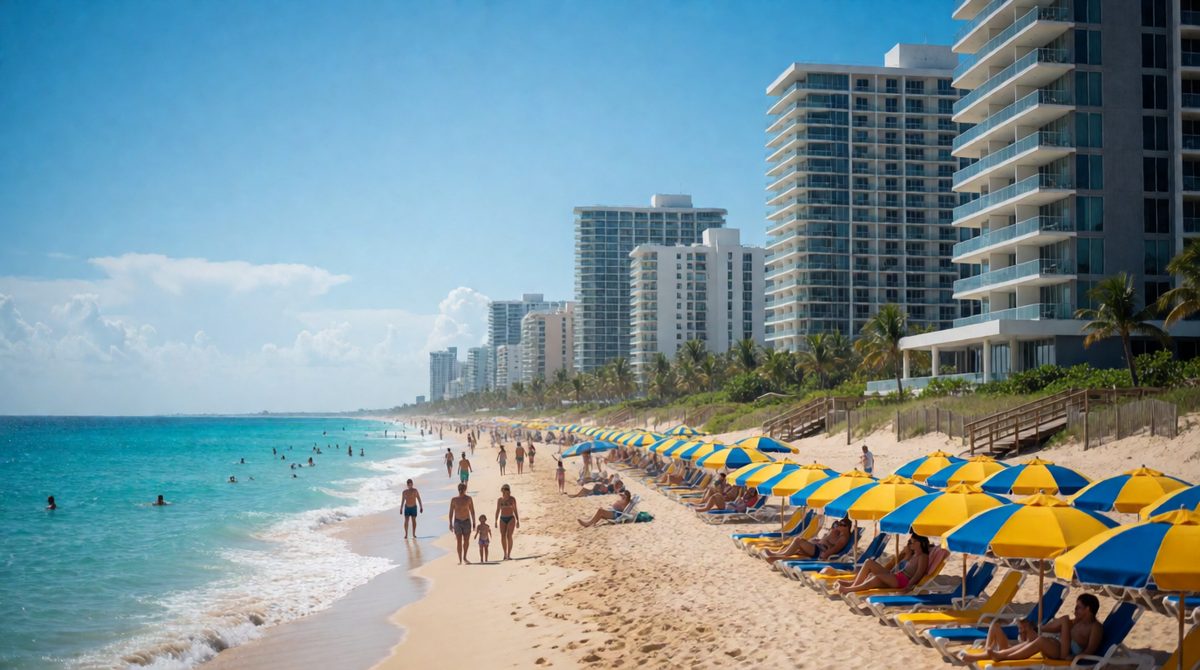
Tourism has big impacts on destinations
Question 1 2 Marks
"State two negative social impacts of tourism on a destination."
✅ Model Answer
1. Increased crime rates as tourist areas attract pickpockets and theft.
2. Loss of local culture as communities adapt to tourist expectations (cultural dilution).
Each point scores 1 mark. No explanation needed here keep it short and clear.
Question 2 4 Marks
"Explain two economic benefits of tourism for a developing country."
✅ Model Answer
Point 1: Tourism creates jobs for local people. In Kenya, the tourism industry employs over 1.5 million people directly and indirectly, providing income for families who might otherwise have no regular employment.
Point 2: Tourism brings in foreign currency, which helps the government fund public services. In The Maldives, tourism accounts for over 25% of GDP, allowing investment in schools, hospitals and infrastructure.
Each point + development = 2 marks. Total = 4 marks.
✍ Exam-Style Question Set 2: The Butler Model (TALC)
Understanding the Butler Tourism Area Life Cycle
The Tourism Area Life Cycle (TALC), developed by Richard Butler in 1980, describes how tourist destinations change over time. It has six stages:
🚀 Exploration & Involvement
Small numbers of adventurous tourists arrive. Few facilities exist. Local people begin to provide basic services. Example: parts of rural Bhutan in the 1970s.
📈 Development & Consolidation
Tourist numbers grow rapidly. Outside companies invest. Infrastructure improves. The destination becomes well-known. Example: Cancún, Mexico in the 1980s.
⚠ Stagnation & Decline/Rejuvenation
Growth slows or stops. The destination may decline (like Blackpool) or reinvent itself (like Bilbao, Spain, which used culture-led regeneration).
Question 3 6 Marks
"Discuss the extent to which the Butler Model is useful for managing tourist destinations."
✅ Model Answer Structure
Introduction: The Butler Model is a theoretical framework that helps planners understand where a destination is in its development cycle.
Point FOR: The model is useful because it helps governments predict when a destination might reach its carrying capacity and take action before decline sets in. For example, Majorca used the model to identify it was in the stagnation stage and invested in eco-tourism and quality tourism to attract higher-spending visitors rather than mass tourists.
Point AGAINST: However, the model is criticised for being too simplistic. Not all destinations follow the same path some skip stages or decline suddenly due to events like terrorism or natural disasters. For example, Tunisia's tourism collapsed rapidly after the 2015 Sousse attacks, which the model could not predict.
Conclusion: Overall, the Butler Model is a useful starting point for planning, but it should be used alongside other tools and real-time data to be truly effective.
✍ Exam-Style Question Set 3: Carrying Capacity & Management
Key Definition Reminder
Carrying capacity is the maximum number of tourists a destination can handle without causing unacceptable damage to the environment, local community, or visitor experience.
Question 4 4 Marks
"Explain how one tourist destination has managed the problem of overtourism."
🔍 Case Study: Venice, Italy
Venice receives over 30 million visitors per year far beyond its sustainable carrying capacity for a city of just 250,000 residents. The impacts include:
- Overcrowded streets and bridges, making daily life difficult for locals
- Rising property prices forcing residents out of the city
- Damage to historic buildings from vibrations caused by large cruise ships
Management strategies used:
- 🚫 Day-tripper tax since 2024, Venice charges day visitors €5 on busy days to discourage casual visits
- 🚫 Cruise ship bans large cruise ships have been banned from the Venice Lagoon to reduce environmental damage
- 🚫 Tourist flow management turnstiles and barriers have been trialled at key entry points during peak times
A strong answer would name Venice, describe a specific strategy and explain how it reduces the impact of overtourism.
Question 5 6 Marks
"Assess the effectiveness of strategies used to manage the negative impacts of tourism at a destination you have studied."
✅ How to Approach This Answer
Use the PEEL structure for each paragraph. Aim for 2–3 paragraphs plus a conclusion. Always evaluate don't just describe what was done, say how well it worked and what the limitations are.
Example structure using The Galapagos Islands:
- Strategy 1: Visitor permits and limits effective at protecting wildlife but limits economic income for local guides
- Strategy 2: Zoning certain areas are off-limits to tourists, protecting nesting sites, but hard to enforce across such a large area
- Conclusion: Strategies have been partially successful wildlife populations have recovered in some areas but ongoing pressure from tourism means constant management is needed
💡 Common Exam Mistakes to Avoid
❌ Mistakes That Cost Marks
- Writing about impacts without saying whether they are positive or negative
- Forgetting to use named examples "a country in Africa" is not enough
- Only writing one side of an argument in a "discuss" question
- Confusing ecotourism with sustainable tourism (they're related but not the same!)
- Not writing a conclusion for 6-mark questions
✅ Habits That Gain Marks
- Always name a real place, company, or organisation
- Use geographical terminology: carrying capacity, multiplier effect, leakage, TALC
- Balance your argument examiners reward students who can see both sides
- Link your answer back to the question in your conclusion
- Use connective phrases: "This is significant because...", "However...", "In contrast..."
🔎 Key Vocabulary for Theme 3 Exam Answers
Use these terms in your answers to show the examiner you know your stuff:
- Economic leakage: When money spent by tourists leaves the local economy (e.g. profits going to foreign-owned hotels)
- Multiplier effect: When tourist spending circulates through the local economy, creating further income and jobs
- Ecotourism: Responsible travel to natural areas that conserves the environment and improves the wellbeing of local people
- Overtourism: When too many tourists visit a place, causing damage to the environment, culture, or quality of life
- Carrying capacity: The maximum number of visitors a place can handle sustainably
- Zoning: Dividing a destination into areas with different rules for tourist access
- Demarketing: Deliberately discouraging tourists from visiting a place (or visiting at certain times) to reduce pressure
🏆 Final Exam Checklist for Theme 3
Before your exam, make sure you can confidently do all of the following:
✅ Impacts
- List positive and negative economic impacts
- List positive and negative social/cultural impacts
- List positive and negative environmental impacts
- Give a named example for each type
✅ Management
- Explain what carrying capacity means
- Describe strategies used to manage overtourism
- Evaluate the effectiveness of those strategies
- Use a named case study (e.g. Venice, Galapagos)
✅ Exam Technique
- Know the difference between "state", "explain" and "discuss"
- Use PEEL for longer answers
- Always include named examples
- Write a conclusion for 6-mark questions