📝 Why "Describe" and "Suggest" Questions Are So Important
In your iGCSE Travel & Tourism exam, two of the most common command words you'll see are Describe and Suggest. They appear in questions worth 2, 3 and 4 marks so getting them right can make a real difference to your grade. The good news? Once you understand exactly what each word is asking you to do, these questions become much more manageable.
Many students lose marks not because they don't know the content, but because they misread what the question is actually asking. Let's fix that right now.
Key Definitions:
- Describe: Say what something is like. Give facts, figures, features, or characteristics. Do not explain why just say what you can see or observe.
- Suggest: Give a possible reason, cause, or idea. You are not expected to know the definite answer you are making a sensible, reasoned proposal based on your knowledge.
💡 The Golden Rule
Describe = What? | Suggest = Why? / How? / What might happen?
If you mix these up in the exam, you will not get full marks even if your answer is accurate. Always re-read the command word before you write anything.
📋 Breaking Down "Describe" Questions
A "Describe" question wants you to paint a picture using facts. Think of it like describing a photograph to someone who can't see it. You tell them what is there not why it's there.
🔎 What Does a Good "Describe" Answer Look Like?
Examiners are looking for specific detail. Vague answers like "there are lots of tourists" will not score well. You need to use data, locations, names, or clear descriptive language.
❌ Weak Answer (1/2 marks)
Question: Describe the pattern of tourist arrivals shown in the graph.
"The number of tourists goes up and then comes down a bit."
This is vague. No figures, no specific points, no real detail. The examiner cannot award full marks.
✅ Strong Answer (2/2 marks)
Question: Describe the pattern of tourist arrivals shown in the graph.
"Tourist arrivals increased steadily from 2 million in 2010 to a peak of 6.5 million in 2018, before falling sharply to 3 million in 2020, likely due to the COVID-19 pandemic."
This uses data, identifies the trend and notes the key turning point. Full marks.
Top tips for "Describe" answers:
- Always quote figures or data if a graph or table is provided
- Identify the overall trend (increasing, decreasing, fluctuating)
- Mention any anomalies or turning points
- Use geographical or tourism-specific vocabulary
- Do not explain causes save that for "Suggest" or "Explain" questions
📋 Breaking Down "Suggest" Questions
A "Suggest" question is asking you to think like a geographer. You need to give a possible reason or idea and crucially, you need to justify it. Just stating a reason without linking it back to the context won't score full marks.
🔎 What Does a Good "Suggest" Answer Look Like?
The key word here is possible. The examiner knows there might be more than one correct answer. They want to see that your suggestion is sensible and that you can back it up with reasoning.
❌ Weak Answer (1/3 marks)
Question: Suggest reasons why tourist numbers to a coastal resort may decline.
"Tourists might stop coming because the resort gets old and boring."
This is too vague. "Old and boring" is not a geographical term. No development or justification is given.
✅ Strong Answer (3/3 marks)
Question: Suggest reasons why tourist numbers to a coastal resort may decline.
"Tourist numbers may fall because the resort has reached the decline stage of the Butler Model, where infrastructure has deteriorated and the destination has lost its appeal to mainstream tourists. Additionally, competition from newer, cheaper destinations such as long-haul resorts in South East Asia may attract visitors away. Environmental damage, such as polluted beaches, can also deter tourists who seek high-quality natural experiences."
Three distinct, justified points. Full marks.
💡 The "Because... Therefore..." Technique
When answering a "Suggest" question, always try to use this structure:
"[Reason] because [explanation], therefore [consequence for tourism]."
Example: "Tourist numbers may fall because the local environment has been damaged by overtourism, therefore visitors seeking natural beauty will choose alternative destinations."
This forces you to fully develop your point which is exactly what examiners reward.
✍ Exam-Style Question Set: Describe and Suggest in Action
Now let's put this into practice with some real exam-style questions. Read each question carefully, identify the command word and think about what kind of answer is needed before reading the model response.
Question 1 2 Marks
"Study Figure 1, which shows visitor numbers to a national park over a 10-year period. Describe the trend in visitor numbers shown."
✅ Model Answer
"Visitor numbers to the national park increased overall between 2012 and 2022, rising from approximately 800,000 to 1.4 million. The growth was relatively steady until 2019, after which there was a sharp drop in 2020, before recovering strongly in 2021–2022."
Why this scores 2/2: It identifies the overall trend, uses approximate figures, notes a specific anomaly (the 2020 drop) and uses clear descriptive language. No causes are given that's not what was asked.
Question 2 3 Marks
"Suggest reasons why a tourist destination in a developing country might experience rapid growth in visitor numbers."
✅ Model Answer
"One reason is improved air connectivity new budget airline routes make the destination more accessible and affordable to international tourists. For example, the expansion of low-cost carriers into East Africa has boosted tourism to countries like Kenya and Tanzania.
A second reason is government investment in tourism infrastructure, such as new hotels, roads and airports. This increases the destination's capacity and quality, attracting higher-spending tourists.
Finally, growing global interest in ecotourism and wildlife experiences means that destinations with unique natural environments such as tropical rainforests or safari parks are increasingly popular with tourists seeking authentic, sustainable travel."
Why this scores 3/3: Three distinct, developed points, each with a justification or example. The answer stays focused on the question context (developing country).
Question 3 4 Marks
"Describe the economic impacts of tourism on a destination you have studied. Suggest one reason why these impacts may not always be positive."
✅ Model Answer
Describe part: "Tourism in Dubai has generated significant economic benefits. It has created thousands of jobs in hotels, retail and transport. In 2019, tourism contributed approximately 11.5% of Dubai's GDP. The construction of purpose-built attractions such as the Burj Khalifa and Palm Jumeirah has attracted foreign investment and boosted the local economy."
Suggest part: "However, these economic impacts may not always be positive because of the problem of economic leakage. In many developing destinations, a large proportion of tourist spending returns to foreign-owned companies such as international hotel chains rather than staying in the local economy. This means local communities may see limited financial benefit despite high visitor numbers."
Why this scores 4/4: The describe section gives specific facts and figures. The suggest section introduces a new concept (leakage), explains it clearly and links it back to the question context.
🔍 Case Study Focus: Maldives Describing and Suggesting in Context
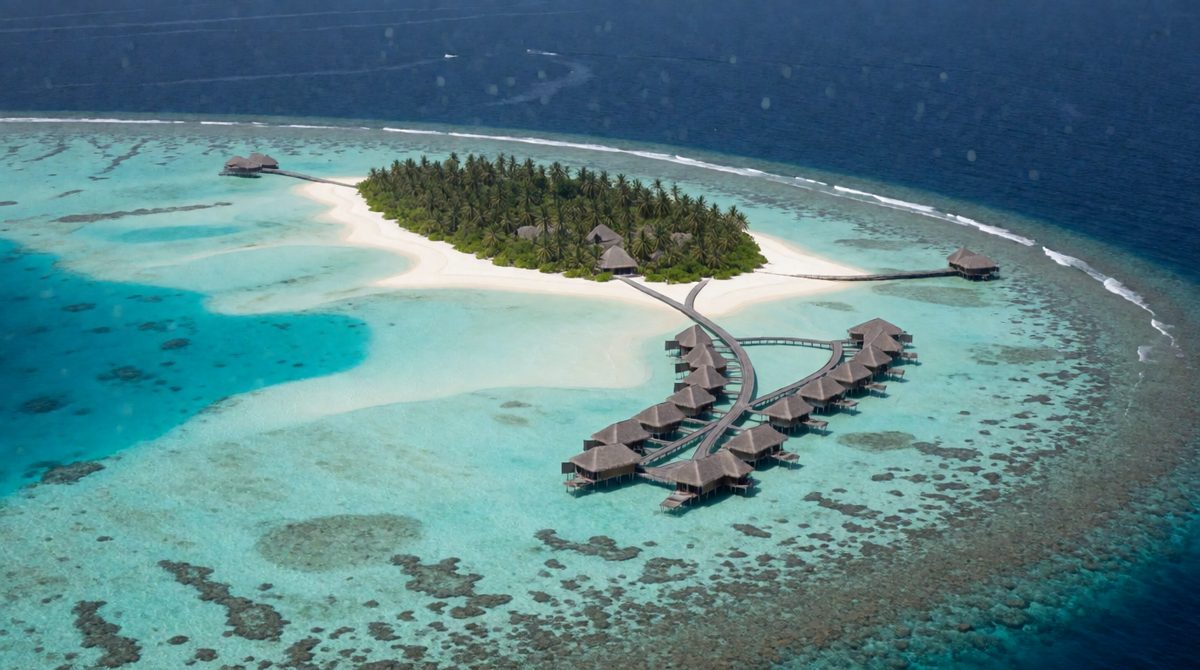
The Maldives is a useful case study for exam answers
The Maldives is a brilliant case study for practising both command words. It gives you lots of data to describe and plenty of issues to suggest reasons for.
🏖 The Maldives: Key Facts for Exam Use
- Located in the Indian Ocean a group of over 1,000 coral islands
- Tourism accounts for around 28% of GDP and over 60% of foreign exchange earnings
- Visitor numbers grew from around 600,000 in 2005 to over 1.7 million in 2019
- The country faces serious threats from rising sea levels due to climate change
- Most resorts are foreign-owned leading to significant economic leakage
- The government has invested in sustainable tourism policies to protect coral reefs
📝 Using the Maldives in Describe and Suggest Questions
📋 Describe Question
"Describe the growth of tourism in the Maldives."
Use the figures above quote the GDP percentage, the visitor number growth and the time period. Identify the overall trend.
📋 Suggest Question
"Suggest reasons why the Maldives may face challenges in the future."
Think: climate change, sea level rise, over-dependence on one industry, economic leakage, environmental fragility of coral reefs.
📋 Combined Question
"Describe the economic importance of tourism and suggest why it creates problems."
Describe: GDP figures, jobs, foreign exchange. Suggest: leakage, overdependence, vulnerability to global events like pandemics.
⚠ The Most Common Mistakes in Describe and Suggest Questions
Even well-prepared students drop marks on these questions. Here are the most frequent errors and how to avoid them.
❌ Mistakes to Avoid
- Explaining instead of describing: If asked to describe a graph, don't say "this is because..." just say what you see.
- Vague suggestions: "It might get worse" is not a suggestion. Give a specific, named reason.
- Repeating the same point: If a question asks for two reasons, make sure they are genuinely different.
- Ignoring the resource: If a graph or map is provided, you must refer to it in a "Describe" answer.
- No development in Suggest answers: A one-word answer like "pollution" scores nothing. Explain the link.
✅ Habits That Gain Marks
- Quote data: Use specific numbers, percentages, or dates from any resource provided.
- Use subject vocabulary: Words like "economic leakage", "carrying capacity", "multiplier effect" show the examiner you understand the subject.
- Develop every point: After making a suggestion, always add "because..." or "therefore..."
- Name real places: Case studies make your answers more convincing and specific.
- Check the mark allocation: A 2-mark describe question needs 2 clear points. A 4-mark question needs more depth.
📈 Mark Allocation: How Many Points Do You Need?
One of the most practical skills in the exam is knowing how much to write. Use the mark allocation as your guide:
📄 2-Mark Question
Two clear, distinct points. Each point should be one sentence. For "Describe" two observable features. For "Suggest" one reason with a brief justification.
📄 3-Mark Question
Three points, or two points with one fully developed. For "Suggest" aim for two reasons with explanation, or three brief reasons. Always use linking words: "because", "therefore", "this means that".
📄 4-Mark Question
Four points, or two well-developed points. If the question combines "Describe" and "Suggest", split your answer clearly. Use a case study or named example to strengthen your response.
🏆 Final Exam Technique Checklist: Describe and Suggest Questions
- ✅ I have identified the command word before writing my answer
- ✅ For "Describe" I have used data, figures, or specific detail
- ✅ For "Describe" I have NOT given causes or explanations
- ✅ For "Suggest" I have given a clear, named reason
- ✅ For "Suggest" I have justified my reason using "because" or "therefore"
- ✅ I have matched the number of points to the mark allocation
- ✅ I have used subject-specific vocabulary (e.g. multiplier effect, leakage, TALC)
- ✅ I have referred to a named place or case study where relevant
- ✅ I have re-read my answer to check it actually answers the question asked
🔎 Key Vocabulary to Use in Describe and Suggest Answers
Using the right vocabulary shows the examiner you understand the subject and it can push a borderline answer into the next mark band. Learn these terms and practise using them in your answers.
📈 Describing Trends
- Increased / decreased steadily
- Fluctuated / remained stable
- Peaked at / fell sharply to
- Grew by X% between [years]
- An anomaly / exception is...
📋 Suggesting Reasons
- One possible reason is...
- This may be because...
- As a result of... tourists may...
- This could lead to...
- Another factor might be...
🌎 Subject Terms
- Economic leakage
- Multiplier effect
- Carrying capacity
- Overtourism
- Sustainable tourism
- Butler Model / TALC