🌿 Sustainability in Customer Service
You already know that customer service is about meeting and exceeding customer needs. But in the modern travel industry, there's a growing expectation that businesses do this responsibly without damaging the planet in the process. This is where sustainability standards come in.
Sustainability in travel and tourism means running a business in a way that protects the environment, supports local communities and can continue long into the future without using up resources faster than they can be replaced.
Key Definitions:
- Sustainability: Meeting the needs of today's travellers without harming the ability of future generations to enjoy the same destinations and resources.
- Sustainability Standards: Agreed rules or targets that travel businesses follow to reduce their environmental and social impact.
- Paperless Transactions: Completing bookings, payments, check-ins and communications digitally without printing physical documents.
- Sustainable Options: Choices offered to customers that have a lower environmental impact, such as carbon offset schemes, eco-friendly accommodation, or public transport alternatives.
🌎 Why Does This Matter for the iGCSE?
The Cambridge iGCSE Travel & Tourism syllabus specifically asks you to understand how sustainability links to customer service. Examiners want to see that you can explain why businesses adopt green practices, how they communicate these to customers and what the benefits are for both the business and the environment.
📄 Paperless Transactions: Going Digital
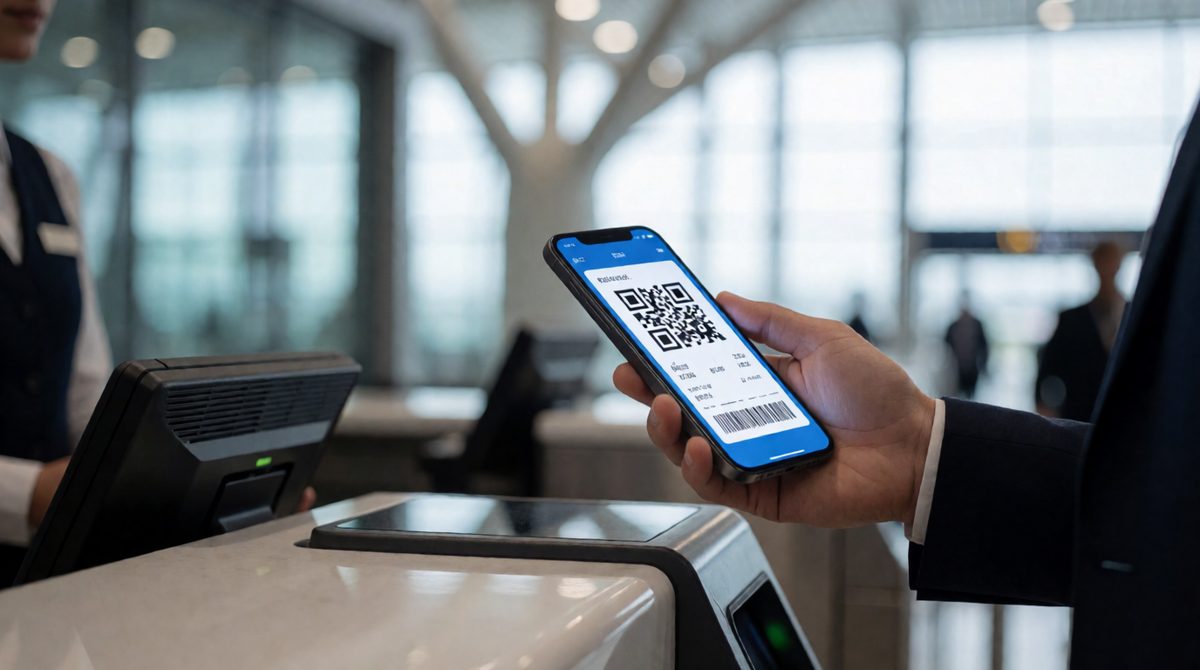
Digital tickets cut paper waste
One of the most visible ways travel businesses have improved their sustainability is by switching to paperless systems. Think about the last time someone in your family booked a holiday chances are, everything happened on a phone or laptop, with no paper involved at all.
📷 What Counts as a Paperless Transaction?
Paperless transactions cover every part of the customer journey where paper used to be the norm but has now been replaced by digital alternatives.
✈ E-Tickets
Airlines like British Airways and easyJet send boarding passes directly to your phone or email. No printed ticket needed. Passengers scan their phone at the gate.
🏢 Digital Check-In
Hotels such as Marriott and Hilton allow guests to check in via an app, receive a digital room key and check out without visiting the front desk at all.
💳 Online Payments
Travel agents and tour operators process payments through secure online portals. Receipts, invoices and booking confirmations are all sent by email or stored in an app.
📋 More Examples of Going Paperless
- Digital itineraries: Tour operators like TUI send full holiday itineraries via app rather than printing thick paper booklets.
- E-brochures: Travel agents now offer interactive digital brochures instead of the heavy printed catalogues that used to fill travel agency windows.
- QR code menus: Cruise ships and hotel restaurants replaced printed menus with QR codes during the pandemic and many kept them permanently.
- Digital luggage tags: Some airlines are trialling electronic luggage tags that can be updated via an app, removing the need for printed paper tags.
- E-visas: Many countries now issue travel visas electronically, removing the need for physical stamps or paper documents.
💡 Did You Know?
The aviation industry alone used to print billions of paper boarding passes every year. By switching to mobile boarding passes, airlines have saved thousands of tonnes of paper annually. Ryanair reported that its move to fully digital boarding passes removed the need for printing at check-in desks across all its European airports.
🌿 Benefits of Paperless Transactions
Going paperless isn't just good for the environment it actually improves the customer experience too. That's why it's such a powerful example for your exam answers: it shows how sustainability and good customer service go hand in hand.
🌿 Environmental Benefits
- Reduces paper waste and deforestation
- Lowers carbon emissions from printing and postal delivery
- Reduces use of ink, toner and plastic packaging
- Supports a business's overall sustainability targets
📈 Business and Customer Benefits
- Saves money on printing, postage and storage
- Speeds up the booking and check-in process
- Reduces errors digital records are easier to update
- Improves customer satisfaction everything is in one place on their phone
- Attracts eco-conscious customers who prefer green businesses
📋 Case Study: TUI Group Digital First
TUI, one of the world's largest tour operators, made a major commitment to paperless customer service as part of its "Better Holidays, Better World" sustainability strategy. TUI replaced its printed holiday brochures with a fully digital catalogue and app-based booking system. Customers receive all documents booking confirmations, boarding passes, transfer details and resort information through the TUI app. The company estimated this saved millions of sheets of paper per year across its UK operations alone. Importantly, TUI trained its customer service staff to guide customers through using the app, ensuring that even less tech-savvy travellers could benefit. This is a great example of how sustainability and customer service training work together.
♻ Recommending Sustainable Options to Customers
A key part of modern customer service in travel and tourism is proactively recommending sustainable choices to customers. This means staff don't just wait to be asked they actively suggest greener alternatives as part of the service they provide.
This is increasingly expected by customers, particularly younger travellers. Research by Booking.com found that over 70% of global travellers say they want to travel more sustainably but many don't know how. This is where well-trained travel staff can make a real difference.
🚌 How Travel Businesses Recommend Sustainable Options
There are many ways that travel and tourism staff can guide customers towards more sustainable choices, without making them feel pressured or guilty.
🌞 Carbon Offsetting
Airlines and travel agents offer customers the option to offset the carbon emissions from their flights by contributing to environmental projects such as tree planting or renewable energy schemes. easyJet and British Airways both offer this at the point of booking.
🏠 Eco-Certified Accommodation
Travel agents can recommend hotels that hold recognised green certifications, such as the Green Key award or Travelife Gold. These hotels have proven they meet strict environmental standards from energy use to waste management.
🚌 Sustainable Transport
Staff can suggest rail travel instead of short-haul flights (especially within Europe), electric vehicle hire, or public transport options at the destination. Eurostar actively markets itself as the low-carbon alternative to flying between London and Paris.
🌿 Further Sustainable Recommendations
- Slow travel: Encouraging customers to stay longer in fewer places, reducing the number of flights taken and deepening the travel experience.
- Local and ethical tours: Recommending tours run by local guides and operators rather than large international companies, keeping money within the local economy.
- Wildlife-friendly excursions: Advising against activities that exploit animals (such as elephant rides or performing dolphin shows) and instead recommending responsible wildlife experiences.
- Reusable products: Some hotels now provide guests with reusable water bottles and bamboo toiletries instead of single-use plastic items.
- Off-season travel: Recommending travel outside peak season to reduce pressure on popular destinations and often save the customer money too.
📋 Case Study: Booking.com Sustainable Travel Badge
Booking.com introduced a "Travel Sustainable" badge for properties that meet verified environmental criteria. When customers search for accommodation, they can filter results to show only sustainable properties. Customer service staff whether online chatbots or human agents are trained to highlight these options and explain what the badge means. Properties earn the badge by demonstrating actions such as using renewable energy, reducing single-use plastics and supporting local communities. This system makes it easy for customers to make greener choices without having to do their own research, which is a brilliant example of sustainability being built directly into the customer service experience.
🏭 Staff Training for Sustainable Customer Service
For sustainability standards to actually work in practice, staff must be trained to understand them and communicate them confidently to customers. A travel agent who doesn't know what carbon offsetting means can't recommend it effectively. A hotel receptionist who doesn't know about the property's green initiatives can't mention them to guests.
📚 What Staff Need to Know
- The environmental certifications held by the products they sell
- How to explain carbon offsetting simply and clearly
- Which accommodation options are eco-certified
- How to use and guide customers through digital/paperless systems
- How to answer customer questions about sustainability honestly
👨🏫 Training Methods Used
- Online sustainability modules (e-learning)
- Product training from eco-certified hotels and tour operators
- Role-play scenarios practising how to recommend green options
- Regular updates as new sustainability standards are introduced
- Incentive schemes rewarding staff who successfully upsell sustainable products
💡 Key Exam Point
In the exam, if you're asked about sustainability in customer service, always try to give specific examples name a real business, a real scheme, or a real product. Vague answers like "the hotel was more eco-friendly" will score fewer marks than "the hotel held a Green Key certification, meaning it had reduced its water and energy consumption by verified amounts." Examiners reward precise, applied knowledge.
⚖ Challenges of Implementing Sustainability Standards
It's not always easy for travel businesses to go green. There are real challenges that you should be aware of for your exam especially if a question asks you to evaluate or discuss sustainability in customer service.
- Digital exclusion: Not all customers are comfortable with paperless systems. Older travellers or those without smartphones may find digital-only services difficult to use, which can reduce customer satisfaction.
- Cost: Upgrading to digital systems and gaining sustainability certifications can be expensive, particularly for smaller businesses like independent travel agents or boutique hotels.
- Greenwashing: Some businesses claim to be sustainable without genuinely meeting standards. This misleads customers and damages trust in the industry as a whole.
- Customer resistance: Some customers simply don't prioritise sustainability when booking they want the cheapest or most convenient option, regardless of environmental impact.
- Inconsistency: A large hotel chain might have excellent sustainability standards at its head office but poor implementation at individual properties around the world.
📋 Case Study: Eurostar Rail as the Sustainable Choice
Eurostar, the high-speed rail service connecting London with Paris, Brussels and Amsterdam, has built its entire brand around being the sustainable alternative to flying. Eurostar claims its trains produce around 90% less carbon per passenger than the equivalent short-haul flight. Its customer service teams are trained to highlight this statistic when speaking to business and leisure travellers. Eurostar also operates a fully paperless ticketing system all tickets are issued digitally and scanned from a phone or smartcard. The company has partnered with environmental charities and offers customers the option to contribute to reforestation projects at the point of booking. Eurostar's approach shows how sustainability can be woven into every aspect of the customer experience, from the first booking click to the final destination.
✅ Summary: Sustainability Standards in Customer Service
Sustainability is no longer just a nice extra in travel and tourism it's becoming a core part of what customers expect and what businesses must deliver. From paperless boarding passes to recommending eco-certified hotels, the travel industry is finding ways to serve customers brilliantly while protecting the planet.
- 📄 Paperless transactions reduce waste, save money and speed up the customer experience
- 🌿 Recommending sustainable options builds trust, attracts eco-conscious customers and supports destinations
- 👨🏫 Staff training is essential sustainability only works if the people delivering the service understand it
- ⚠ Challenges exist digital exclusion, cost and greenwashing are real issues businesses must manage
- 🏆 Certifications and schemes like Green Key, Travelife and Booking.com's Travel Sustainable badge help customers identify genuinely green businesses