✈ In Airlines
- Flights delayed with no explanation or apology
- Luggage lost with no follow-up
- Rude cabin crew or check-in staff
- Overbooking passengers without compensation
- Poor communication during disruptions
Sign up to access the complete lesson and track your progress!
Unlock This CourseWe've looked at all the brilliant things that happen when customer service is great. But what about when it goes badly wrong? In travel and tourism, poor service doesn't just annoy one person it can ripple outward and cause serious damage to a business. Understanding why bad service is so harmful is just as important as knowing what good service looks like.
Bad customer service means failing to meet customer expectations whether that's being rude, slow, unhelpful, or simply not delivering what was promised. In an industry built on experiences and emotions, this can be devastating.
Key Definitions:
Research by the White House Office of Consumer Affairs found that a dissatisfied customer will tell between 9 and 15 people about their bad experience. Around 13% of unhappy customers tell more than 20 people. In the age of social media, that number can reach millions.
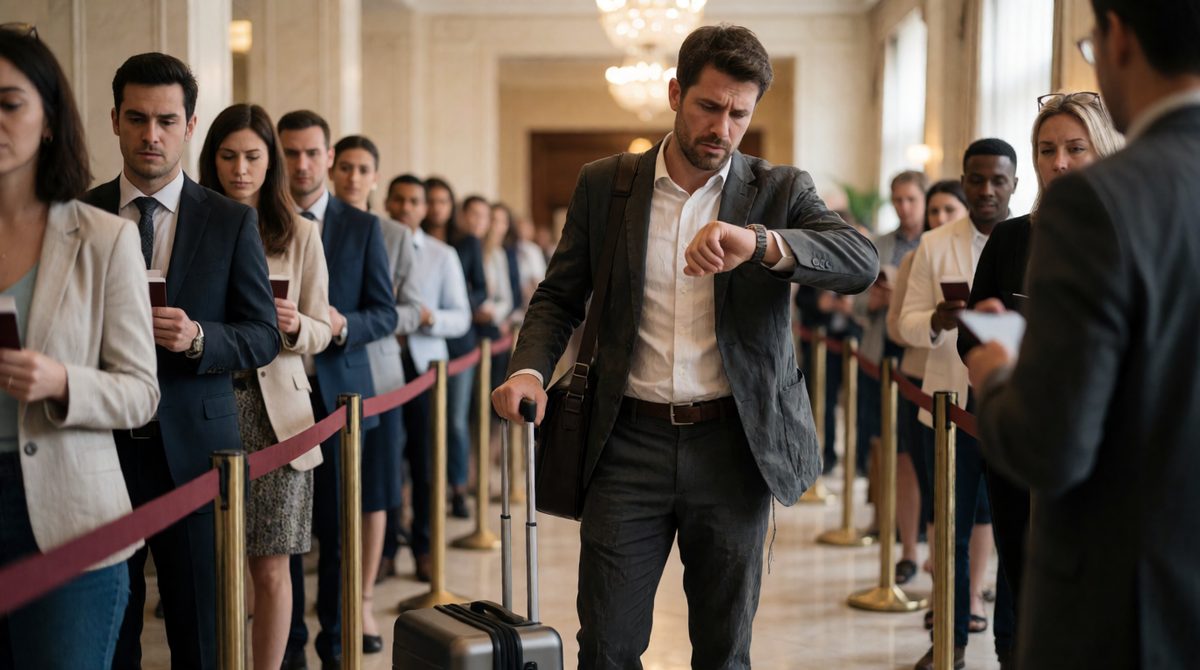
Poor service leaves customers unhappy
Before we explore the impacts, it helps to know what bad service actually involves. In travel and tourism, it can take many forms from a rude hotel receptionist to a tour rep who never shows up.
The consequences of poor service are wide-ranging. They affect the business financially, damage its reputation and reduce its ability to compete. Let's break these down clearly.
The most immediate impact of bad service is financial. When customers are unhappy, they don't come back and they don't spend money. This hits the business directly in its income.
Customers who have a bad experience simply won't book again. A hotel that loses even 10 repeat customers per month loses thousands of pounds in annual revenue.
Businesses may be legally required to offer refunds or compensation for poor service especially under UK and EU consumer protection laws. This directly reduces profit.
Hotels with bad reviews see lower occupancy rates. Airlines with poor reputations see fewer passengers. Empty seats and rooms mean wasted fixed costs.
In 2008, musician Dave Carroll watched baggage handlers throw his guitar onto the tarmac at Chicago O'Hare Airport. The guitar was broken. United Airlines' customer service team dismissed his complaints for nine months, refusing to compensate him.
Carroll responded by writing and uploading a song called "United Breaks Guitars" to YouTube. Within four days, it had over 1 million views. Within a month, it had 5 million. United's stock price dropped by 10% in the days following wiping approximately $180 million off the company's value.
💡 Exam point: This case shows how failing one customer and then handling the complaint badly, can lead to massive financial and reputational damage especially in the social media age.
In travel and tourism, reputation is everything. People choose holidays based on recommendations. When customers have a bad experience, they talk about it and in today's world, they post about it online for everyone to see.
Negative word of mouth is one of the most damaging consequences of poor service. Unlike a private complaint, a bad review on TripAdvisor, Google, or social media is permanent and public. Future customers will read it before deciding whether to book.
A single negative tweet or Instagram post can reach thousands of followers instantly. If it goes viral, it can reach millions far beyond the business's own marketing reach.
TripAdvisor has over 1 billion reviews. A drop from 4.5 to 3.8 stars can dramatically reduce bookings, as most travellers filter searches by rating.
Studies show that 94% of travellers say a negative review has convinced them to avoid a business. Trust, once lost, is very hard to rebuild.
Thomas Cook was one of the world's oldest travel companies, founded in 1841. By 2019, years of poor customer experiences, outdated service and failure to adapt had eroded customer trust. Complaints about poor hotel quality, unhelpful reps and slow refund processes were widespread online.
While financial mismanagement was the primary cause of collapse, the company's declining customer satisfaction scores and negative online reputation made it harder to attract new customers or retain loyal ones. When the company folded in September 2019, 600,000 tourists were stranded abroad and 21,000 jobs were lost.
💡 Exam point: Poor customer service doesn't just lose individual customers over time, it can contribute to the complete failure of a business.
Loyal customers are the backbone of any successful travel business. They book again and again, spend more and recommend the business to others. Bad service destroys this loyalty instantly.
It costs a business five to seven times more to attract a new customer than to keep an existing one. When poor service drives loyal customers away, the business must spend far more on marketing just to replace them and it may never fully recover those relationships.
Bad customer service doesn't just affect customers it affects staff too. When a business develops a poor reputation, it creates a difficult working environment. Staff who deal with constant complaints become stressed and demoralised. High staff turnover follows, which leads to even worse service a vicious cycle.
Poor service → unhappy customers → complaints and bad reviews → fewer bookings → less revenue → budget cuts → less staff training → even poorer service. This cycle is very hard to break once it starts.
In the UK and internationally, travel businesses have legal obligations to their customers. Consistently poor service can lead to serious legal consequences.
In the UK, customers are entitled to services carried out with reasonable care and skill. Failure to do so gives customers the right to a repeat performance or a price reduction.
Under UK Package Travel Regulations, tour operators are legally responsible for all elements of a package holiday. Poor service from a hotel or transfer company can make the operator liable for compensation.
Travel businesses regulated by ABTA or ATOL must meet service standards. Repeated complaints can lead to investigations, fines, or loss of membership which makes it illegal to sell certain products.
The travel and tourism industry is hugely competitive. There are thousands of hotels, airlines, tour operators and travel agents all competing for the same customers. A business with a reputation for poor service will simply lose customers to competitors who offer better experiences.
In the digital age, customers can compare businesses in seconds. If your hotel has 200 negative reviews and the one down the road has 200 positive ones, the choice is obvious. Poor service hands your customers directly to your competitors.
For many years, Ryanair was famous for poor customer service hidden fees, unhelpful staff and a dismissive attitude towards complaints. By the early 2010s, the airline had become a byword for bad service, despite its low prices. Customer surveys regularly ranked it among the worst airlines in Europe for satisfaction.
In 2013, CEO Michael O'Leary publicly admitted the airline needed to change its approach. Ryanair launched its "Always Getting Better" programme, improving its website, reducing fees, improving boarding processes and training staff to be more helpful. By 2016, customer satisfaction scores had significantly improved and the airline reported record profits.
💡 Exam point: This case shows that bad service creates competitive disadvantage but also that businesses can recover if they recognise the problem and act decisively. It also shows that price alone is not enough to retain customers if service is consistently poor.
It helps to organise the impacts of bad customer service into clear categories. The iGCSE exam may ask you to discuss, explain, or evaluate these impacts so knowing them in an organised way is really useful.
The iGCSE Travel & Tourism exam will often ask you to explain or evaluate the impacts of bad customer service. Here's what examiners are looking for:
Bad customer service is not just an inconvenience in travel and tourism, it can be catastrophic. From a single rude receptionist to a company-wide failure to handle complaints, the ripple effects touch every part of a business: its finances, its reputation, its staff and its future.
The good news is that understanding these impacts helps businesses avoid them. And for your iGCSE exam, being able to clearly explain why bad service is so damaging with real examples will earn you strong marks.