📋 Making Reservations: The Basics
Every time someone books a hotel room, a flight, a package holiday or a restaurant table, a reservation is being made. In travel and tourism, this is one of the most important customer service skills you can have. Get it right and the customer feels confident and looked after. Get it wrong and the whole trip could fall apart before it even starts.
A reservation is simply a confirmed arrangement that sets aside a product or service for a specific customer at a specific time. It creates a legal agreement between the customer and the business.
Key Definitions:
- Reservation: A booking made in advance to secure a product or service, such as a hotel room, flight seat or tour.
- Confirmation: Written or verbal proof that the reservation has been accepted and recorded.
- Booking reference: A unique code given to a customer so their reservation can be identified and tracked.
- Availability: Whether the product or service the customer wants is actually free on the dates requested.
- Overbooking: When more reservations are taken than there are spaces available a common issue in airlines and hotels.
📞 Telephone Reservations
Still widely used, especially in hotels and smaller travel agencies. Staff must speak clearly, confirm details back to the customer and always send written confirmation afterwards. The customer cannot see you, so tone of voice is everything.
💻 Online Reservations
Platforms like Booking.com, Expedia and airline websites allow customers to book 24/7 without speaking to anyone. These systems are automated and instantly update availability. They are now the most common method of booking worldwide.
📝 What Information Must Be Collected?
When taking a reservation, staff must gather the right information every time. Missing details cause errors, complaints and sometimes legal problems. Whether you are working at a hotel front desk, a travel agency or a call centre, the same core information is always needed.
✅ The Essential Booking Checklist
Think of this as your safety net. Every reservation should include all of the following:
👤 Customer Details
Full name, contact number, email address and sometimes a home address. For international travel, passport details may also be needed.
📅 Dates and Times
Exact check-in and check-out dates, departure and return times, or the specific date of a tour or activity. Always double-check confusing dates is one of the most common booking errors.
🏢 Product Details
Room type, flight class, number of passengers, dietary requirements, accessibility needs, or any special requests. The more specific, the better.
🌎 Case Study: Premier Inn Getting the Booking Right
Premier Inn, one of the UK's largest hotel chains, uses an online booking system that requires customers to enter their name, email, dates, room type and number of guests before any reservation is confirmed. The system automatically sends a confirmation email with a booking reference. If a customer calls to book instead, front desk staff follow the same checklist on their internal system. Premier Inn's policy is to always read back the booking details to the customer before ending the call a simple step that dramatically reduces errors. In 2022, Premier Inn reported that their digital booking system handled over 80% of all reservations, reducing human error significantly.
📁 Types of Reservation Systems
Different businesses use different systems to manage their bookings. Understanding these systems is important for the iGCSE exam, as you may be asked to compare them or explain how they work.
🔢 Manual Systems
Paper-based booking ledgers or simple spreadsheets. Still used by very small guesthouses or independent tour operators. Cheap to run but slow, prone to errors and hard to update in real time. If two staff members take bookings at the same time, double-booking is a real risk.
⚙ Computerised Reservation Systems (CRS)
Used by airlines, large hotel chains and car hire companies. Systems like Amadeus, Sabre and Galileo allow travel agents worldwide to check availability and make bookings instantly. They update in real time, reducing the risk of overbooking and making it easy to manage large volumes of reservations.
🌄 Global Distribution Systems (GDS)
A GDS is a network that connects travel agents with airlines, hotels, car hire firms and other suppliers all in one place. Rather than calling each airline individually, a travel agent can search multiple options at once. The three main GDS platforms are Amadeus, Sabre and Travelport (which includes Galileo and Worldspan). These systems are used by thousands of travel agencies globally and process millions of bookings every day.
✈️ Real Example: British Airways and Amadeus
British Airways uses the Amadeus CRS to manage its flight inventory. When a travel agent in Manchester searches for flights to New York, the Amadeus system checks BA's live availability and shows the agent exactly which seats are free, at what price and in which cabin class. The moment a seat is booked, it is removed from the available inventory preventing anyone else from booking the same seat. This real-time updating is what makes modern reservation systems so reliable.
💰 Taking Payments: Methods and Processes
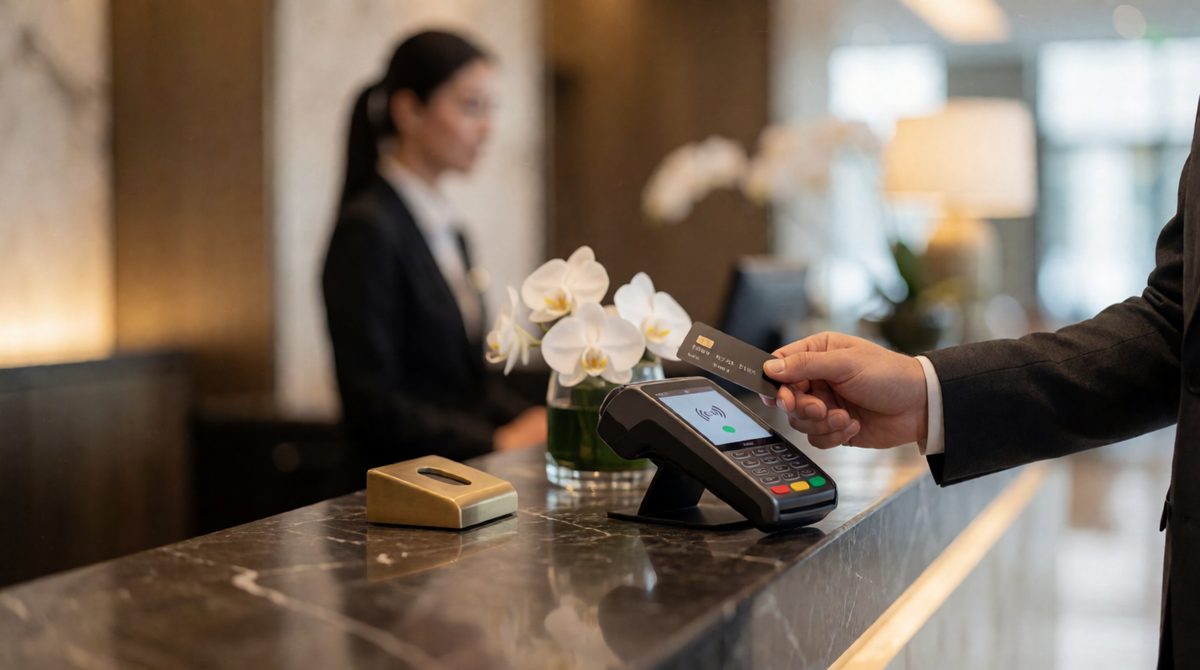
Tourism businesses take payments in many ways
Once a reservation is confirmed, the customer usually needs to pay either in full or as a deposit. In travel and tourism, there are several different ways a customer can pay and staff need to know how to handle each one correctly and securely.
Key Definitions:
- Deposit: A partial payment made upfront to secure a booking, with the remainder paid later.
- Full payment: The entire cost paid at the time of booking.
- Balance due date: The deadline by which the remaining payment must be made often 8–12 weeks before departure for package holidays.
- Receipt: Written proof that a payment has been made.
- Refund: Money returned to a customer, usually when a booking is cancelled.
💳 Payment Methods in Travel and Tourism
💳 Credit and Debit Cards
The most common payment method. Debit cards take money directly from the customer's bank account. Credit cards allow the customer to pay later. Credit card payments offer extra consumer protection under Section 75 of the Consumer Credit Act 1974 important for expensive holidays.
💷 Cash
Still used in some settings, particularly for smaller purchases or in destinations where card payments are less common. Staff must count cash carefully, issue a receipt and follow the business's cash handling procedures to prevent theft or error.
📱 Digital Payments
PayPal, Apple Pay, Google Pay and bank transfers are increasingly common. Many online travel platforms now accept these methods. They are fast and secure but staff must ensure the payment has actually cleared before confirming the booking.
🔒 Payment Security and Fraud Prevention
Handling payments comes with serious responsibilities. Customers are trusting you with their financial information and businesses are legally required to protect it. This is especially important in travel, where bookings often involve large sums of money.
- PCI DSS (Payment Card Industry Data Security Standard): A set of rules that any business taking card payments must follow. It covers how card data is stored, processed and transmitted. Businesses that fail to comply can face heavy fines.
- CVV / Security Code: The three-digit number on the back of a card. Staff should never write this down or store it it is only used at the point of payment.
- Data Protection: Under the UK GDPR (General Data Protection Regulation), customer payment details must be stored securely and not shared without consent.
- Fraud checks: Many systems automatically flag unusual transactions for example, a booking made with a card registered in one country but with a delivery address in another.
🔒 Case Study: TUI UK Secure Payment Processing
TUI UK, one of Britain's largest holiday companies, processes millions of card payments every year through its website and high-street stores. TUI is fully PCI DSS compliant, meaning all card data is encrypted and never stored in plain text. When a customer books in store, the card machine connects directly to the bank the travel agent never sees the full card number. Online, TUI uses 3D Secure authentication (you may know it as "Verified by Visa" or "Mastercard Identity Check"), which sends a one-time code to the customer's phone to confirm their identity. This extra step helps prevent fraudulent bookings and protects both the customer and the business.
⚖️ Deposits, Cancellations and Refunds
Not every booking goes smoothly. Customers change their minds, emergencies happen and sometimes the travel company itself has to cancel. Knowing the rules around deposits and refunds is essential both for working in the industry and for your exam.
📄 How Deposits Work
For most package holidays, customers pay a deposit (typically 10–25% of the total cost) when they book and then pay the full balance closer to the departure date. The deposit secures the booking and shows the customer is committed. If the customer cancels, the deposit is usually non-refundable this covers the costs the tour operator has already paid to airlines and hotels.
✅ Cancellation by the Customer
If a customer cancels, the amount they lose depends on how far in advance they cancel. Most travel companies have a sliding scale cancel 10 weeks before departure and you might only lose your deposit; cancel the day before and you could lose 100% of the cost. These terms must be clearly explained at the time of booking.
💲 Cancellation by the Operator
If the travel company cancels for example, due to a natural disaster or airline insolvency the customer is usually entitled to a full refund or an alternative holiday of equal value. Under the Package Travel Regulations 2018, UK customers booking package holidays have strong legal protections in this situation.
📚 Consumer Protection in Travel Payments
The travel industry has specific laws designed to protect customers when they pay for holidays. These are important exam topics and also genuinely useful to know as a consumer yourself.
- ATOL (Air Travel Organiser's Licence): A UK protection scheme run by the Civil Aviation Authority (CAA). If you book a package holiday that includes a flight and the company goes bust, ATOL ensures you either get your money back or can complete your holiday. Look for the ATOL logo when booking.
- ABTA (Association of British Travel Agents): A trade association that provides protection for non-flight-based holidays and travel services. ABTA members must follow a strict code of conduct.
- Package Travel Regulations 2018: UK law that sets out the rights of customers who book package holidays, including the right to a refund if the holiday is significantly changed or cancelled.
- Section 75, Consumer Credit Act 1974: If you pay for a holiday costing over £100 on a credit card and something goes wrong, the credit card company is jointly liable with the travel company.
📈 Real Example: Thomas Cook Collapse (2019)
When Thomas Cook went into administration in September 2019, around 150,000 UK holidaymakers were stranded abroad and 800,000 future bookings were cancelled. Because most customers had booked ATOL-protected holidays, the CAA organised the largest peacetime repatriation in UK history flying stranded customers home at no extra cost. Customers with future bookings received full refunds. This real-world event shows exactly why ATOL protection matters and why travel businesses must be transparent about financial protection when taking payments.
💡 Exam Tips: Making Reservations and Taking Payments
⚠️ Common Mistakes to Avoid in the Exam
❌ Vague Answers
Don't just say "the staff took the payment." Explain how what method, what security steps, what confirmation was given. Examiners want specific detail.
❌ Confusing ATOL and ABTA
ATOL covers flight-inclusive packages. ABTA covers non-flight holidays and travel services. Many students mix these up. Remember: ATOL = Air Travel.
❌ Forgetting the Customer Perspective
Always think about how the reservation or payment process affects the customer's experience. A smooth, secure booking builds trust and loyalty. A poor one loses business.
📚 Quick Recap: Making Reservations and Taking Payments
- ✅ A reservation secures a product or service for a customer and creates a legal agreement.
- ✅ Essential information includes customer details, dates, product specifics and any special requirements.
- ✅ Reservation systems range from simple paper ledgers to global computerised systems like Amadeus and Sabre.
- ✅ Payment methods include card, cash and digital options each with different security considerations.
- ✅ PCI DSS and UK GDPR set the rules for how payment data must be handled and stored.
- ✅ Deposits secure bookings; cancellation policies must be clearly communicated at the time of booking.
- ✅ ATOL, ABTA and the Package Travel Regulations 2018 protect customers when things go wrong.
- ✅ The Thomas Cook collapse is a key real-world example of why financial protection schemes matter.