🗺 Introduction to Access and Information Provision
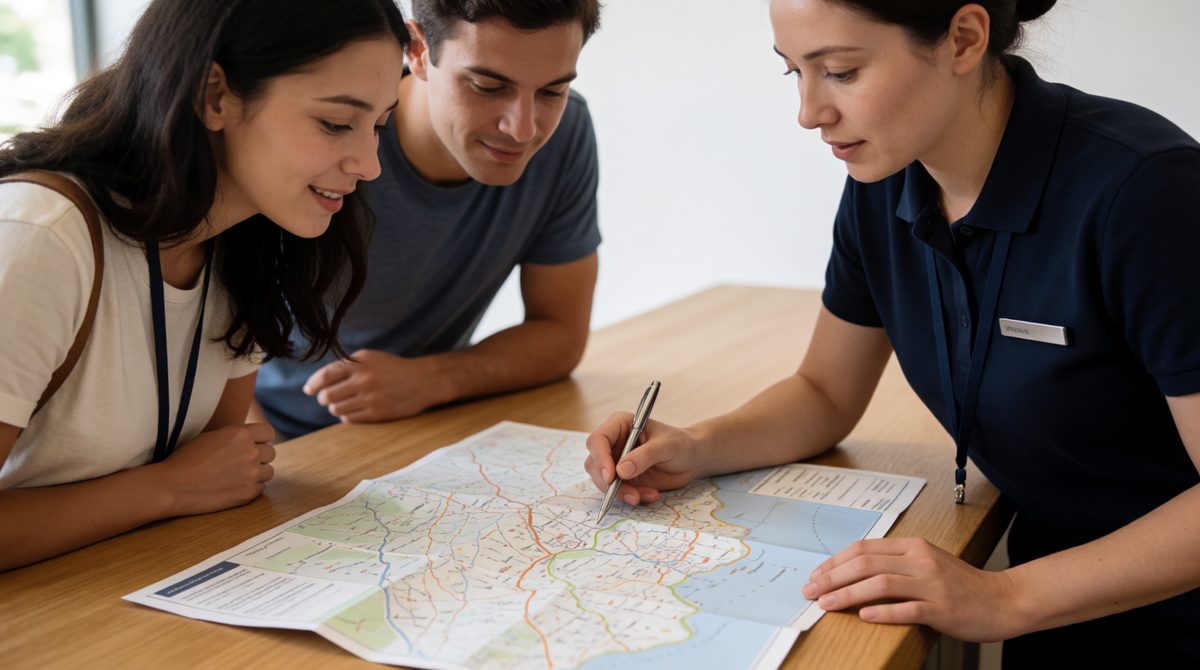
Good information helps every tourist
Imagine arriving in a brand new city. You don't know where anything is, you can't read the signs and there's nobody to help you. Stressful, right? That's exactly why access and information provision is one of the most important parts of customer service in travel and tourism. Getting the right information to the right tourist at the right time can make the difference between a brilliant holiday and a total disaster.
Tourism organisations from airports to theme parks to national parks all have a responsibility to make sure their visitors can find their way around, understand what's on offer and get help when they need it. This applies to all types of tourists, whether they're a solo backpacker, a family with young children, an elderly couple, or a visitor with a disability.
Key Definitions:
- Access: The ability of tourists to physically reach, enter and move around a tourist facility or destination.
- Information Provision: The ways in which tourist organisations supply visitors with the details they need such as opening times, prices, directions and local attractions.
- Tourist Information Centre (TIC): A physical location (often in a town centre or transport hub) where staff provide free information and advice to visitors.
- Accessibility: How easy it is for ALL tourists including those with disabilities, language barriers, or other needs to use a service or facility.
- Inclusive Tourism: Tourism that is designed to be accessible and enjoyable for everyone, regardless of age, ability, or background.
💡 Why Information Matters
Good information helps tourists plan their visit, feel confident and enjoy their experience. Without it, tourists may miss attractions, overspend, or feel frustrated. Well-informed tourists are more likely to stay longer, spend more money and leave positive reviews which is great for the local economy!
♿ Why Access Matters
Access isn't just about ramps and lifts (though those are important!). It also means making sure information is available in different languages, in large print, in audio format and online. Good access means everyone can participate in tourism not just the able-bodied or tech-savvy visitor.
👥 Different Types of Tourists and Their Needs
Different tourists have very different needs when it comes to information and access. A good tourism provider thinks carefully about who their visitors are and tailors their services accordingly. Let's look at the main tourist types and what they need.
✈ Independent Travellers
These tourists plan and book everything themselves, without using a package holiday company. They tend to be confident and tech-savvy, often using apps, websites and social media to find information. However, they still need reliable, up-to-date information especially about local transport, accommodation options and hidden gems.
📱 Digital Info
Independent travellers love apps like Google Maps, TripAdvisor and Airbnb. QR codes at attractions link directly to information pages.
📍 Wayfinding
Clear signage in towns and at transport hubs is essential. Multilingual signs help international independent travellers navigate easily.
📞 24/7 Support
Chatbots, online FAQs and social media accounts mean independent travellers can get help at any time of day or night.
👪 Families with Young Children
Families need practical, easy-to-understand information. They want to know about child-friendly facilities (baby changing rooms, play areas, kids' menus), safety information and age-appropriate activities. Information needs to be clear, friendly and not too wordy.
👴 Elderly Tourists
Older visitors may have mobility issues, hearing or vision impairments and may be less comfortable with digital technology. They often prefer face-to-face information from staff, printed leaflets in large print and clear, simple signage. Physical access such as lifts, seating areas and smooth pathways is especially important for this group.
♿ Tourists with Disabilities
This is a hugely important group. Tourists with physical disabilities, visual impairments, hearing impairments, or learning difficulties all have specific access and information needs. The UK's Equality Act 2010 requires tourism providers to make "reasonable adjustments" to ensure disabled people are not disadvantaged. This includes things like:
- Wheelchair ramps and accessible toilets
- Audio guides and Braille information sheets
- British Sign Language (BSL) interpretation at major attractions
- Induction loops for hearing aid users
- Accessible websites that work with screen readers
🏭 Case Study: VisitBritain's Accessibility Guide
VisitBritain the UK's national tourism agency has developed a dedicated accessibility section on its website. It lists hundreds of accessible attractions, hotels and transport options across the UK. Tourists can filter by type of disability or access need. The site also provides information in multiple languages, with easy-read versions available. This is a brilliant example of how a national tourism body can use digital information provision to serve diverse tourist groups.
🌐 International Tourists
Visitors from overseas face a unique challenge: language barriers. A tourist from Japan visiting London may not speak English and even if they do, they may struggle with local accents, slang, or complex written information. Good information provision for international tourists includes:
- Multilingual staff at key tourist sites
- Information leaflets and maps in multiple languages
- Translation apps and QR codes linking to translated web pages
- Pictogram-based signage (symbols that everyone understands)
- Currency exchange information and payment guidance
🏢 Methods of Information Provision
There are many different ways that tourist information is delivered. Each method suits different tourist types and different situations. Let's explore the main ones.
🏠 Tourist Information Centres (TICs)
TICs are physical buildings usually found in town centres, airports, or train stations where trained staff provide free advice to visitors. They stock maps, leaflets and guides and can help with accommodation bookings. TICs are especially useful for elderly tourists and those without internet access. However, many TICs have closed in recent years due to budget cuts, making digital alternatives increasingly important.
📱 Digital and Online Information
Websites, apps and social media are now the most popular way tourists get information. Destination Management Organisations (DMOs) run official tourism websites packed with information. Apps like Visit London, Google Maps and TripAdvisor give real-time information on the go. Social media platforms like Instagram and YouTube also play a huge role tourists research destinations by watching vlogs and looking at photos before they even book!
📖 Printed Materials
Despite the rise of digital, printed materials are still very important especially for tourists who aren't comfortable with technology. These include:
- Maps: Free maps of towns, cities and attractions help tourists navigate independently.
- Leaflets and Brochures: Found in hotels, TICs and at attractions, these give quick overviews of what's on offer.
- Guidebooks: Detailed books like Lonely Planet or Rough Guides are used by independent travellers for in-depth information.
- Large Print Materials: Essential for visually impaired tourists.
🚫 Signage and Wayfinding
Good signage is one of the most basic but most important forms of information provision. Signs help tourists find their way around without needing to ask for help. Effective signage should be:
- Clear and easy to read (good font size and contrast)
- Multilingual where appropriate
- Use universally understood symbols (pictograms)
- Well-lit and visible at night
- Positioned at key decision points (junctions, entrances, transport hubs)
🏭 Case Study: The National Trust and Accessibility
The National Trust manages over 500 historic houses, gardens and nature reserves across the UK. They have invested heavily in making their sites accessible to all visitors. Each property has an Accessibility Guide on the National Trust website, detailing step-free routes, accessible parking, hearing loops and facilities for visually impaired visitors. Staff are trained in disability awareness and many sites offer Tramper mobility scooters for hire. This shows how a large tourism organisation can provide excellent access and information for tourists with disabilities.
📋 The Role of Technology in Modern Information Provision
Technology has completely transformed how tourists access information. Here are some of the key technologies used in modern tourism:
📷 QR Codes
Scan a QR code with your phone and instantly access a website, audio guide, or translated information page. Used widely at museums, heritage sites and restaurants.
🤖 Chatbots & AI
Many tourism websites now use AI chatbots to answer visitor questions 24/7. They can handle hundreds of queries at once and are available in multiple languages.
🌎 Augmented Reality (AR)
AR apps let tourists point their phone at a building or landmark and see information overlaid on the screen. Used at historic sites like the Colosseum in Rome and Stonehenge in the UK.
📈 Evaluating Information Provision
Not all information provision is equally good! When evaluating how well a tourism organisation provides information and access, you should consider:
- Accuracy: Is the information correct and up to date?
- Availability: Can tourists access the information easily, at any time?
- Accessibility: Is it available in different formats for different needs (large print, audio, multiple languages)?
- Relevance: Is the information actually useful to the tourist?
- Cost: Is the information free, or does it cost money to access?
💡 Exam Tip!
In your exam, you may be asked to evaluate how well a tourist destination or organisation provides information and access for a specific type of tourist. Always think about the specific needs of that tourist type don't give a generic answer. For example, if asked about elderly tourists, focus on face-to-face service, large print, physical access and simple language.
🌎 A Global Example: Singapore Tourism Board
Singapore is one of the world's top tourist destinations and is famous for its excellent information provision. The Singapore Tourism Board (STB) runs the VisitSingapore website in multiple languages, including English, Mandarin, Japanese and Korean reflecting the nationalities of its top visitor groups. Singapore's Changi Airport (regularly voted the world's best airport) provides information kiosks, multilingual staff and a dedicated app. The city's MRT (metro) system uses pictograms and multiple languages on all signage, making it easy for international tourists to navigate independently.
✅ Summary: Key Points to Remember
- Access and information provision is a core part of customer service in tourism.
- Different tourist types (families, elderly, disabled, international) have different information and access needs.
- Methods of information provision include TICs, digital platforms, printed materials and signage.
- Technology (apps, QR codes, AR, chatbots) is increasingly important in modern information provision.
- Good information provision should be accurate, available, accessible, relevant and ideally free.
- The UK's Equality Act 2010 requires tourism providers to make reasonable adjustments for disabled visitors.
- National organisations like VisitBritain and the National Trust are good examples of inclusive information provision.