♿ Tourists with Mobility Needs
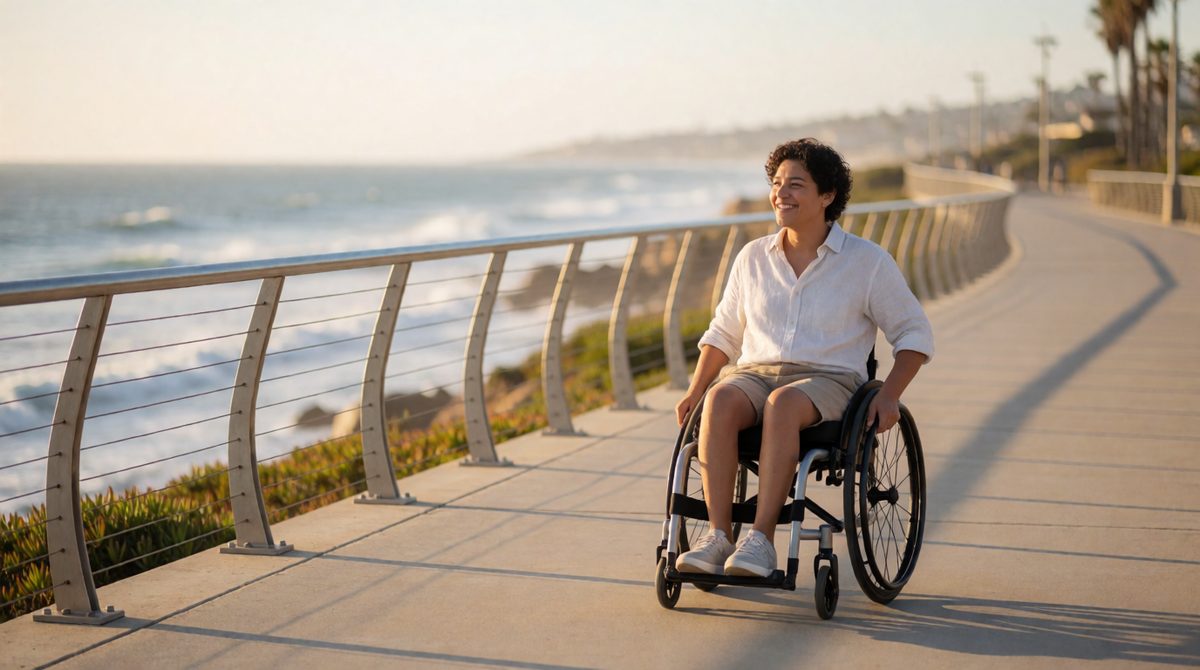
Tourists with mobility needs need good access
When we talk about tourists with mobility needs, we mean anyone who finds it difficult to move around in the way most people do. This could be someone who uses a wheelchair, someone on crutches, a person with a prosthetic limb, or even someone who gets very tired walking long distances due to a health condition. It's a much bigger group than most people realise and the tourism industry has a legal and moral duty to serve them well.
Key Definitions:
- Mobility impairment: A physical condition that limits a person's ability to move freely, walk, or use their limbs fully.
- Accessible tourism: Tourism that is designed and delivered so that people with disabilities or specific needs can participate fully and independently.
- Wheelchair user: A person who uses a manual or powered wheelchair as their primary means of getting around.
- Step-free access: Routes and facilities that have no steps, allowing wheelchair users and others to move freely.
📈 Did You Know?
According to the World Health Organisation, over 1 billion people worldwide live with some form of disability. In the UK alone, around 14 million people have a disability. That's a huge market that tourism providers simply cannot afford to ignore!
What Do Mobility-Impaired Tourists Actually Need?
It's not just about ramps. Tourists with mobility needs require a whole range of provisions across every stage of their journey from booking to arriving home. Here's a breakdown of the key areas:
🏠 At the Destination
- Ramps and lifts instead of steps
- Wide doorways (minimum 80cm for wheelchairs)
- Accessible toilets with grab rails and turning space
- Smooth, even surfaces on pathways
- Accessible parking bays close to entrances (Blue Badge scheme in the UK)
- Lowered reception desks and information counters
✈ During Travel
- Wheelchair spaces on trains, buses and coaches
- Assistance services at airports (e.g. airport buggies, boarding ramps)
- Accessible aircraft seating and lavatories
- Priority boarding for passengers with mobility needs
- Adapted taxis and vehicles (e.g. London black cabs)
- Level boarding at train stations
🏭 Case Study: Disneyland Paris and Mobility Access
Disneyland Paris is one of Europe's most visited tourist attractions, welcoming over 9 million visitors per year. It has invested heavily in making the park accessible for guests with mobility impairments.
♿ Physical Access
All main pathways are paved and flat. Every ride area has a dedicated accessible entrance. Wheelchairs and Electric Convenience Vehicles (ECVs) can be hired at the park entrance.
🏭 Priority Access Card
Guests with disabilities can apply for a Priority Access Card, which allows them to skip long queues because standing for extended periods can be painful or impossible for many mobility-impaired visitors.
📱 Pre-Visit Planning
The Disneyland Paris website has a dedicated accessibility section with downloadable maps showing accessible routes, lift locations and accessible toilet facilities throughout the park.
⚖ The Legal Framework: Equality Act 2010
In the UK, tourism providers are legally required to make "reasonable adjustments" for people with disabilities under the Equality Act 2010. This means they must not treat disabled people less favourably and they must take steps to remove barriers that make it harder for disabled people to use their services.
💡 What counts as a "reasonable adjustment"?
This depends on the size and resources of the business. A large hotel chain would be expected to install a lift, for example. A small B&B might instead offer a ground-floor room. The key point is that some effort must be made doing nothing is not acceptable under the law.
🏢 Accommodation Provisions for Mobility-Impaired Guests
Hotels and other accommodation providers have a particularly important role. A tourist might cope with a few steps at a museum, but they need their bedroom and bathroom to be fully accessible every single day of their stay.
- Roll-in showers a shower with no step or lip, allowing a wheelchair to enter directly
- Wet rooms fully waterproofed bathrooms with a drain in the floor
- Grab rails fixed to walls near the toilet, shower and bath
- Lowered beds easier to transfer from a wheelchair
- Visual and vibrating fire alarms important for guests who may not hear standard alarms (this also links to hearing impairments)
- Accessible swimming pools with hoists or ramps for entry
🏭 Case Study: Premier Inn's Accessibility Commitment
Premier Inn, the UK's largest hotel chain, publishes detailed accessibility information for every one of its hotels on its website. Each hotel listing states exactly which accessible rooms are available, the dimensions of doorways, whether there is a roll-in shower and the distance from accessible parking to the entrance. Guests can also call a dedicated accessibility team before booking. This transparency helps mobility-impaired tourists plan with confidence removing the anxiety of arriving somewhere and finding it doesn't meet their needs.
👁 Tourists with Visual Impairments
Visual impairment covers a wide spectrum. Some people are completely blind, while others have partial sight they may be able to see shapes, light and colour but not fine detail. Around 2 million people in the UK live with sight loss significant enough to affect their daily lives. For the tourism industry, this means thinking carefully about how information is presented and how environments are designed.
Key Definitions:
- Visual impairment: A significant reduction in a person's ability to see, which cannot be fully corrected with glasses or contact lenses.
- Registered blind: A person whose sight is so severely impaired that they cannot do any work for which eyesight is essential.
- Partially sighted: A person with reduced vision who may still be able to see some things with the help of aids.
- Tactile paving: Textured ground surface indicators (the bumpy yellow tiles you see at kerbs and train platforms) that help visually impaired people navigate safely.
- Braille: A system of raised dots that can be read by touch, used by many blind people.
- Audio description: A spoken commentary that describes what is happening visually, used in museums, theatres and on screens.
How Tourism Providers Support Visually Impaired Tourists
📖 Information Formats
- Braille versions of leaflets, menus and guides
- Large-print versions of all printed materials
- Audio guides at museums and heritage sites
- Screen-reader compatible websites (following WCAG accessibility guidelines)
- QR codes linking to audio descriptions
🏠 Physical Environment
- Tactile paving at kerbs, crossings and platform edges
- High-contrast colour schemes (e.g. dark handrails against light walls)
- Good lighting throughout buildings and pathways
- Audio announcements at transport hubs
- Guide dog friendly policies assistance dogs must be admitted
- Staff trained to offer verbal guidance and assistance
🏭 Case Study: The British Museum and Visual Impairment
The British Museum in London welcomes visitors from across the world and has developed a strong programme of provision for visually impaired visitors. Their approach shows what a world-class attraction can do when it takes accessibility seriously.
- Touch tours: Specially arranged sessions where visually impaired visitors can touch replica objects and some original artefacts giving a tactile experience of history that sighted visitors don't always get!
- Audio descriptions: Detailed spoken descriptions of key exhibits available via the museum's app and dedicated audio guides
- Large-print and Braille guides: Available free of charge from the information desk
- Trained staff: Museum staff receive disability awareness training, including how to assist visually impaired visitors respectfully and effectively
- Guide dogs welcome: Water bowls are provided and staff are briefed on working with guide dog owners
💡 Exam Tip!
In the exam, you may be asked to evaluate how well a tourism provider meets the needs of tourists with specific needs. Don't just list what they do think about how effective it is. For example, offering a Braille guide is great, but if it's only available on request and takes 30 minutes to arrive, is it really good enough? Always consider the quality and accessibility of the provision, not just whether it exists.
📱 Technology as a Game-Changer for Visually Impaired Tourists
Modern technology has transformed what's possible for visually impaired tourists. Smartphones in particular have become incredibly powerful tools:
- VoiceOver (Apple) / TalkBack (Android): Built-in screen readers that read out everything on a phone screen allowing visually impaired people to use apps, maps and booking systems independently
- Google Maps audio navigation: Turn-by-turn spoken directions, helping visually impaired tourists navigate unfamiliar cities
- Be My Eyes app: Connects visually impaired users with sighted volunteers via video call volunteers can read menus, signs or help identify surroundings
- Aira app: A professional service where trained agents provide real-time visual assistance via a smartphone camera
- NFC tags: Small chips embedded in signs or exhibits that trigger audio descriptions when a smartphone is held nearby
🏭 Case Study: Transport for London (TfL) and Visual Impairment
Transport for London has made significant investments in supporting visually impaired passengers across the Underground, Overground and bus networks.
🚫 Tactile Paving
All London Underground platforms have tactile warning strips at the platform edge. Tactile paving guides passengers from station entrances to ticket machines and platforms.
🔊 Audio Announcements
'Mind the gap' and destination announcements are made on all trains. Bus stops announce the bus number and destination as buses arrive. The TfL app provides audio-compatible journey planning.
♿ Staff Assistance
TfL's 'Turn Up and Go' service means visually impaired passengers can arrive at any staffed station and receive assistance without pre-booking. Staff are trained in sighted guide techniques.
⚖ Comparing Mobility and Visual Impairment Provision
It's useful to understand how provision for these two groups overlaps and where it differs. Both groups benefit from good staff training and accessible information, but the physical requirements are quite different.
♿ Mobility Impairment Key Priorities
- Physical access ramps, lifts, wide doors
- Accessible toilets and changing facilities
- Smooth, level surfaces
- Adapted vehicles and transport
- Accessible accommodation
👁 Visual Impairment Key Priorities
- Information in alternative formats (Braille, large print, audio)
- Tactile navigation aids
- High contrast and good lighting
- Audio announcements and descriptions
- Guide dog friendly policies
👥 Both Groups Need:
- ✅ Well-trained, aware and helpful staff
- ✅ Clear, accurate information before they travel (so they can plan with confidence)
- ✅ A positive, welcoming attitude not to be made to feel like a burden
- ✅ Consistent provision not just token gestures
📈 Why Getting This Right Matters Business and Ethics
Providing well for tourists with mobility and visual impairments isn't just the right thing to do it also makes excellent business sense. The "purple pound" is the term used to describe the spending power of disabled people and their families in the UK, estimated at over £274 billion per year. Businesses that fail to cater for disabled tourists are missing out on a massive market.
Furthermore, disabled tourists rarely travel alone. When a family chooses a holiday destination, they often choose based on whether it works for the family member with a disability. Get it right for one person and you win the whole group's business.
🏭 Case Study: VisitEngland's 'Accessible and Inclusive Tourism' Scheme
VisitEngland runs an accessibility accreditation scheme that awards quality ratings to tourism businesses that meet verified accessibility standards. Businesses are assessed by trained auditors who physically visit and test the facilities. Achieving accreditation tells tourists that the business has been independently checked not just self-certified. This gives mobility and visually impaired tourists the confidence to book. Businesses that achieve accreditation report increased bookings from disabled visitors and their companions.
✅ Summary: Key Points to Remember
- Tourists with mobility impairments need physical access provisions: ramps, lifts, accessible toilets, adapted transport and accommodation
- Tourists with visual impairments need information in alternative formats, tactile navigation aids, audio announcements and guide dog friendly policies
- The Equality Act 2010 legally requires UK tourism providers to make reasonable adjustments for disabled visitors
- Technology including apps, audio guides and NFC tags is increasingly important in supporting visually impaired tourists
- Good staff training is essential for both groups physical provisions alone are not enough
- The "purple pound" represents the enormous economic value of the disabled tourism market
- Provision should be consistent and high quality, not just token gestures and should be communicated clearly before tourists travel