📢 Introduction: Why Specific Needs Matter
Not every tourist experiences travel the same way. A family from Japan visiting London, a Muslim traveller looking for halal food, or a deaf guest checking into a hotel all of them have specific needs that standard tourism provision might not automatically meet. Getting this right isn't just good manners it's good business.
Tourism providers who understand and respond to specific needs attract more customers, build loyalty and avoid complaints. The iGCSE syllabus asks you to understand four key areas of specific need: hearing, dietary, language and cultural.
Key Definitions:
- Specific needs: Requirements that go beyond standard provision, often related to a tourist's health, religion, language, or background.
- Inclusive tourism: Tourism that is designed to be accessible and welcoming to all types of visitor.
- Provision: The services, facilities and information that tourism organisations put in place to meet tourist needs.
🔊 Tourists with Hearing Impairments
Around 466 million people worldwide have disabling hearing loss (World Health Organisation). Hearing-impaired tourists include people who are profoundly deaf (little or no hearing), hard of hearing (partial hearing loss), or those who use hearing aids or cochlear implants. Their needs are often invisible you can't always tell someone has a hearing impairment just by looking at them.
What Do Hearing-Impaired Tourists Actually Need?
The main challenge for hearing-impaired tourists is communication and safety. If you can't hear a public announcement at an airport, a fire alarm at a hotel, or a tour guide explaining an exhibit your experience is significantly reduced and in some cases, your safety is at risk.
🚫 Communication Barriers
Hearing-impaired tourists may struggle with verbal announcements, phone calls to hotels, spoken tour guides and face-to-face conversations with staff who don't know sign language. Background noise in busy tourist areas makes lip-reading very difficult.
🚨 Safety Concerns
Fire alarms, emergency announcements and safety briefings (e.g., on aircraft or boats) rely heavily on sound. If a hearing-impaired tourist misses these, the consequences can be serious. Providers have a duty to ensure safety information reaches everyone.
🏠 How Tourism Providers Support Hearing-Impaired Tourists
📺 Visual Alerts
Hotels install flashing light fire alarms and visual door-knock alerts in rooms. Some hotels offer vibrating alarm clocks and pillow vibrators for wake-up calls.
🗣 Induction Loops
Hearing loops (also called induction loops) transmit sound directly to hearing aids. They are found at hotel reception desks, theatre box offices, museum information points and airport check-in desks.
🎬 Subtitles & Captions
Visitor attractions use subtitled films and video guides. Museums provide written transcripts of audio tours. Some theatres offer signed performances using British Sign Language (BSL) interpreters.
Staff training is also critical. Tourism staff should know basic sign language phrases, be aware of how to communicate clearly (facing the guest, speaking at a normal pace, not covering their mouth) and know how to use any assistive technology installed at the venue.
🏭 Case Study: Alton Towers Resort and Deaf Awareness
Alton Towers in Staffordshire has made efforts to improve provision for deaf and hearing-impaired guests. The resort offers BSL-interpreted shows on selected dates, provides written safety information at ride entrances and has trained guest experience staff in deaf awareness. Their website includes a dedicated accessibility section where guests can pre-plan their visit. This is a good example of proactive provision anticipating needs before guests even arrive.
💡 Exam Tip!
In the exam, if asked to evaluate provision for hearing-impaired tourists, think about: communication, safety, information access and staff training. A good answer will cover more than one of these areas and give specific examples.
🍽 Tourists with Dietary Needs
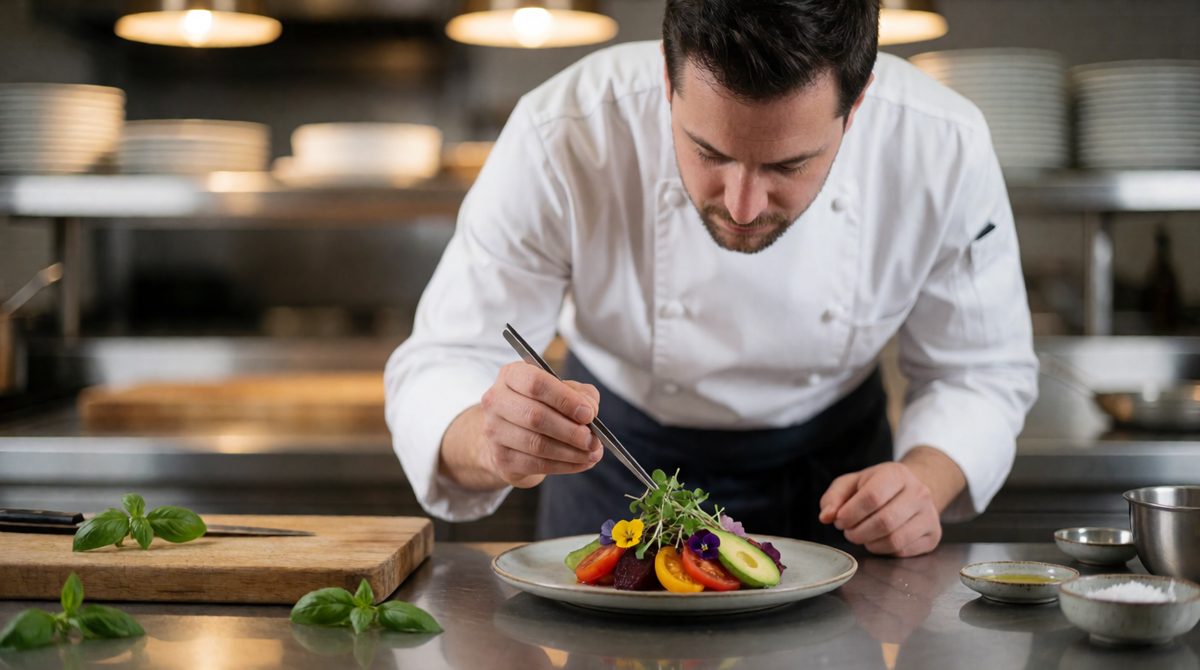
Restaurants cater for different dietary needs
Food is a huge part of the travel experience but for many tourists, eating out isn't straightforward. Dietary needs can be driven by religion, health, ethics, or personal choice. Tourism providers especially hotels, restaurants, airlines and tour operators must cater for a wide range of dietary requirements.
Key Dietary Categories:
- Religious dietary laws: Halal (Islamic), Kosher (Jewish), no beef (Hindu), no pork (Islamic and Jewish).
- Medical/allergy needs: Nut allergies, gluten intolerance (coeliac disease), lactose intolerance, diabetes.
- Ethical choices: Vegetarian, vegan, pescatarian.
- Cultural preferences: Some tourists simply prefer the cuisine of their home country or have strong dislikes of certain ingredients.
How the Tourism Industry Responds to Dietary Needs
✈ Airlines
Most major airlines allow passengers to pre-order special meals when booking. Options typically include: halal, kosher, vegetarian, vegan, gluten-free, low-fat, diabetic and child meals. British Airways, Emirates and Singapore Airlines all offer 20+ special meal types. The key is that passengers must request these in advance usually 24–48 hours before the flight.
🏢 Hotels
Hotels with restaurants are expected to clearly label menus with allergen information (this is a legal requirement in the UK under the Food Information Regulations 2014). Many hotels now offer dedicated vegan menus, halal-certified kitchens, or will prepare dishes on request. Staff should be trained to answer questions about ingredients confidently.
Tour operators also play a role when booking package holidays, customers can often state dietary requirements which are then communicated to hotels and airlines. This is an example of the supply chain working together to meet tourist needs.
🏭 Case Study: Marriott Hotels and Dietary Provision
Marriott International, one of the world's largest hotel chains, has implemented a global policy on dietary provision. Their chefs are trained to handle allergen requests safely, with separate preparation areas to avoid cross-contamination. In Muslim-majority destinations such as Dubai and Kuala Lumpur, Marriott hotels are fully halal-certified. In Israel, some properties offer kosher dining. This shows how provision must be adapted to the local tourist market what works in one destination may not be appropriate in another.
📈 Did You Know?
The global halal food market was worth over $2 trillion USD in 2023. Muslim tourists spend an estimated $220 billion per year on travel. Tourism providers who ignore halal dietary needs are missing out on a massive and fast-growing market segment.
🌐 Tourists with Language Needs
Language is one of the most common barriers in tourism. When tourists visit a country where they don't speak the language, even simple tasks reading a menu, asking for directions, understanding a safety notice can become stressful or impossible. Tourism providers have a responsibility to bridge this gap.
Key Definitions:
- Language barrier: Difficulty communicating because two parties don't share a common language.
- Multilingual provision: Offering information, signage, or services in more than one language.
- Lingua franca: A shared language used between people who don't share a native language English often serves this role in international tourism.
How Tourism Providers Address Language Barriers
🚫 Multilingual Signage
Major tourist destinations display signs in several languages. London's Underground uses pictograms and clear English, but tourist attractions like the British Museum offer information in up to 10 languages. Airports such as Heathrow display signs in English, Arabic, Chinese and other key languages.
📖 Translated Materials
Brochures, maps, menus and safety information are translated into key languages. Tour operators produce holiday brochures in multiple languages. National tourist boards such as VisitBritain produce content in Mandarin, French, German, Spanish and more.
👥 Multilingual Staff
Hiring staff who speak multiple languages is a direct solution. Large hotels in international destinations often employ staff who speak the languages of their key visitor markets. Cruise ships are known for having multilingual crew members from dozens of countries.
Technology has transformed language provision. Translation apps such as Google Translate allow tourists to photograph signs and menus and receive instant translations. Many tourism websites now use automatic language detection to serve content in the visitor's preferred language.
🏭 Case Study: The Louvre, Paris and Language Provision
The Louvre is one of the world's most visited museums, attracting around 9 million visitors per year from across the globe. To serve this international audience, the Louvre provides: audio guides in 10 languages, information panels in French and English throughout the galleries, a website available in French, English, Spanish and Chinese and staff trained to assist visitors in multiple languages. The museum also offers a dedicated Japanese-language guide service, reflecting the large number of Japanese visitors. This is a strong example of tailoring language provision to actual visitor demographics.
💡 Exam Tip!
When evaluating language provision, consider: who are the main visitor groups? A tourist attraction in Spain should prioritise English and German (its biggest markets) rather than, say, Swahili. Good provision is targeted and evidence-based, not just a token gesture.
🏭 Tourists with Cultural Needs
Culture shapes everything about how we travel what we eat, how we dress, what we find respectful or offensive, how we like to be greeted and what activities we enjoy. Cultural needs are sometimes harder to define than physical needs, but they are just as important. Ignoring cultural differences can lead to tourist dissatisfaction, complaints and reputational damage for tourism providers.
Key Definitions:
- Cultural sensitivity: Awareness of and respect for the values, beliefs and practices of different cultures.
- Cultural norms: The accepted behaviours and expectations within a particular culture or society.
- Culture shock: The feeling of disorientation experienced when encountering an unfamiliar culture.
Examples of Cultural Needs in Tourism
🙏 Religious Observance
Muslim tourists may need a prayer room and knowledge of prayer times. Jewish tourists may need kosher food and may not travel on the Sabbath (Friday sunset to Saturday sunset). Hindu tourists may avoid beef. Buddhist tourists may be vegetarian. Tourism providers in popular destinations increasingly provide prayer facilities, Qibla direction indicators in hotel rooms and religious calendars for staff awareness.
👔 Dress Codes and Modesty
Tourists from some cultures have strong expectations around modesty for example, requiring separate male and female swimming areas, or expecting staff to dress conservatively. Some tourist attractions (e.g., religious sites) require visitors to cover their heads or shoulders. Providers should communicate dress code requirements clearly in advance to avoid embarrassment or conflict.
👑 Greetings and Social Customs
In some cultures, a handshake is standard. In others, a bow, a nod, or no physical contact at all is preferred. Japanese tourists may find overly casual or loud behaviour from staff off-putting. Middle Eastern tourists may expect a high level of formality and personal service. Staff training in cultural awareness helps avoid unintentional offence.
🏠 Family and Group Dynamics
Some cultures travel in large extended family groups and need connecting rooms, large tables in restaurants and group booking flexibility. In some cultures, women and men may prefer separate spaces. Chinese tourists, for example, often travel in large organised groups and expect Chinese-speaking guides, Chinese TV channels in hotels and familiar food options.
🏭 Case Study: Dubai Tourism and Cultural Provision
Dubai is a fascinating case study because it welcomes tourists from all over the world while also having a strong local Islamic culture. The Dubai Tourism authority has worked hard to balance these needs. Alcohol is available in licensed hotels and restaurants for tourists who drink, while halal food is available everywhere for Muslim visitors. During Ramadan, eating and drinking in public during daylight hours is restricted tourists are informed of this clearly before and during their visit. Hotels provide prayer mats, Qibla compasses and a copy of the Quran in rooms. This shows how a destination can respect its own culture while still welcoming tourists with very different backgrounds.
🌐 The Chinese Tourist Market: A Specific Cultural Example
China is now one of the world's largest sources of international tourists. Understanding Chinese cultural needs has become a priority for tourism providers worldwide.
🍴 Food
Chinese tourists often prefer Chinese cuisine or at least familiar Asian food options. Rice, noodles and hot water for tea are important. Many hotels in European tourist destinations now offer a Chinese breakfast option alongside the standard continental breakfast.
💲 Payment
Chinese tourists frequently use WeChat Pay and Alipay rather than cash or Western credit cards. Tourism providers in popular destinations are increasingly accepting these payment methods to attract Chinese visitors.
📷 Photography & Social Media
Sharing travel photos on Chinese social media platforms (WeChat, Weibo, Xiaohongshu) is extremely important to Chinese tourists. Attractions that offer good photo opportunities and are "Instagram-worthy" (or "Xiaohongshu-worthy") are more appealing to this market.
⚖ Comparing the Four Areas of Specific Need
It's useful to compare how provision works across the four areas covered in this lesson. Notice that some solutions overlap for example, good staff training helps with hearing, language and cultural needs all at once.
🔊 Hearing
Main challenges: Communication, safety alerts, accessing information.
Key solutions: Induction loops, visual alarms, subtitles, BSL interpreters, staff training.
Technology: Text relay services, captioning apps, vibrating alerts.
🍽 Dietary
Main challenges: Finding suitable food, avoiding allergens, religious compliance.
Key solutions: Menu labelling, special meal pre-ordering, halal/kosher certification, vegan menus.
Legal requirement: UK Food Information Regulations 2014 allergens must be declared.
🌐 Language
Main challenges: Reading signs, understanding staff, accessing information.
Key solutions: Multilingual signage, translated materials, multilingual staff, audio guides.
Technology: Translation apps, multilingual websites, AI chatbots.
🏭 Cultural
Main challenges: Religious observance, social customs, food preferences, family structures.
Key solutions: Prayer facilities, cultural awareness training, adapted menus, flexible booking.
Key principle: Provision must be tailored to the actual visitor market, not a generic response.
📈 Why Getting This Right Matters
There are two strong reasons why tourism providers should invest in provision for tourists with specific needs: ethical reasons and business reasons.
⚖ Ethical Reasons
Every tourist deserves to have a safe, enjoyable and dignified experience. Failing to provide for specific needs can make tourists feel excluded, disrespected, or unsafe. This is particularly serious when it involves safety (e.g., a deaf tourist missing a fire alarm) or religious observance (e.g., a Muslim tourist being unable to find halal food).
💲 Business Reasons
Tourists who feel well-catered for spend more, return more often and recommend destinations to others. Negative experiences lead to complaints, bad reviews online and loss of business. The halal tourism market alone is worth hundreds of billions of dollars providers who ignore it are leaving money on the table.
✅ Summary: Key Points to Remember
- 🔊 Hearing-impaired tourists need visual alerts, induction loops, subtitles and staff trained in deaf awareness.
- 🍽 Dietary needs are driven by religion, health and ethics providers must label allergens (UK law), offer special meals and adapt menus to visitor markets.
- 🌐 Language barriers are addressed through multilingual signage, translated materials, multilingual staff and technology such as translation apps.
- 🏭 Cultural needs include religious observance, dress codes, social customs and food preferences staff training in cultural awareness is essential.
- 📈 Good provision is both an ethical responsibility and a smart business decision.
- 💡 Provision must be tailored to the actual visitor market a one-size-fits-all approach is rarely effective.