🏢 What Is Customer Service at a Destination?
Customer service in travel and tourism isn't just about a friendly smile at a hotel reception. At a destination, customer service covers everything a tourist experiences from the moment they arrive to the moment they leave. That includes transport links, signage, staff helpfulness, safety, accessibility and how well the destination meets the needs of different types of tourists.
A destination could be a city, a resort, a theme park, a heritage site, or an entire country. The key idea is that customer service is delivered by many different providers working together not just one business.
Key Definitions:
- Customer service: All the ways in which a tourism provider meets the needs and expectations of tourists before, during and after their visit.
- Destination management: The coordinated planning and delivery of tourism services across an entire destination.
- Tourist type: A category of visitor defined by their purpose of travel, age, ability, or travel style e.g. families, business tourists, elderly tourists, tourists with disabilities.
- Service quality: How well the service delivered matches what the tourist expected.
📈 Why Destination-Level Customer Service Matters
When a tourist has a bad experience at a destination confusing signs, unhelpful staff, inaccessible attractions they don't just blame one business. They blame the whole destination. This affects repeat visits, online reviews and the destination's reputation worldwide. Getting customer service right at destination level is essential for long-term tourism success.
🌐 Who Delivers Customer Service at a Destination?
Customer service at a destination is delivered by a wide range of providers: local government and tourist boards, transport operators, hotels and accommodation providers, attraction staff, tour guides, restaurants and even local residents. All of these contribute to the overall tourist experience.
🏭 Case Study: Barcelona, Spain Customer Service Provision at a Major Destination
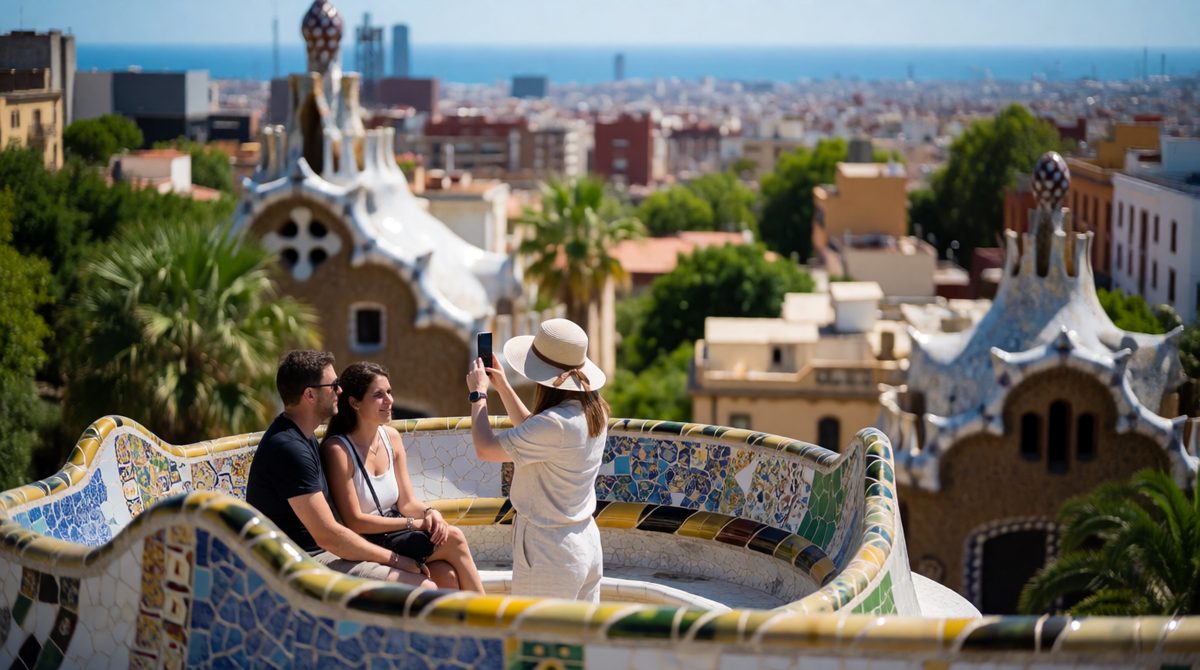
Barcelona works hard to look after its visitors
📍 Destination Overview: Barcelona
Barcelona is one of Europe's most visited cities, attracting over 12 million international tourists per year (pre-pandemic figures). It is a destination that serves a huge variety of tourist types families, elderly visitors, business tourists, solo travellers, budget tourists and international visitors from all over the world. This makes it an ideal case study for examining how customer service is provided for different types of tourists at destination level.
👪 Customer Service for Families in Barcelona
Barcelona has developed strong customer service provision for families with young children. The city recognises that families need specific support to enjoy their visit comfortably and safely.
🏭 Family-Friendly Attractions
The Barcelona Zoo, CosmoCaixa Science Museum and Port Aventura (nearby) all offer family ticket pricing, pushchair-friendly access, baby-changing facilities and child-friendly catering. Staff are trained to assist families and provide information in multiple languages.
🚌 Transport for Families
Barcelona's metro system offers lift access at most major stations, making it easier for families with pushchairs. Children under 4 travel free. The Barcelona Card includes unlimited public transport, reducing stress for families managing multiple tickets.
🍽 Dining Provision
Many restaurants in tourist areas offer menú infantil (children's menus) and high chairs. The city's beach areas have family zones with lifeguards, clean facilities and play areas all part of the broader customer service offer for families.
👴 Customer Service for Elderly Tourists in Barcelona
Barcelona has made significant investment in making the city accessible and comfortable for older visitors, who represent a growing and high-spending tourist segment.
- Accessible transport: All buses in Barcelona are low-floor and wheelchair/mobility aid accessible. The Aerobus from the airport is also accessible.
- Sagrada Família: One of Barcelona's most famous attractions offers priority queuing for elderly and disabled visitors, lift access to towers and audio guides in multiple languages reducing physical and communication strain.
- Pharmacies: Barcelona has a dense network of pharmacies (farmàcies), many open 24 hours, providing reassurance for elderly tourists who may need medical supplies.
- Pace-friendly tourism: The city's tourist board promotes slower-paced itineraries and guided tours specifically designed for older visitors, including seated tours by electric vehicle.
💼 Customer Service for Business Tourists in Barcelona
Barcelona is one of Europe's top MICE destinations (Meetings, Incentives, Conferences and Exhibitions). The city's customer service provision for business tourists is highly developed.
🏢 Conference Infrastructure
The Fira de Barcelona is one of Europe's largest convention centres, hosting major events like the Mobile World Congress, which attracts over 100,000 delegates. The venue offers seamless Wi-Fi, translation services, business lounges and dedicated transport links. Hotels nearby offer express check-in, business centres and meeting rooms as standard.
✈ Airport and Transport Links
Barcelona–El Prat Airport has a dedicated Fast Track security lane for business class passengers. The airport offers business lounges, reliable taxi and private transfer services and a direct Aerobus service to the city centre every 5–10 minutes. This efficiency is a key part of the customer service offer for time-pressured business tourists.
🌐 Customer Service for International Tourists in Barcelona
Barcelona receives tourists from all over the world, meaning language and cultural needs are a major part of its customer service strategy.
- Multilingual signage: Key tourist areas, metro stations and major attractions provide signage in Catalan, Spanish, English, French and often German, Chinese and Japanese.
- Tourist information offices: The Turisme de Barcelona network operates multiple tourist information points across the city, staffed by multilingual advisers who can assist with maps, bookings and local advice.
- Currency and payment: The city is cashless-friendly, with card payment accepted almost universally important for international visitors who may not carry euros.
- Cultural sensitivity: Tourist-facing staff in Barcelona are increasingly trained in cultural awareness, particularly to serve growing markets from China, the Middle East and the USA.
📈 Did You Know?
Barcelona's Turisme de Barcelona tourist board produces a dedicated Accessible Barcelona guide, available in print and online, covering accessible transport, accommodation, attractions and beaches for tourists with disabilities. This is a direct example of destination-level customer service planning for specific tourist types.
⚖ Evaluating Customer Service at a Destination
In your exam, you may be asked to evaluate customer service provision that means looking at both the strengths and weaknesses and suggesting improvements. Use the Barcelona case study as a model.
👍 Strengths of Customer Service in Barcelona
✅ Accessibility
Strong investment in accessible transport, attractions and information provision for tourists with mobility and sensory needs. The Accessible Barcelona guide is a standout example of proactive customer service planning.
✅ Multilingual Support
Widespread multilingual signage, staff and printed materials mean that international tourists from many different countries feel welcomed and supported throughout their visit.
✅ Business Tourism Infrastructure
World-class conference facilities, efficient airport services and business-focused hotel provision make Barcelona highly competitive as a business tourism destination in Europe.
👎 Weaknesses and Challenges
- Overtourism: Barcelona has faced serious problems with overtourism, particularly in areas like Las Ramblas and the Gothic Quarter. Overcrowding reduces the quality of the tourist experience and can make customer service harder to deliver effectively.
- Pickpocketing and safety concerns: The city has a well-documented problem with tourist-targeted theft, which negatively impacts the customer service experience particularly for elderly tourists and solo travellers.
- Resident-tourist tensions: Some local residents have protested against mass tourism, which can create an unwelcoming atmosphere for tourists in certain neighbourhoods.
- Inconsistent service quality: While major attractions and hotels deliver high standards, smaller businesses and street-level services can be inconsistent, particularly outside peak tourist zones.
💡 Exam Tip!
When evaluating customer service at a destination, always link your points to specific tourist types. Don't just say "the transport is good" say "the accessible metro benefits elderly tourists and tourists with mobility impairments by allowing independent travel around the city." Specific, linked answers score higher marks.
📋 Measuring and Improving Customer Service at a Destination
Destinations don't just deliver customer service they also measure it and look for ways to improve. This is part of destination management.
Methods used to measure customer service quality:
- Tourist satisfaction surveys: Questionnaires given to tourists at the end of their visit, asking about their experience across different aspects of the destination.
- Online reviews: Platforms like TripAdvisor, Google Reviews and Booking.com provide real-time feedback on hotels, attractions and restaurants giving destination managers valuable data.
- Mystery shopping: Trained evaluators visit attractions and services posing as regular tourists to assess the quality of customer service without staff knowing they are being assessed.
- Complaint monitoring: Tracking the number and type of complaints received by tourist boards and individual businesses to identify recurring problems.
- Repeat visitor rates: A destination with high repeat visitor rates is likely delivering good customer service. A declining rate may indicate problems.
📈 Barcelona's Response to Feedback
In response to overtourism complaints and tourist safety concerns, Barcelona introduced a Tourist Tax (taxa turística) to fund improvements to public spaces and services. The city also launched a Responsible Tourism Plan, aiming to spread tourist activity beyond the most crowded areas and improve the experience for all visitor types.
🏭 Staff Training at Destination Level
Barcelona's tourist board runs training programmes for staff working in tourist-facing roles across the city from taxi drivers to museum staff. Training covers language skills, cultural awareness, disability awareness and how to handle complaints. This destination-wide approach to staff development is a key part of maintaining consistent customer service standards.
👥 Applying the Case Study: Different Tourist Types at Barcelona
📋 Summary Table: Customer Service Provision by Tourist Type
| Tourist Type |
Key Needs |
Barcelona's Provision |
Strength / Weakness |
| 👪 Families |
Child-friendly facilities, safe beaches, family pricing |
Family attractions, accessible metro, beach lifeguards |
👍 Strong overall provision |
| 👴 Elderly |
Accessible transport, medical support, slower pace |
Low-floor buses, priority queuing, pharmacy network |
👍 Good but crowding is a challenge |
| 💼 Business |
Efficient transport, conference facilities, Wi-Fi |
Fira de Barcelona, Fast Track airport, business hotels |
👍 Excellent provision |
| 🌐 International |
Multilingual info, cultural sensitivity, currency |
Multilingual TICs, signage, cashless payment |
👍 Strong multilingual offer |
| ♿ Tourists with Disabilities |
Accessible transport, adapted attractions, clear info |
Accessible Barcelona guide, lift access, priority entry |
👍 Proactive and well-documented |
💡 Exam Tip! How to Write a Case Study Answer
If the exam asks you to use a case study to explain customer service provision at a destination, follow this structure: (1) Name the destination and give brief context. (2) Describe the specific customer service provision for the tourist type mentioned in the question. (3) Evaluate is it effective? Are there any weaknesses? (4) Suggest one improvement if asked. Always use specific named examples (e.g. "the Sagrada Família offers priority queuing for elderly visitors") rather than vague generalisations.
💡 Suggesting Improvements to Customer Service at a Destination
A key exam skill is being able to suggest realistic, justified improvements to customer service. Here are some examples based on the Barcelona case study:
🚫 Reduce Overcrowding
Introduce timed entry tickets at the most popular sites (e.g. Las Ramblas area, Park Güell already does this) to spread visitor numbers and improve the experience for all tourist types, especially elderly visitors and families.
🔐 Improve Safety
Increase visible tourist police presence in high-theft areas and provide multilingual safety advice at tourist information points. This would particularly benefit solo travellers and elderly tourists who may feel more vulnerable.
📱 Digital Customer Service
Develop a comprehensive Barcelona tourism app with real-time transport updates, accessibility information, multilingual support and a live chat function for tourist queries. This would benefit independent travellers, international tourists and business visitors.
✅ Summary: Key Points to Remember
- Customer service at a destination involves many different providers working together not just one business.
- Different tourist types (families, elderly, business, international, disabled) have different customer service needs at a destination.
- Barcelona is a strong example of a destination that has developed specific customer service provision for different tourist types, including accessible transport, multilingual information and business tourism infrastructure.
- Destinations measure customer service quality through surveys, online reviews, mystery shopping and complaint monitoring.
- Even successful destinations have weaknesses overtourism, safety issues and inconsistent service quality are real challenges in Barcelona.
- In the exam, always link customer service provision to specific tourist types and use named examples from your case study.
- Improvements should be realistic, specific and justified explain why the improvement would help a particular type of tourist.