👤 Personal Skills in Travel & Tourism
Working in travel and tourism isn't just about loving holidays. Employers need staff who can speak clearly, handle numbers, read and write well, use technology confidently and communicate effectively in all kinds of situations. These are called personal skills and they're just as important as knowing your destinations.
Whether you're checking a guest into a hotel, booking a flight, handling a complaint, or writing a tour itinerary, these five core skills come up again and again. Let's look at each one in detail.
Key Definitions:
- Personal skills: Abilities that an individual uses to interact effectively with others and carry out tasks in the workplace.
- Clear speech: Speaking in a way that is easy to understand at the right pace, volume and tone.
- Numeracy: The ability to work confidently with numbers, calculations and data.
- Literacy: The ability to read, understand and write text accurately and professionally.
- ICT: Information and Communications Technology using computers, software and digital tools to carry out tasks.
- Communication: The ability to share and receive information clearly, whether spoken, written, or non-verbal.
💡 Did You Know?
According to the World Travel & Tourism Council (WTTC), the travel and tourism industry supports over 330 million jobs worldwide. Employers consistently rank communication and numeracy as the top skills they look for when hiring above specific tourism knowledge.
🗣 Clear Speech
In a busy airport, a hotel lobby, or a tour bus, being understood the first time matters. Clear speech means speaking at a steady pace, using plain language and adjusting your tone depending on who you're talking to. It's one of the most visible skills in tourism customers judge staff almost instantly based on how they speak.
Why Clear Speech Matters
Tourism staff regularly deal with people from many different countries, age groups and backgrounds. A tour guide speaking too fast, a receptionist mumbling, or a customer service agent using jargon can all cause confusion and complaints.
✅ Good Clear Speech In Action
- A flight attendant calmly explains safety procedures in clear, slow English to a nervous passenger
- A hotel receptionist confirms a booking by repeating the key details back to the guest
- A tour guide pauses after each point to check understanding
- A travel agent uses simple terms when explaining visa requirements
❌ When Speech Lets Staff Down
- Speaking too fast causes misunderstandings about departure times
- Using industry jargon confuses a first-time traveller
- A quiet voice at a busy check-in desk leads to incorrect information being heard
- A strong regional accent, without adjustment, causes a foreign visitor to miss key safety information
Elements of Clear Speech
🎤 Pace
Not too fast, not too slow. Slow down when speaking to non-native English speakers or elderly guests. Speed up slightly in casual, friendly conversations.
🔊 Volume
Loud enough to be heard clearly especially in noisy environments like airports or theme parks but never shouting, which can seem aggressive.
🎼 Tone
Warm and friendly for customer-facing roles. Calm and reassuring during complaints or emergencies. Professional and clear in formal settings.
📋 Case Study: Thomas Cook Call Centres
Before its collapse in 2019, Thomas Cook operated large customer service call centres. Staff were trained specifically in clear speech techniques including how to slow down when customers were confused, how to confirm bookings by repeating details back and how to adjust tone when dealing with complaints. Recordings of calls were reviewed regularly to ensure standards were met. This shows that clear speech isn't just natural talent it can be trained and measured.
🔢 Numeracy Skills
You might not think of travel and tourism as a maths-heavy industry but numbers are everywhere. From calculating currency exchange to working out commission, from reading timetables to managing budgets, numeracy is a daily requirement across almost every tourism job.
Where Numeracy Shows Up in Tourism
Let's look at the real situations where staff need to be confident with numbers:
💳 Financial Calculations
- Currency exchange: Converting pounds to euros, dollars, or yen for customers
- Pricing packages: Adding up flights + hotel + transfers + insurance
- Commission: Calculating a travel agent's 10% commission on a £2,400 holiday
- Discounts: Applying a 15% early-bird discount to a booking
- VAT: Understanding when tax is included or excluded from a price
📊 Operational Numeracy
- Timetables: Reading 24-hour clocks, calculating layover times, working out journey durations
- Capacity: Knowing a hotel has 120 rooms and 85 are booked = 35 available
- Occupancy rates: A hotel running at 78% occupancy this month
- Statistics: Understanding visitor numbers, growth percentages and market share data
💡 Numeracy in Exam Questions
In your iGCSE Travel & Tourism exam, you may be asked to interpret data from tables, graphs, or charts or to calculate things like occupancy rates or percentage changes. Practise reading data carefully and showing your working clearly.
📋 Case Study: TUI Group Revenue Management
TUI, one of the world's largest travel companies, employs revenue managers whose entire job is based on numeracy. They analyse booking data, adjust prices based on demand and forecast how many seats or rooms will sell at different price points. But even front-line staff like holiday reps need numeracy. A TUI rep in Majorca might need to calculate the cost of an optional excursion in euros, convert it to pounds for a British customer and then process the payment correctly. Getting the maths wrong costs the company money and damages trust.
📚 Literacy Skills
Literacy in tourism means more than just being able to read. It includes writing professional emails, understanding contracts, reading maps and timetables, creating itineraries and producing accurate reports. Poor literacy leads to errors and in tourism, errors can ruin someone's holiday.
Reading and Writing in Tourism Roles
Different roles require different types of literacy. A travel agent needs to read supplier contracts carefully. A hotel manager needs to write staff rotas and guest communications. A tour guide needs to research and write accurate commentary about destinations.
✉ Written Communication
Emails to customers must be professional, clear and free from spelling errors. A poorly written email makes the business look unprofessional and can cause booking errors.
📄 Reading Documents
Staff must read and understand booking confirmations, visa requirements, health and safety regulations and supplier agreements often under time pressure.
📝 Creating Content
Marketing teams write brochures, social media posts and website copy. Tour guides write scripts. All of this requires strong literacy to be accurate and persuasive.
📋 Case Study: Booking.com Property Descriptions
Booking.com relies on accurate, well-written property descriptions to attract customers. When hotels write their own listings, poor literacy spelling mistakes, vague descriptions, or incorrect information leads to lower booking rates and negative reviews. Booking.com actually provides writing guidelines and templates to help property owners write better descriptions. This shows how literacy directly affects commercial success in tourism.
Literacy and Safety
Literacy isn't just about looking professional it can be a matter of safety. Staff who misread a health and safety document, misunderstand an allergy notice, or write incorrect medical information on a passenger record could put lives at risk. Airlines, cruise ships and hotels all have strict written procedures that staff must be able to read and follow accurately.
💻 ICT Skills
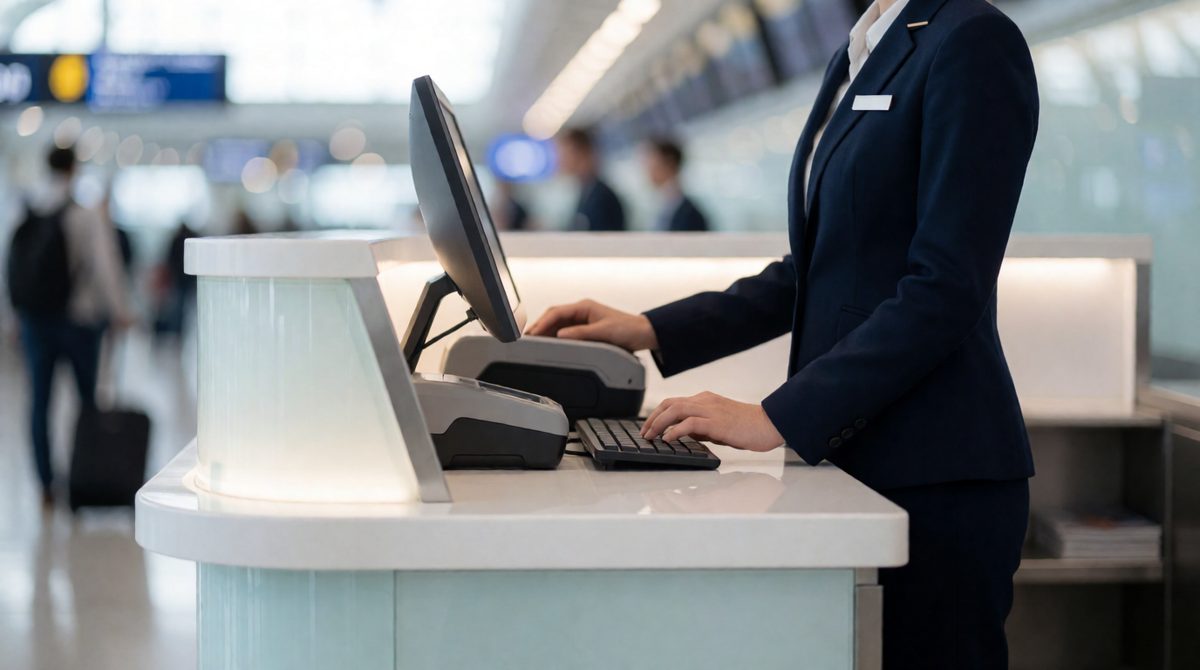
ICT skills are essential in modern tourism
The travel and tourism industry is one of the most technology-driven sectors in the world. From online booking systems to social media marketing, from global distribution systems (GDS) to digital check-in, ICT skills are now essential not optional for almost every tourism role.
Key ICT Tools Used in Tourism
🔢 Booking & Reservation Systems
- Global Distribution Systems (GDS): Amadeus, Sabre and Galileo are used by travel agents to search and book flights, hotels and car hire worldwide
- Property Management Systems (PMS): Hotels use systems like Opera or Fidelio to manage room bookings, check-ins and billing
- Online Travel Agencies (OTAs): Platforms like Expedia and Booking.com that staff must know how to manage and update
📱 Digital Communication Tools
- Email and live chat: Responding to customer enquiries quickly and professionally
- Social media: Managing a hotel or tour operator's Instagram, Facebook, or TripAdvisor presence
- Video calls: Virtual consultations with clients or remote team meetings
- CRM software: Customer Relationship Management tools to track bookings and preferences
📋 Case Study: easyJet Digital-First Operations
easyJet operates almost entirely through digital systems. Customers book online, check in via an app and receive boarding passes on their phones. Ground staff use tablets to manage boarding and cabin crew use handheld devices to process in-flight sales. Staff who aren't confident with ICT simply cannot do the job. easyJet invests heavily in ICT training for all new staff, including how to use their proprietary apps and how to troubleshoot common digital issues that passengers face at the gate.
ICT Beyond Booking Systems
ICT skills in tourism also include:
- Data analysis: Using spreadsheets (e.g. Microsoft Excel) to track occupancy, sales and customer feedback
- Presentation software: Creating PowerPoint presentations for sales pitches or staff training
- Digital marketing: Running email campaigns, managing Google Ads and updating websites
- Cybersecurity awareness: Protecting customer payment data and personal information especially important under GDPR
💬 Communication Skills
Communication is the umbrella skill that brings everything together. It's not just about speaking or writing it's about listening, adapting and connecting with people in a way that makes them feel understood and valued. In tourism, where customers are often excited, anxious, or frustrated, excellent communication can make the difference between a loyal repeat customer and a one-star review.
Types of Communication in Tourism
🗣 Verbal
Face-to-face conversations, phone calls, announcements. Requires clear speech, active listening and appropriate tone. Used constantly in hotels, airports and tour operations.
✉ Written
Emails, letters, social media posts, signage, brochures. Must be accurate, professional and appropriate for the audience. Errors here are permanent and visible.
👥 Non-Verbal
Body language, facial expressions, posture and eye contact. Often communicates more than words a warm smile at check-in sets the tone for a guest's entire stay.
Active Listening The Forgotten Skill
Active listening means fully concentrating on what someone is saying, rather than just waiting for your turn to speak. In tourism, this is vital. A customer who feels truly listened to is far more likely to trust your advice, accept your suggestions and forgive minor problems.
Active listening involves:
- Making eye contact and nodding to show you're engaged
- Not interrupting while the customer is speaking
- Summarising what you've heard: "So you'd like a sea-view room for four nights, arriving on the 14th is that right?"
- Asking follow-up questions to clarify needs
📋 Case Study: Ritz-Carlton The Gold Standards of Communication
The Ritz-Carlton hotel group is famous for its exceptional customer service. A key part of their training is what they call the "Three Steps of Service": a warm and sincere greeting using the guest's name, anticipating and fulfilling each guest's needs and a fond farewell using the guest's name again. Every member of staff from the general manager to the housekeeping team is trained in these communication principles. The result? Ritz-Carlton consistently tops global hotel satisfaction surveys and guests pay premium prices partly because of how the communication makes them feel.
Adapting Communication Style
Great communicators don't use the same approach with everyone. They adapt. A skilled tourism professional will naturally adjust their communication style based on:
🌐 The Customer's Background
- Simpler vocabulary and slower speech for non-native English speakers
- More formal language with older or business travellers
- Friendly, casual tone with young backpackers or families
- Extra patience and clarity with customers who have disabilities or hearing difficulties
📊 The Situation
- Calm and reassuring during a flight delay or cancellation
- Enthusiastic and persuasive when selling a holiday package
- Empathetic and solution-focused when handling a complaint
- Precise and factual when giving safety briefings or visa advice
🏆 How These Skills Work Together
In real tourism jobs, these five skills don't work in isolation they combine constantly. Consider a travel agent handling a complex group booking:
- They use literacy to read the tour operator's terms and conditions carefully
- They use numeracy to calculate the total cost for 12 passengers, apply a group discount and work out the deposit required
- They use ICT to search the GDS for available flights and enter the booking into the system
- They use clear speech to explain the itinerary to the group leader over the phone
- They use communication skills to listen carefully to the group's preferences and adapt their recommendations accordingly
Remove any one of these skills and the booking could go wrong. Together, they create a professional, reliable and customer-focused service.
📋 Case Study: Virgin Atlantic Integrated Skills Training
Virgin Atlantic's cabin crew training programme which lasts several weeks covers all five personal skills in an integrated way. Trainees practise clear speech through announcement role-plays, develop numeracy by handling in-flight duty-free sales and currency, build literacy by completing passenger documentation accurately, master ICT through the airline's in-flight management systems and develop communication through customer service scenarios. Virgin Atlantic's brand is built on exceptional service and that service is only possible when all five skills are strong.
🔎 Quick Recap
- 🗣 Clear speech pace, volume and tone must be adapted to the customer and situation
- 🔢 Numeracy used for pricing, currency, timetables, occupancy rates and data interpretation
- 📚 Literacy essential for reading documents, writing professional communications and creating content
- 💻 ICT GDS, PMS, social media, data tools and digital communication are all part of modern tourism work
- 💬 Communication verbal, written and non-verbal; active listening and adapting style are key
- 🏆 All five skills work together strong staff combine them seamlessly in every customer interaction
✍ Exam Tips: What the Examiner Wants to See
- Use the correct terminology say "numeracy" not just "maths", "literacy" not just "reading and writing"
- Give specific examples linked to tourism contexts don't just define the skill, show where it's used
- For 4+ mark questions, explain why the skill matters, not just what it is
- Case study knowledge (Ritz-Carlton, easyJet, Virgin Atlantic) can earn you top marks in extended answers
- Remember that communication includes listening examiners love to see active listening mentioned
- Link skills to customer satisfaction and business success for the highest marks