👥 Interpersonal Skills in Travel & Tourism
Travel and tourism is a people business. Every single day, millions of customers interact with airline staff, hotel receptionists, tour guides, travel agents and resort reps. What makes those interactions good or bad? Very often, it comes down to interpersonal skills the personal qualities that affect how we communicate and get on with other people.
This lesson focuses on three of the most important interpersonal skills in the industry:
- Listening truly understanding what a customer is saying
- Patience staying calm and helpful even when things get difficult
- Being welcoming making people feel valued and at ease from the moment they arrive
Key Definitions:
- Interpersonal skills: The skills people use to interact effectively with others, including communication, empathy and emotional control.
- Active listening: Fully concentrating on what someone is saying, understanding their message and responding thoughtfully.
- Patience: The ability to remain calm and composed when faced with delays, difficult customers, or stressful situations.
- Being welcoming: Creating a warm, friendly and inclusive atmosphere that makes customers feel comfortable and valued.
💡 Did You Know?
According to research by American Express, 7 in 10 customers say they have spent more money with a company because of excellent customer service. In tourism, where customers are often spending hundreds or thousands of pounds, the way staff treat people can directly affect revenue. Interpersonal skills are not just "nice to have" they are a core business tool.
🔓 Listening: More Than Just Hearing
There is a big difference between hearing someone and listening to them. Hearing is passive sound enters your ears. Listening is active you are genuinely paying attention, processing what is being said and thinking about how to respond helpfully.
In travel and tourism, poor listening can lead to serious mistakes: booking the wrong dates, misunderstanding a complaint, or missing a customer's specific needs. Good listening, on the other hand, builds trust and leads to better outcomes for everyone.
✅ What Active Listening Looks Like
Active listening is a skill that can be learned and practised. It involves several specific behaviours that show the customer they are being heard and understood.
👀 Full Attention
Put down what you are doing. Make eye contact. Face the customer. Do not look at a screen or over their shoulder. Your body language should say "you have my full attention."
💬 Verbal Signals
Use short responses like "I understand," "of course," and "I see" to show you are following along. These reassure the customer that you are engaged without interrupting them.
🔄 Reflecting Back
Repeat or paraphrase what the customer has said: "So just to confirm, you need a room with twin beds and sea view, checking in on the 14th?" This prevents errors and shows care.
❌ When Listening Goes Wrong
Failing to listen properly is one of the most common causes of customer complaints in tourism. Here are some typical examples of poor listening in the industry:
- A travel agent books a flight to Sydney, Australia instead of Sydney, Nova Scotia, Canada because they did not clarify which Sydney the customer meant.
- A hotel receptionist assigns a smoking room to a customer who clearly stated they needed a non-smoking room for health reasons.
- A tour guide rushes through an explanation without noticing that a group member has been trying to ask a question for several minutes.
- A call centre agent interrupts a customer mid-sentence and offers a solution to a problem the customer had not actually described yet.
Each of these situations could be avoided with better listening. They also damage the customer's experience and the company's reputation.
📋 Case Study: Four Seasons Hotels The Art of Listening
The Four Seasons hotel chain is consistently ranked among the world's best for customer service. A key part of their staff training is what they call "anticipatory service" listening so carefully to guests that staff can predict and meet needs before the guest even asks.
For example, if a guest mentions during check-in that they are celebrating a wedding anniversary, staff are trained to note this and arrange a small gesture perhaps a card or a complimentary dessert without being asked. This level of attentiveness starts with genuinely listening to what guests say, even in casual conversation. Four Seasons staff are trained to treat every piece of information a guest shares as important.
The result? Four Seasons regularly achieves some of the highest guest satisfaction scores in the luxury hotel sector and a large proportion of their guests are repeat visitors.
⏳ Patience: Staying Calm When It Gets Hard
Tourism is full of situations that test a person's patience. Flights get delayed. Luggage goes missing. Customers arrive stressed, tired, or disappointed. Some customers are rude. Some ask the same question five times. Some complain about things that are completely outside the staff member's control.
In all of these situations, the professional response is patience. Patience does not mean being a pushover or accepting poor behaviour it means staying calm, professional and solution-focused even when the situation is frustrating.
🚫 Why Customers Lose Patience
Customers in tourism are often under stress. They may have saved for years for a holiday. They may be travelling for an important event like a wedding or funeral. When something goes wrong, their emotional reaction can be intense. Understanding why a customer is upset helps staff respond with empathy rather than defensiveness.
- Fear of missing a flight or connection
- Language barriers causing confusion
- Feeling ignored or unimportant
- Tiredness after long journeys
- Unmet expectations about a destination or hotel
✅ How Patient Staff Respond
A patient member of staff does not match the customer's frustration. Instead, they use a calm, steady approach:
- Lower their voice speaking quietly and slowly has a calming effect
- Acknowledge feelings "I completely understand why you're frustrated"
- Avoid blame do not argue about whose fault it is
- Focus on solutions "Here is what I can do for you right now"
- Take their time rushing a stressed customer makes things worse
👥 Patience With Different Types of Customers
Not all customers are the same and patience means adapting to different needs. Tourism staff regularly deal with:
👴 Elderly Travellers
May need more time to process information, may ask for things to be repeated and may struggle with technology such as self-check-in kiosks. Patient staff slow down, speak clearly and offer hands-on help without making the customer feel embarrassed.
🌐 Non-English Speakers
Communication takes longer when there is a language barrier. Patient staff use simple language, avoid jargon, speak at a measured pace and use visual aids or gestures where helpful. They never show frustration at being misunderstood.
🙈 Anxious or First-Time Travellers
Some customers have never flown before or are travelling alone for the first time. They may ask many questions that seem obvious to experienced staff. Patient staff treat every question as valid and take time to reassure.
📋 Case Study: Southwest Airlines (USA) Patience as a Brand Value
Southwest Airlines is famous in the aviation industry for its customer-friendly culture. One of their core hiring principles is selecting staff who demonstrate patience and warmth under pressure what the company calls a "Warrior Spirit" combined with a "Servant's Heart."
During the major winter storm disruptions of December 2022, when thousands of flights were cancelled, Southwest staff were filmed and praised on social media for staying calm, apologising sincerely and helping stranded passengers find solutions even when they themselves were exhausted and under enormous pressure. Many passengers noted that it was the attitude of the staff, not just the practical help, that made the situation bearable.
Key lesson: Patience is not just a personal quality it can define how an entire brand is perceived during a crisis.
😊 Being Welcoming: First Impressions That Last
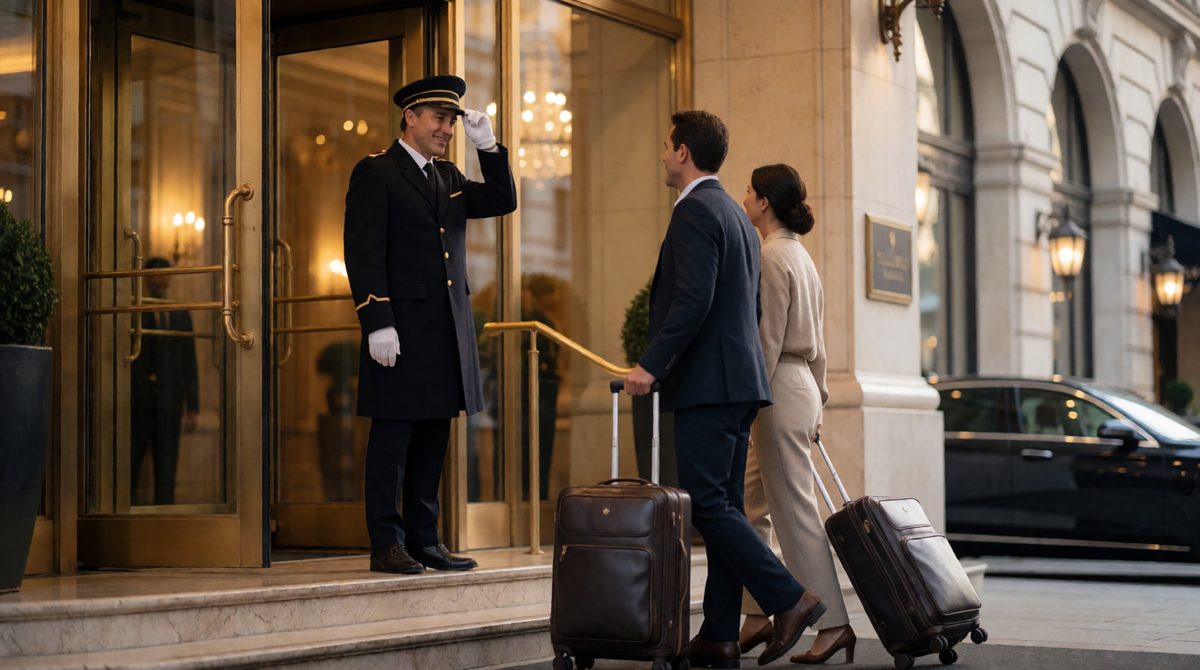
A warm welcome creates a great first impression
The moment a customer walks through a door, boards a plane, or calls a helpline, they are forming an impression. Research shows that people make judgements about others within the first 7 seconds of meeting them. In tourism, that first impression can set the tone for the entire experience.
Being welcoming is about more than just smiling. It is a combination of attitude, body language, tone of voice and genuine interest in the customer as a person. It means making every customer feel like they matter not just like a booking reference number.
🏠 What Makes Someone Feel Welcome?
Think about a time when you walked into a shop or restaurant and immediately felt comfortable. What made you feel that way? Chances are, it was a combination of several small things:
- Someone made eye contact and smiled genuinely
- You were greeted promptly not ignored for several minutes
- The person used a warm, friendly tone rather than sounding bored or robotic
- You felt like you were being treated as an individual, not just processed
- The environment itself felt clean, organised and inviting
All of these elements apply directly to tourism settings hotel lobbies, airport check-in desks, tour buses, cruise ship reception areas and travel agency offices.
🙋 Verbal Welcome Techniques
The words staff use matter enormously. Compare these two greetings:
❌ "Name?"
✅ "Good morning! Welcome to the Grand Hotel. My name is Sarah how can I help you today?"
The second greeting uses the customer's arrival as an opportunity to connect. It includes a greeting, a welcome, a personal introduction and an open invitation. It takes only a few extra seconds but creates a completely different experience.
🌟 Inclusive Welcoming
Being welcoming also means being inclusive making all customers feel equally valued regardless of their age, nationality, disability, or background. This includes:
- Offering assistance to customers with mobility needs without waiting to be asked
- Avoiding assumptions about what a customer wants based on their appearance
- Using respectful, neutral language that does not exclude anyone
- Being equally warm to solo travellers, families, elderly guests and young people
📋 Case Study: Marriott Hotels "Spirit to Serve"
Marriott International, one of the world's largest hotel groups with over 8,500 properties globally, has built its entire service culture around what founder J. Willard Marriott called the "Spirit to Serve." This philosophy is embedded in staff training from day one.
New employees at Marriott are taught that every guest interaction from check-in to a chance encounter in a corridor is an opportunity to make someone feel welcome. Staff are trained to use guests' names when they know them, to make eye contact, to smile genuinely and to offer help proactively rather than waiting to be asked.
Marriott also trains staff in cultural sensitivity understanding that what feels welcoming to a British guest may differ from what feels welcoming to a Japanese or Saudi Arabian guest. For example, the appropriate level of formality, the use of personal space and the style of greeting can all vary significantly across cultures.
The result? Marriott consistently scores highly on guest satisfaction surveys and has one of the strongest loyalty programme memberships in the hotel industry, with over 192 million Bonvoy members worldwide.
👥 How Listening, Patience and Being Welcoming Work Together
These three skills are not separate they are deeply connected. A truly excellent tourism professional uses all three simultaneously and each one supports the others.
📈 The Three Skills in Action: A Scenario
Imagine a family arrives at a hotel after a 12-hour flight. Their luggage has been delayed. The children are tired and upset. The parents are stressed and slightly irritable. Here is how the three skills combine:
- Being welcoming: The receptionist smiles warmly, makes eye contact and says "Welcome I can see you've had quite a journey. Let me help you get sorted straight away." This immediately lowers the tension.
- Listening: Rather than jumping to solutions, the receptionist lets the parents explain the situation fully. They listen carefully, ask one clarifying question and confirm they understand the problem correctly.
- Patience: One of the parents becomes quite sharp in their tone. The receptionist does not react defensively. They stay calm, acknowledge the frustration and calmly explain what steps they are taking to help.
The outcome? The family feels heard, respected and cared for even though the luggage problem has not yet been solved. Their overall experience of the hotel is positive because of how they were treated.
📋 Case Study: Disneyland Paris "The Magic of Welcome"
Disneyland Paris employs over 17,000 people (called "Cast Members") and serves around 15 million visitors per year from across Europe and beyond. Their training programme, known internally as "The Disney Way," places enormous emphasis on all three interpersonal skills covered in this lesson.
Cast Members are trained to greet every guest as if they are the most important person in the park that day. They are taught to crouch down to speak to children at eye level (welcoming), to listen carefully to understand what a family needs before offering directions or advice (listening) and to remain cheerful and helpful even during the busiest, most chaotic days in peak season (patience).
Disney also trains staff in what they call LAST Listen, Apologise, Solve, Thank. This four-step model is used whenever a guest has a complaint or problem and it directly incorporates active listening as the very first step.
Why it matters: Disneyland Paris is one of the most visited theme parks in the world. Their reputation for exceptional guest experience is directly linked to the interpersonal skills of their frontline staff.
🎓 Why These Skills Are Assessed in iGCSE Travel & Tourism
The Cambridge iGCSE Travel & Tourism syllabus (0471/0538) specifically identifies interpersonal skills as essential qualities for people working in the industry. Examiners want to see that you understand not just what these skills are, but why they matter and how they are used in real tourism contexts.
Questions in the exam may ask you to:
- Define a specific interpersonal skill and give an example from tourism
- Explain why a particular skill is important in a given situation
- Evaluate how well a member of staff demonstrated (or failed to demonstrate) a skill in a case study
- Suggest how a tourism business could improve the interpersonal skills of its staff
✅ Strong Exam Answers Include...
- A clear definition of the skill
- A specific example from tourism (not just a general example)
- An explanation of the impact on the customer or business
- Use of correct terminology (e.g. "active listening," "empathy," "customer satisfaction")
❌ Weak Exam Answers...
- Give vague answers like "be nice to customers"
- Repeat the question without adding explanation
- Fail to link the skill to a tourism context
- Confuse interpersonal skills with technical skills (e.g. using a booking system)
🔎 Quick Recap
- 👥 Interpersonal skills are personal qualities that affect how we interact with others they are central to success in travel and tourism.
- 🔓 Listening means actively paying attention, reflecting back what you have heard and avoiding assumptions it prevents mistakes and builds trust.
- ⏳ Patience means staying calm and professional under pressure especially important when customers are stressed, confused or upset.
- 😊 Being welcoming means creating a warm, inclusive first impression through tone, body language and genuine interest in the customer.
- 📈 All three skills work together the best tourism professionals use them simultaneously in every customer interaction.
- 📋 Real companies like Four Seasons, Marriott, Southwest Airlines and Disneyland Paris have built their reputations on these skills.
✍ Exam Tips: What the Examiner Wants to See
- Be specific: Don't just say "good listening skills." Say "active listening where the staff member repeats back what the customer has said to confirm understanding."
- Use tourism examples: Link every skill to a real tourism setting a hotel, airline, tour operator, or travel agent.
- Explain the impact: Always say what difference the skill makes to the customer's experience, to the business's reputation, or to staff effectiveness.
- Know the difference: Interpersonal skills (listening, patience, welcoming) are different from personal skills (numeracy, literacy, ICT) and technical skills (using a GDS booking system). Make sure you use the right category in your answers.
- Case study knowledge: Being able to refer to a real company (e.g. "Marriott trains staff in the Spirit to Serve philosophy...") will earn you higher marks in extended response questions.