🔍 What Does "Evaluating Skills" Actually Mean?
You've already studied a wide range of skills needed in travel and tourism communication, numeracy, ICT, problem-solving, flexibility, body language and more. Now it's time to go one step further: evaluating those skills. That means deciding which skills matter most for a particular job and being able to explain why.
This is one of the highest-level skills the iGCSE examiner tests. It's not enough to list skills you need to compare them, rank them and justify your choices with real examples.
Key Definitions:
- Essential skill: A skill that is absolutely required to do the job properly without it, the employee cannot function effectively.
- Desirable skill: A skill that is useful and makes an employee better, but the job could still be done without it.
- Evaluation: Making a judgement about the relative importance of something, supported by evidence and reasoning.
- Role-specific skills: Skills that are particularly important because of the nature of a specific job.
💡 Did You Know?
According to the World Travel & Tourism Council, the industry employs over 330 million people worldwide roughly 1 in 10 jobs globally. Each of those roles requires a different mix of skills. A cruise ship entertainer and an airline revenue manager both work in tourism, but their skill priorities are completely different!
📋 The Skills Framework: A Quick Reminder
Before we evaluate, here's a summary of the main skill categories you've already studied. Think of this as your toolkit now we're deciding which tool fits which job.
💬 Interpersonal Skills
Listening, patience, being welcoming, empathy. Vital when dealing face-to-face with customers.
🔢 Personal Skills
Clear speech, numeracy, literacy, ICT. The practical tools that get the job done day-to-day.
🛠 Transferable Skills
Problem-solving, flexibility, teamwork. Useful across almost every role in the industry.
✈ Evaluating Skills for Airline Roles
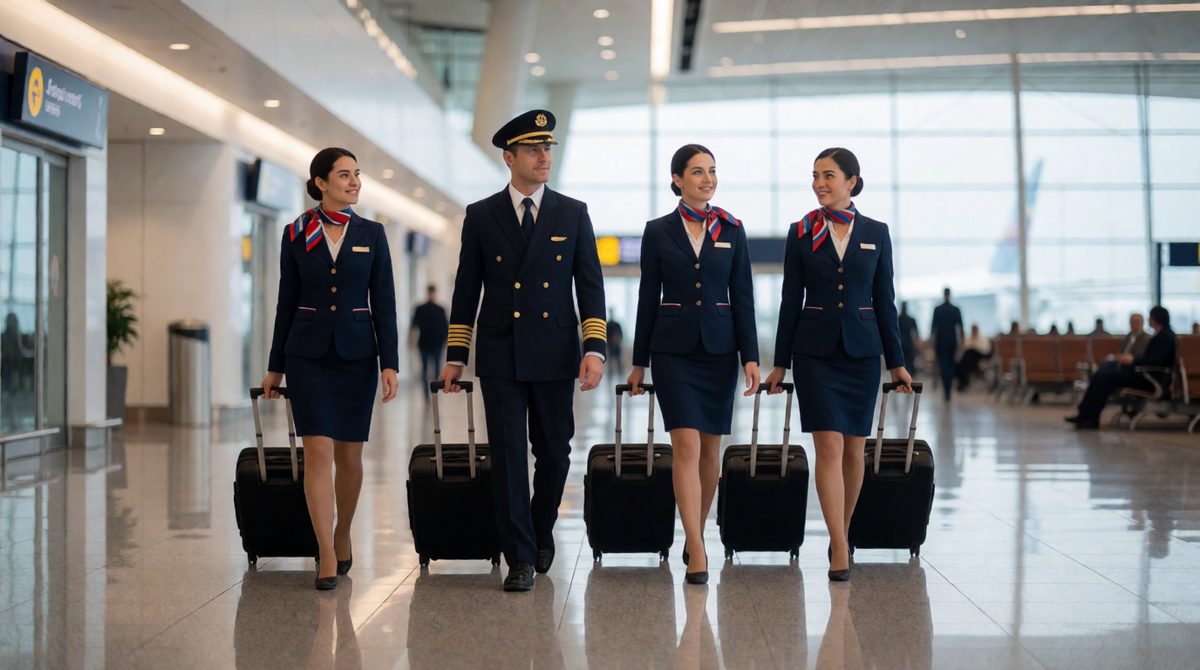
Different tourism roles need different skills
Airlines employ people in very different roles from cabin crew to ground handling staff, from pilots to customer service agents. Let's evaluate which skills matter most in each case.
👔 Cabin Crew
Cabin crew are the face of the airline. Passengers interact with them for hours at a time, often in stressful situations. The skill mix required is therefore heavily weighted towards interpersonal and personal presentation skills.
✅ Most Important Skills for Cabin Crew
- Communication: Giving safety instructions clearly to passengers of all nationalities
- Body language & presentation: Projecting calm confidence, especially during turbulence or emergencies
- Flexibility: Flights are delayed, passengers are difficult, meals run out adaptability is essential
- Language skills: Serving international passengers; multilingual crew are highly valued
- Teamwork: Crew must work as a unit a breakdown in teamwork at 35,000 feet can be dangerous
📈 Less Critical (But Still Useful)
- Advanced ICT: Cabin crew use basic systems, but don't need deep technical knowledge
- High-level numeracy: Basic maths for duty-free sales is enough
- Specialist product knowledge: Important but can be trained quickly
The key point: for cabin crew, how you interact with people matters more than technical knowledge.
📋 Case Study: British Airways Cabin Crew Selection
British Airways uses a multi-stage selection process for cabin crew that includes group exercises, role-play scenarios and one-to-one interviews. Crucially, they are not primarily testing knowledge they are evaluating interpersonal skills, emotional resilience and teamwork ability. Candidates who demonstrate excellent product knowledge but poor communication skills are routinely rejected. BA's view is that knowledge can be taught; natural warmth and calm under pressure are much harder to train.
💻 Airline Revenue Manager
A revenue manager works behind the scenes, analysing data to set ticket prices and maximise profit. This role has almost no direct customer contact the skill priorities are completely different.
- Numeracy: Absolutely essential analysing booking patterns, yield management, forecasting demand
- ICT: Must use complex software systems, spreadsheets and data dashboards
- Literacy: Writing clear reports for senior management
- Problem-solving: Responding to unexpected drops in bookings or competitor price changes
- Communication: Still needed, but mainly written presenting findings to colleagues
Notice how body language, personal presentation and patience with customers barely feature here. The job simply doesn't require them in the same way.
🏢 Evaluating Skills for Hotel Roles
Hotels are complex operations with dozens of different job types. Let's compare two very different hotel roles.
🙋 Hotel Receptionist
Top priority skills:
- Communication greeting guests, handling complaints, answering queries
- ICT using property management systems (PMS) like Opera or Fidelio
- Numeracy processing payments, calculating bills, handling foreign currency
- Language skills international hotels serve guests from all over the world
- Problem-solving overbookings, lost keys, noise complaints happen daily
- Personal presentation the receptionist is the first person guests see
This role demands a broad mix of skills because it combines technical tasks with constant customer interaction.
🍳 Hotel Chef
Top priority skills:
- Teamwork a kitchen brigade must work in perfect coordination
- Problem-solving ingredient shortages, equipment failures, dietary requirements
- Flexibility menus change, staff call in sick, large groups arrive unexpectedly
- Literacy reading recipes, understanding allergen regulations, writing menus
- Numeracy portion control, costing dishes, managing food budgets
Customer-facing interpersonal skills are less critical here chefs rarely interact directly with guests. Technical culinary skill matters far more.
📋 Case Study: The Savoy Hotel, London Role-Specific Training
The Savoy is one of London's most prestigious hotels. Their training programme is carefully tailored to each department. Front-of-house staff (receptionists, concierge, waiters) receive intensive training in communication, cultural awareness and personal presentation. Back-of-house staff (chefs, maintenance, housekeeping) receive training focused on technical skills, teamwork and safety procedures. The Savoy's management explicitly states that trying to give every employee the same training would be inefficient skill priorities must match the role.
🌍 Evaluating Skills for Tour Operators and Guides
Tour guides and representatives work directly with groups of tourists, often in unfamiliar or challenging environments. Their skill requirements are unique.
🌎 The Tour Guide: A Special Skill Mix
A tour guide's job combines the interpersonal demands of a customer service role with the knowledge demands of a teacher and the problem-solving demands of a crisis manager. Let's evaluate what matters most.
🏆 Critical Skills
- Communication speaking clearly to large groups outdoors
- Language skills often guiding non-English speakers
- Problem-solving lost tourists, medical emergencies, cancelled transport
- Cultural knowledge explaining local customs sensitively
✅ Very Important Skills
- Flexibility weather changes, site closures, group dynamics
- Patience managing slow walkers, persistent questioners, complaints
- Teamwork coordinating with drivers, local operators, hotels
- Personal presentation representing the tour company's brand
📈 Less Critical
- Advanced ICT guides use apps and booking systems, but not at a high level
- High numeracy basic maths for collecting payments is sufficient
- Formal literacy written communication is minimal in this role
📋 Case Study: Intrepid Travel Guide Recruitment Criteria
Intrepid Travel, the responsible tourism specialist, publishes detailed criteria for their tour leader recruitment. They explicitly rank skills in order of importance. First priority: local knowledge and cultural sensitivity. Second priority: communication and language skills. Third priority: problem-solving and crisis management. ICT skills and formal qualifications are listed as desirable but not essential. Intrepid argues that a guide who speaks three languages and handles emergencies calmly is worth far more than one with a degree but poor people skills.
📞 Evaluating Skills for Travel Agents
Travel agents whether working in a high street shop or remotely have a skill profile that sits between customer service and technical sales. Let's evaluate what they need most.
📋 The Travel Agent's Skill Priority List
- ICT (Essential): Travel agents use Global Distribution Systems (GDS) like Amadeus or Sabre to search and book flights, hotels and packages. Without strong ICT skills, they simply cannot do the job.
- Product knowledge (Essential): Clients expect agents to know destinations, visa requirements, health advice and package details. This overlaps with literacy reading brochures, ATOL documents and supplier updates.
- Communication (Essential): Building rapport with clients, understanding their needs and explaining complex itineraries clearly.
- Numeracy (Very important): Comparing prices, calculating commission, handling deposits and final payments.
- Problem-solving (Very important): When bookings go wrong cancelled flights, visa refusals, supplier failures the agent must find solutions quickly.
- Language skills (Desirable): Useful for serving international clients, but English-language agents can still serve most customers effectively.
📋 Case Study: Trailfinders The Skill-Heavy Travel Agent
Trailfinders, the UK's largest independent travel agency, is famous for the depth of knowledge its consultants possess. New recruits undergo up to six months of training before they are allowed to advise clients independently. The training focuses on destination knowledge, GDS systems, visa regulations and communication skills. Trailfinders explicitly states that ICT proficiency and product knowledge are their top hiring criteria but candidates who cannot communicate confidently with clients are also rejected. This shows that even in a knowledge-heavy role, interpersonal skills cannot be ignored.
⚖ Comparing Roles: A Summary Table
One of the best ways to evaluate skills is to compare them across roles side by side. Study this carefully it's exactly the kind of analysis the examiner wants to see.
| Skill |
Cabin Crew |
Hotel Receptionist |
Tour Guide |
Travel Agent |
Revenue Manager |
| Communication |
⭐⭐⭐ |
⭐⭐⭐ |
⭐⭐⭐ |
⭐⭐⭐ |
⭐⭐ |
| ICT Skills |
⭐ |
⭐⭐⭐ |
⭐ |
⭐⭐⭐ |
⭐⭐⭐ |
| Numeracy |
⭐ |
⭐⭐⭐ |
⭐ |
⭐⭐ |
⭐⭐⭐ |
| Language Skills |
⭐⭐⭐ |
⭐⭐ |
⭐⭐⭐ |
⭐⭐ |
⭐ |
| Problem-Solving |
⭐⭐⭐ |
⭐⭐⭐ |
⭐⭐⭐ |
⭐⭐⭐ |
⭐⭐ |
| Personal Presentation |
⭐⭐⭐ |
⭐⭐⭐ |
⭐⭐ |
⭐⭐ |
⭐ |
| Flexibility |
⭐⭐⭐ |
⭐⭐ |
⭐⭐⭐ |
⭐⭐ |
⭐⭐ |
⭐⭐⭐ = Essential | ⭐⭐ = Very Important | ⭐ = Useful but less critical
🔎 How to Write an Evaluation Answer
In the exam, you might be asked something like: "Evaluate the skills required for a hotel receptionist. Which skill is most important and why?" Here's how to structure a strong answer.
✅ Strong Evaluation Answer
"A hotel receptionist requires a wide range of skills. Communication is arguably the most important because the receptionist is the first point of contact for guests a poor welcome can damage the hotel's reputation immediately. However, ICT skills are equally critical in a modern hotel, as receptionists must use property management systems to check guests in and out, process payments and manage room allocations. Without ICT competence, the operational side of the role breaks down entirely. Problem-solving is also essential, as issues such as overbooking arise daily. In contrast, advanced language skills, while useful in an international hotel, are less critical as translation apps can assist. Overall, communication and ICT are jointly the most important skills because they are needed constantly and cannot be substituted."
❌ Weak Evaluation Answer
"A hotel receptionist needs good communication skills. They also need ICT skills and numeracy. Problem-solving is important too. All of these skills are needed to do the job well."
This answer lists skills but does not evaluate them. There is no comparison, no justification and no conclusion about which matters most. The examiner will not award high marks for this.
🏆 Factors That Affect Which Skills Are Most Important
When evaluating skills, it's not just about the job title several other factors affect which skills are most critical.
🌎 The Type of Customer
A luxury five-star hotel serving wealthy international guests needs staff with exceptional interpersonal skills and language ability. A budget hostel serving young backpackers might prioritise ICT skills and efficiency over formal presentation.
🏢 The Work Environment
Outdoor roles (tour guides, activity instructors) demand flexibility and problem-solving because conditions are unpredictable. Office-based roles (revenue managers, marketing teams) demand ICT and numeracy more heavily.
📈 The Level of Seniority
Junior staff need strong technical and interpersonal skills for day-to-day tasks. Senior managers need stronger leadership, decision-making and communication skills to manage teams and strategy.
📋 Case Study: TUI Group Matching Skills to Roles
TUI Group, one of the world's largest travel companies, employs over 70,000 people across airlines, hotels, cruise ships and retail travel agencies. Their HR department uses a detailed skills matrix for each job category. For example, TUI's resort representatives are assessed primarily on communication, flexibility and problem-solving. Their airline crew are assessed on safety knowledge, teamwork and personal presentation. Their head office finance staff are assessed on numeracy, ICT and analytical thinking. TUI's approach confirms that there is no single "most important" skill across the whole industry it depends entirely on the role.
📚 Exam Scenario Practice
Try answering this question using what you've learned. Aim for at least 6 sentences that include comparison and a justified conclusion.
✍ Practice Question
"Evaluate the skills required for a tour guide working for an adventure travel company in Nepal. Justify which skill you consider to be most important."
Think about: Who are the customers? What environment does the guide work in? What problems might arise? Which skills can be replaced by technology and which cannot?
Hint: Consider that guides work in remote areas with limited connectivity, with international tourists, in physically demanding and sometimes dangerous conditions. This should shape your evaluation.
🔎 Quick Recap
- ✅ Evaluating skills means comparing their importance and justifying your judgement not just listing them
- ✅ Different roles require different mixes of skills there is no single "most important" skill for all jobs
- ✅ Customer-facing roles (cabin crew, receptionists, tour guides) prioritise interpersonal and communication skills
- ✅ Technical roles (revenue managers, IT staff) prioritise numeracy, ICT and analytical skills
- ✅ The type of customer, work environment and seniority level all affect which skills matter most
- ✅ Strong exam answers compare, justify and conclude they don't just list
- ✅ Real-world examples (TUI, Trailfinders, The Savoy, Intrepid Travel) strengthen your evaluation
✍ Exam Tips: What the Examiner Wants to See
- Use comparative language: "more important than", "less critical because", "equally essential"
- Give reasons, not just facts: Don't say "communication is important" say why it's important for that specific role
- Name real businesses where possible it shows you understand how the industry actually works
- Reach a conclusion: Always end with a clear judgement about which skill is most important and why
- Consider counter-arguments: Acknowledge that other skills are also important before explaining why your chosen skill ranks highest