🏠 Provision for Different Types of Tourists
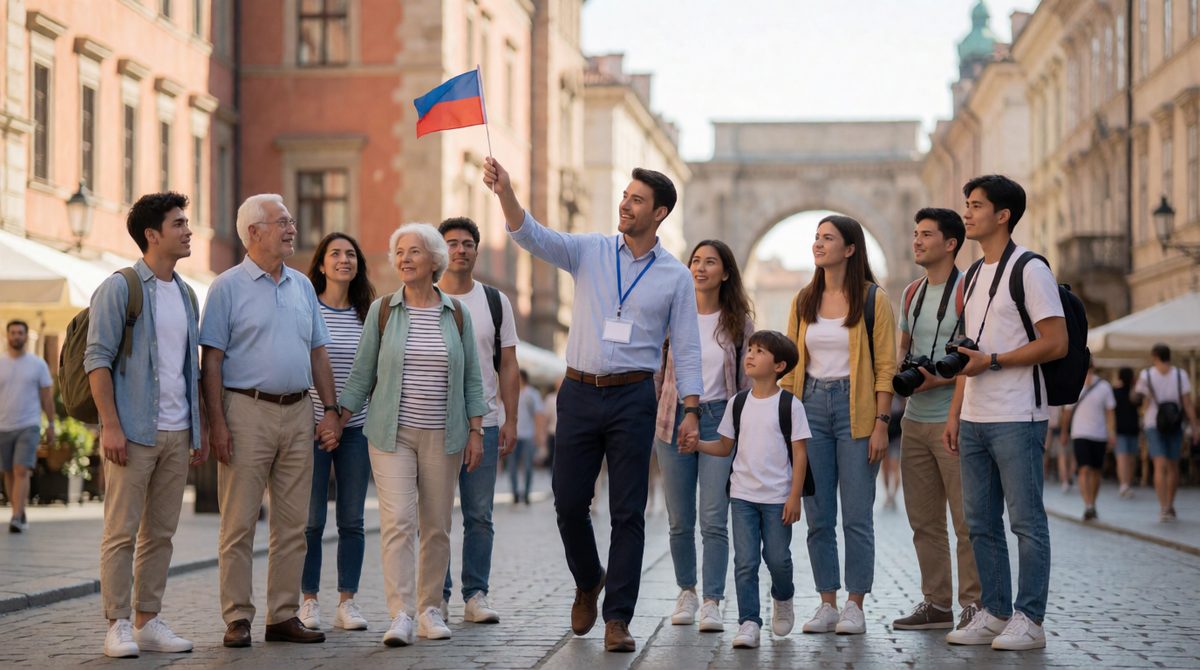
Tourism providers cater for many types of tourist
The tourism industry doesn't serve just one type of person it serves everyone. A retired couple, a group of teenagers on a school trip, a solo backpacker and a family with young children all have completely different needs. Good tourism providers understand this and adapt their facilities, services and staff to meet those needs.
Key Definitions:
- Provision: The facilities, services and support that tourism organisations offer to tourists.
- Inclusive tourism: Making travel accessible and enjoyable for all types of tourists, regardless of age, ability, or background.
- Adaptation: Changing products or services to suit the specific needs of different tourist groups.
👪 Families with Young Children
Families need child-friendly facilities such as kids' menus, baby-changing rooms, cots and shallow swimming pools. Theme parks like Legoland Windsor design entire experiences around children, with age-appropriate rides and character meet-and-greets. Hotels often offer family rooms and kids' clubs so parents can relax.
♿ Tourists with Disabilities
Providers must offer wheelchair ramps, lifts, accessible toilets, Braille signage and trained staff. In the UK, the Equality Act 2010 requires tourism businesses to make reasonable adjustments. Many airports now offer hidden disability lanyards so staff know to offer extra help discreetly.
👤 Solo Travellers
Solo travellers especially younger ones often look for hostels, group tours and social activities. They value safety, good Wi-Fi and meeting other travellers. Providers like Contiki specialise in group tours for 18–35 year olds, turning solo travel into a social experience.
👴 Senior Tourists
Older tourists often prefer slower-paced itineraries, comfortable transport and accessible accommodation. Companies like Saga Holidays cater exclusively to the over-50s, offering cruises, escorted tours and travel insurance designed for their needs. Clear signage and patient staff are essential.
🌎 Religious and Cultural Needs
Tourists from different cultural or religious backgrounds have specific requirements that providers must respect and accommodate.
🍳 Halal & Kosher Food
Muslim and Jewish tourists require food prepared according to religious rules. Many hotels and airlines now offer halal-certified meals and clearly label menus. Dubai's hotels are well-known for excellent halal provision.
📍 Prayer Facilities
Airports like Heathrow and Dubai International provide dedicated prayer rooms for Muslim, Christian and multi-faith travellers. This is a key part of inclusive tourism provision.
🏭 Dress Codes & Customs
Some destinations require tourists to dress modestly (e.g. covering shoulders in temples). Good tour operators brief tourists in advance so they can respect local customs and avoid causing offence.
📚 Case Study: Center Parcs UK
Center Parcs is a brilliant example of a provider that caters for a huge range of tourists. Their forest villages offer activities for toddlers (soft play, splash pools), teenagers (climbing walls, archery), adults (spa treatments, cycling) and elderly guests (gentle nature walks, accessible lodges). Every lodge is designed to be fully accessible and staff are trained to assist guests with mobility needs. This "something for everyone" approach keeps occupancy rates consistently above 95%.
🔧 Industry Skills in Travel and Tourism
Working in travel and tourism isn't just about knowing your destinations it's about having the right skills to deliver excellent experiences. The industry is highly competitive and employers look for a specific mix of personal qualities and professional abilities.
Key Definitions:
- Hard skills: Technical, teachable abilities e.g. using booking software, speaking a foreign language, first aid.
- Soft skills: Personal qualities and interpersonal abilities e.g. communication, empathy, problem-solving.
- Professionalism: Behaving in a way that reflects well on yourself and your employer including appearance, punctuality and attitude.
🌟 Essential Skills for Tourism Workers
Tourism workers interact with people from all walks of life, often under pressure. Here are the most important skills the industry demands:
💬 Communication
Clear, friendly and professional communication both spoken and written. This includes active listening, giving clear directions and writing professional emails. Being able to communicate in more than one language is a huge advantage.
🧠 Problem-Solving
Things go wrong in tourism flights are delayed, rooms are double-booked, luggage gets lost. Workers need to stay calm, think quickly and find solutions. Employers call this resilience under pressure.
💋 Empathy
Understanding how a tourist feels especially when they're stressed, lost, or disappointed is crucial. Empathetic staff turn bad situations into positive memories. This is one of the hardest skills to teach, but one of the most valued.
🌐 Cultural Awareness
Tourism workers meet people from all over the world. Understanding different customs, greetings and expectations helps avoid misunderstandings. For example, in Japan, it's polite to bow rather than shake hands. A culturally aware tour guide will know this and brief their group accordingly.
💻 IT and Digital Skills
Modern tourism relies heavily on technology booking systems (like Amadeus or Galileo), social media, online check-in and customer databases. Workers who can use these tools confidently are far more employable in today's industry.
📚 Case Study: TUI Group Staff Training
TUI is one of the world's largest travel companies, operating holidays across 180 destinations. TUI invests heavily in staff training through its TUI Academy, which teaches customer service, cultural awareness, destination knowledge and digital skills. Their holiday reps are trained to handle everything from a medical emergency to a complaint about a noisy neighbour all while keeping a smile on their face. TUI's research shows that well-trained reps directly increase customer satisfaction scores and repeat bookings.
📋 Matching Provision to Tourist Needs Exam Focus
In the exam, you may be asked to evaluate how well a tourism provider meets the needs of a specific tourist group, or to suggest improvements. Use the framework below to structure your answers.
🔎 How to Evaluate Provision
When evaluating how well a provider meets tourist needs, consider these four areas:
🏠 Facilities
Are the physical facilities appropriate? (e.g. ramps for wheelchair users, cots for families, quiet rooms for elderly guests)
👥 Staff
Are staff trained to meet specific needs? (e.g. sign language, language skills, first aid, cultural sensitivity training)
📄 Information
Is information available in accessible formats? (e.g. large print, multiple languages, audio guides, easy-read leaflets)
💡 Did You Know?
The World Tourism Organisation (UNWTO) estimates that tourists with disabilities and their companions represent a market of over 1 billion people worldwide. Providers who invest in accessibility don't just do the right thing they tap into a massive and loyal customer base. Accessible tourism is good ethics and good business!
✅ Exam Practice Theme 4 Consolidation
Use these exam-style questions to test yourself. Try writing full answers before checking the guidance below.
📝 Exam-Style Questions
📋 4-Mark Question
"Describe two ways a hotel could improve its provision for tourists with disabilities."
Guidance: Name the adaptation (e.g. wheelchair ramp) + explain how it helps (e.g. allows wheelchair users to access all areas independently). Do this twice for full marks.
📋 6-Mark Question
"Explain why good communication skills are important for workers in the travel and tourism industry."
Guidance: Give at least three developed points. Link each point to a specific tourism context e.g. a resort rep explaining excursions, a hotel receptionist handling a complaint, an airline crew member in an emergency.
📋 8-Mark Evaluate Question
"Evaluate how effectively a named tourism provider meets the needs of family tourists."
Guidance: Use a real example (e.g. Center Parcs, Legoland). Cover facilities, staff and information. Give both strengths and limitations. End with a justified conclusion.
📋 Suggest Question
"Suggest two ways a tour operator could better meet the needs of senior tourists."
Guidance: Think practically slower pace, accessible transport, clear large-print materials, travel insurance options, medical support. Always explain why each suggestion helps.
🎓 Key Revision Points Theme 4 Consolidation
- ✅ Different tourist groups (families, elderly, solo, disabled, cultural) all have distinct needs that providers must address.
- ✅ Provision includes facilities, staff training, information and pricing.
- ✅ Key industry skills include communication, empathy, problem-solving, cultural awareness and IT skills.
- ✅ Inclusive tourism is both an ethical responsibility and a commercial opportunity.
- ✅ In the exam, always name a real provider and link your points to specific tourist needs.
- ✅ Use command words carefully: describe = what it is; explain = how/why; evaluate = strengths, weaknesses and a conclusion.
🎯 Final Quick Recap
Before you move on, make sure you can answer these questions without looking at your notes:
- Name four different types of tourist and one specific need for each.
- What is the difference between a hard skill and a soft skill?
- Give one example of how a provider can meet the needs of a tourist with a disability.
- Why is cultural awareness important for tourism workers?
- Name one real company and explain how it caters for a specific tourist group.