🌎 Introduction to the Marketing Mix
Every tourism business whether it's a hotel, airline, theme park or eco-lodge needs a plan to attract customers and keep them coming back. That plan is called the marketing mix. Think of it as a recipe: get the ingredients right and you've got a winning product. Get them wrong and nobody turns up!
The marketing mix is made up of what's known as the 4 Ps: Product, Price, Place, and Promotion. In this session, we're focusing on two of the most important: Product and Promotion.
Key Definitions:
- Marketing Mix: The combination of strategies a business uses to promote and sell its product or service to customers.
- Product: In tourism, this is everything a tourist buys or experiences from a flight to a guided tour to a hotel stay.
- Promotion: All the ways a business communicates with potential customers to persuade them to buy.
- Sustainable Tourism: Tourism that meets the needs of today's tourists without damaging the environment or local communities for future generations.
🏭 Tangible vs Intangible Products
A tangible product is something you can physically touch like a souvenir, a meal, or a hotel room. An intangible product is an experience like the feeling of excitement on a safari or the relaxation of a spa day. Most tourism products are a mix of both. For example, a beach holiday includes the tangible hotel room AND the intangible feeling of being on holiday.
✈ Goods vs Services
Goods are physical items you can take home a guidebook, a snow globe, a meal. Services are actions performed for you a taxi ride, a guided tour, a flight. Tourism is mostly a service industry, which makes it unique. You can't test-drive a holiday before you buy it! This means businesses have to work extra hard to convince customers their service is worth it.
🏠 What Is a Tourism Product?
In travel and tourism, a "product" isn't just one thing it's a whole bundle of experiences, services and goods all wrapped together. When someone books a package holiday to Spain, the product includes the flight, the hotel, the food, the weather, the local culture, the excursions and even the customer service they receive. All of these together make up the total tourism product.
🌐 The Three Levels of a Tourism Product
Tourism experts often describe products in three layers like an onion! Each layer adds more value for the customer.
⬛ Core Product
This is the basic reason someone travels. A tourist going to Paris wants to see the Eiffel Tower and experience French culture. That's the core the fundamental need being met.
⬜ Actual Product
This includes the specific features: the hotel chosen, the airline used, the tour guide hired. It's the real, physical version of the holiday that the customer books and pays for.
⭐ Augmented Product
These are the extras that make the experience special free airport transfers, loyalty points, 24-hour customer support, or a welcome drink at the hotel. These help businesses stand out from competitors.
🔍 Real World Example: Thomas Cook vs Modern Packages
Thomas Cook, once one of the world's biggest travel companies, sold classic package holidays flights, hotels and transfers all bundled together. When it collapsed in 2019, many customers were left stranded abroad. This showed how important it is for tourism businesses to manage their total product carefully. Today, companies like TUI and Jet2 have taken over, offering similar packages but with more flexible, digital-first options and better financial protection for customers.
🌿 Sustainable Tourism Products
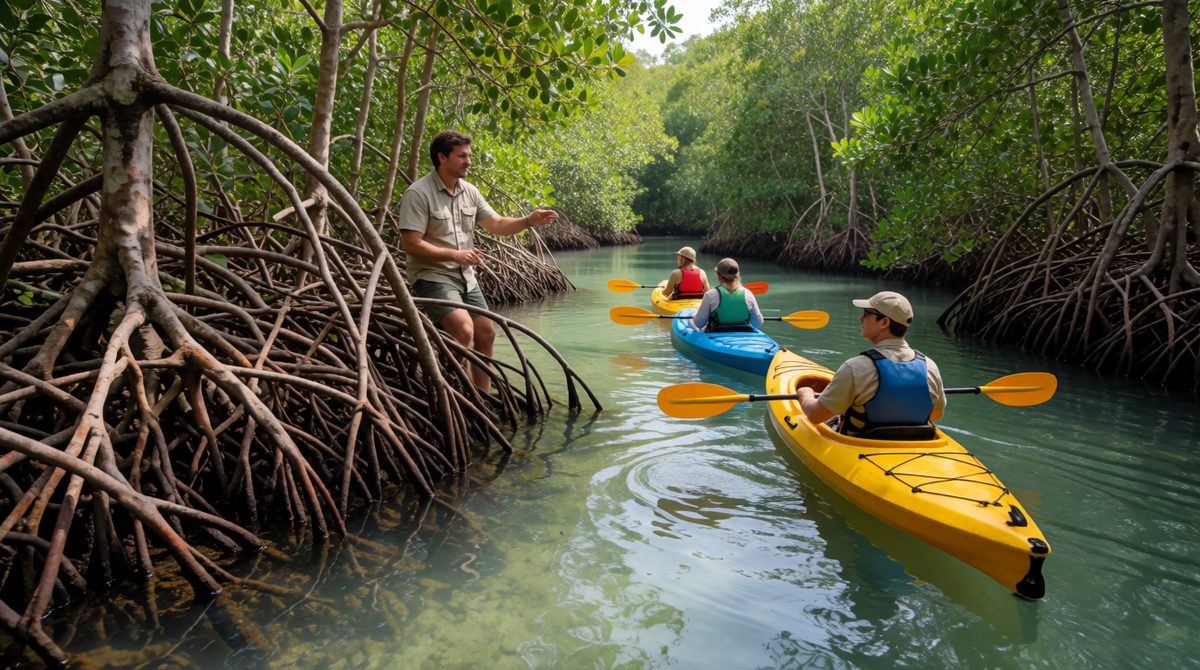
Sustainable tourism products are growing in popularity
Here's where things get really interesting. The tourism industry is one of the biggest contributors to carbon emissions and environmental damage in the world. But it's also one of the biggest sources of income for developing countries. So how do we enjoy travel without wrecking the planet? The answer is sustainable tourism products.
Sustainable tourism products are designed to minimise negative impacts on the environment, support local communities and preserve cultural heritage while still giving tourists a brilliant experience.
Key Definitions:
- Ecotourism: Responsible travel to natural areas that conserves the environment and improves the wellbeing of local people.
- Green Tourism: Tourism that actively tries to reduce its environmental footprint using renewable energy, reducing waste and protecting wildlife.
- Community-Based Tourism (CBT): Tourism where local communities are directly involved in running tourism activities and receive the economic benefits.
- Carbon Offsetting: When a business or traveller compensates for their carbon emissions by funding environmental projects like tree planting.
🌿 Examples of Sustainable Products
- 🌿 Eco-lodges in Costa Rica built from sustainable materials
- 🐊 Wildlife conservation tours in Kenya where fees fund anti-poaching
- ⛷ Cycling and walking holidays in the UK's National Parks
- 🌊 Coral reef restoration dives in the Maldives
- 🏠 Homestay programmes in Nepal supporting local families
✅ Why Sustainable Products Are Growing
- 📈 Growing consumer demand especially from younger travellers
- 🌎 Climate change awareness is pushing tourists to make greener choices
- 🌟 Certifications like Green Globe and EarthCheck help tourists identify responsible businesses
- 💵 Governments offering incentives for eco-friendly tourism businesses
- 📱 Social media amplifies eco-friendly travel stories, creating free promotion
🇨🇷 Case Study: Costa Rica The King of Ecotourism
Costa Rica is tiny about the size of Wales but it's one of the world's top ecotourism destinations. Over 25% of the country is protected national parkland. The government has invested heavily in sustainable tourism infrastructure and local communities run many of the tours and lodges. Tourists come to see rainforests, volcanoes, sloths and sea turtles. The result? Tourism brings in over $4 billion per year while the country runs on nearly 100% renewable energy. It's proof that sustainable tourism can be both good for the planet AND great for business.
📣 Promotion in Travel and Tourism
You could have the most amazing eco-lodge in the world, but if nobody knows about it, nobody will come. That's where promotion comes in. Promotion is everything a business does to communicate with potential customers and persuade them to choose their product over a competitor's.
In tourism, promotion is especially important because customers are often buying something they've never experienced before and can't return if they don't like it. Trust and image are everything.
📋 The Promotional Mix
Businesses don't rely on just one type of promotion they use a mix of methods to reach different audiences. Here are the main ones used in travel and tourism:
📺 Advertising
TV adverts, billboards, online banner ads and magazine spreads. Classic and expensive, but great for reaching large audiences. Think of those dreamy holiday adverts you see on TV in January when everyone's miserable!
📱 Social Media & Digital
Instagram, TikTok, YouTube and Facebook are now the biggest tools in tourism promotion. Influencer partnerships, viral videos and targeted ads can reach millions for a fraction of traditional advertising costs.
🎓 Public Relations (PR)
Getting positive media coverage travel journalists writing reviews, news stories about a destination, or celebrity endorsements. PR builds credibility because it feels more trustworthy than a paid advert.
🎁 Sales Promotions
Special deals designed to get people to book now rather than later. Examples include early-bird discounts, two-for-one offers, free upgrades and loyalty reward schemes like Avios air miles. These are great for filling rooms or seats during quiet periods.
📄 Brochures & Print
Traditional travel brochures are still used, especially by older travellers. However, digital brochures (PDFs and interactive websites) are increasingly replacing print. A well-designed brochure builds trust and gives customers something physical to browse through.
📷 Case Study: Visit Britain's Digital Campaigns
VisitBritain is the UK's national tourism agency. In recent years, they've shifted heavily towards digital promotion. Their "GREAT Britain" campaign used social media influencers, YouTube travel vlogs and targeted Instagram adverts to reach potential tourists in the USA, China and India. They partnered with celebrities and used stunning drone footage of the British countryside. The result was a significant increase in international visitor numbers proving that smart digital promotion can have a massive impact even on a limited budget.
🌟 Branding in Tourism
A brand is more than just a logo. It's the entire personality and reputation of a business or destination. When you think of "The Maldives" you probably picture white sand, crystal water and luxury overwater bungalows. That's branding at work and it took years of consistent promotion to build that image.
- Destination Branding: Countries and cities create a brand identity to attract tourists. "Incredible India," "Pure New Zealand," and "Amazing Thailand" are all famous destination branding slogans.
- Corporate Branding: Companies like Virgin Atlantic, Airbnb and Marriott have strong brand identities that customers trust and recognise instantly.
- Sustainable Branding: Increasingly, businesses are building their brand around sustainability like Intrepid Travel, which markets itself as the world's largest adventure travel company with a commitment to responsible tourism.
💡 Exam Tip: Linking Product and Promotion
In your exam, you might be asked to evaluate how a tourism business uses the marketing mix. Remember: the product and promotion must match. A luxury five-star resort shouldn't use budget discount promotions it would damage the brand. An eco-lodge should promote its sustainability credentials loudly and clearly, because that's exactly what its target market cares about. Always think about whether the promotion suits the product and the target audience.
⚖ Evaluating Promotional Strategies
Not all promotion is equally effective. Businesses need to measure whether their promotional spending is actually working. Here are some ways they do this:
- 📈 Tracking bookings Did sales increase after the campaign?
- 📱 Website analytics Did more people visit the website after the advert?
- 💬 Social media engagement Did the post get likes, shares and comments?
- ⭐ Customer reviews Are tourists mentioning the promotion in their feedback?
- 💳 Return on Investment (ROI) Did the money spent on promotion generate more revenue than it cost?
🌎 The Growing Role of Sustainable Promotion
As sustainability becomes more important to travellers, businesses are increasingly promoting their green credentials as a key selling point. This is sometimes called "green marketing." However, businesses must be careful not to fall into the trap of greenwashing making false or exaggerated claims about being eco-friendly just to attract customers.
Genuine sustainable promotion includes things like:
- Displaying recognised eco-certifications (e.g., Green Globe, Rainforest Alliance)
- Sharing transparent data about carbon footprint reductions
- Highlighting community benefit projects funded by tourism revenue
- Using authentic stories from local communities in marketing materials
⚠ Watch Out: Greenwashing!
Greenwashing is when a company pretends to be more eco-friendly than it actually is. For example, a hotel might call itself "green" just because it asks guests to reuse towels while still using huge amounts of single-use plastic and flying in all its food from overseas. Savvy tourists (and exam markers!) know the difference between genuine sustainability and greenwashing. Real sustainable tourism products make a measurable, meaningful difference.
📚 Summary: Key Points to Remember
- ✅ The marketing mix (4 Ps) includes Product, Price, Place and Promotion
- ✅ Tourism products are mostly intangible services, not physical goods
- ✅ The total tourism product has three levels: core, actual and augmented
- ✅ Sustainable tourism products minimise environmental damage and support local communities
- ✅ Ecotourism, green tourism and community-based tourism are key sustainable product types
- ✅ Costa Rica is a leading example of successful sustainable tourism
- ✅ Promotion includes advertising, social media, PR, sales promotions and brochures
- ✅ Digital promotion and influencer marketing are increasingly dominant in tourism
- ✅ Branding creates a consistent identity and builds customer trust
- ✅ Greenwashing is misleading and damages trust genuine sustainability must be evidenced