📈 The Product Life Cycle – What Is It?
Every product – whether it's a new smartphone, a chocolate bar, or a holiday destination – goes through a journey. It starts out fresh and exciting, grows in popularity, reaches a peak and then eventually starts to fade. This journey is called the Product Life Cycle (PLC).
In travel and tourism, the PLC is incredibly useful. It helps tourism businesses and destination managers understand where their product currently sits and what they should do next to keep attracting visitors and making money.
Key Definitions:
- Product Life Cycle (PLC): A model that shows the stages a product goes through from when it is first launched to when it is eventually withdrawn from the market.
- Sales Revenue: The money a business earns from selling its product or service.
- Market Saturation: When a market has been filled to its maximum capacity and growth slows down.
- Extension Strategy: A marketing action taken to slow down or reverse the decline of a product and extend its life.
📊 The Four Stages of the Product Life Cycle
The PLC is usually shown as a curve on a graph, with time on the horizontal axis and sales/revenue on the vertical axis. The curve rises, peaks and then falls. There are four key stages:
🚀 1. Introduction
The product is brand new. Sales are low because not many people know about it yet. Costs are high due to marketing and development. Profits may be negative at this point. Example: A brand-new eco-lodge opening in a remote rainforest.
🔥 2. Growth
Word spreads and more people start buying the product. Sales rise quickly. Profits begin to appear. Competitors may start to copy the idea. Example: Budget airlines growing rapidly in the 1990s as more travellers discovered cheap flights.
🏅 3. Maturity
Sales reach their highest point and then level off. The market is saturated – most people who want the product already have it. Competition is fierce. Businesses must work hard to stay ahead. Example: Package holidays to Spain in the 1980s and 1990s.
😣 4. Decline
Sales begin to fall. The product is becoming outdated or unfashionable. Profits shrink. Businesses must decide whether to withdraw the product or try to revive it with an extension strategy. Example: Traditional seaside resorts like Blackpool in the UK, which saw visitor numbers fall as people chose to holiday abroad instead.
💡 Why Does This Matter?
Understanding which stage a product is in helps businesses make smarter decisions. Should they invest more in advertising? Should they lower prices? Should they add new features? The PLC gives them a framework to answer these questions and plan their next move strategically.
📌 Visualising the PLC Curve
Imagine drawing a hill on a piece of paper. The left side going up = Introduction and Growth. The top of the hill = Maturity. The right side going down = Decline. The goal of any business is to stay at the top of the hill for as long as possible – or to climb back up if they start sliding down!
🌍 Applying the PLC to Tourism Destinations
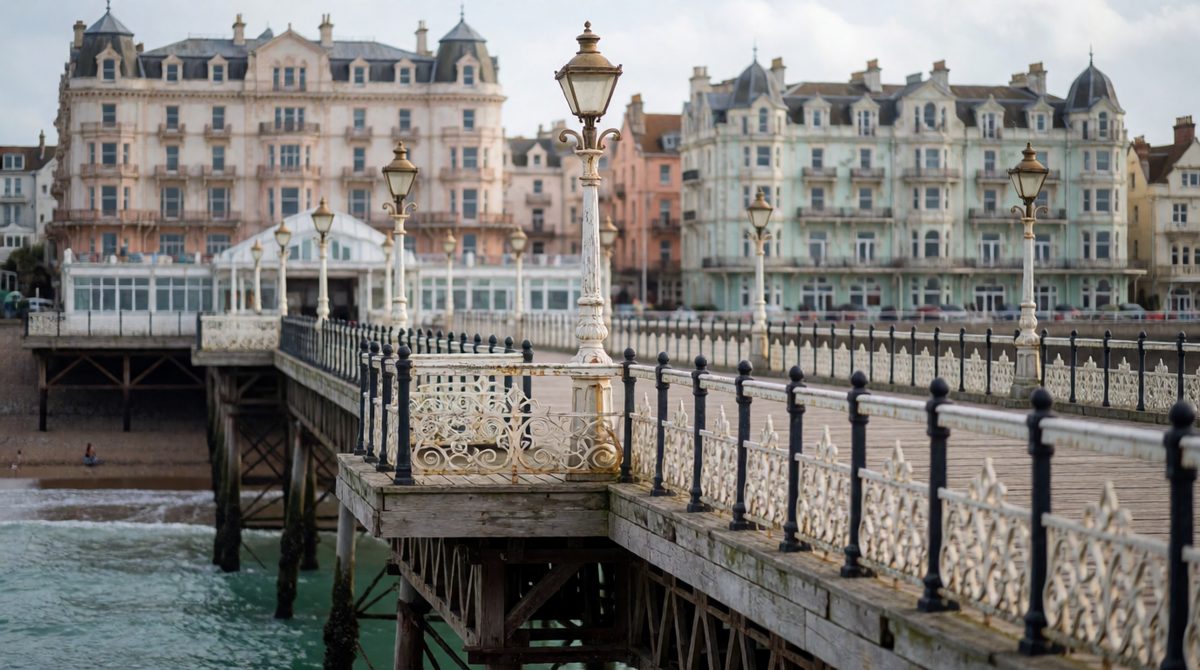
Destinations go through a life cycle
The PLC doesn't just apply to physical products like sunscreen or suitcases. It applies brilliantly to tourism destinations too. A beach resort, a city break destination, or a theme park can all be mapped onto the PLC curve. This is sometimes called Butler's Tourist Area Life Cycle (TALC), which is a version of the PLC designed specifically for destinations.
🏝 Butler's Tourist Area Life Cycle (TALC)
Geographer Richard Butler developed his TALC model in 1980. It mirrors the PLC but uses tourism-specific language. The stages are: Exploration, Involvement, Development, Consolidation, Stagnation and then either Decline or Rejuvenation.
🔎 Early Stages: Exploration & Involvement
Exploration: Very few visitors – often adventurous backpackers or explorers. No tourist infrastructure. The destination is largely unspoilt. Think of the Faroe Islands in the 1980s or Bhutan before tourism opened up.
Involvement: Local people start to provide basic services for tourists – guesthouses, local guides. Visitor numbers slowly grow. The government may begin to take notice.
🏗 Middle Stages: Development & Consolidation
Development: Big investment pours in. Hotels, airports and attractions are built. Visitor numbers grow rapidly. The destination becomes well-known. This is where places like Dubai were in the 1990s.
Consolidation: Tourism dominates the local economy. Growth slows slightly. The destination is well-established and heavily marketed. Think of Cancún, Mexico today.
Stagnation is when the destination has reached its peak. It is no longer new or exciting. Visitor numbers plateau. The destination may have environmental or social problems caused by over-tourism. After stagnation, the destination faces a choice:
- 🔴 Decline: Visitor numbers fall. The destination becomes run-down and loses its appeal.
- 🟢 Rejuvenation: The destination reinvents itself through investment, new attractions, or rebranding and climbs back up the curve.
🏭 Case Study: Blackpool – From Boom to Bust (and Back?)
Introduction & Growth (1800s–1950s): Blackpool was one of the UK's most exciting seaside resorts. The arrival of the railway in 1846 made it accessible to millions of working-class families. The famous Blackpool Tower opened in 1894. Visitor numbers soared.
Maturity (1950s–1970s): Blackpool was at its peak. Millions visited every year. Hotels were full. The illuminations drew huge crowds in autumn.
Decline (1980s–2000s): Package holidays to Spain became affordable. British tourists chose guaranteed sunshine over rainy Blackpool. Hotels closed. The resort became run-down. Crime and poverty increased.
Rejuvenation attempts (2000s–present): Blackpool has tried several extension strategies – investing in new attractions, improving the promenade, bidding for a super-casino (which was rejected) and promoting itself as a short-break destination. Results have been mixed, but visitor numbers have stabilised.
🌞 Extension Strategies – Fighting the Decline
When a tourism product or destination enters decline, businesses and governments don't just give up. They fight back using extension strategies – clever marketing and investment moves designed to breathe new life into a product and push sales back up.
Common Extension Strategies in Tourism:
- 🌟 Rebranding: Changing the image of a destination to attract a new type of visitor. Example: Las Vegas rebranded from a gambling city to a family entertainment destination in the 1990s.
- 🏅 New Attractions: Adding new things to see and do. Example: Blackpool adding new rides and events to attract younger visitors.
- 💰 Price Reductions: Lowering prices to attract budget-conscious travellers during quieter periods.
- 🌎 Targeting New Markets: Promoting the destination to different groups, such as older travellers, adventure tourists, or visitors from new countries.
- ♨ Sustainability Upgrades: Repositioning as an eco-friendly destination to attract environmentally conscious tourists.
- 📷 Social Media Campaigns: Using Instagram, TikTok and YouTube to reach younger audiences and create a buzz.
🏒 Case Study: Ibiza – Reinventing Itself
Ibiza in Spain is a brilliant example of a destination that has successfully used extension strategies. In the 1960s and 1970s, it was a quiet hippy retreat – very much in the exploration stage. By the 1990s, it had exploded into the world's clubbing capital, firmly in maturity. By the 2010s, concerns about over-tourism, drug use and a rowdy reputation threatened to push it into decline.
The Ibiza government responded with a clever extension strategy: they began promoting the quieter, more upmarket side of the island – yoga retreats, luxury villas, gourmet restaurants and family-friendly beaches. They targeted wealthier tourists and families rather than just young clubbers. This helped stabilise visitor numbers and improved the island's reputation. Ibiza successfully extended its life cycle by targeting a completely new market segment.
🏠 The PLC and Tourism Products (Not Just Destinations)
Remember – the PLC applies to tourism products as well as destinations. Think about how different types of holidays have moved through the cycle:
✈ Package Holidays
Introduced in the 1960s, grew massively through the 1970s–80s, reached maturity in the 1990s and have been in gradual decline since the internet allowed people to book their own trips. Extension strategies include adding more flexibility and personalisation.
🚢 Cruise Holidays
Once seen as old-fashioned and only for the elderly, the cruise industry reinvented itself in the 1990s–2000s by targeting younger families and offering onboard entertainment. Now in a strong growth/maturity phase with record passenger numbers.
🌳 Eco-Tourism
Currently in the growth stage. Demand is rising fast as travellers become more environmentally aware. Destinations and operators are investing heavily. Profits are growing. Competition is increasing as more businesses enter the market.
📈 Using the PLC to Make Marketing Decisions
The real power of the PLC is that it tells businesses what to do at each stage. Here's a quick guide:
- 🚀 Introduction: Spend heavily on advertising and promotion to build awareness. Accept low profits in the short term. Focus on getting the product known.
- 🔥 Growth: Keep promoting but also focus on quality and customer loyalty. Watch competitors carefully. Consider expanding.
- 🏅 Maturity: Compete on price, quality and unique selling points. Look for ways to differentiate from competitors. Begin planning extension strategies.
- 😣 Decline: Decide: extend or exit? If extending, invest in rebranding, new features, or new markets. If exiting, manage the withdrawal carefully to protect the brand's overall reputation.
🎉 Case Study: Dubai – Rapid Growth to Maturity
Dubai is one of the most dramatic examples of the PLC in action. In the 1980s, it was in the exploration stage – a small trading port with very little tourism. The government of Dubai made a bold decision to invest massively in tourism infrastructure: luxury hotels, the Burj Al Arab (opened 1999), the Palm Jumeirah, Dubai Mall and world-class airlines (Emirates).
Through the 2000s and 2010s, Dubai was firmly in the growth stage – visitor numbers doubled and doubled again. By the 2020s, Dubai had entered maturity, welcoming over 14 million international visitors per year. To stay at the top, Dubai continuously launches new attractions – Expo 2020, new theme parks and cultural tourism initiatives – classic extension strategies to avoid stagnation.
📋 Limitations of the PLC Model
The PLC is a really useful tool, but it's not perfect. Here are some things to watch out for in the exam:
- ❌ It's hard to know exactly which stage a product is in at any given time.
- ❌ Not all products follow the same curve – some skip stages or have multiple peaks.
- ❌ External factors (like a pandemic, a natural disaster, or a change in fashion) can dramatically alter the curve in ways the model doesn't predict.
- ❌ The model is descriptive – it tells you what is happening, but not always why or what to do about it.
- ✅ Despite its limitations, the PLC remains one of the most widely used models in tourism marketing because it provides a clear, simple framework for decision-making.
📚 Summary: Key Points to Remember
- The Product Life Cycle (PLC) has four stages: Introduction, Growth, Maturity and Decline.
- It applies to both tourism products (like package holidays or cruises) and destinations (like Blackpool or Dubai).
- Butler's TALC is a version of the PLC designed specifically for tourism destinations, with stages from Exploration through to Decline or Rejuvenation.
- Extension strategies – such as rebranding, new attractions and targeting new markets – can slow or reverse decline.
- Businesses use the PLC to decide how much to spend on marketing, whether to change their product and who to target.
- The PLC has limitations – it's a guide, not a guarantee.
- Real-world examples: Blackpool (decline), Ibiza (rejuvenation), Dubai (growth to maturity), eco-tourism (growth stage).