🎁 Sales Promotions in Travel and Tourism
You've probably seen adverts saying "Book now – 20% off!" or "Free child place on selected holidays!" These are sales promotions – short-term tactics designed to give customers a reason to buy right now rather than later. They create urgency and excitement and they're used constantly across the travel industry.
Key Definitions:
- Sales Promotion: A short-term incentive used to encourage customers to buy a product or service quickly.
- Incentive: Something that motivates a customer to take action – like a discount, freebie or competition prize.
- Call to Action: A message that tells the customer exactly what to do next, e.g. "Book before midnight tonight!"
📌 Types of Sales Promotion Used in Tourism
Tourism businesses use a wide range of sales promotion techniques. Here are the most common ones you need to know for your exam:
💲 Discounts and Price Reductions
Cutting the price for a limited time. For example, airlines like Ryanair regularly offer "seat sales" with heavily discounted fares to fill planes that would otherwise fly half-empty.
🆕 Early Bird Offers
Rewarding customers who book well in advance. TUI and Jet2 Holidays both offer early booking discounts – sometimes up to 30% off – to encourage customers to commit early and help the company plan ahead.
⏰ Last-Minute Deals
The opposite of early bird – discounting unsold holidays just before departure. Websites like lastminute.com built their entire business model around this. It helps fill empty hotel rooms and aircraft seats.
🆕 Free Child Places
A classic family holiday promotion. Tour operators like First Choice and TUI offer "kids go free" deals to attract families. The adult price is often slightly higher to cover the cost, but it feels like a great deal to parents.
🏆 Competitions and Prize Draws
Customers enter a competition to win a free holiday or upgrade. This generates excitement and also collects customer data. Airlines and hotels often run these on social media to boost engagement.
👛 Loyalty Schemes
Rewarding repeat customers with points, miles or exclusive deals. British Airways' Executive Club and Marriott Bonvoy are examples. Customers earn points every time they fly or stay, then redeem them for free flights or upgrades.
📋 Case Study: TUI's "Free Child Place" Campaign
TUI (formerly Thomson) is one of the UK's biggest package holiday companies. Every year, TUI runs "free child place" promotions on selected holidays, particularly during the January booking peak – the busiest time of year for holiday bookings, when families are planning their summer getaway.
The campaign works because it targets a specific segment (families) with a very clear financial benefit. Parents feel they're getting exceptional value, even though the adult prices on these deals are often slightly higher than standard. TUI uses TV adverts, email campaigns and in-store posters to push the message simultaneously – this is called an integrated campaign.
Result: January consistently becomes TUI's highest-revenue booking month, with sales promotions playing a central role in driving that demand.
✅ Advantages of Sales Promotions
- Creates an immediate boost in sales
- Attracts price-sensitive customers who might otherwise choose a competitor
- Helps fill unsold capacity (seats, rooms, tours)
- Can be targeted at specific customer groups
- Easy to measure success (bookings before and after)
- Generates excitement and buzz around a brand
❌ Disadvantages of Sales Promotions
- Reduces profit margins – you're earning less per booking
- Customers may wait for the next promotion rather than paying full price
- Can damage brand image if used too often (looks desperate or cheap)
- Competitors can copy your promotion quickly
- Short-term effect – doesn't build long-term customer loyalty on its own
- May attract bargain-hunters who aren't loyal customers
📢 Public Relations (PR) in Travel and Tourism
While sales promotions shout "Buy now!", public relations works more quietly in the background. PR is all about managing how the public, the media and other organisations think and feel about a tourism business or destination. Good PR builds trust over time – and that trust is incredibly valuable.
Key Definitions:
- Public Relations (PR): The process of managing communication between an organisation and the public to build a positive image and reputation.
- Press Release: An official statement sent to journalists and media outlets to share news about an organisation.
- Media Coverage: When newspapers, TV channels, websites or magazines feature a story about your organisation – often for free.
- Stakeholders: Anyone with an interest in the organisation – customers, employees, investors, local communities and government bodies.
📰 How PR Works in Tourism
PR in tourism isn't just about getting good press – it's also about managing bad news. When something goes wrong (a flight is cancelled, a resort floods, a hotel gets a terrible review), PR professionals work to control the story and protect the brand's reputation.
📖 Positive PR Activities
- Press trips (FAM trips): Inviting journalists and travel writers to experience a destination for free, hoping they'll write positive reviews
- Press releases: Sending news stories to media – e.g. "New direct flight to Bali launched from Manchester"
- Sponsorship: Sponsoring events like the London Marathon or a music festival to get brand visibility
- Community projects: Supporting local charities or environmental schemes to show the business cares
- Award entries: Entering tourism awards (like the World Travel Awards) to gain credibility
🚨 Crisis PR – Damage Limitation
- Issuing apologies: Quickly and publicly acknowledging when something has gone wrong
- Offering compensation: Showing affected customers that the business is taking responsibility
- Press conferences: Giving journalists a controlled environment to ask questions
- Social media responses: Replying to negative comments quickly and professionally online
- Correcting misinformation: Challenging false or exaggerated stories in the media
📋 Case Study: VisitEngland and the "Home of Amazing Moments" PR Campaign
VisitEngland is the national tourism agency for England. Rather than simply buying advertising space, VisitEngland regularly uses PR to generate earned media – coverage they don't have to pay for directly.
Their "Home of Amazing Moments" campaign invited real visitors to share their experiences of England on social media. VisitEngland then worked with journalists and travel writers to amplify these stories in national newspapers and travel magazines.
They also organised press trips for international travel journalists, flying them to lesser-known English destinations like the Lake District, Cornwall and Yorkshire. The resulting articles in overseas publications encouraged international tourists to visit England – at a fraction of the cost of a traditional advertising campaign.
Key PR lesson: Earned media (free coverage) is often more trusted by consumers than paid advertising, because it appears to be an independent opinion rather than a sales pitch.
📋 Case Study: Thomas Cook Collapse – A PR Crisis
In September 2019, Thomas Cook – one of the world's oldest travel companies – collapsed suddenly, leaving 150,000 British tourists stranded abroad. This was one of the biggest travel industry crises in UK history.
The PR challenge was enormous. The UK government and Civil Aviation Authority (CAA) had to manage public communication, reassuring stranded passengers that they would be brought home. The operation – called Operation Matterhorn – repatriated passengers over two weeks using chartered aircraft.
Meanwhile, rival companies like TUI and Jet2 faced their own PR decisions: should they offer discounted holidays to displaced Thomas Cook customers? Both did, generating positive press coverage for being helpful during a crisis.
Key PR lesson: How a company responds to a crisis can define its reputation for years. Doing the right thing publicly – and quickly – is essential.
✅ Advantages of PR
- Can generate free media coverage (earned media)
- More trusted by consumers than paid advertising
- Builds long-term brand reputation and loyalty
- Reaches a wide audience through media channels
- Helps manage negative stories and protect brand image
- Can target specific audiences through specialist media
❌ Disadvantages of PR
- You can't fully control what journalists write
- Results are hard to measure precisely
- Takes time to build – not a quick fix like a discount
- A single negative story can undo years of positive PR
- Requires skilled PR professionals, which is expensive
- Not guaranteed – a press release might simply be ignored
📄 e-Brochures in Travel and Tourism
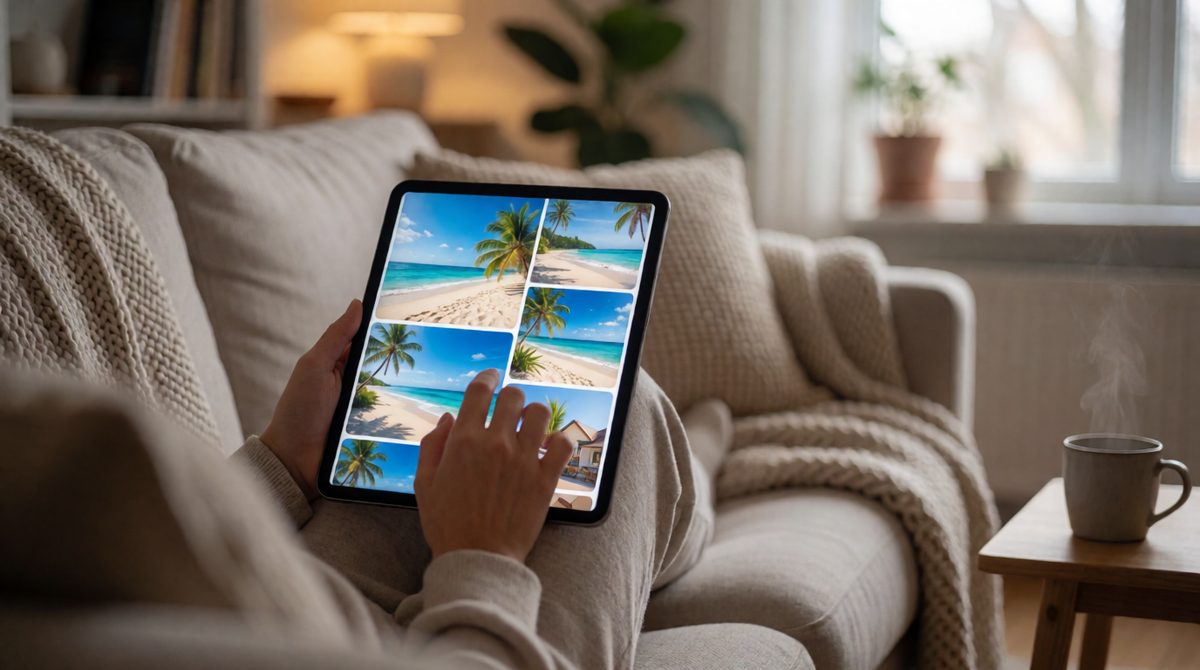
e-Brochures let customers browse holidays online
Cast your mind back to the days when families would visit a travel agent and come home with armfuls of glossy holiday brochures. Those thick, colourful catalogues were once the backbone of tourism marketing. Today, the industry has largely moved online – and the e-brochure has taken centre stage.
Key Definitions:
- e-Brochure (Electronic Brochure): A digital version of a traditional printed brochure, designed to be viewed on a screen – via a website, email, tablet or smartphone.
- PDF Brochure: A fixed-format digital document (like a scanned printed brochure) that can be downloaded and read offline.
- Interactive e-Brochure: A more advanced digital brochure with clickable links, video content, image galleries and booking buttons built in.
- Flipbook: A digital brochure that mimics the look and feel of a real book, with animated page-turning effects.
💻 What Makes e-Brochures Different?
Traditional printed brochures were expensive to produce, slow to update and had to be physically distributed. e-Brochures solve most of these problems – but they come with their own challenges too.
📷 Rich Media Content
Unlike a printed brochure, an e-brochure can include video clips of a resort, 360-degree room tours, interactive maps and audio guides. This gives customers a much richer sense of what they're booking.
📌 Instant Updates
If a price changes or a hotel closes, an e-brochure can be updated immediately. A printed brochure would be out of date the moment it was printed – and reprinting costs thousands of pounds.
🌏 Global Reach
An e-brochure can be emailed to millions of customers worldwide at almost zero cost. A printed brochure has to be physically posted or collected from a travel agent – limiting its reach significantly.
📋 Case Study: Kuoni's Move to Digital Brochures
Kuoni is a luxury travel company known for high-end holidays to destinations like the Maldives, Sri Lanka and East Africa. For decades, their beautifully produced printed brochures were a key part of their brand identity – customers would keep them on their coffee tables for months.
As digital technology improved, Kuoni developed sophisticated interactive e-brochures that could be viewed on tablets and laptops. These included embedded video tours of hotels, clickable maps showing resort locations and direct links to their booking system.
The results were impressive:
- Printing and distribution costs fell dramatically
- The e-brochures could be updated in real time as prices and availability changed
- Customer engagement increased – people spent longer browsing the digital version
- The environmental impact of the business reduced (no paper waste)
However, Kuoni kept a small print run of their most prestigious brochures for customers who specifically requested them – recognising that for some luxury customers, the physical brochure still feels special and premium.
📈 How e-Brochures Are Distributed
Getting an e-brochure in front of the right customer is just as important as creating it. Tourism businesses use several methods:
- Email campaigns: Sending e-brochures directly to customers on a mailing list, often personalised to their interests
- Website downloads: Customers can download a PDF brochure from the company's website
- Social media: Sharing pages or highlights from an e-brochure on Instagram, Facebook or Pinterest
- Travel agent portals: Sharing digital brochures with travel agents who can show them to customers on screen
- QR codes: Placing a QR code on a poster or magazine advert that links directly to the e-brochure
✅ Advantages of e-Brochures
- Much cheaper to produce and distribute than printed brochures
- Can be updated instantly when prices or information change
- Can include video, audio and interactive features
- Environmentally friendly – no paper, printing or postage
- Can reach a global audience instantly via email or the web
- Easy to track who has opened and read them (analytics)
- Customers can share them easily with friends and family
❌ Disadvantages of e-Brochures
- Requires internet access – not suitable for all customers
- Older customers may prefer a physical brochure they can hold
- Can get lost in a crowded email inbox
- Screens don't always show colours and images as well as print
- Requires good design skills and software to produce well
- No physical presence – can't be left in a travel agent's window
- Risk of spam filters blocking email distribution
🔄 Printed Brochures vs e-Brochures: A Comparison
📄 Printed Brochure
- Tangible – customers can hold it
- No internet needed
- Feels premium for luxury brands
- Expensive to print and post
- Cannot be updated once printed
- Limited distribution range
💻 e-Brochure
- Cheap to produce and share
- Can include video and links
- Instantly updateable
- Global reach via email/web
- Needs internet access
- May feel less personal
🌟 Best Practice
- Many businesses use both
- Print for luxury/premium feel
- Digital for mass distribution
- QR codes link print to digital
- Integrated approach works best
- Match format to your audience
💡 Exam Tip: Linking the Three Tools Together
In your exam, you may be asked to evaluate or compare different promotional methods. Remember that sales promotions, PR and e-brochures are rarely used in isolation – successful tourism businesses combine them.
For example: A tour operator might launch an early bird discount (sales promotion), send out an e-brochure featuring the deal to their mailing list and simultaneously issue a press release (PR) to travel journalists announcing the new season's holidays. All three tools work together to maximise impact.
When evaluating, always consider: Who is the target audience? What is the budget? What is the goal? A small independent travel agent has very different needs from a global tour operator like TUI.
📋 Comparing the Three Promotional Tools
🎁 Sales Promotions
Best for: Generating quick bookings, filling unsold capacity, attracting price-sensitive customers
Time frame: Short-term
Cost: Reduces revenue per booking but boosts volume
Example: "Book by Friday – 25% off all Caribbean holidays"
📢 Public Relations
Best for: Building long-term reputation, managing crises, reaching new audiences through media
Time frame: Long-term
Cost: Can be low cost if media coverage is earned
Example: Press trip for travel journalists to a new resort
📄 e-Brochures
Best for: Showcasing products in detail, reaching a wide audience cheaply, supporting other promotions
Time frame: Medium-term
Cost: Low distribution cost once produced
Example: Interactive summer holiday catalogue emailed to 500,000 subscribers
📚 Summary: Key Points to Remember
- 🎁 Sales promotions are short-term incentives (discounts, free child places, competitions) designed to boost bookings quickly
- ⏰ They help fill unsold capacity but can reduce profit margins and may attract disloyal bargain-hunters
- 📢 Public relations (PR) manages how the public perceives a tourism business or destination
- 📰 PR tools include press releases, press trips, sponsorship, community projects and crisis management
- 📋 Earned media (free press coverage) is often more trusted than paid advertising
- 📄 e-Brochures are digital versions of traditional brochures – cheaper, faster and more flexible
- 📷 Interactive e-brochures can include video, maps, links and booking buttons
- ✅ All three tools work best when used together as part of an integrated marketing campaign
- 💡 Always match your promotional tools to your target audience, budget and marketing goals