🌎 Introduction to the Marketing Mix & Place
You've probably heard of the 4 Ps of Marketing Product, Price, Promotion and Place. In travel and tourism, "Place" doesn't mean a holiday destination. It means how a tourism product (like a flight, hotel, or package holiday) gets from the business that creates it to the customer who buys it. This is called a distribution channel.
Think of it like this: a hotel in Tenerife needs customers. But how do those customers find out about it and actually book a room? That's what distribution is all about the path a product takes to reach the buyer.
Key Definitions:
- Marketing Mix: The combination of strategies a business uses to market its product Product, Price, Place and Promotion (the 4 Ps).
- Place (Distribution): The methods and channels used to make a product available to customers.
- Distribution Channel: The route a product takes from the producer to the final customer.
- Principal: The original producer of a tourism product, e.g. an airline, hotel, or attraction.
- Intermediary: A business that sits between the producer and the customer, such as a travel agent or tour operator.
📈 Why Does Distribution Matter?
A brilliant hotel or exciting tour means nothing if customers can't find it or book it easily. Choosing the right distribution channel helps businesses reach more customers, increase sales and build their brand. The wrong channel can mean empty hotel rooms and lost revenue!
👥 Who Are the Key Players?
In travel & tourism, the main players in distribution are: Principals (airlines, hotels, attractions), Wholesalers (tour operators), Retailers (travel agents) and the Customer. Each plays a different role in getting the product sold.
💡 The Distribution Chain A Simple Picture
Here's the basic flow of a traditional distribution channel in tourism:
Principal (e.g. Hotel / Airline)
→ Wholesaler (Tour Operator)
→ Retailer (Travel Agent)
→ Customer
But this chain doesn't always have all the steps. Sometimes businesses skip the middlemen and sell directly to customers especially online!
📞 Direct Selling
Direct selling is when a tourism business sells its product straight to the customer, with no middlemen involved. This is also called selling "direct to consumer." It's becoming more and more popular, especially with the rise of the internet.
How Does Direct Selling Work?
A business can sell directly through its own website, a phone booking line, a walk-in office, or even social media. The key thing is: no intermediary takes a cut of the sale.
✅ Advantages for Businesses
• Keep 100% of the revenue no commission paid to agents
• Build a direct relationship with customers
• Collect customer data for future marketing
• Full control over how the product is presented
✅ Advantages for Customers
• Can be cheaper (no agent fees)
• Book at any time, day or night
• Speak directly to the people who know the product best
• Easier to customise bookings
❌ Disadvantages
• Business must invest in its own marketing and booking systems
• Customers may not find the business without a middleman promoting it
• Less reach especially in overseas markets
• No independent advice for the customer
✈ Case Study: easyJet The King of Direct Selling
Budget airline easyJet is a brilliant example of direct selling. When it launched in 1995, it sold tickets mainly by phone. Today, the vast majority of its tickets are sold through its own website and app. By cutting out travel agents, easyJet keeps costs low and passes savings on to customers which is a huge part of its brand appeal. In 2023, easyJet carried over 82 million passengers, most of whom booked directly.
📦 Wholesalers The Tour Operators
In travel and tourism, a wholesaler is usually a tour operator. They buy large amounts of tourism products in bulk flights, hotel rooms, transfers, excursions and package them together to sell as a holiday package. They buy in bulk at lower prices and make a profit by selling the packaged product at a higher price.
Tour operators don't usually sell directly to the public themselves (though some do). Traditionally, they sell their packages through travel agents (retailers). This is called the indirect channel.
What Do Tour Operators Actually Do?
Tour operators are the architects of your holiday. They negotiate contracts with hotels and airlines, design the itineraries, create the brochures (or websites) and take on the financial risk of buying in bulk. If they can't fill those hotel rooms or plane seats, they lose money!
📌 Mass Market Tour Operators
These sell large volumes of package holidays to popular destinations. Examples include TUI and Jet2holidays. They offer standardised holidays sun, sea and sand to millions of customers each year at competitive prices.
📌 Specialist Tour Operators
These focus on a niche market a specific type of holiday or destination. Examples include Explore Worldwide (adventure travel), Saga (over-50s holidays) and Cox & Kings (luxury tours). They offer more tailored, unique experiences.
🏠 Case Study: TUI Group
TUI is one of the world's largest tour operators. It's a great example of vertical integration TUI owns its own airlines (TUI Airways), hotels (TUI Blue, RIU Hotels) and retail travel agencies (TUI stores). This means TUI controls almost the entire distribution chain itself! In 2023, TUI served around 19 million customers across Europe. By owning multiple parts of the chain, TUI can cut costs and keep quality consistent.
🏪 Retailers The Travel Agents
A travel agent is the retailer in the tourism distribution chain. They act as the link between the tour operator (wholesaler) and the customer. Travel agents don't usually create their own holidays they sell products made by others and earn a commission for doing so.
Travel agents can be found on the high street (like TUI stores or Hays Travel) or they can operate online. They offer customers expert advice, help with complex bookings and provide a human touch that websites can't always replicate.
What Do Travel Agents Offer?
💬 Expert Advice
Travel agents know their products well. They can recommend the best resort for a family, warn about visa requirements, or find the perfect cruise. This personal knowledge is very valuable especially for complex trips.
🔒 Financial Protection
Booking through a travel agent often gives customers extra protection. ABTA (Association of British Travel Agents) membership means customers are protected if something goes wrong, like a company going bust.
💰 Earning Commission
Travel agents earn a percentage of each sale typically 10–15% commission from tour operators. Some also charge booking fees. This is how they make their money without owning the products they sell.
🏭 Case Study: Hays Travel Britain's Biggest Independent Travel Agent
Hays Travel, based in Sunderland, became famous in 2019 when it bought all 555 Thomas Cook high street stores after Thomas Cook collapsed. Hays Travel now has over 470 branches across the UK and employs thousands of staff. It's a brilliant example of a traditional retail travel agent thriving in the modern age by focusing on personal service and expert advice something online booking engines can't easily replicate.
📱 Online Distribution Channels
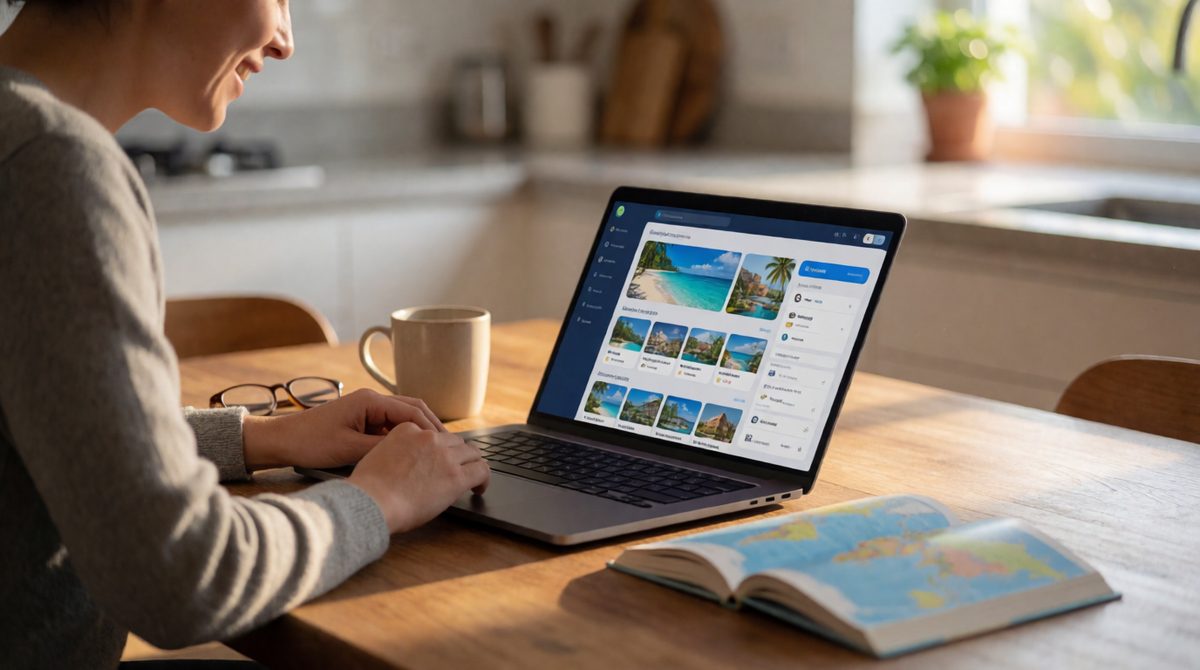
Many holidays are now booked online
The internet has completely changed how people book travel. Online distribution is now the dominant channel in most parts of the world. Customers can research, compare and book everything from a flight to a full holiday package all from their sofa.
Online channels include: business websites, Online Travel Agents (OTAs) like Booking.com and Expedia, comparison sites like Skyscanner and social media platforms. This has given customers far more power and choice than ever before.
Types of Online Distribution
🌐 Online Travel Agents (OTAs)
OTAs like Booking.com, Expedia and Hotels.com act as online retailers. They list thousands of hotels, flights and car hire options and earn commission from each booking. They're incredibly powerful Booking.com lists over 28 million accommodation options worldwide!
🔍 Comparison & Metasearch Sites
Sites like Skyscanner, Kayak and TripAdvisor don't always sell directly they compare prices across multiple sites and direct customers to the best deal. They earn money through referral fees or advertising.
📊 The Online Revolution Key Stats
• Over 70% of travel bookings in the UK are now made online.
• Booking.com processes over 1.5 million room nights every single day.
• Skyscanner has over 100 million monthly users worldwide.
• Mobile bookings (via smartphone) now account for nearly 40% of all online travel bookings.
These numbers show just how dramatically online channels have disrupted traditional distribution.
⚖ Comparing the Distribution Channels
Each distribution channel has its own strengths and weaknesses. The best businesses often use a mix of channels this is called a multi-channel distribution strategy. For example, a hotel might sell rooms directly through its own website, list on Booking.com, AND work with a tour operator.
Channel Comparison at a Glance
| Channel |
Who Uses It |
Key Advantage |
Key Disadvantage |
| Direct Selling |
Airlines, hotels, attractions |
No commission paid; full control |
Must invest in own marketing |
| Wholesaler (Tour Operator) |
TUI, Jet2holidays |
Bulk buying = lower costs; wide reach |
Financial risk if packages don't sell |
| Retailer (Travel Agent) |
Hays Travel, TUI stores |
Expert advice; personal service |
Commission costs; declining footfall |
| Online (OTA/Website) |
Booking.com, Expedia, Skyscanner |
24/7 access; huge reach; easy comparison |
High competition; OTA commission fees |
📚 Key Exam Concepts to Remember
🔗 Vertical Integration
When a company owns businesses at different levels of the distribution chain. For example, TUI owns airlines, hotels, AND travel agencies. This gives them control over the whole chain and can reduce costs.
🔗 Disintermediation
This is the process of cutting out the middleman. When airlines and hotels sell directly online, they are disintermediating removing travel agents and tour operators from the chain. This has been a major trend since the 2000s.
🌟 Exam Tip: Choosing the Right Channel
In the exam, you might be asked to recommend a distribution channel for a specific tourism business. Always think about: Who is the target market? Are they young and tech-savvy (online works best) or older and less confident online (travel agent might be better)? Also consider the type of product a complex safari trip might need expert agent advice, while a simple city break is easy to book online.
📋 Summary: The Big Picture
Distribution channels are a vital part of the marketing mix for any travel and tourism business. The right channel gets the right product to the right customer at the right time. Here's a quick recap:
- ✈ Direct Selling Business sells straight to the customer. No middlemen. More profit per sale but requires strong marketing.
- 📦 Wholesalers (Tour Operators) Buy in bulk, package products, sell through agents or directly. Examples: TUI, Jet2holidays.
- 🏪 Retailers (Travel Agents) Sell other companies' products for commission. Offer expert advice. Examples: Hays Travel, TUI stores.
- 📱 Online Channels OTAs, comparison sites, business websites. Dominant channel today. Examples: Booking.com, Skyscanner, easyJet.com.
- 🔗 Multi-channel strategy Many businesses use several channels at once to maximise reach and sales.