🏠 Physical Location – Why It Matters
Imagine you're opening a hotel. You could build it anywhere – but would you build it in the middle of a motorway junction? Of course not! Where a tourism business is physically located is one of the most important decisions it will ever make. Get it right and visitors flood in. Get it wrong and the place sits empty.
In the iGCSE Travel & Tourism course, "Place" in the marketing mix isn't just about distribution channels (like travel agents or websites). It also covers the physical location of the tourism product itself – the actual spot on the map where the hotel, attraction, resort or airline hub sits.
Key Definitions:
- Physical Location: The actual geographical place where a tourism business or attraction is situated.
- Location Factors: The things that make a particular place more or less suitable for a tourism business – including cost, character and features.
- Cost: The financial expense of setting up and running a business in a particular place.
- Character: The unique atmosphere, identity and appeal of a location that attracts visitors.
- Features: The physical and human characteristics of a place – things like scenery, transport links, climate and local attractions.
📌 The Three Big Location Factors
When deciding where to physically locate a tourism business, planners and developers look at three main things: Cost, Character and Features. These three factors work together – a place might be cheap but have no character, or have brilliant features but be far too expensive to develop. The best locations tick all three boxes.
🌎 A Real-World Example
Think about Center Parcs in the UK. They deliberately chose woodland locations away from cities. The land cost less than city-centre sites, the forest setting gave it unique character and the natural features (trees, lakes, wildlife) were perfect for their outdoor activity brand. Smart location thinking!
💰 Factor 1: Cost
Cost is often the first thing a business thinks about when choosing a location. Land, buildings, planning permission, construction and ongoing running costs all vary enormously depending on where you are. A beachfront plot in Marbella costs a fortune. A hillside plot in rural Wales costs a fraction of that. But cheaper isn't always better – it depends on what the business is trying to achieve.
What Costs Are Involved?
There are several different types of cost that affect location decisions in tourism:
🏠 Land & Property Costs
The price of buying or renting land varies hugely. City centres, coastal hotspots and famous tourist areas are expensive. Rural areas, less-visited regions and developing countries are much cheaper. Many large resort hotels in places like the Maldives or Bali were built because land was affordable compared to equivalent European locations.
🔧 Development & Build Costs
Building on a flat, accessible site is cheaper than building on a cliff, in a jungle or on a remote island. Infrastructure costs – roads, water, electricity, sewage – can be enormous in remote areas. Dubai's Palm Jumeirah cost billions partly because it was built on reclaimed sea – but the prestige location justified the expense.
💵 Running Costs
Once open, a business faces ongoing costs that vary by location: staff wages (higher in expensive cities), energy bills, local taxes and rates and transport costs for supplies. A ski resort in the Alps has massive heating and snow-grooming costs. A beach resort in Thailand benefits from a warm climate and lower labour costs.
📈 Case Study: Budget Hotels & Location Cost Strategy
Premier Inn is a great example of smart cost-based location thinking. Rather than paying premium prices for city-centre land, many Premier Inn hotels are located just outside city centres – near ring roads, business parks or retail zones. Land is cheaper, parking is easier and they can offer lower room prices. They still need to be close enough to the city for guests to visit easily, so they balance cost savings with accessibility. This strategy has helped Premier Inn become the UK's largest hotel brand with over 800 hotels.
⚠ The Cost vs. Benefit Trade-Off
Businesses must always weigh up whether the cost of a location is worth it. A shop on Oxford Street in London costs millions in rent – but the footfall (number of people passing by) is enormous. A travel agent in a quiet village is cheap to rent but may not get enough customers. The key question is always: will the location generate enough income to cover its costs?
- High cost, high footfall: City-centre travel agents, airport hotels, theme parks near motorways
- Low cost, niche market: Eco-lodges in remote areas, rural B&Bs, adventure tourism camps
- Government incentives: Some governments offer grants or tax breaks to encourage tourism development in poorer regions – reducing costs for businesses willing to locate there
🌞 Factor 2: Character
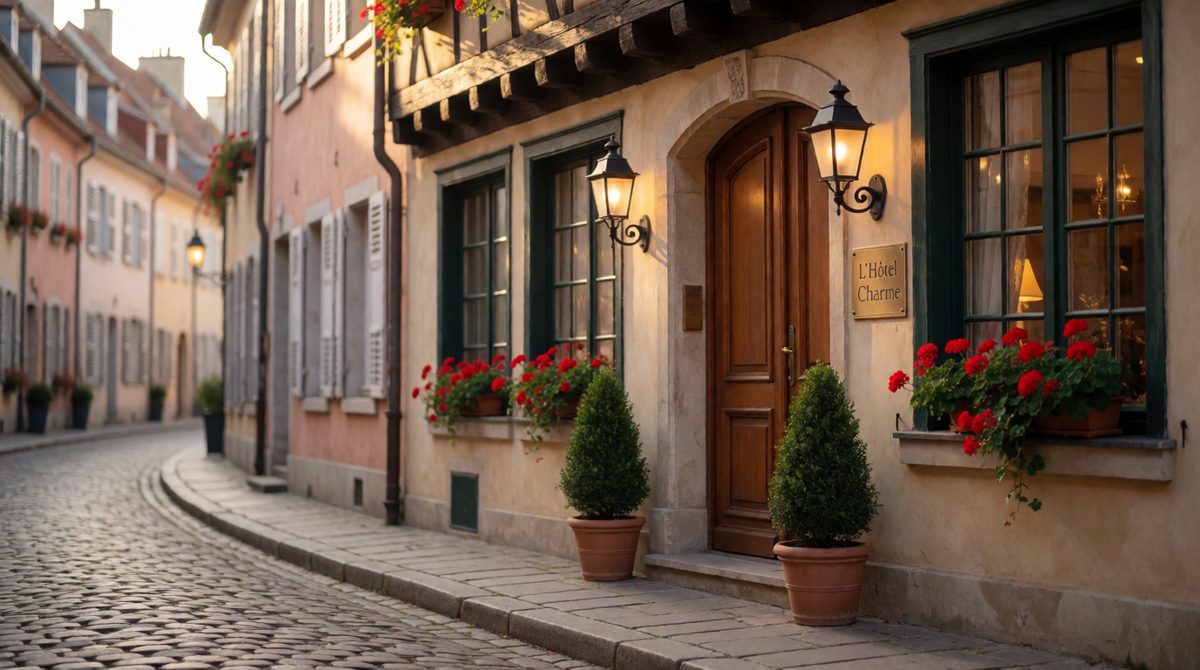
A location's character attracts customers
Character is about the feel of a place – its personality, atmosphere and unique identity. It's what makes somewhere special and different from everywhere else. Tourists don't just buy a bed for the night; they buy an experience. The character of a location is a huge part of that experience.
What Creates Character?
Character comes from a mix of history, culture, architecture, local people, traditions and atmosphere. It's often the hardest thing to manufacture – you can build a hotel anywhere, but you can't easily create 500 years of history or a vibrant local culture from scratch.
🏛 Historic Character
Places like Bath, York, Edinburgh and Venice draw millions of tourists because of their historic character. Ancient buildings, cobbled streets, castles and cathedrals create an atmosphere that modern developments simply can't replicate. Tourism businesses in these areas benefit enormously from the existing character – a hotel in York's medieval centre sells itself partly on the surroundings, not just its own facilities.
🏭 Cultural Character
Some places have strong cultural identities that attract tourists. New Orleans is famous for jazz and Creole food. Marrakech draws visitors with its souks, riads and Moroccan traditions. Notting Hill Carnival gives that part of London a unique cultural character every August. Tourism businesses in culturally rich areas can use that character as a selling point without having to create it themselves.
🌟 Case Study: Whitby, North Yorkshire
Whitby is a small fishing town on the Yorkshire coast, but it punches well above its weight as a tourist destination. Why? Character. It has a ruined clifftop abbey, connections to Bram Stoker's Dracula, a working fishing harbour, traditional fish and chip shops and a quirky Goth Festival twice a year. Hotels, B&Bs, fish restaurants and souvenir shops all benefit from this unique character. The town's identity is the product. Businesses that locate here are buying into that character – and visitors pay a premium to experience it.
💡 Character Can Be Damaged
Here's an important exam point: over-development can destroy character. If too many modern hotels, chain restaurants and souvenir shops replace historic buildings and local businesses, a place can lose the very character that made it attractive in the first place. This is called tourist saturation or the honeypot effect. Venice, Barcelona and Dubrovnik have all struggled with this problem in recent years.
🌎 Factor 3: Features
Features are the specific physical and human characteristics of a location that make it suitable – or unsuitable – for tourism. Think of features as the raw ingredients that a tourism business needs to work with. Some features are natural (mountains, beaches, climate), others are human-made (airports, roads, theme parks).
Natural Features
Natural features are often the main reason tourists visit a place in the first place. Tourism businesses choose locations where natural features match their product:
🏖 Climate & Weather
Warm, sunny climates attract beach resorts and outdoor activity businesses. The Spanish Costas, the Canary Islands and the Caribbean all benefit from reliable sunshine. Ski resorts need reliable snowfall – hence the concentration of ski tourism in the Alps, Rockies and Scandinavian mountains. Climate is a feature businesses cannot change, so they must choose locations where the climate suits their product.
🏔 Landscape & Scenery
Dramatic landscapes attract tourists. The Scottish Highlands, the Norwegian fjords, the Grand Canyon and the Great Barrier Reef are all examples of natural scenery that drives tourism. Hotels, lodges and activity centres locate near these features to capitalise on the views and outdoor opportunities they provide. A safari lodge in Kenya's Masai Mara is only viable because of the wildlife and landscape around it.
🌊 Coastal & Water Features
Beaches, lakes, rivers and seas are hugely important tourism features. The UK's coastal resorts – Blackpool, Brighton, Bournemouth – grew up around their beaches. Water-based activities like surfing, diving, sailing and fishing all depend on suitable water features. The Maldives' entire tourism industry is built on its coral reefs and crystal-clear lagoons.
Human-Made Features
Not all important features are natural. Human-made features are just as important for many tourism businesses:
- Transport Links: Airports, motorways, rail connections and ports are critical. A brilliant hotel in a location with no easy access will struggle. Heathrow Airport's location has made the surrounding area a hub for airport hotels, car hire firms and business tourism.
- Existing Attractions: Theme parks, museums, sports stadiums and entertainment venues attract visitors and support nearby hotels, restaurants and shops. Hotels near Disneyland Paris or the O2 Arena benefit from the footfall generated by those attractions.
- Infrastructure: Good roads, reliable electricity, clean water supply and fast broadband are all features that modern tourists expect. Developing countries sometimes struggle to attract high-end tourism because their infrastructure isn't yet good enough.
- Safety & Stability: Political stability, low crime rates and effective emergency services are features that reassure tourists. Countries with high crime or political unrest struggle to attract visitors, regardless of their natural beauty.
✈ Case Study: Dubai – Engineering the Perfect Location
Dubai is a fascinating case study because it manufactured many of its own features. It had sunshine and a coastline, but little else in the 1970s. Over the following decades, Dubai built world-class airports (Dubai International is one of the busiest in the world), artificial islands (the Palm Jumeirah), iconic skyscrapers (Burj Khalifa), massive shopping malls, theme parks and a Formula 1 circuit. By investing heavily in human-made features, Dubai transformed itself from a small trading port into one of the world's top tourism destinations, welcoming over 17 million international visitors in 2023. The lesson? Natural features help, but human-made features can be just as powerful.
📋 Putting It All Together – Cost, Character & Features
In real tourism planning, these three factors don't work in isolation – they interact with each other. A location might score brilliantly on features (stunning beach, great climate) but be too expensive to develop. Another might be cheap and have great character but lack the transport features to make it accessible. The best tourism locations balance all three.
💰 Cost Considerations
Land prices, build costs, running costs, government incentives, labour costs, tax rates. Always ask: is the income potential worth the investment?
🌞 Character Considerations
Historic identity, cultural richness, local atmosphere, uniqueness, authenticity. Character attracts visitors and justifies premium pricing – but can be damaged by over-development.
🌎 Feature Considerations
Natural features (climate, landscape, coast), human-made features (airports, attractions, infrastructure), safety and accessibility. Features are the raw material of the tourism product.
📚 Key Exam Concepts to Remember
- Physical location is part of Place in the marketing mix – don't confuse it with distribution channels.
- The three main physical location factors are Cost, Character and Features.
- Cost includes land, development, running costs and government incentives.
- Character is the unique identity and atmosphere of a place – it attracts visitors but can be damaged by over-development.
- Features include both natural (climate, scenery, coast) and human-made (airports, attractions, infrastructure) elements.
- The best locations balance all three factors – cheap land is no good without features or character; great character is wasted without accessibility.
- In exam questions, always try to give specific named examples – examiners love real places and real businesses.
🌟 Exam Tip: Evaluation Questions
If an exam question asks you to evaluate a location decision, make sure you discuss all three factors – cost, character and features – and explain how they interact. For example: "Although the coastal location provides excellent natural features and strong character, the high land costs may reduce profitability unless the business can charge premium prices." That kind of balanced answer earns top marks!