🏠 Physical Location – Facilities, Staff, Access & Transport
So far in Topic 5.5 we've looked at cost, character and features as location factors. Now we move on to four more critical factors: facilities, staff, access and transport. These aren't just background details they can be the difference between a destination that thrives and one that struggles, no matter how beautiful it looks on Instagram.
Think about it this way: you could have the most stunning beach in the world, but if there are no toilets, the staff are rude, the roads are terrible and the nearest airport is four hours away tourists won't come back. The physical experience of a place matters enormously.
Key Definitions:
- Facilities: The physical amenities and services available at or near a tourist destination things like accommodation, restaurants, toilets, visitor centres and leisure attractions.
- Staff: The people who work at a destination or tourism business, including their training, attitude, language skills and professionalism.
- Access: How easy it is for tourists to reach and move around a destination, including physical infrastructure like roads, paths and signage.
- Transport: The modes of travel available to reach and get around a destination air, rail, road, sea and local transport networks.
📍 Why These Four Factors Matter
In the marketing mix, Place isn't just about where something is on a map. It's about the whole experience of getting there, arriving and enjoying the destination. Facilities, staff, access and transport shape every stage of that journey from the moment a tourist books their trip to the moment they leave.
Tourism businesses and destination managers invest heavily in these areas because they directly affect visitor satisfaction, repeat visits and word-of-mouth recommendations.
📈 The Visitor Experience Chain
Imagine the tourist journey as a chain. Every link matters:
- ✈ Transport gets them there
- 📍 Access gets them around
- 🏠 Facilities keep them comfortable
- 👥 Staff make them feel welcome
If any single link breaks, the whole experience suffers. A destination that gets all four right creates loyal visitors who return and recommend.
🏠 Factor 1: Facilities
Facilities are everything a tourist needs to have a comfortable, enjoyable and safe visit. They range from basic necessities (clean toilets, drinking water) to luxury extras (spas, fine dining, entertainment). The range and quality of facilities at a destination directly affects how long tourists stay, how much they spend and whether they return.
📍 Types of Facilities
Facilities can be split into two broad categories: essential facilities that tourists expect as a minimum and supplementary facilities that enhance the experience and encourage longer stays and higher spending.
✅ Essential Facilities
These are the basics tourists need:
- Accommodation (hotels, hostels, campsites)
- Food and drink outlets
- Public toilets
- Visitor information centres
- First aid and medical facilities
- Safe drinking water
⭐ Supplementary Facilities
These add value and extend stays:
- Leisure and entertainment venues
- Shopping centres and markets
- Spas, gyms and wellness centres
- Museums and cultural attractions
- Sports facilities
- Children's play areas
💳 Facilities & Spending
More facilities = more tourist spending. Destinations with a wide range of facilities benefit from:
- Longer average stays
- Higher daily spend per tourist
- Attraction of higher-income market segments
- Greater economic multiplier effect on the local economy
🏭 Case Study: Center Parcs – Facilities as the Core Product
Center Parcs is a brilliant example of a destination built entirely around its facilities. With sites across the UK (including Sherwood Forest, Elveden Forest and Longleat Forest), Center Parcs offers an enormous range of on-site facilities: a subtropical swimming paradise, over 100 activities, restaurants, spas, cycling trails and accommodation ranging from basic lodges to luxury treehouses.
The key to their success? Guests don't need to leave the site. Everything is provided. This "all-inclusive" facilities model means tourists spend more on-site, stay longer (typically 3–4 nights) and return regularly over 97% of guests say they'd recommend Center Parcs to others. The facilities ARE the destination.
Exam link: This shows how facilities can be the main reason tourists choose a destination, not just a supporting factor.
👥 Factor 2: Staff
Tourism is a people business. Unlike buying a physical product like a phone or a pair of trainers, tourism is a service and services are delivered by people. The quality, attitude and skills of staff at a destination or tourism business have a massive impact on the visitor experience.
Poor staff can ruin an otherwise perfect holiday. Excellent staff can rescue a holiday that's gone wrong. In tourism, staff are sometimes called part of the "people" element of the extended marketing mix but in terms of physical location, they are a crucial factor in how welcoming and functional a place feels.
📋 What Makes Good Tourism Staff?
Tourism employers look for a specific set of skills and qualities. These can be split into hard skills (technical knowledge and abilities) and soft skills (personal qualities and interpersonal skills).
📚 Hard Skills
- Foreign language ability
- Knowledge of local area, history and attractions
- First aid and safety training
- IT and booking system skills
- Food hygiene certificates (hospitality)
- Driving licences (tour guides, transfer drivers)
😀 Soft Skills
- Friendly, welcoming attitude
- Patience and empathy
- Problem-solving ability
- Cultural sensitivity and awareness
- Communication skills
- Ability to work under pressure
🏭 Case Study: The Maldives – Staff Training as a Competitive Advantage
The Maldives is one of the world's most expensive and exclusive tourist destinations. With over-water bungalows costing £1,000+ per night, tourists have sky-high expectations. Resort operators like Soneva Fushi and Six Senses Laamu invest enormously in staff training to match those expectations.
Staff at top Maldivian resorts are trained in: personalised guest recognition (remembering names, preferences, dietary needs), cultural etiquette for guests from different countries, environmental awareness (guests expect eco-conscious staff) and multi-language communication.
The result? These resorts consistently top global satisfaction rankings. Guests pay premium prices partly because of the exceptional staff experience. This demonstrates that in luxury tourism, staff quality is a key part of what justifies the price and the location's reputation.
🌎 Staff and Local Communities
In many tourist destinations, particularly in developing countries, local employment in tourism is a major economic and social issue. Destinations that hire and train local staff benefit in several ways:
- Local staff have authentic knowledge of the area, culture and language
- Tourism income stays in the local economy (reducing economic leakage)
- Local communities feel more positive about tourism, reducing social conflict
- Tourists often prefer authentic local experiences delivered by local people
However, if tourism businesses import staff from outside the local area (or from the tourist's home country), this can cause resentment and reduce the economic benefits to the host community.
🚌 Factor 3: Access
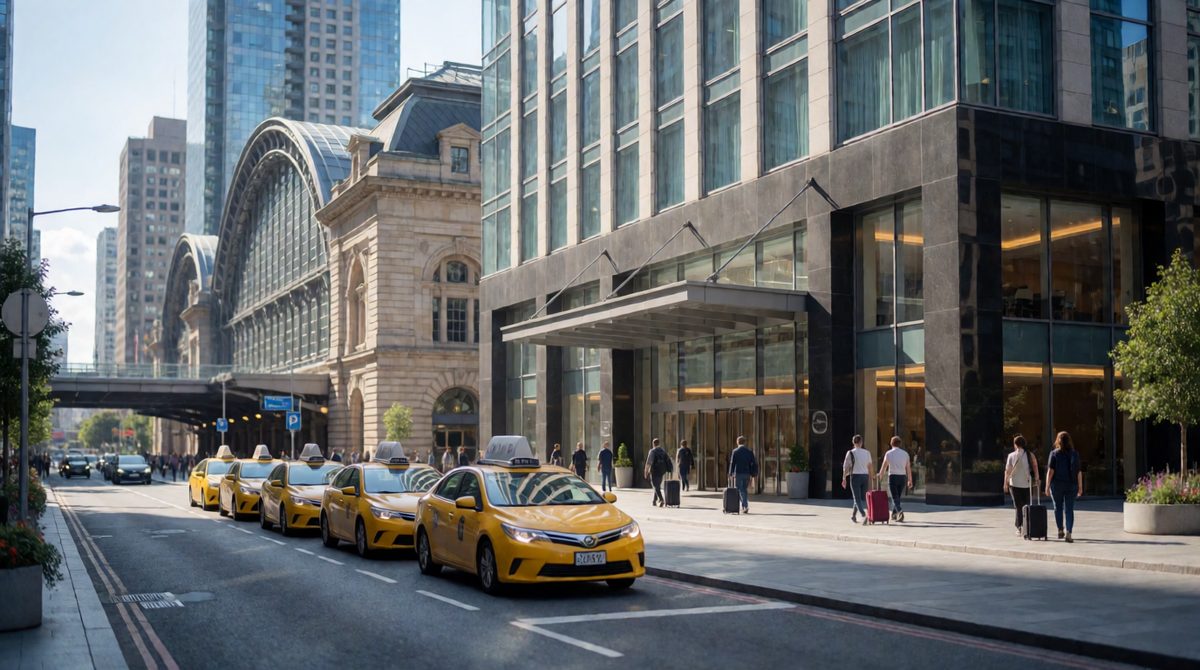
Easy access matters for tourism businesses
Access refers to how easy it is for tourists to reach a destination and move around once they're there. Even the most spectacular destination will struggle to attract visitors if it's difficult to get to or hard to navigate. Access covers physical infrastructure, signage, accessibility for people with disabilities and the ease of moving between attractions.
Key Definitions:
- Physical access: Roads, paths, bridges and other infrastructure that allow tourists to reach and move around a destination.
- Accessibility: How easy a destination is to use for ALL visitors, including those with disabilities, elderly tourists and families with young children.
- Signage: Clear, multilingual signs that help tourists navigate a destination independently.
📍 Types of Access Issues
🚌 Road Access
Quality of roads leading to and within a destination. Poor roads deter visitors, especially those with mobility issues or travelling with luggage. Many rural tourist destinations have invested in road improvements to increase visitor numbers.
♿ Disability Access
Ramps, lifts, accessible toilets, hearing loops and Braille signage make destinations welcoming to tourists with disabilities. The UK Equality Act 2010 requires many tourism businesses to provide reasonable adjustments for disabled visitors.
📍 Signage & Wayfinding
Clear signs in multiple languages help international tourists navigate independently. Poor signage frustrates visitors and reduces the time they spend exploring and spending money. Good signage is a low-cost but high-impact investment.
🏭 Case Study: Venice – When Access Becomes a Problem
Venice, Italy, is one of the world's most visited cities and one of the most challenged by access issues. The city receives around 30 million visitors per year, but its narrow streets, bridges and canal network create serious access problems.
The issues: Cruise ships bring thousands of tourists at once, overwhelming the narrow streets. The main tourist areas become dangerously overcrowded. Tourists with mobility issues struggle with the hundreds of bridge steps. There is no road access only boats and walking.
The response: Venice introduced a tourist entry fee (from 2024) for day-trippers during peak periods and has experimented with one-way pedestrian systems and timed entry to key attractions. This shows that access isn't just about getting tourists IN sometimes it's about managing the flow to protect the experience for everyone.
Exam link: Access problems can reduce tourist satisfaction and damage a destination's reputation, even if the destination itself is world-class.
✈ Factor 4: Transport
Transport is closely linked to access, but it specifically refers to the modes of travel available to tourists both to reach a destination and to get around once there. The availability, affordability and quality of transport links is one of the most important factors in a destination's success.
A destination with excellent transport links can attract tourists from a much wider catchment area. A destination with poor transport links is limited to visitors who are willing to make the effort usually a much smaller market.
🚌 Transport to the Destination
The main modes of transport used by international and domestic tourists are:
✈ Air Transport
The most important mode for long-haul international tourism. The growth of low-cost carriers (Ryanair, easyJet) has opened up previously hard-to-reach destinations. Airport capacity, flight frequency and route networks are critical factors. Many destinations have invested in new airports or terminal expansions to attract more tourists.
🚉 Rail Transport
High-speed rail has transformed tourism in Europe and Asia. The Eurostar connects London to Paris in 2h15m, making day trips possible. In Japan, the Shinkansen bullet train network has opened up domestic tourism enormously. Rail is increasingly popular as a more sustainable alternative to flying.
🚢 Road Transport
Cars, coaches and buses remain the dominant mode for domestic tourism in most countries. Motorway networks, road quality and parking availability all affect how easily tourists can reach a destination. Coach tourism remains important for group travel and older tourist segments.
🚌 Local Transport at the Destination
Once tourists arrive, they need to be able to get around. Local transport options include:
- Buses and trams: Affordable and widely used in cities. Many destinations offer tourist day passes for unlimited travel.
- Metro/underground systems: Fast and efficient in major cities like London, Paris, Tokyo and New York.
- Taxis and ride-hailing apps: Uber, Bolt and local equivalents offer flexible point-to-point travel.
- Cycle hire schemes: Increasingly popular in cities like Amsterdam, London (Santander Cycles) and Copenhagen.
- Hop-on hop-off buses: Specifically designed for tourists, covering key attractions with commentary.
- Water transport: Ferries, water taxis and river cruises in coastal and riverside destinations.
🏭 Case Study: Dubai – Transport Infrastructure as a Tourism Strategy
Dubai is perhaps the world's best example of a destination that has used transport investment as a deliberate tourism strategy. Dubai International Airport is one of the world's busiest, handling over 86 million passengers per year. Emirates airline, based in Dubai, connects the city to over 150 destinations worldwide, making it one of the most accessible long-haul destinations on earth.
Within the city, Dubai has invested in a modern Metro system (opened 2009), an extensive taxi network, water taxis (Abra) on Dubai Creek and the iconic Dubai Tram. The city is also building towards autonomous vehicle networks. Every transport investment is designed to make the tourist experience seamless from landing at the airport to reaching their hotel and exploring the city.
Result: Dubai attracted 17.15 million international overnight visitors in 2023, making it one of the world's top tourist destinations a remarkable achievement for a city that barely existed as a tourist destination 40 years ago. Transport infrastructure was central to this growth.
📋 How Facilities, Staff, Access & Transport Work Together
These four factors don't work in isolation they interact and reinforce each other. A destination that gets all four right creates a powerful, seamless tourist experience. Let's look at how they connect:
🔗 The Connections
- Great transport links bring tourists to a destination, but poor facilities on arrival will disappoint them
- Excellent facilities are worthless if tourists can't access them (no disabled access, poor signage)
- Good access and transport are undermined if staff are unhelpful or unfriendly
- Brilliant staff can compensate for some facility shortcomings, but not for fundamental access or transport failures
📈 The Competitive Advantage
Destinations that excel in all four areas gain a significant competitive advantage. They attract more tourists, generate more revenue, receive better reviews and build stronger brand reputations.
In contrast, destinations that neglect any one of these factors risk losing tourists to competitors even if their natural or cultural attractions are superior. In today's world of online reviews and social media, word travels fast about poor facilities, rude staff, difficult access or inadequate transport.
🌟 Exam Tip: The "Why Does It Matter?" Question
In IGCSE exams, you may be asked to explain or evaluate the importance of these factors. Always link your answer to the impact on tourists and the impact on the tourism business or destination. For example:
- Don't just say "good transport is important." Say: "Good transport links increase the catchment area of a destination, allowing it to attract tourists from further away, which increases visitor numbers and revenue."
- Don't just say "staff matter." Say: "Well-trained, friendly staff improve visitor satisfaction, leading to positive reviews, repeat visits and word-of-mouth recommendations, all of which increase long-term tourist numbers."
Always think: cause → effect → so what?
📚 Key Exam Concepts to Remember
📋 Vocabulary Checklist
🏠 Facilities
- Essential vs. supplementary facilities
- Facilities attract and retain tourists
- More facilities = longer stays + higher spend
- All-inclusive facility models (e.g. Center Parcs)
👥 Staff
- Hard skills vs. soft skills
- Staff training as competitive advantage
- Local employment benefits
- Staff quality affects satisfaction and reviews
✈ Access & Transport
- Physical access vs. accessibility
- Air, rail, road, sea transport modes
- Local transport networks
- Transport investment as tourism strategy
💡 Quick Revision: The Four Factors at a Glance
- 🏠 Facilities – What's available at the destination (accommodation, food, leisure, toilets, visitor centres)
- 👥 Staff – The people who deliver the tourist experience (skills, training, attitude, local knowledge)
- 📍 Access – How easy it is to reach and move around the destination (roads, paths, disability access, signage)
- ✈ Transport – The modes of travel available (air, rail, road, sea, local networks)
- 🔗 All four factors are interconnected weakness in one affects the others
- 📈 Destinations that excel in all four gain a competitive advantage