🔍 Introduction to SWOT Analysis
Imagine you're running a small beach resort. Business is going well, but a massive new hotel chain is about to open down the road. What do you do? Do you panic? Do you ignore it? Or do you sit down, think clearly and work out exactly where you stand? That's exactly what a SWOT Analysis helps you do. It's one of the most useful tools in market research and it's used by tourism businesses all over the world, from tiny bed and breakfasts to giant airlines.
SWOT Analysis is a structured way of looking at a business or destination from four angles. It helps managers understand what they're good at, what they need to fix, what chances they can grab and what dangers they need to watch out for. In travel and tourism, where things change fast new trends, new competitors, natural disasters, changing tastes SWOT is an essential planning tool.
Key Definitions:
- SWOT Analysis: A market research tool used to evaluate a business or destination by identifying its Strengths, Weaknesses, Opportunities and Threats.
- Internal factors: Things inside the business that it can control these are Strengths and Weaknesses.
- External factors: Things outside the business that it cannot fully control these are Opportunities and Threats.
- Market research: The process of gathering information about customers, competitors and the market to help make better business decisions.
- Competitive advantage: What makes one business better or different from its rivals.
💡 Why Does SWOT Matter in Tourism?
Tourism is one of the world's biggest industries worth over $9 trillion globally. It's also one of the most unpredictable. A volcano eruption, a pandemic, a new budget airline route, or a viral TikTok video can change everything overnight. SWOT Analysis helps tourism businesses and destinations stay prepared and make smart decisions based on real evidence, not just guesswork.
✅ The Four Parts of SWOT
Let's break down each letter of SWOT. Think of it as a 2x2 grid two internal factors (things you control) and two external factors (things you don't fully control).
💪 S Strengths
These are the positive internal features of a business or destination. What does it do really well? What does it have that others don't?
- A stunning natural landscape (e.g. the Scottish Highlands)
- A well-known brand (e.g. TUI or Thomas Cook)
- Excellent customer service ratings
- A unique cultural heritage (e.g. Kyoto, Japan)
- Good transport links and infrastructure
Strengths give a business its competitive edge. They're the things to shout about in marketing!
🙁 W Weaknesses
These are the negative internal factors areas where the business or destination falls short. Being honest here is crucial.
- Poor online booking system
- Seasonal tourism only (e.g. a ski resort in summer)
- Limited language support for international visitors
- Ageing facilities or outdated accommodation
- High prices compared to competitors
Weaknesses are things to fix or manage. Ignoring them can be very costly!
🌟 O Opportunities
These are positive external factors things happening in the outside world that the business could take advantage of.
- Growing interest in eco-tourism and sustainable travel
- A new direct flight route opening to the destination
- Rising middle class in emerging markets (e.g. China, India)
- Government grants for tourism development
- A major event coming to the area (e.g. World Cup, Olympics)
Opportunities are chances to grow but only if the business is ready to act on them!
⚡ T Threats
These are negative external factors dangers from outside the business that could cause problems.
- A new competitor opening nearby
- Natural disasters (e.g. hurricanes, floods, wildfires)
- Economic recession reducing tourist spending
- Political instability or travel warnings
- Climate change affecting the destination's appeal
Threats can't always be stopped but they can be planned for!
📊 The SWOT Grid How It Looks
In practice, a SWOT Analysis is usually laid out as a simple 2x2 table. Here's what it looks like for a tourism business:
| 💪 STRENGTHS (Internal +) |
🙁 WEAKNESSES (Internal −) |
- Unique product or location
- Strong brand reputation
- Loyal customer base
- Skilled, experienced staff
|
- Limited marketing budget
- Seasonal demand only
- Poor accessibility
- Outdated facilities
|
| 🌟 OPPORTUNITIES (External +) |
⚡ THREATS (External −) |
- Growing eco-tourism market
- New transport links
- Digital marketing growth
- Government tourism investment
|
- New competitors entering market
- Climate change impacts
- Economic downturn
- Negative media coverage
|
🏠 Case Study 1: A UK Seaside Hotel
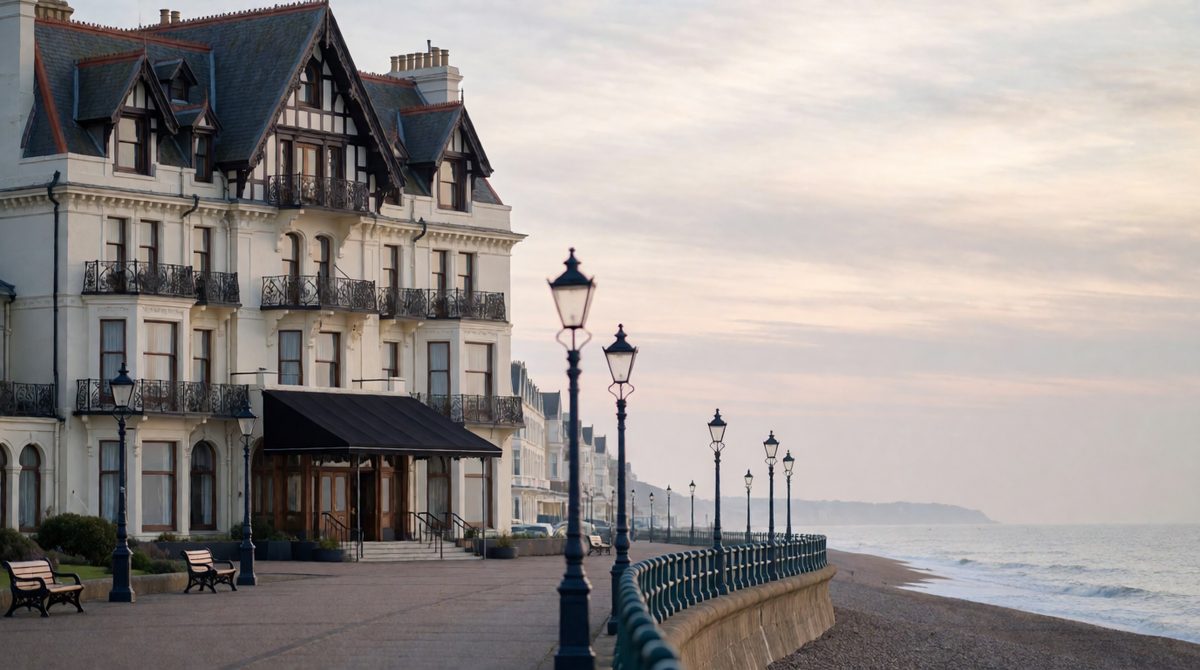
SWOT helps a seaside hotel plan ahead
Let's look at a real-world style example. The Seaview Hotel is a family-run hotel in Whitby, North Yorkshire. The owners want to expand their business and attract more visitors year-round. They carry out a SWOT Analysis:
📍 Seaview Hotel, Whitby SWOT Analysis
💪 Strengths: Beautiful sea views, excellent TripAdvisor reviews (4.8 stars), close to Whitby Abbey (a famous tourist attraction), family-friendly atmosphere, loyal returning customers.
🙁 Weaknesses: Only 12 rooms (small capacity), no conference facilities, very quiet in winter months, website is outdated and hard to use on mobile phones.
🌟 Opportunities: Growing "staycation" trend in the UK since Brexit and COVID-19, Whitby featured in Dracula tourism campaigns, new coastal walking trail opening nearby, option to add glamping pods in the garden.
⚡ Threats: Several new Airbnb properties opening in Whitby, rising energy costs increasing running expenses, storm damage risk to the building, negative reviews from one unhappy guest going viral on social media.
💡 Outcome: The owners decided to invest in a new mobile-friendly website, add two glamping pods and launch a "Dracula Weekend" package all informed by their SWOT findings!
🌍 Case Study 2: A Tourist Destination The Maldives
SWOT Analysis isn't just for businesses it's used by entire tourist destinations too. National tourism boards use it to plan how to attract more visitors and protect what makes their destination special.
🏖 The Maldives Destination SWOT
The Maldives is a group of islands in the Indian Ocean, famous for luxury resorts, crystal-clear water and coral reefs. Here's a simplified SWOT for the destination:
💪 Strengths
Stunning natural beauty, world-class luxury resorts, strong brand as a "honeymoon destination", excellent diving and snorkelling, political stability.
🙁 Weaknesses
Very expensive not accessible to budget travellers. Almost all food must be imported (costly). Very dependent on tourism if tourists stop coming, the economy suffers badly.
🌟 Opportunities
Growing demand for luxury eco-tourism. New direct flight routes from Asia. Potential to develop more affordable "mid-range" resorts to attract a wider market.
⚡ Threats Facing the Maldives
The Maldives faces one of the most serious threats of any tourist destination on Earth rising sea levels caused by climate change. The average island is only 1.5 metres above sea level. Scientists warn that many islands could be underwater by 2100. This is a massive external threat that the Maldivian government must plan for. They've already begun building artificial raised islands and exploring the possibility of buying land in other countries as a backup plan.
📋 Why Do Tourism Businesses Use SWOT Analysis?
There are several key reasons why SWOT is such a popular and important tool in travel and tourism market research:
🎯 The Main Reasons for Using SWOT
🔎 To Understand the Market
SWOT helps businesses see clearly where they stand compared to competitors. It uses both primary and secondary research data to build an honest picture of the business environment.
📈 To Plan for the Future
By spotting opportunities early, businesses can plan new products, enter new markets, or improve services before rivals do. Planning ahead is key in tourism, where trends change quickly.
🛡 To Manage Risk
Identifying threats before they happen means businesses can put plans in place. For example, a tour operator might take out insurance against natural disasters after identifying them as a threat.
- ✅ Supports decision-making gives managers clear evidence to base choices on
- ✅ Improves marketing strategy strengths become selling points in adverts
- ✅ Helps secure funding investors and banks want to see a SWOT before lending money
- ✅ Encourages teamwork staff at all levels can contribute ideas to a SWOT
- ✅ Simple and flexible can be used by any size of business, anywhere in the world
🔗 SWOT and Other Market Research Tools
SWOT Analysis doesn't work alone it's most powerful when combined with other research methods. Here's how it connects to the wider market research toolkit:
📝 Primary Research Feeds SWOT
Data gathered directly from customers through surveys, interviews, or questionnaires can reveal weaknesses (e.g. "guests said the Wi-Fi was terrible") and strengths (e.g. "guests loved the breakfast"). This real feedback goes straight into the SWOT grid.
📰 Secondary Research Feeds SWOT
Reports from tourism boards, government statistics, competitor websites and industry publications help identify external opportunities and threats. For example, a report showing a 30% rise in eco-tourism bookings is a clear opportunity to act on.
💡 SWOT in Action EasyJet Example
Budget airline EasyJet regularly uses SWOT-style analysis. A key strength is its low-cost model and large European route network. A weakness is its reliance on a small number of aircraft types. An opportunity spotted in recent years was the growth of solo and short-break travel. A major threat is rising fuel costs and competition from ultra-low-cost rivals like Ryanair. By understanding these factors, EasyJet can adjust its pricing, routes and marketing strategy accordingly.
✏️ How to Write a Good SWOT Analysis Exam Tips
In your iGCSE exam, you may be asked to carry out or evaluate a SWOT Analysis for a tourism business or destination. Here's how to do it well:
🌟 Top Tips for SWOT in the Exam
- 👉 Always label each section clearly S, W, O, T
- 👉 Remember: Strengths and Weaknesses are INTERNAL (inside the business)
- 👉 Remember: Opportunities and Threats are EXTERNAL (outside the business)
- 👉 Use the context given in the question don't write generic points, make them specific to the business or destination described
- 👉 For higher marks, explain how a strength could be used to take advantage of an opportunity (this is called an SO strategy)
- 👉 Don't confuse Weaknesses with Threats a weakness is something the business itself does badly; a threat comes from outside
- 👉 Include at least 2–3 points in each section for a full answer
📚 Common Exam Mistake to Avoid!
Students often write "competition from rivals" as a Weakness but it's actually a Threat! Competition comes from outside the business. A weakness would be something like "our prices are higher than our rivals" that's an internal issue the business can work on. Always ask yourself: "Is this something the business controls, or something happening around it?"
🎯 Summary SWOT Analysis in Travel and Tourism
SWOT Analysis is a brilliant, simple and powerful tool that helps tourism businesses and destinations make sense of a complicated world. By honestly looking at what they're good at, what they need to improve, what chances are out there and what dangers lie ahead, businesses can make smarter decisions, plan better marketing and stay one step ahead of the competition.
- ✅ Strengths = internal positives (what you're great at)
- ✅ Weaknesses = internal negatives (what needs improving)
- ✅ Opportunities = external positives (chances to grab)
- ✅ Threats = external negatives (dangers to plan for)
- ✅ Used by hotels, airlines, tour operators and whole destinations
- ✅ Works best when combined with primary and secondary research
- ✅ Essential for business planning, marketing strategy and risk management