🌎 Putting It All Together Applying SWOT and PESTLE to a Destination
You've already learned what SWOT and PESTLE are and how each one works on its own. Now it's time to use them together the way tourism professionals actually do in real life.
When a travel company, tourist board, or government wants to understand a destination, they don't just pick one tool. They use PESTLE to scan the outside world (things the destination can't fully control) and SWOT to look at both internal and external factors in one clear grid. Together, they create a powerful, joined-up picture.
Key Definitions:
- Destination analysis: A detailed study of a place as a tourism product looking at what it offers, who visits and what challenges it faces.
- Internal factors: Things a destination or business can control, such as its facilities, staff, or pricing.
- External factors: Things outside the destination's control, such as global economics, political events, or climate change.
- Strategic planning: Using research and analysis to make smart decisions about the future.
💡 Why Use Both Tools at Once?
Think of it like this: PESTLE is your radar it scans the environment around a destination. SWOT is your map it shows where you are and where you could go. You need both to navigate successfully. A tourist board using only SWOT might miss a major political risk. One using only PESTLE might forget to assess its own weaknesses. Together, they leave far fewer blind spots.
🔗 How PESTLE Feeds Into SWOT
One of the most important skills in this topic is understanding how the two tools link together. PESTLE findings don't just sit on their own they directly inform the Opportunities and Threats sections of a SWOT analysis.
🔄 The PESTLE-to-SWOT Pipeline
Here's how each PESTLE factor can become an Opportunity or a Threat in your SWOT grid:
🏛️ Political
A stable government = Opportunity (safe to invest and visit). Political unrest or visa restrictions = Threat (tourists stay away).
💰 Economic
A weak local currency = Opportunity for foreign tourists (their money goes further). A global recession = Threat (people cut holiday spending).
🌿 Environmental
Growing eco-tourism trends = Opportunity for green destinations. Rising sea levels or extreme weather = Threat to coastal resorts.
The Strengths and Weaknesses in SWOT come from the destination's own internal features its attractions, infrastructure, reputation and resources. PESTLE helps you fill in the external half of the SWOT grid with real, evidence-based points.
🌍 Case Study: Iceland as a Tourism Destination
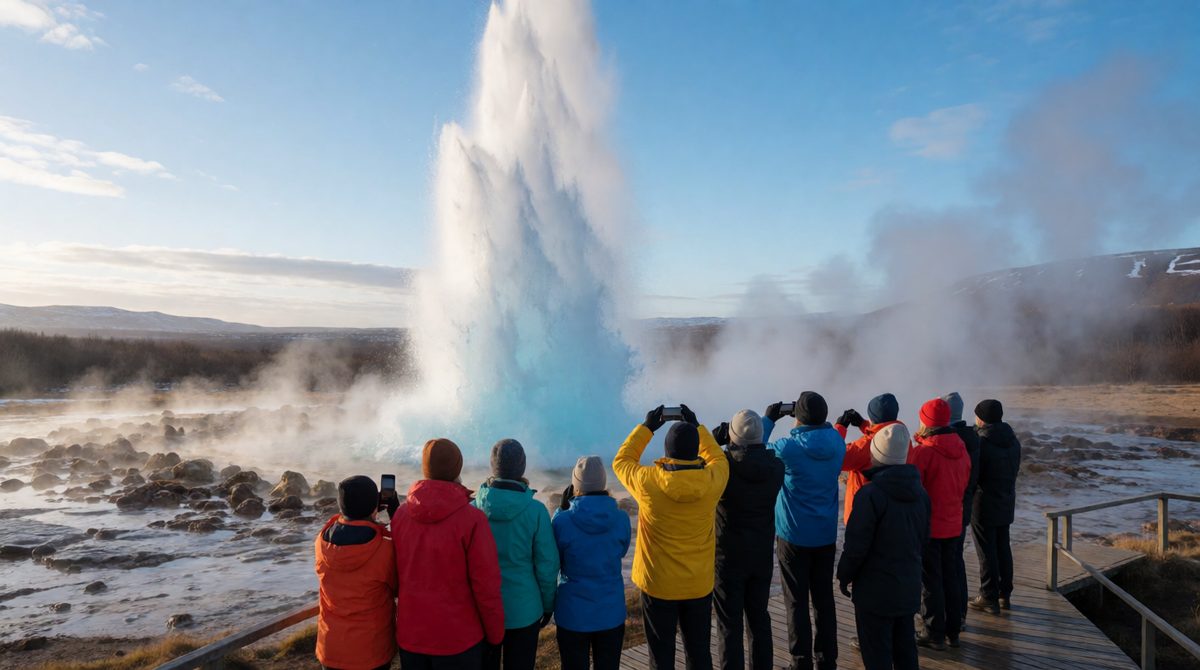
Iceland is a popular tourism destination
Iceland is one of the world's fastest-growing tourist destinations. It went from around 500,000 visitors per year in 2010 to over 2.3 million by 2018 in a country with a population of only 370,000. This rapid growth makes it a brilliant case study for applying both SWOT and PESTLE.
📊 Quick Stats Iceland Tourism
Tourism now accounts for roughly 40% of Iceland's export earnings. The industry grew so fast that locals began to complain about overtourism, congestion and rising house prices in Reykjavik. This is a real-world example of why destination analysis matters growth without planning causes problems.
⚡ PESTLE Analysis Iceland
🏛️ Political
Positive: Iceland is politically stable, part of the Schengen Area and has strong international relations. EU and EEA membership makes travel easy for European visitors.
Negative: Not an EU member, so some trade and policy differences apply post-Brexit for UK tourists.
💰 Economic
Positive: Iceland's tourism boom created thousands of jobs and boosted GDP significantly after the 2008 financial crash.
Negative: Iceland is an expensive destination high cost of living means it appeals mainly to higher-income tourists, limiting its market.
👥 Social
Positive: Growing global interest in adventure tourism, wellness travel and unique natural experiences Iceland fits all three perfectly.
Negative: Overtourism has created tension with local residents, who feel their culture and quality of life is being disrupted.
📱 Technological
Positive: Iceland has excellent digital infrastructure. Social media especially Instagram has been a massive driver of tourism, with the Northern Lights and Blue Lagoon going viral repeatedly.
Negative: Remote highland areas lack mobile coverage, which can be a safety concern for trekkers.
⚖️ Legal
Positive: Strong environmental protection laws preserve Iceland's natural assets, which are its main tourism draw.
Negative: New tourist taxes and entry fees to protected areas (such as Fjaðrárgljúfur canyon) have been introduced, which some visitors find off-putting.
🌿 Environmental
Positive: Iceland runs almost entirely on renewable energy (geothermal and hydro), giving it strong green credentials that appeal to eco-conscious travellers.
Negative: Glaciers are melting due to climate change some of Iceland's most iconic attractions (like Okjökull glacier) are disappearing. This is both an environmental and a long-term tourism threat.
📋 SWOT Analysis Iceland
Now we take what we found in the PESTLE and combine it with Iceland's internal features to build a full SWOT grid:
💪 Strengths (Internal)
- Unique natural attractions Northern Lights, geysers, volcanoes, glaciers
- Strong brand identity as a wild, adventurous destination
- High safety ratings and low crime
- Well-developed tourism infrastructure in Reykjavik
- Renewable energy reputation appeals to eco-tourists
🙁 Weaknesses (Internal)
- Very expensive for tourists limits mass-market appeal
- Seasonal Northern Lights only visible in winter; summer has very different appeal
- Remote location means long-haul flights for many visitors
- Limited capacity in rural areas roads and facilities struggle with large numbers
🌟 Opportunities (from PESTLE)
- Growing global demand for eco-tourism and adventure travel (Social/Environmental PESTLE)
- Instagram and social media continue to drive organic marketing (Technological PESTLE)
- Expanding flight routes from WOW Air successors and budget carriers (Economic/Technological)
- Positioning as a sustainable destination as green travel grows in importance
⚡ Threats (from PESTLE)
- Climate change melting glaciers destroying key attractions (Environmental PESTLE)
- Overtourism causing resident backlash and potential government restrictions (Social/Legal)
- Global economic downturns reduce discretionary travel spending (Economic PESTLE)
- WOW Air collapse (2019) cut affordable flight options, reducing visitor numbers (Economic)
🔍 Real-World Link WOW Air Collapse
In March 2019, WOW Air Iceland's budget airline suddenly collapsed, stranding thousands of passengers. Almost overnight, affordable flights to Iceland disappeared. Visitor numbers dropped noticeably in 2019. This is a perfect example of an Economic PESTLE threat becoming a Threat in the SWOT and it shows why destination managers must constantly update their analysis.
🏛️ Case Study: Barcelona Managing Success
Barcelona is one of Europe's most visited cities, attracting over 19 million tourists per year before the pandemic. But popularity has brought serious problems. Applying SWOT and PESTLE together reveals a destination under pressure.
📋 Combined SWOT + PESTLE Snapshot Barcelona
💪 Strengths
- World-famous architecture (Gaudí, Sagrada Família)
- Excellent climate warm summers, mild winters
- Strong food, culture and nightlife offer
- Major international airport with excellent connections
🙁 Weaknesses
- Overtourism straining local services and housing
- Pickpocketing and petty crime in tourist areas
- Catalan independence tensions create political uncertainty
- Some iconic sites overcrowded reducing visitor experience
🌟 Opportunities
- Growing cruise tourism Barcelona is Europe's busiest cruise port
- Smart city technology to manage tourist flows (Technological PESTLE)
- Year-round appeal reduces seasonal pressure
- Cultural tourism growth museums, festivals, food tours
Key Threat (from PESTLE): In 2017, Catalan independence protests and a disputed referendum caused a sharp drop in tourist bookings a direct Political PESTLE threat feeding straight into the SWOT Threats box. This shows how quickly external events can damage a destination's appeal.
✏️ How to Apply Both Tools in an Exam Step by Step
In your iGCSE exam, you may be asked to apply SWOT, PESTLE, or both to a destination or tourism business. Here's a clear method to follow:
📝 The Four-Step Method
1️⃣ Step 1 Run Your PESTLE First
Go through each of the six PESTLE factors and note anything relevant to the destination in the question. Ask yourself: "Is this a positive or negative external factor?" Write brief notes for each letter.
2️⃣ Step 2 Identify Internal Features
Think about what the destination itself offers its attractions, infrastructure, reputation and resources. These become your Strengths and Weaknesses in the SWOT. These come from inside the destination, not from the wider world.
3️⃣ Step 3 Build Your SWOT Grid
Use your PESTLE findings for Opportunities and Threats. Use your internal analysis for Strengths and Weaknesses. Make sure each point is specific don't just write "good weather." Write "warm Mediterranean climate attracting beach tourists year-round."
4️⃣ Step 4 Make a Recommendation
The best exam answers don't just list points they use the analysis. Suggest how the destination could use a Strength to take advantage of an Opportunity, or how it should address a Threat. This shows higher-level thinking.
📚 Common Exam Mistakes to Avoid!
- Mixing up internal and external: Strengths and Weaknesses are INTERNAL (the destination controls them). Opportunities and Threats are EXTERNAL (from the outside world). Don't swap them.
- Being too vague: "Good location" is weak. "Located in the Mediterranean with direct flights from 40 countries" is strong.
- Listing PESTLE points without linking them to SWOT: Always show the connection e.g., "This Environmental PESTLE factor creates a Threat because..."
- Forgetting to use the destination in the question: Always apply your answer to the specific place mentioned, not a generic destination.
🎯 Summary Applying SWOT and PESTLE to a Destination
Using SWOT and PESTLE together is one of the most powerful skills in travel and tourism analysis. Here's what to remember:
🔄 PESTLE Scans the Environment
It looks at Political, Economic, Social, Technological, Legal and Environmental factors all things outside the destination's direct control.
📋 SWOT Builds the Full Picture
SWOT combines internal factors (Strengths, Weaknesses) with external factors (Opportunities, Threats). PESTLE findings feed directly into the O and T sections.
🌟 Together They Drive Strategy
Tourist boards, travel companies and governments use both tools to make smart decisions where to invest, what risks to manage and how to stay competitive.
Whether it's Iceland managing explosive growth, Barcelona tackling overtourism, or any destination facing climate change SWOT and PESTLE give tourism professionals the tools to understand what's happening and plan what to do next. That's exactly what the iGCSE examiner wants to see you do too.