📍 What Is Market Position?
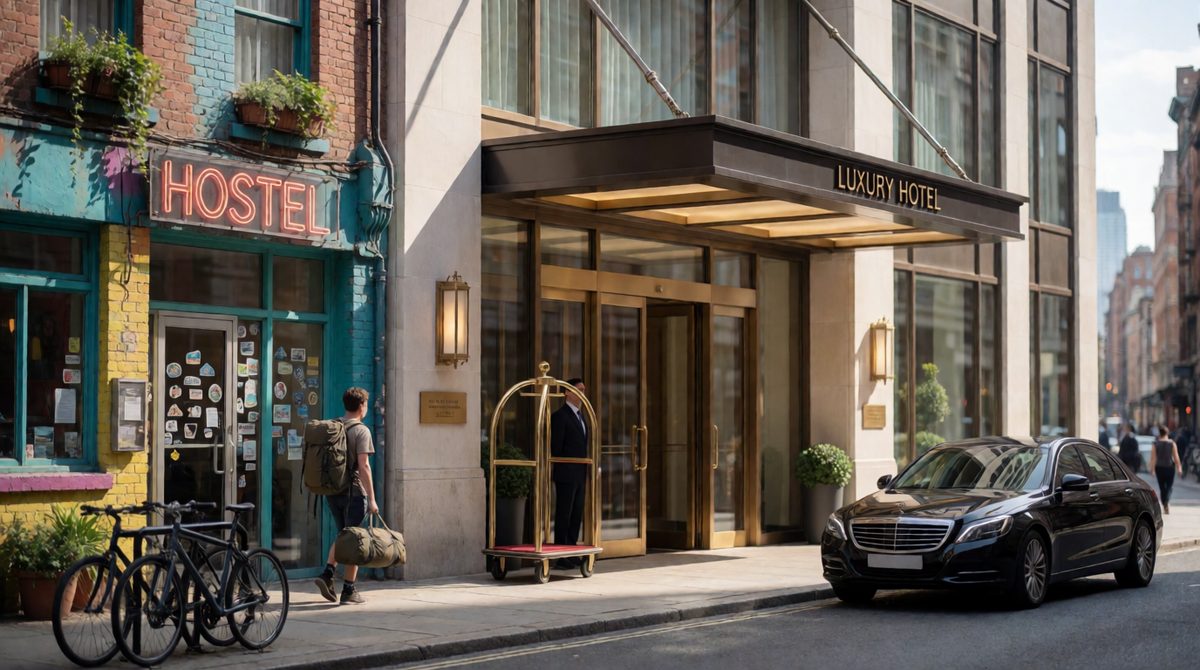
Market position shows where a business sits against rivals
Imagine you're choosing a holiday. You might pick a budget airline like Ryanair, a luxury cruise with P&O, or a backpacker hostel in Thailand. Each of these businesses has a market position a place in the minds of customers that tells them what to expect. Market position is basically how a business is seen compared to its rivals.
In travel and tourism, understanding your market position is absolutely essential. A hotel that thinks it's a luxury five-star resort but charges budget prices or delivers budget service is confused about its position. That confusion costs money and customers.
Key Definitions:
- Market Position: Where a business sits in the market relative to its competitors based on price, quality, reputation and target audience.
- Market Research: The process of collecting and analysing information about customers, competitors and market trends to make better business decisions.
- Target Market: The specific group of customers a business aims its products or services at.
- Competitive Advantage: Something a business does better than its rivals that gives it an edge in the market.
- Market Share: The percentage of total sales in a market that one business holds compared to all competitors.
💡 Why Does Market Position Matter?
If a tourism business doesn't know where it stands in the market, it can't make smart decisions. Should it lower prices? Improve quality? Target a new type of customer? Without market research, these decisions are just guesswork. Market research turns guesswork into informed strategy.
🔍 Reasons for Market Research: Understanding Market Position
There are several specific reasons why travel and tourism businesses carry out market research to understand their market position. Each reason links directly to a real business need and each one could appear in your exam.
🎯 1. To Identify Who Their Customers Are
Before a business can position itself effectively, it needs to know who it is actually selling to. Market research helps businesses build a clear picture of their customers their age, income, interests, travel habits and what they value most.
For example, a boutique eco-lodge in Costa Rica might use surveys and booking data to discover that 70% of its guests are aged 30–45, earn above-average incomes and care deeply about sustainability. This tells the business exactly how to position itself: as a premium, eco-conscious retreat not a cheap adventure hostel.
👥 Customer Profiling
Businesses use research to create customer profiles (also called personas). These describe the typical customer their age, lifestyle, spending habits and travel motivations. A profile helps a business tailor its marketing, pricing and services to exactly the right people.
📊 Segmentation
Market segmentation means dividing the total market into smaller groups with similar needs. Tourism businesses might segment by age (families vs. retirees), budget (luxury vs. budget), or travel style (adventure vs. relaxation). Knowing your segment helps you position yourself precisely.
💰 2. To Understand Competitors
You can't know your position without knowing who else is in the race. Market research helps businesses find out who their competitors are, what they offer, how they price their products and how customers rate them.
A travel agency in Birmingham, for instance, might research rival agencies online looking at their pricing, package deals, customer reviews on TripAdvisor and social media presence. This competitor analysis reveals where gaps exist and where the business can stand out.
🌎 Case Study: TUI vs. Independent Travel Agents
TUI is one of the world's largest travel companies. When independent travel agents carry out market research, they often discover they cannot compete on price with TUI. However, research also reveals that many customers value personalised service and local expertise things a large company struggles to offer. This insight helps smaller agents position themselves as the personal, expert alternative to the big brands. Without research, they might try to compete on price and lose every time.
📈 3. To Assess Their Own Strengths and Weaknesses
Market research isn't just about looking outward at customers and competitors it also helps businesses look inward. Customer feedback, reviews and satisfaction surveys reveal what a business is doing well and where it is falling short.
A hotel chain might use guest satisfaction surveys to discover that customers love the location and breakfast but consistently complain about slow Wi-Fi and dated rooms. This research directly informs decisions about where to invest and helps the hotel understand how its weaknesses are affecting its market position.
💪 Recognising Strengths
Research helps businesses identify what makes them special their unique selling point (USP). This might be location, price, quality, brand reputation, or specialist knowledge. Knowing your strengths lets you shout about them in marketing.
🙁 Spotting Weaknesses
Customer reviews and complaint data reveal weaknesses before they become serious problems. A business that acts on this research can improve its position one that ignores it risks losing customers to competitors who do better.
🔄 4. To Track Changes in the Market
The travel and tourism market is always changing. New destinations become popular, economic conditions shift, technology changes how people book holidays and global events (like pandemics) can reshape the entire industry overnight. Market research helps businesses stay ahead of these changes rather than being caught off guard.
📊 Real Example: The Rise of Staycations
During and after the COVID-19 pandemic, market research showed a massive surge in UK domestic tourism so-called "staycations." Businesses that tracked this trend early caravan parks, UK holiday cottages and domestic tour operators repositioned themselves quickly to capture this new demand. Those that didn't research the market missed a huge opportunity. Visit Britain reported a £19.6 billion boost to domestic tourism in 2021 as a direct result of this trend.
Ongoing market research allows businesses to spot trends early whether that's growing demand for sustainable travel, the rise of solo travel, or the increasing importance of digital booking platforms. Spotting a trend early gives a business time to adapt its position before competitors do.
🌟 5. To Identify Gaps in the Market
Sometimes market research reveals that a particular type of customer is being underserved there's a gap in the market. This is a golden opportunity for a business to position itself as the solution to an unmet need.
For example, research might show that there are very few high-quality tour operators specifically catering to solo female travellers over 50. A business that spots this gap can position itself directly in that space with tailored itineraries, safety-focused marketing and community-building features and face very little direct competition.
🔍 Spot the Gap
Research reveals unmet customer needs areas where demand exists but supply is limited.
🎯 Target the Gap
The business positions itself to fill that gap with a tailored product or service.
💰 Own the Gap
By moving first, the business builds brand recognition and loyalty before rivals catch on.
📱 6. To Make Informed Pricing Decisions
Pricing is one of the most powerful ways a business signals its market position. A luxury resort charges high prices to signal exclusivity. A budget airline charges low prices to signal accessibility. But how does a business know what price is right for its position? Market research.
Research into competitor pricing, customer willingness to pay and perceived value helps businesses set prices that match their desired position. Charge too much and you lose customers; charge too little and you undermine your brand image and your profits.
🏠 Case Study: Premier Inn's Pricing Strategy
Premier Inn regularly conducts market research to understand how customers perceive its value compared to rivals like Travelodge and Holiday Inn. Research consistently shows customers rate Premier Inn highly for cleanliness, comfort and reliability at a mid-range price. This insight allows Premier Inn to price slightly above budget competitors while positioning itself as the reliable, quality choice not the cheapest, but worth it. Their "Good Night Guarantee" is a direct result of understanding what their market position promises to customers.
📋 7. To Evaluate the Effectiveness of Marketing
Market research also helps businesses check whether their current marketing is actually working. Are the right customers seeing the adverts? Is the brand message landing correctly? Is the business known for what it wants to be known for?
A theme park might survey visitors to find out how they heard about the park and what made them choose it. If research reveals that most visitors found them through Instagram but the business is spending most of its marketing budget on newspaper adverts, that's a clear signal to shift strategy and reposition marketing spend where it actually works.
📚 Putting It All Together: The Market Position Map
One useful tool that comes directly from market research is the market positioning map (also called a perceptual map). This is a simple diagram that plots businesses against two axes usually price and quality to show visually where each competitor sits in the market.
📊 How a Positioning Map Works
Imagine a graph with price on the vertical axis (low at the bottom, high at the top) and quality on the horizontal axis (low on the left, high on the right). You then plot tourism businesses on this map based on research data. Ryanair sits bottom-left (low price, basic quality). Emirates sits top-right (high price, high quality). The map instantly shows where gaps exist and where competition is fierce.
🔍 What the Map Reveals
A positioning map built from market research shows: where your business currently sits, where your competitors are clustered and where there are empty spaces potential gaps to move into. It's a visual summary of your market position.
🎯 Using the Map Strategically
Once a business sees the map, it can make strategic decisions: Should it move upmarket? Reduce prices to compete? Or find a completely different axis to compete on like sustainability or personalisation? The map turns research data into clear visual strategy.
⚡ Why Getting Market Position Wrong Is Costly
Understanding market position isn't just a nice-to-have getting it wrong has real consequences. Here are some ways poor market research leads to poor positioning:
🙅 Wrong Target Market
A business markets luxury spa breaks to budget-conscious students. Marketing spend is wasted and bookings are low because the message doesn't match the audience.
🙅 Wrong Price Point
A mid-range hotel prices itself like a budget hostel, attracting the wrong customers and damaging its reputation for quality making it harder to raise prices later.
🙅 Missed Trends
A tour operator ignores research showing growing demand for sustainable travel. Competitors who spotted the trend early capture the market, leaving the business behind.
🔍 Case Study: Thomas Cook A Warning About Ignoring the Market
Thomas Cook, once Britain's most iconic travel brand, collapsed in 2019. While many factors contributed, market research analysts had long warned that the company was failing to understand its changing market position. Research showed customers were increasingly booking online directly, preferring flexibility over package holidays and seeking personalised experiences. Thomas Cook was slow to adapt its position continuing to invest in high-street shops and rigid package deals while the market moved on. By the time the company recognised the shift, it was too late. Market research, acted upon early, might have saved it.
✏️ Exam Tips: Writing About Market Position in the Exam
When the exam asks you about reasons for market research, the examiner wants to see that you understand the purpose behind the research not just that businesses "want to know things." Here's how to write strong answers:
- Always link research to a decision: Don't just say "to find out about customers." Say "to find out about customers so they can target their marketing more effectively and improve their market position."
- Use real examples: Reference real businesses like TUI, Premier Inn, or Ryanair to show the examiner you understand how this works in practice.
- Use the correct terminology: Words like market position, competitive advantage, market share, target market and market segmentation show the examiner you know your stuff.
- Explain consequences: Good answers explain what happens if the research isn't done what goes wrong, what opportunities are missed.
📚 Common Exam Mistake to Avoid!
Students often write vague answers like "market research helps businesses know what customers want." This is too general. Always be specific: explain which type of information is being gathered, why it matters for market position and what decision it informs. Examiners reward precision and application.
🎯 Summary: Understanding Market Position Through Market Research
- 📍 Market position is how a business is seen by customers compared to its competitors based on price, quality and reputation.
- 👥 Market research helps businesses identify their target customers and understand what those customers want and value.
- 🔍 Research into competitors reveals where a business stands in relation to rivals and where gaps in the market exist.
- 📈 Tracking market trends through research allows businesses to adapt their position before competitors do.
- 💰 Research informs pricing decisions that match the business's desired market position.
- 📋 Tools like positioning maps turn research data into clear visual strategy.
- ⚠️ Ignoring market research leads to poor positioning, wasted marketing spend and as Thomas Cook shows potentially catastrophic consequences.