🔍 Why Do Tourism Businesses Bother With Market Research?
Imagine opening a luxury ski resort in Spain without checking whether anyone actually wants to ski there. Sounds ridiculous, right? That's exactly why market research exists. In travel and tourism, businesses spend enormous amounts of money on products, destinations and campaigns. Getting it wrong is expensive. Getting it right requires evidence, not guesswork.
Market research is the process of gathering, analysing and using information about customers, competitors and the wider market. But why exactly do businesses do it? There are three core reasons that the iGCSE syllabus focuses on:
👥 Customer Needs
Finding out what travellers actually want their preferences, budgets and expectations so businesses can tailor their products.
💰 Competitor Analysis
Understanding what rival businesses offer, how they price their products and where gaps in the market might exist.
📋 Marketing Plans
Using research findings to build effective, targeted marketing strategies that actually reach the right people.
Key Definitions:
- Market Research: The systematic process of collecting and analysing data about a market, including customers and competitors.
- Customer Needs: The specific desires, requirements and expectations that travellers have when choosing a holiday or tourism product.
- Competitor Analysis: A detailed study of rival businesses what they offer, how they market themselves and how they are perceived by customers.
- Marketing Plan: A structured document that sets out a business's marketing objectives, target audience, strategies, budget and timescales.
👥 Reason 1: Understanding Customer Needs
The most fundamental reason for market research in tourism is simple: you can't sell something people don't want. Customer needs in travel and tourism are constantly shifting. What travellers wanted in 2005 is very different from what they want today. Research helps businesses stay in tune with these changes.
🌟 What Do Customers Actually Need?
Customer needs in tourism go beyond just "a nice holiday." They include practical requirements, emotional desires and value expectations. Businesses use research to uncover all three layers.
✅ Functional Needs
These are the basics safe transport, clean accommodation, reliable booking systems. If a business doesn't meet these, customers won't return. Research reveals whether current offerings are hitting the mark. For example, surveys might reveal that 68% of customers find the check-in process too slow prompting a hotel chain to invest in app-based check-in.
❤️ Emotional Needs
Travellers also want to feel something excitement, relaxation, adventure, or cultural connection. Focus groups and in-depth interviews help tourism businesses understand the emotional drivers behind travel decisions. A cruise company might discover that older travellers prioritise security and comfort, while younger travellers want unique experiences and Instagram-worthy moments.
📊 How Businesses Research Customer Needs
Tourism businesses use a mix of primary and secondary research methods to understand what their customers need:
- Surveys and questionnaires sent after a holiday to gather satisfaction data and future preferences
- Focus groups small groups of target customers discuss new product ideas or existing services
- Online reviews TripAdvisor, Google Reviews and Booking.com provide huge volumes of unsolicited customer feedback
- Loyalty programme data frequent flyer schemes and hotel reward cards track booking patterns and spending habits
- Social media listening monitoring hashtags and comments to understand what travellers are talking about
🏠 Case Study: Marriott Hotels and Customer Research
Marriott International regularly conducts large-scale customer surveys across its global hotel portfolio. Research revealed that a growing segment of business travellers particularly millennials wanted flexible workspaces, fast Wi-Fi and healthy food options rather than traditional formal dining. As a direct result, Marriott redesigned many of its lobbies into open co-working spaces and introduced grab-and-go healthy menus. This change was entirely driven by customer needs research. Occupancy rates in redesigned properties increased by an average of 12% within two years of the refurbishment.
💡 Changing Customer Needs A Moving Target
One of the most important things to understand is that customer needs change over time. Market research isn't a one-off task it's ongoing. Consider how customer needs in tourism have shifted in recent years:
- Sustainability: Research by Booking.com (2023) found that 76% of global travellers want to travel more sustainably a massive shift from a decade ago.
- Health and wellness: Post-pandemic, demand for wellness retreats, outdoor holidays and "slow travel" surged significantly.
- Personalisation: Customers increasingly expect tailored recommendations, not one-size-fits-all packages.
- Digital experience: Seamless online booking, virtual tours and AI-powered customer service are now expected, not optional.
A business that researched customer needs in 2015 and never updated its findings would be completely out of touch today. This is why continuous market research is essential in tourism.
💰 Reason 2: Competitor Analysis
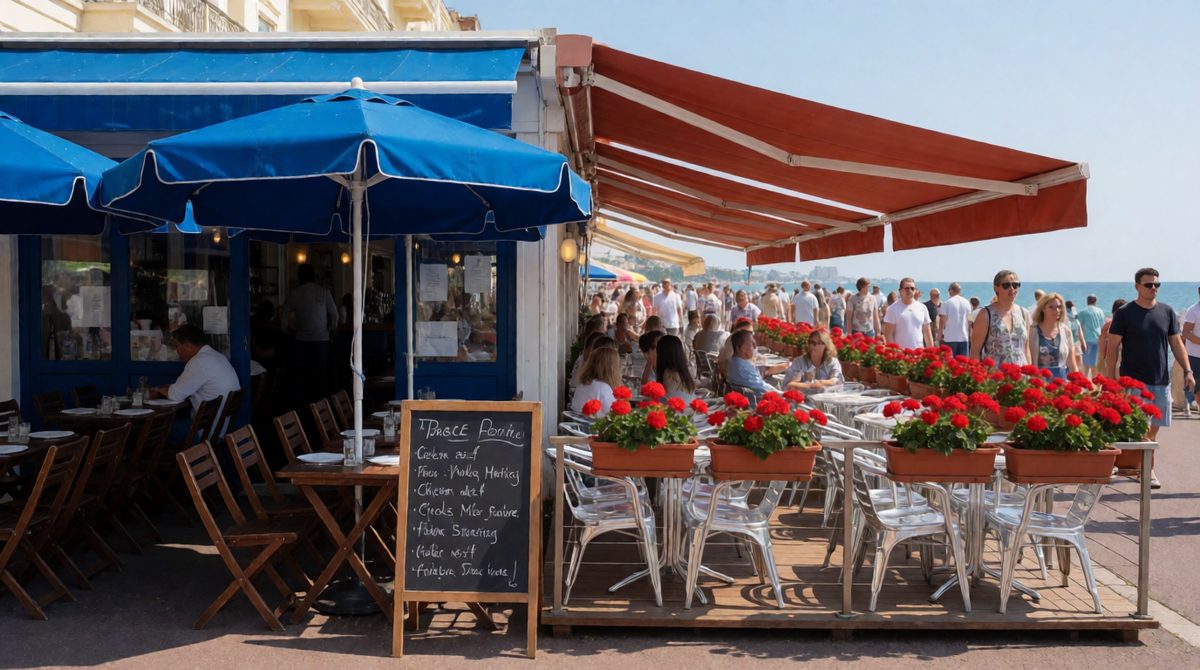
Businesses keep an eye on their competitors
Tourism is an incredibly competitive industry. Airlines compete on price, routes and service. Hotels compete on location, facilities and brand reputation. Tour operators compete on destinations, value and customer experience. To survive let alone thrive businesses must understand exactly what their rivals are doing.
Competitor analysis means studying rival businesses to understand their strengths, weaknesses, pricing, products and marketing strategies. It answers questions like: Who are our main competitors? What are they offering that we're not? Where are they beating us and where are we beating them?
🔍 What Does Competitor Analysis Actually Look At?
💰 Pricing
How much do rivals charge for similar products? Are they using dynamic pricing, early-bird discounts or last-minute deals? Understanding competitor pricing helps a business position itself correctly in the market.
🌟 Product Range
What destinations, packages or services do competitors offer? Are there routes, experiences or accommodation types that rivals provide but you don't? This reveals potential gaps to fill.
📱 Marketing Tactics
Where and how do rivals advertise? Which social media platforms do they use? What messages do they promote? Analysing competitor marketing reveals what's working in the industry.
📊 Methods Used in Competitor Analysis
- Mystery shopping visiting or contacting a competitor as a customer to assess their service quality
- Website and social media analysis studying competitor websites, booking platforms and social media engagement
- Review site monitoring reading TripAdvisor and Google reviews of competitors to spot their weaknesses
- Price comparison tools using sites like Kayak, Skyscanner or Trivago to track competitor pricing in real time
- Industry reports trade publications like Travel Weekly and reports from VisitBritain provide competitor market share data
✈️ Case Study: easyJet vs Ryanair Competitor Analysis in Action
easyJet and Ryanair are the two dominant low-cost carriers in Europe and both constantly monitor each other. When Ryanair began aggressively expanding its routes into secondary UK airports (like Stansted and East Midlands), easyJet responded by strengthening its presence at primary airports like Gatwick and Amsterdam Schiphol deliberately targeting business travellers who prefer convenient locations over the cheapest possible fare. This strategic repositioning was only possible because easyJet had conducted thorough competitor analysis. They identified that Ryanair's weakness was inconvenient airport locations and used this insight to differentiate themselves. easyJet's business traveller bookings grew by 18% following this strategy shift.
⚡ Why Ignoring Competitors Is Dangerous
Businesses that fail to monitor competitors risk being caught off guard by market shifts. Consider what happened in the package holiday market when online travel agencies (OTAs) like Expedia and Booking.com emerged. Traditional high-street travel agents who ignored this competitive threat lost enormous market share. Those who adapted by developing their own online platforms and offering added-value services survived. Competitor analysis would have flagged this threat early, giving businesses time to respond.
The key lesson: competitor analysis is not about copying rivals it's about understanding the competitive landscape so you can make smarter decisions.
📋 Reason 3: To Inform and Build Marketing Plans
Market research doesn't just tell a business what is happening it tells them what to do about it. One of the most important uses of market research in tourism is to build an effective marketing plan. Without research, a marketing plan is just guesswork. With research, it becomes a targeted, evidence-based strategy.
📝 What Is a Marketing Plan?
A marketing plan is a formal document that sets out how a business will promote its products or services to achieve specific objectives. In travel and tourism, a marketing plan might cover:
- Which customer segments to target (e.g. families, solo travellers, luxury seekers)
- Which channels to use (e.g. social media, TV advertising, travel fairs, influencer partnerships)
- What messages to communicate (e.g. "best value", "most sustainable", "most adventurous")
- How much budget to allocate to each activity
- How success will be measured (e.g. booking numbers, website traffic, brand awareness scores)
Every single one of these decisions is better when informed by market research.
💡 How Market Research Shapes Each Part of a Marketing Plan
🎯 Targeting the Right Audience
Research reveals who is most likely to buy. A boutique eco-lodge in Costa Rica might discover through surveys that 70% of its bookings come from 30–45 year old professionals interested in wildlife and sustainability. This means the marketing plan should focus on this group using platforms like Instagram and LinkedIn and messaging around conservation and authentic experiences rather than wasting budget on broad TV advertising.
📱 Choosing the Right Channels
Research into customer behaviour reveals where people look for travel inspiration. If research shows that 65% of a target audience discover new destinations through YouTube travel vlogs, then investing in video content and influencer partnerships makes far more sense than newspaper adverts. Channel decisions backed by research deliver much higher return on investment.
💬 Crafting the Right Message
Research into customer needs and motivations helps businesses understand what language and imagery will resonate. If research reveals that post-pandemic travellers prioritise flexibility and peace of mind, a tour operator's marketing plan should emphasise free cancellation policies and 24/7 customer support not just destination highlights.
📈 Setting Realistic Objectives
Market research provides benchmarks. If secondary research shows that the adventure tourism market is growing at 17% per year, a business can set ambitious but realistic growth targets. Without this data, objectives are either too cautious (missing opportunity) or too optimistic (setting the business up to fail).
🌎 Case Study: VisitScotland's "Scotland Is Now" Campaign
VisitScotland, the national tourism agency, used extensive market research before launching its "Scotland Is Now" campaign. Research revealed that international visitors particularly from the USA and Germany associated Scotland primarily with history, whisky and golf, but were largely unaware of Scotland's thriving tech scene, modern cities and outdoor adventure opportunities. The research also identified that the target demographic was aged 25–40, digitally active and motivated by authentic, off-the-beaten-track experiences. Armed with this data, the marketing plan focused on digital channels (YouTube, Instagram, targeted Facebook ads), used young Scottish ambassadors rather than traditional tartan imagery and highlighted modern Scotland alongside its heritage. The campaign reached over 30 million people internationally and contributed to a 5% increase in international visitor numbers in its first year.
🔄 The Research-to-Plan Cycle
It's important to understand that market research and marketing planning form a continuous cycle, not a one-time process:
- Research is conducted to understand customers, competitors and the market.
- Findings are analysed to identify opportunities and challenges.
- A marketing plan is built based on these findings.
- The plan is implemented campaigns are launched, products are promoted.
- Results are measured booking data, customer feedback and sales figures are collected.
- New research is conducted to evaluate what worked and what didn't and the cycle begins again.
This is why successful tourism businesses like TUI, Airbnb and British Airways have dedicated market research teams working year-round. Research isn't a luxury it's a core business function.
📚 Bringing It All Together The Three Reasons Working as One
In practice, the three reasons for market research don't work in isolation. They feed into each other in a powerful way. Here's how they connect:
🔗 How the Three Reasons Link Together
Understanding customer needs tells a business what travellers want. Competitor analysis reveals whether rivals are already meeting those needs and where the gaps are. This combined knowledge then directly informs the marketing plan, ensuring the business promotes the right products, to the right people, through the right channels, with the right message. A business that does all three well has a significant competitive advantage over one that relies on instinct alone.
🏠 Mini Case Study: A New Boutique Hotel Opening in Edinburgh
Imagine a new boutique hotel is planning to open in Edinburgh. Here's how all three reasons for market research would apply:
- Customer Needs Research: Surveys and focus groups reveal that the target audience (25–40 year old urban travellers) wants locally sourced breakfast, fast Wi-Fi, stylish interiors and easy access to the Old Town. The hotel designs its rooms and services around these findings.
- Competitor Analysis: Research into existing Edinburgh hotels reveals that budget chains dominate the lower end, while large international brands dominate the luxury end. The middle ground stylish, independent, mid-range is underserved. This confirms there is a gap in the market for the new hotel.
- Marketing Plan: Armed with customer data and competitor insights, the hotel builds a marketing plan targeting urban millennials via Instagram and travel blogs, emphasising its independent character, local food credentials and central location. The plan sets a target of 75% occupancy within six months of opening.
Without market research, the hotel might have opened with the wrong facilities, in the wrong price bracket, promoted through the wrong channels. Research turns a risky investment into a calculated, informed decision.
✏️ Exam Tips: Writing About Reasons for Market Research
📚 How to Score Top Marks in the Exam
- Always link to tourism context: Don't just say "to understand customers" say "to understand what type of holiday experience customers are looking for, such as adventure, relaxation or cultural immersion."
- Use specific examples: Examiners reward real-world knowledge. Mention airlines, hotel chains, tour operators or destinations you've studied.
- Explain the consequence: Don't just state a reason explain what happens as a result. "By understanding competitor pricing, a tour operator can set prices that are competitive without undercutting their own profit margins."
- Show the links: If asked about marketing plans, show that you understand research feeds into the plan it's not separate from it.
- Use the correct terminology: Words like "competitor analysis," "customer segmentation," "marketing objectives" and "target market" will impress examiners.
📚 Common Exam Mistake to Avoid!
Many students write that businesses do market research "to make more money." While profit is ultimately the goal, this is too vague for exam marks. You need to be specific about how research helps by identifying unmet customer needs, revealing competitor weaknesses, or enabling more targeted and cost-effective marketing. Always go one step further than the obvious answer.
🎯 Summary: Reasons for Market Research in Tourism
- 👥 Customer Needs: Research helps businesses discover what travellers want their preferences, motivations, budgets and expectations so products and services can be designed to meet those needs effectively.
- 💰 Competitor Analysis: By studying rivals, businesses can identify competitive threats, spot market gaps, benchmark their own performance and develop strategies to differentiate themselves.
- 📋 Marketing Plans: Research provides the evidence base for every decision in a marketing plan from choosing target audiences and channels to crafting messages and setting objectives.
- 🔄 The three reasons are interconnected customer research and competitor analysis together build the foundation for a strong, targeted marketing plan.
- 🔍 Continuous research is essential because customer needs, competitor strategies and market conditions all change over time.