🌐 What is a Product and Service Mix?
Once a tourism business has identified its market segments, the next step is to actually design and deliver the right product for each group. This is called developing the product and service mix and it's one of the most important skills in travel and tourism marketing.
Think of it like a restaurant menu. You wouldn't serve the same dish to everyone regardless of whether they're vegetarian, have allergies, or prefer spicy food. Tourism businesses do exactly the same thing they adjust what they offer, how they price it, how they promote it and where they sell it, depending on who the customer is.
Key Definitions:
- Product Mix: The full range of products and services a business offers across all its market segments.
- Service Mix: The combination of services (tangible and intangible) provided to meet customer needs e.g. guided tours, airport transfers, concierge services.
- Targeting: Choosing which segment(s) to focus your marketing and product development on.
- Differentiation: Making your product stand out from competitors by tailoring it to a specific group's needs.
- The Marketing Mix (4Ps): Product, Price, Place, Promotion the four tools a business uses to reach its target market.
💡 Why This Matters for Your Exam
Exam questions often ask you to explain how a business adapts its product or service for a named segment. You need to go beyond just naming the segment you must explain what changes are made and why those changes appeal to that group. Use the 4Ps as your framework.
🎯 The Marketing Mix and Market Segments
The marketing mix is the toolkit that businesses use to reach their customers. Each element can be adjusted to suit a different segment. Let's look at how each of the 4Ps is adapted in tourism.
📦 Product What You're Selling
The product in tourism is rarely just a flight or a hotel room. It's the whole experience the accommodation, activities, food, atmosphere and level of service. Businesses adapt the product to suit different segments.
👴 Young Adults (18–30)
Party atmospheres, hostel-style dorms, group tours, adventure activities, flexible itineraries. Example: Contiki tours offer group travel with a social focus for 18–35s.
👪 Families
Kids' clubs, family rooms, shallow pools, child-friendly menus, entertainment programmes. Example: Center Parcs designs every aspect of its resort around family needs.
🛴 Senior Travellers (60+)
Slower pace, cultural excursions, comfortable coaches, accessible rooms, full-board options. Example: Saga Holidays offers escorted tours with extra support and comfort.
💰 Price What You Charge
Price is one of the most powerful tools for targeting segments. Different groups have very different budgets and expectations. Charging the right price signals the right message to the right customer.
💵 Budget Pricing
Targets cost-conscious travellers students, backpackers, low-income families. Uses strategies like early-bird discounts, last-minute deals and no-frills pricing. Example: Ryanair and easyJet strip back services to offer the lowest base fare, appealing to price-sensitive segments.
💎 Premium Pricing
Targets luxury and high-income segments. High prices signal exclusivity and quality. Example: Abercrombie & Kent charges premium prices for bespoke safaris and private jet travel, targeting wealthy travellers who expect the very best.
📣 Promotion How You Reach Customers
Promotion means getting your message to the right people in the right way. Different segments use different media, respond to different messages and trust different sources of information.
| Segment |
Preferred Promotion Method |
Example |
| Young adults (18–30) |
Instagram, TikTok, influencer marketing |
Hostelworld uses social media campaigns |
| Families |
TV adverts, family magazines, Facebook |
Center Parcs uses TV and family lifestyle press |
| Senior travellers |
Newspaper adverts, direct mail, TV |
Saga advertises in Sunday supplements and on TV |
| Luxury travellers |
Glossy magazines, private events, word of mouth |
Abercrombie & Kent uses Condé Nast Traveller |
| Business travellers |
LinkedIn, corporate email, travel management firms |
Marriott targets corporate clients via TMCs |
📍 Place How and Where You Sell
Place in tourism means the distribution channel how a customer finds and books the product. This must match the habits of your target segment.
- Online booking platforms (Booking.com, Airbnb) popular with younger, tech-savvy travellers
- High street travel agents still used by older travellers who prefer face-to-face advice
- Direct booking via brand websites used across all segments but especially by brand-loyal customers
- Tour operators and package deals popular with families and first-time international travellers who want everything sorted
- Corporate travel management companies (TMCs) used by business travellers whose companies arrange travel for them
📚 Case Study: Marriott International One Brand, Many Segments
Marriott International is a brilliant example of a business that has developed a completely different product mix for different segments all under one company umbrella.
- Marriott Bonvoy (loyalty programme): Targets frequent business travellers with points, upgrades and exclusive perks.
- Courtyard by Marriott: Mid-range hotels targeting business travellers on a moderate budget functional, reliable, good Wi-Fi.
- The Ritz-Carlton (owned by Marriott): Ultra-luxury segment butler service, fine dining, bespoke experiences for high-net-worth individuals.
- Moxy Hotels: Targets younger travellers (millennials) with a fun, social atmosphere, stylish design and lower price points.
- Residence Inn: Targets long-stay travellers (relocating workers, extended business trips) with apartment-style rooms and kitchen facilities.
By operating multiple brands, Marriott can target completely different segments without confusing its core customers. Each brand has its own product, price point, promotion style and distribution channel.
🏠 Developing Products for Specific Segments In Detail
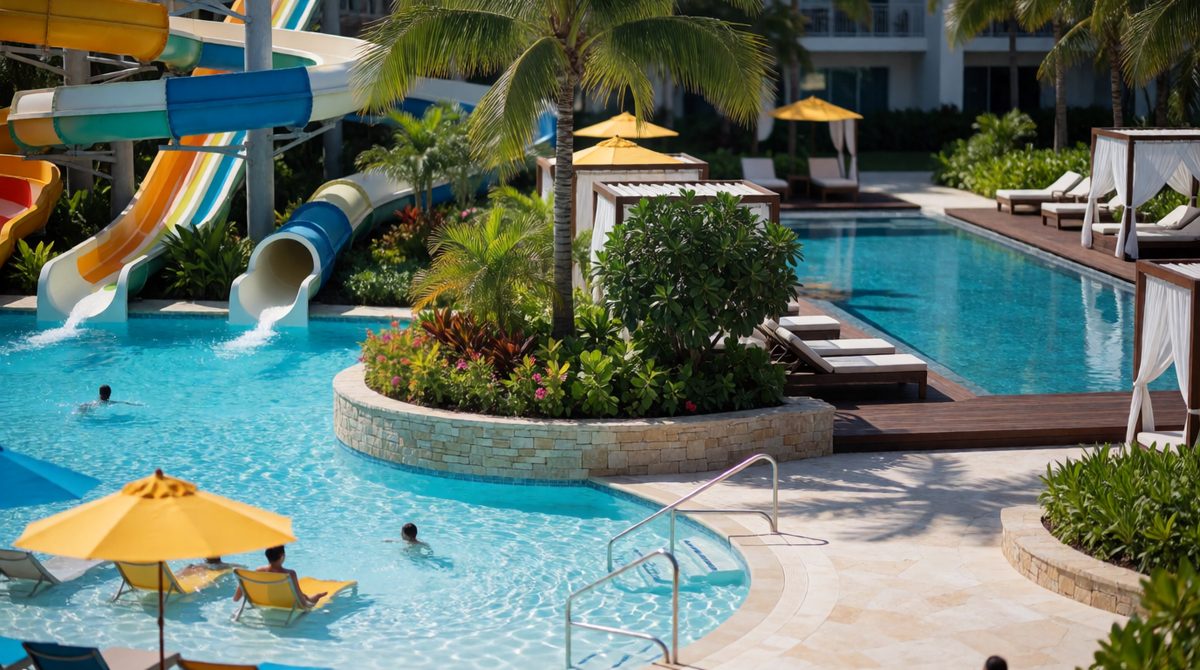
Products are developed for specific segments
Let's now look at how specific tourism products are developed to meet the needs of particular market segments. This is where you need to show real understanding in the exam not just that businesses target different groups, but how they do it.
👪 The Family Segment
Families are one of the most valuable segments in UK tourism. They tend to travel during school holidays, spend more per trip (multiple people) and are very loyal to brands they trust.
What families need: Safety, convenience, value for money, entertainment for children of different ages and flexibility.
📚 Case Study: Center Parcs
Center Parcs is arguably the UK's most successful family tourism product. Every element of its offering is designed around the family segment:
- Product: Forest lodges, indoor subtropical swimming pool, over 100 activities for all ages, no cars on site (safe for children)
- Price: Premium pricing but perceived as value the all-inclusive nature means families don't spend extra on activities
- Promotion: TV adverts during family programmes, social media targeting parents, email campaigns to previous guests
- Place: Bookable online or by phone; located within 2 hours of major UK cities for easy access
Center Parcs has a repeat visit rate of over 90% showing that when you get the product mix right for a segment, loyalty follows.
✈️ The Business Travel Segment
Business travellers have very different needs from leisure tourists. They travel frequently, often at short notice and their employer usually pays so price is less of a concern than efficiency, comfort and reliability.
📋 What Business Travellers Need
- Fast, reliable Wi-Fi
- Easy check-in and check-out
- Central locations near business districts
- Meeting rooms and business centres
- Flexible booking and cancellation
- Loyalty rewards for frequent travel
- Airport lounges and priority boarding
📈 How Airlines Respond
British Airways targets business travellers with its Club World business class product fully flat beds, premium meals, fast-track security and access to exclusive lounges. The price is significantly higher than economy, but the segment is willing to pay for productivity and comfort. BA also offers flexible tickets that can be changed without penalty essential for business travellers whose plans change frequently.
🌟 The Luxury Segment
Luxury travellers are not just looking for expensive things they're looking for exclusivity, personalisation and unique experiences that money can't easily buy. This segment is small but extremely high-spending.
Businesses targeting this segment must ensure every touchpoint of the customer journey feels special. A single bad experience can destroy the relationship.
📚 Case Study: Abercrombie & Kent
Founded in 1962, Abercrombie & Kent (A&K) is one of the world's leading luxury travel companies. Their product mix is entirely built around the ultra-high-net-worth segment:
- Product: Bespoke itineraries, private game reserves, chartered yachts, exclusive access to cultural sites (e.g. private viewings of the Sistine Chapel)
- Price: Safaris can cost £10,000+ per person; no budget options exist the high price is part of the appeal
- Promotion: Glossy travel magazines (Condé Nast Traveller), word of mouth, invitation-only events, partnerships with luxury brands
- Place: Personal travel consultants, no online self-booking every trip is planned one-to-one
A&K's approach shows that for the luxury segment, exclusivity and personal service are the product not just the destination.
📊 Undifferentiated vs Differentiated vs Concentrated Targeting
When a business decides how to approach its segments, it has three main strategic choices. Understanding these helps you explain why a business develops its product mix the way it does.
🌟 Undifferentiated
One product for everyone. Rare in modern tourism. Example: A basic ferry crossing the product is the same regardless of who's on board. Low cost to develop but misses many customer needs.
👥 Differentiated
Different products for different segments. Example: Marriott's multiple hotel brands. More expensive to run but reaches more customers and builds stronger loyalty in each segment.
🎯 Concentrated
One product aimed at one specific segment. Example: Saga targeting the 50+ market only. Allows deep expertise and strong brand identity within that segment. Risk: if the segment shrinks, so does the business.
📚 Case Study: TUI Group Differentiated Targeting in Action
TUI is Europe's largest travel and tourism company and a perfect example of differentiated targeting. Under the TUI umbrella, you'll find:
- TUI Holidays: Mass-market package holidays targeting families and couples affordable, all-inclusive, popular destinations like Spain and Turkey
- Marella Cruises (owned by TUI): Targets older couples and retirees with a relaxed, British-friendly cruise experience
- TUI Blue Hotels: Adult-only resorts targeting couples seeking a quieter, more sophisticated experience
- TUI SENSIMAR: Romantic couples adults only, premium service, intimate atmosphere
- TUI Family Life: Families with young children kids' clubs, family entertainment, child-friendly pools
Each sub-brand has its own product design, pricing tier and promotional approach but all benefit from TUI's massive distribution network and buying power.
🔎 Niche Products for Niche Segments
Not all tourism businesses target large segments. Some deliberately focus on very small, specialist groups this is called niche marketing. The product is highly specific and so is the customer.
- Dark Tourism: Visits to sites of tragedy or historical significance (e.g. Auschwitz, Chernobyl). Operators like Chernobyl Tour develop specialist guided experiences for history-focused travellers.
- Voluntourism: Travel combined with volunteering. Products include conservation projects in Africa or teaching placements in Asia. Targets ethically motivated, often younger travellers.
- LGBTQ+ Tourism: Dedicated tours, cruises and resorts designed for LGBTQ+ travellers seeking safe, welcoming environments. Example: Olivia Travel runs all-women cruises and resorts.
- Accessible Tourism: Products designed for travellers with disabilities accessible rooms, adapted transport, trained staff. Example: Disabled Holidays UK specialises entirely in this segment.
💡 Exam Tip: Niche vs Mass Market
If an exam question asks you to compare product development for different segments, try to include one mass market example and one niche example. This shows you understand the full range of targeting strategies and will earn higher marks.
🌟 Exam Tips: What the Examiner Wants to See
✅ Do This in the Exam
- Name the segment clearly (e.g. "the family segment" or "luxury travellers")
- Use the 4Ps framework to structure your answer
- Give a real business example for each point you make
- Explain why the product change suits that segment link to their needs
- Use terms like "differentiated targeting," "niche marketing," and "product mix"
- Compare at least two segments if the question asks you to evaluate
❌ Avoid These Mistakes
- Don't just say "they change the price" explain how and why
- Don't confuse the segment with the product the segment is the customer group, the product is what you offer them
- Don't use vague examples "a hotel" is not as good as "Marriott's Moxy brand"
- Don't forget that promotion and place also change not just product and price
- Don't write about segmentation in general focus on developing the product mix
📋 Summary: Product and Service Mix for Different Segments
- The product and service mix is everything a business offers to meet the needs of its target segment
- Businesses use the 4Ps (Product, Price, Place, Promotion) to tailor their offering to each segment
- Differentiated targeting means developing different products for different segments (e.g. TUI, Marriott)
- Concentrated targeting means focusing on one segment only (e.g. Saga, Abercrombie & Kent)
- Families need safety, convenience and entertainment; business travellers need efficiency and flexibility; luxury travellers need exclusivity and personalisation
- Niche products serve very specific, small segments e.g. accessible tourism, dark tourism, LGBTQ+ travel
- Promotion must reach the right segment through the right channel social media for young adults, print for seniors
- Getting the product mix right leads to customer loyalty, repeat visits and higher revenue