🌎 Setting the Scene Impacts of Tourism in the Exam
In Paper 1, you will be given a scenario a short description of a real or fictional destination and asked to respond to questions about the impacts of tourism there. These questions test whether you can apply what you know, not just recall it. That means you need to link your knowledge directly to the place described.
Impacts of tourism is one of the most heavily examined topics in iGCSE Travel & Tourism. It covers three main areas:
💰 Economic Impacts
How tourism affects jobs, income and the local economy both positively and negatively.
👥 Social & Cultural Impacts
How tourism changes the way people live, their traditions and community wellbeing.
🌿 Environmental Impacts
How tourism affects natural landscapes, wildlife and ecosystems.
Key Definitions:
- Impact: A change caused by tourism it can be positive (a benefit) or negative (a cost).
- Host community: The local people who live in a tourist destination.
- Carrying capacity: The maximum number of visitors a destination can handle before damage occurs.
- Overtourism: When too many tourists visit a place, causing harm to the environment and local community.
- Ecotourism: Responsible travel to natural areas that conserves the environment and improves the wellbeing of local people.
💰 Economic Impacts The Full Picture
Tourism brings money into a destination, but the economic story is more complicated than it first appears. You need to know both sides for the exam.
✅ Positive Economic Impacts
- Job creation: Hotels, restaurants, tour operators and transport all employ local people.
- Foreign exchange earnings: International tourists bring foreign currency, boosting the national economy.
- Infrastructure investment: Governments build better roads, airports and utilities to support tourism locals benefit too.
- The multiplier effect: Money spent by tourists circulates through the local economy a tourist buys a meal, the restaurant owner pays staff, the staff buy groceries locally and so on.
❌ Negative Economic Impacts
- Economic leakage: Money leaves the local economy when tourists stay in foreign-owned hotels or buy imported goods.
- Seasonal unemployment: Many tourism jobs only exist in peak season, leaving workers without income in the off-season.
- Rising prices: As tourism grows, house prices and the cost of living can increase, pricing out local residents.
- Over-dependence: If a country relies too heavily on tourism, a crisis (like a pandemic or natural disaster) can devastate the whole economy.
🏆 Case Study: The Gambia Economic Leakage in Action
The Gambia is a popular winter sun destination for European tourists. However, studies have shown that up to 70–80% of tourist spending leaks out of the country. This is because many hotels are foreign-owned, food is imported and package holidays are sold by European tour operators. Local people see very little of the money tourists spend. This is a classic example of economic leakage and a perfect case study to use in a scenario about developing countries and tourism.
👥 Social and Cultural Impacts People and Places
Tourism doesn't just affect money it changes people's lives and cultures. These impacts can be tricky to measure, but they are just as important in the exam.
✅ Positive Social & Cultural Impacts
- Cultural exchange: Tourists and locals learn about each other's customs, food and traditions.
- Preservation of heritage: Tourism income can fund the restoration of historic buildings, museums and cultural festivals.
- Improved services: Investment in tourism often leads to better hospitals, schools and public services for locals.
- Pride in local culture: Tourism can encourage communities to celebrate and maintain their traditions.
❌ Negative Social & Cultural Impacts
- Demonstration effect: Locals, especially young people, copy tourist behaviour and abandon traditional ways of life.
- Commodification of culture: Sacred traditions are turned into tourist performances, losing their meaning.
- Increased crime: The presence of wealthy tourists can attract pickpocketing, scams and other crimes.
- Loss of community identity: When a town becomes entirely focused on tourism, locals can feel like strangers in their own home.
- Displacement: Local people may be forced out of their homes to make way for tourist developments.
🏆 Case Study: Bali, Indonesia Culture Under Pressure
Bali receives millions of tourists each year, drawn by its stunning temples, rice terraces and Hindu culture. However, this popularity has come at a cost. Sacred temple ceremonies have become tourist attractions, with visitors sometimes behaving disrespectfully. The demonstration effect has led younger Balinese people to adopt Western lifestyles and rapid hotel development has encroached on traditional rice farming land. Despite this, tourism income has also funded the restoration of temples and supported traditional dance schools showing that impacts are rarely all positive or all negative.
🌿 Environmental Impacts Nature Pays the Price
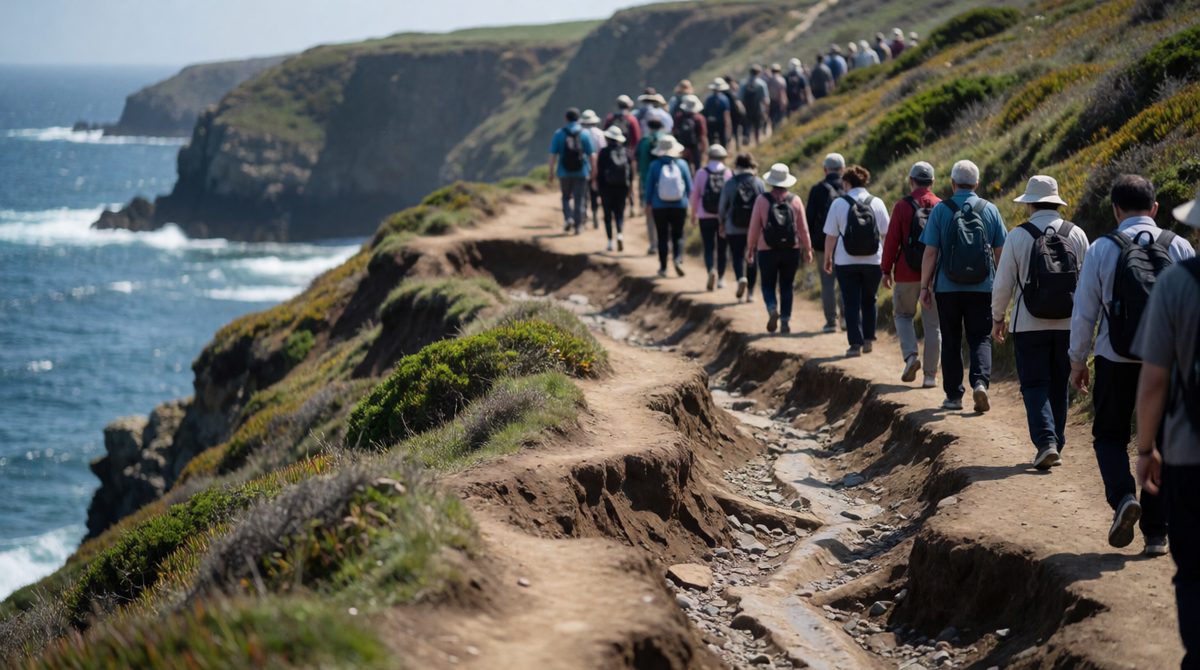
Tourism can harm the environment
Natural environments are often the very reason tourists visit a destination. But ironically, tourism can destroy the very things that attract visitors in the first place.
✅ Positive Environmental Impacts
- Conservation funding: Entry fees and tourism taxes can pay for national parks and wildlife protection.
- Incentive to protect: If wildlife brings tourists (and income), governments have a reason to protect it.
- Awareness: Tourists who visit natural areas often become advocates for conservation.
❌ Negative Environmental Impacts
- Habitat destruction: Building hotels, roads and airports destroys natural habitats.
- Pollution: Litter, sewage, noise and air pollution from transport all damage ecosystems.
- Erosion: Footpaths, coral reefs and beaches are worn away by too many visitors.
- Water stress: Golf courses and hotel swimming pools use enormous amounts of water in areas where it is scarce.
- Wildlife disturbance: Animals change their behaviour when humans are too close.
🏆 Case Study: The Great Barrier Reef, Australia Environmental Pressure
The Great Barrier Reef is the world's largest coral reef system and a UNESCO World Heritage Site. It attracts over 2 million visitors per year, generating around AU$6.4 billion for the Australian economy. However, tourism contributes to coral bleaching through sunscreen chemicals, anchor damage and boat pollution. Climate change worsened by carbon emissions from tourist flights is the biggest threat of all. Australia has invested heavily in reef monitoring and has introduced strict rules on where boats can anchor, showing how management can reduce negative environmental impacts.
📈 The Butler Tourism Area Life Cycle (TALC)
The Butler Model (also called the Tourism Area Life Cycle) is a key concept for Paper 1. It describes how tourist destinations change over time, moving through six stages. Understanding this model helps you explain why impacts change as a destination develops.
🚀 Early Stages
Exploration: A few adventurous tourists discover the place. Impacts are minimal.
Involvement: Local people start providing services. Small positive economic impacts begin.
📈 Growth Stages
Development: Mass tourism arrives. Big hotels are built, often by foreign companies. Leakage increases. Environmental pressure grows.
Consolidation: Tourism dominates the economy. Negative impacts become more visible.
⚠️ Later Stages
Stagnation: The destination loses its appeal. Visitor numbers plateau or fall.
Decline or Rejuvenation: The destination either collapses or reinvents itself (e.g. through ecotourism or new attractions).
💡 Exam tip: If a scenario describes a destination that is "struggling to attract visitors" or "trying to rebrand," think about the stagnation or decline stage of the Butler Model.
📝 Full Exam-Style Scenario Practice This Now
📋 Read the Scenario Carefully
Scenario: Koh Samui, Thailand
Koh Samui is a tropical island in the Gulf of Thailand. In the 1970s, it was a quiet fishing village visited by a handful of backpackers. By the 2000s, it had become a major international resort destination with luxury hotels, an international airport and over 1.5 million visitors per year. Local fishermen have sold their land to hotel developers. Coral reefs around the island have been damaged by tourist boat anchors and sunscreen. However, tourism has created thousands of jobs and funded new roads and hospitals. Recently, the Thai government has introduced limits on tourist numbers to some of the most sensitive beach areas.
📝 Exam Question 1 Identify [2 marks]
"Identify two negative environmental impacts of tourism in Koh Samui."
❌ Weak Answer
"Tourism is bad for the environment. It causes pollution and damage."
👉 Too vague. No reference to the scenario. No specific impacts named.
✅ Strong Answer
"One negative environmental impact is coral reef damage caused by tourist boat anchors. A second is water pollution from sunscreen chemicals used by swimmers, which harms marine life."
👉 Specific, linked to the scenario and uses correct terminology.
📝 Exam Question 2 Explain [4 marks]
"Explain how tourism has had both positive and negative economic impacts on Koh Samui."
❌ Weak Answer
"Tourism creates jobs and brings money. But it can also cause problems like leakage."
👉 Correct ideas, but no development and no use of the scenario.
✅ Strong Answer
"Tourism has had positive economic impacts on Koh Samui because it has created thousands of jobs in hotels, restaurants and transport, raising income levels for local people. The scenario also mentions that tourism has funded new roads and hospitals, improving infrastructure for the whole community. However, there are also negative economic impacts. When local fishermen sold their land to hotel developers, they lost their traditional livelihoods. If those hotels are foreign-owned, much of the tourist spending will leak out of the local economy rather than benefiting Thai people directly."
👉 Uses scenario evidence, develops both sides and applies key terminology correctly.
📝 Exam Question 3 Assess [8 marks]
"Assess the extent to which the negative impacts of tourism on Koh Samui outweigh the positive impacts."
✅ Strong Answer Structure
Use this paragraph structure:
- Paragraph 1: Positive economic impacts (jobs, infrastructure, foreign exchange) with scenario evidence.
- Paragraph 2: Negative environmental impacts (coral damage, pollution, erosion) with scenario evidence.
- Paragraph 3: Negative social impacts (loss of traditional livelihoods for fishermen, cultural change) with scenario evidence.
- Paragraph 4: Judgement Do the negatives outweigh the positives? Consider that the Thai government is now managing tourism (limiting numbers), which suggests the negatives have become serious enough to require action. However, the economic benefits remain significant for a developing country like Thailand.
💡 Remember: An "assess" answer must reach a justified conclusion. Don't just list points weigh them up and decide.
🛠 Managing Tourism Impacts What Can Be Done?
Exam questions often ask you to suggest ways to manage the impacts of tourism. Here are the key strategies you should know:
🌿 Environmental Management
- Visitor number limits (carrying capacity management)
- Zoning keeping tourists away from sensitive areas
- Banning harmful activities (e.g. anchoring on coral reefs)
- Eco-taxes on flights or hotel stays to fund conservation
- Promoting low-impact ecotourism
👥 Social & Economic Management
- Encouraging locally owned businesses to reduce leakage
- Training local people for skilled tourism jobs
- Spreading tourism to less-visited areas (dispersal)
- Community-based tourism giving locals control
- Promoting year-round tourism to reduce seasonality
🏆 Case Study: Bhutan Controlling Tourism from the Start
Bhutan, a small Himalayan kingdom, has taken a unique approach to tourism. It charges all international visitors a Sustainable Development Fee of US$200 per person per night. This limits visitor numbers to those who can afford it, reducing environmental pressure while maximising income per tourist. The government uses the fees to fund conservation, education and healthcare. Bhutan's approach is often cited as a model of sustainable tourism management though critics argue it excludes less wealthy travellers. This is an excellent case study for questions about managing tourism impacts.
🚀 Quick Revision Summary Impacts of Tourism
- ✅ Tourism creates jobs, income and infrastructure but leakage, seasonality and over-dependence are real risks.
- ✅ Social impacts include cultural exchange and heritage preservation, but also the demonstration effect and displacement.
- ✅ Environmental impacts include conservation funding, but also habitat destruction, pollution and erosion.
- ✅ The Butler TALC model shows how impacts change as a destination develops over time.
- ✅ Management strategies include visitor limits, eco-taxes, zoning and community tourism.
- ✅ Always link your answer to the scenario use the place name and specific details given.
- ✅ For higher-mark questions, always reach a conclusion and justify it.
✍️ Try This Yourself
Read the scenario below and answer the question that follows. Write your answer before checking any notes.
📋 Scenario: Zanzibar, Tanzania
Zanzibar is an island off the coast of Tanzania. It is famous for its white sand beaches, historic Stone Town (a UNESCO World Heritage Site) and spice plantations. Tourism has grown rapidly since the 1990s. Large foreign-owned beach resorts have been built and cruise ships now bring thousands of day visitors to Stone Town. Local fishermen report that tourist boat traffic has damaged fish stocks. However, tourism has created jobs and the government has used tourism taxes to restore historic buildings in Stone Town.
Question: "Assess the economic and environmental impacts of tourism on Zanzibar. To what extent do the negative impacts outweigh the positive impacts?" [8 marks]
💡 Checklist before you write:
- Have you identified at least two positive impacts with scenario evidence?
- Have you identified at least two negative impacts with scenario evidence?
- Have you used key terms (e.g. leakage, multiplier effect, carrying capacity)?
- Have you reached a justified conclusion?