📋 What is Paper 2?
Paper 2 is all about Managing and Marketing Destinations. It tests whether you understand how tourist destinations are run, promoted and kept sustainable. This paper is worth 60 marks and lasts 1 hour 30 minutes. That means you need to be sharp, focused and know exactly how to use your time wisely.
Think of Paper 2 like a job interview for a tourism manager role the examiner wants to see that you can think about real-world tourism problems, not just remember facts.
Key Definitions:
- Destination Management: The process of planning, organising and controlling tourism at a specific place to make it successful and sustainable.
- Destination Marketing: Promoting a place to attract visitors using adverts, social media, brochures and campaigns.
- Sustainable Tourism: Tourism that meets the needs of today's visitors without damaging the destination for future generations.
- Stakeholder: Anyone who has an interest in tourism at a destination locals, businesses, governments, tourists.
- DMO (Destination Management Organisation): A body responsible for managing and promoting a tourist destination.
💡 Why does Paper 2 matter?
Paper 2 counts towards your final iGCSE grade alongside Paper 1 (The Travel and Tourism Industry) and your coursework (Component 3). Getting your exam technique right in Paper 2 can make a real difference to your overall grade. It rewards students who can apply their knowledge to real situations not just those who memorise lists.
📄 Paper 2 Structure What's Actually in It?
Paper 2 is divided into sections, each with a different style of question. Knowing the structure before you walk into the exam room means no nasty surprises. Let's break it down clearly.
🔍 The Three Sections of Paper 2
Paper 2 is split into Section A, Section B and Section C. Each section tests a slightly different skill from short, punchy answers to longer, more detailed responses.
1️⃣ Section A
Short-answer questions based on a stimulus (like a photo, map, or data). Usually worth 1–4 marks per question. Tests knowledge and understanding quickly. No long essays here keep answers brief and precise.
2️⃣ Section B
Structured questions that go deeper. Worth more marks per question (often 4–8 marks). You'll need to explain, compare, or analyse tourism management issues. Use examples to back up your points.
3️⃣ Section C
Extended response / essay-style question. This is the big one worth up to 12–15 marks. You'll be asked to evaluate, discuss, or recommend. Structure your answer clearly with an introduction, main points and a conclusion.
📌 Real Exam Tip
Section C is where many students lose marks not because they don't know the content, but because they don't structure their answer. Always plan for 2–3 minutes before writing your extended response. Jot down 3–4 key points you want to make.
⏰ Timing How to Use Your 90 Minutes
Time management is one of the biggest skills tested in any exam. In Paper 2, you have 90 minutes for 60 marks. A handy rule of thumb: 1 mark = roughly 1.5 minutes. Use this to plan your time across sections.
⏱ Suggested Time Plan
- 🕒 Reading time: 5 minutes read the whole paper first
- 🕒 Section A: ~20 minutes
- 🕒 Section B: ~35 minutes
- 🕒 Section C: ~25 minutes
- 🕒 Checking: 5 minutes at the end
⚠ Common Time Mistakes
- ❌ Spending too long on low-mark questions
- ❌ Rushing Section C because time ran out
- ❌ Not reading the question properly
- ❌ Writing bullet points when a full explanation is needed
- ❌ Leaving Section C blank always attempt it!
🌟 Mark Allocation What Are Marks Actually For?
Understanding how marks are awarded is just as important as knowing the content. Examiners use mark schemes that reward specific things. Let's look at what they're looking for at different mark levels.
🎯 Mark Levels Explained
⭐ 1–2 Mark Questions
These want a simple, direct answer. One or two words, or a short sentence. No need to explain just state the fact. Example: "Name one type of tourist attraction." Answer: "Theme park."
⭐⭐ 3–6 Mark Questions
These want you to explain or describe. Use the P-E-E structure: Point, Evidence, Explanation. Don't just list develop your ideas. One well-explained point is worth more than three vague ones.
⭐⭐⭐ 8–15 Mark Questions
These want a balanced, structured argument. Include both sides of an issue, use real-world examples and reach a justified conclusion. Examiners reward evaluation showing you can weigh up different viewpoints.
📚 What is P-E-E?
Point: Make your main point clearly.
Evidence: Back it up with a fact, statistic, or example.
Explanation: Say why this matters or what effect it has.
Example: "One way to manage tourist numbers is to introduce entry fees (Point). For example, Venice charges a day-tripper fee of up to €10 (Evidence). This reduces overcrowding and generates income for conservation (Explanation)."
🔎 Command Words The Secret Code of Exam Questions
Every question in Paper 2 uses a command word a word that tells you exactly what to do. Misreading the command word is one of the most common reasons students lose marks. Learn these off by heart!
- 👉 State / Name / Identify: Give a simple, direct answer. No explanation needed.
- 👉 Describe: Say what something is like use detail and specific features.
- 👉 Explain: Say why or how something happens give reasons.
- 👉 Suggest: Give a possible reason or idea there may not be one right answer.
- 👉 Compare: Look at similarities and differences between two things.
- 👉 Assess / Evaluate: Weigh up the positives and negatives and reach a conclusion.
- 👉 Discuss: Consider different viewpoints and develop a balanced argument.
- 👉 Recommend: Say what you think should happen and justify your choice.
⚠ Watch Out!
If a question says "Explain" and you only "Describe", you will lose marks. Examiners are strict about this. Always check: have I said why or how, not just what?
🌎 Topics Covered in Paper 2 Know Your Content
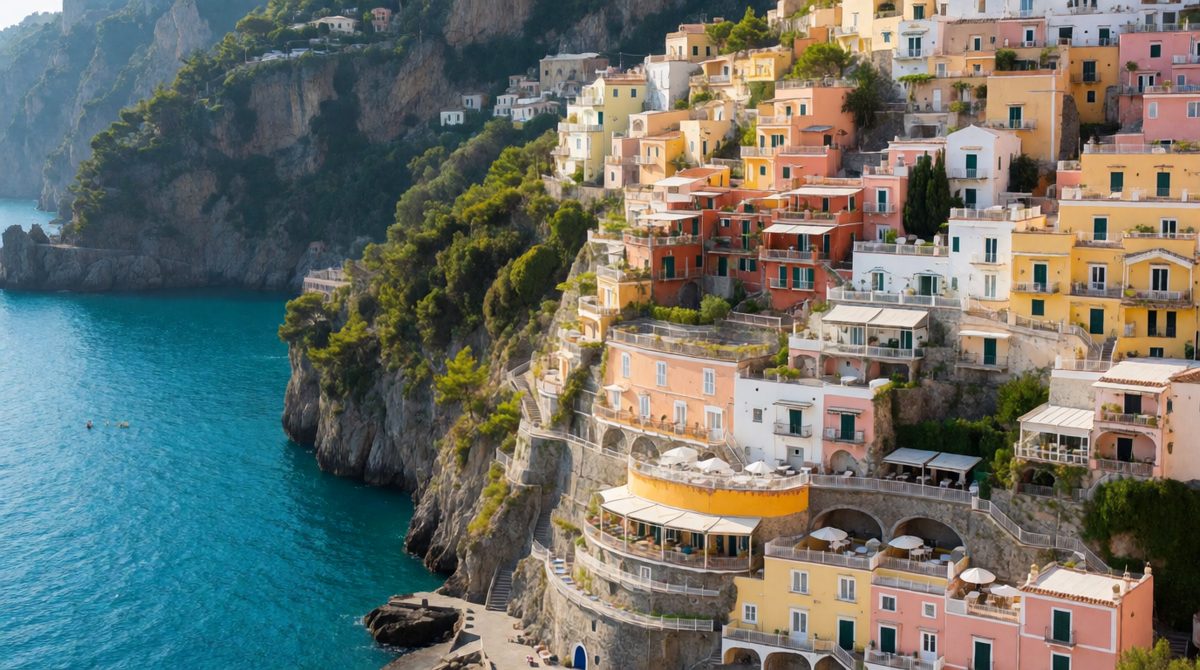
Paper 2 covers destinations and how they are managed
Paper 2 draws on specific topics from the iGCSE syllabus. You need to be confident across all of these areas because any of them could appear in the exam.
🏠 Managing Destinations
- The role of DMOs and tourist boards
- Managing visitor numbers (e.g. zoning, permits, pricing)
- Carrying capacity and overcrowding
- Sustainable tourism strategies
- The Butler Tourism Area Life Cycle (TALC)
- Impacts of tourism economic, social, environmental
📣 Marketing Destinations
- The marketing mix (4 Ps: Product, Price, Place, Promotion)
- Target markets and market segmentation
- Branding a destination
- Digital marketing and social media
- Tourism campaigns and slogans
- The role of travel writers, influencers and media
🌍 Case Study: Venice, Italy Managing Overtourism
Venice is one of the most visited cities in the world and one of the most overwhelmed. With over 30 million visitors a year and a local population of just 250,000, the city faces serious overtourism problems. This makes it a brilliant case study for Paper 2.
📍 Venice Key Facts for the Exam
- 🔴 Problem: Overcrowding, litter, damage to canals, locals leaving the city
- 🟢 Management strategy: Day-tripper entry fee introduced in 2024 (up to €10)
- 🔵 Marketing: Campaigns to attract responsible tourists and promote off-season visits
- 🔴 Sustainability issue: Cruise ships were banned from the main lagoon to reduce wave damage
- 🟢 Evaluation: Critics argue the fee is too low to truly reduce numbers a good point for Section C!
🌍 Case Study: New Zealand Marketing a Destination
New Zealand's "100% Pure New Zealand" campaign is one of the most successful destination marketing campaigns ever. Launched in 1999, it used stunning natural landscapes to attract high-value tourists. It's a perfect example of destination branding done well.
📍 New Zealand Key Facts for the Exam
- ⭐ Campaign: "100% Pure New Zealand" focused on clean, green, natural image
- ⭐ Target market: High-spending tourists from UK, USA, Australia, China
- ⭐ Media used: TV adverts, social media, film tourism (Lord of the Rings)
- ⭐ Result: Tourism became one of NZ's top earners, worth billions annually
- ⭐ Evaluation: Some argue the "pure" image is misleading given environmental challenges great for a balanced answer!
📚 Extended Response How to Nail Section C
Section C is where the big marks are. It usually asks you to evaluate or discuss a tourism management or marketing issue. Here's a simple structure that works every time:
- ① Introduction (2–3 sentences): Define the issue and say what you're going to argue.
- ② Point 1 For (with example): Give a reason why something works, with a real-world example.
- ③ Point 2 Against (with example): Give a counter-argument, again with evidence.
- ④ Point 3 Further development: Add another angle economic, social, or environmental.
- ⑤ Conclusion: Make a clear judgement. Which side is stronger? Why? Use words like "Overall, I believe..." or "On balance..."
🌟 Examiner's Favourite Phrases
Using these phrases signals to the examiner that you're evaluating, not just describing:
👉 "However, it could be argued that..."
👉 "On the other hand..."
👉 "This is significant because..."
👉 "Overall, the most effective strategy is... because..."
✅ Quick Revision Checklist
Before your exam, make sure you can tick off every item on this list:
- ✅ I know the structure of Paper 2 (Sections A, B and C)
- ✅ I know the total marks (60) and time allowed (90 minutes)
- ✅ I can use the 1 mark = 1.5 minutes rule to manage my time
- ✅ I know what command words like "evaluate", "explain" and "suggest" mean
- ✅ I can use P-E-E structure for medium-mark questions
- ✅ I can write a structured extended response for Section C
- ✅ I know at least two case studies (e.g. Venice, New Zealand)
- ✅ I understand the marketing mix (4 Ps) and can apply it to a destination
- ✅ I can explain what a DMO does and give an example
- ✅ I understand the Butler TALC model and its stages