🔍 What is Market Research in Tourism?
Before a destination can market itself effectively, it needs to know its audience. That's where market research comes in. Market research is the process of collecting and analysing information about tourists who they are, where they come from, why they visit, how much they spend and what they want from a holiday.
Think of it like this: if you were opening a café, you'd want to know whether your customers prefer coffee or tea before you stock the shelves. Destinations do exactly the same thing but on a much bigger scale.
Key Definitions:
- Market Research: The process of gathering data about tourists and potential visitors to help plan effective marketing strategies.
- Primary Research: Data collected directly from tourists e.g. surveys, interviews, questionnaires at airports or attractions.
- Secondary Research: Data already collected by others e.g. government tourism statistics, reports from the UNWTO, or published visitor surveys.
- Visitor Profile: A summary of the typical characteristics of tourists visiting a destination age, nationality, spending habits, purpose of visit, etc.
- Market Segmentation: Dividing tourists into groups based on shared characteristics so that marketing can be targeted more precisely.
📋 Primary Research Methods
Tourism boards often survey visitors as they leave airports or attractions. They might ask: How long did you stay? How much did you spend? What did you enjoy most? Would you return? This gives up-to-date, specific data but can be expensive and time-consuming to collect.
📄 Secondary Research Methods
Destinations also use existing data like hotel occupancy rates, flight booking trends, or reports from organisations like VisitBritain or the UNWTO. This is cheaper and quicker but may be outdated or not specific enough to the destination's needs.
👥 Market Segmentation Dividing Tourists into Groups
Once a destination has its research, it uses market segmentation to split tourists into groups. Each group has different needs, different budgets and different reasons for travelling. By understanding these groups, a destination can tailor its product, price and promotion to attract the right visitors.
There are several ways to segment a tourism market. The iGCSE syllabus focuses on four main types:
📈 The Four Types of Market Segmentation
🌎 Geographic
Grouping tourists by where they come from. A Caribbean island might focus on attracting visitors from North America and Europe. A city in Southeast Asia might target Chinese tourists. Knowing source markets helps plan where to advertise.
👤 Demographic
Grouping by age, gender, income, family status, etc. For example: retired couples (55+), young backpackers (18–25), families with children, or high-income business travellers. Each group needs a different marketing approach.
🌟 Psychographic
Grouping by lifestyle, values and interests. An eco-tourist who cares about the environment is very different from a luxury tourist who wants a five-star resort. Psychographic segmentation helps destinations match their image to the right audience.
💡 The Fourth Type: Behavioural Segmentation
Behavioural segmentation groups tourists by how they behave how often they visit, how much they spend, what activities they do and how loyal they are to a destination. For example, a destination might identify "repeat visitors" who return every year and target them with loyalty discounts or exclusive experiences. This is increasingly used alongside digital data from booking platforms and social media.
🔎 Why Segmentation Matters for Destinations
Not all tourists are equally valuable to a destination. Some stay longer and spend more. Some cause more environmental damage. Some visit in the off-season and help spread demand. Market segmentation helps destinations attract the right tourists not just the most tourists.
✅ Benefits of Segmentation
- Marketing budgets are spent more efficiently
- Messages can be tailored to specific groups
- Destinations can attract higher-spending tourists
- Helps reduce overtourism by targeting off-peak visitors
- Supports sustainable tourism goals
❌ Limitations of Segmentation
- Tourists don't always fit neatly into one group
- Data can become outdated quickly
- Focusing on one segment can exclude others
- Expensive to collect detailed primary data
- Behaviour can change due to economic or political events
🌍 Case Study: Bhutan Targeting High-Value, Low-Impact Tourists
Bhutan in the Himalayas is a brilliant example of deliberate market segmentation. Rather than attracting mass tourism, Bhutan uses a "High Value, Low Impact" tourism policy. Every visitor must pay a Sustainable Development Fee of $100 per person per day (as of 2023). This automatically segments the market only wealthier tourists can afford to visit. The result: fewer tourists, but much higher revenue per visitor and far less environmental pressure on this fragile mountain kingdom. Bhutan's tourism board uses research to identify which source markets (primarily USA, Europe and East Asia) produce the most high-spending visitors and targets its promotion accordingly.
📊 Reading Visitor Data in a Scenario A Core Exam Skill
In Paper 2, you'll almost always be given stimulus material a graph, table, or chart showing visitor statistics. Your job is to read it carefully and use it to answer questions about market research and segmentation. Here's how to do it well.
📝 How to Interpret Visitor Statistics
When you see a table or graph of visitor data, ask yourself these questions:
- Who is visiting? Look at nationality, age group, or purpose of visit.
- When are they visiting? Are there seasonal peaks? Is there an off-season problem?
- How long do they stay? Short stays mean less spending. Longer stays are better for the local economy.
- How much are they spending? Average spend per visitor is a key indicator of tourist value.
- Is the trend going up or down? Changes over time reveal problems or opportunities.
📌 Examiner Tip: Use the Data!
A very common mistake in Paper 2 is writing a general answer without referring to the figures. If the table shows that 68% of visitors stay only one night, say so in your answer. Examiners award marks for using specific data from the stimulus material. Always quote figures with units and the year if shown.
📋 Practice Scenario: The Algarve, Portugal
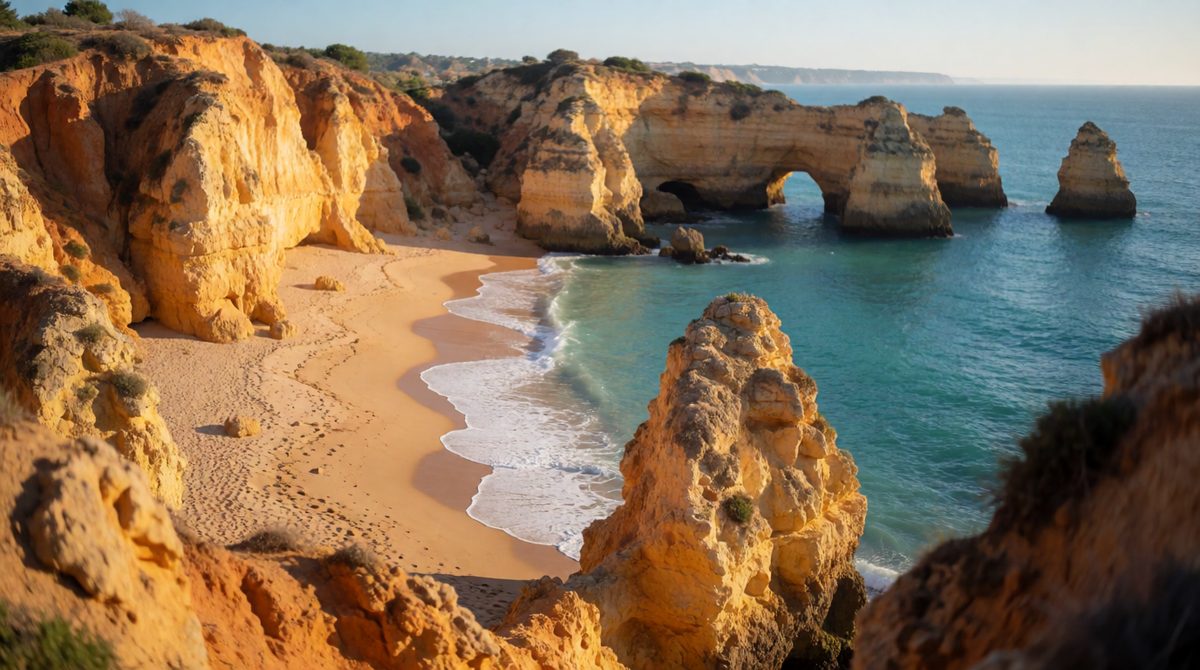
The Algarve attracts many types of tourist
Read the scenario and stimulus material below, then work through the practice questions. Model answers are provided so you can check your thinking.
🌍 The Scenario
The Algarve is Portugal's most popular tourist region, attracting over 4 million international visitors per year. It is famous for its beaches, golf courses and warm climate. The regional tourism authority has commissioned market research to better understand its visitors and plan future marketing campaigns.
📈 Figure 1 Visitor Profile Data, Algarve (2023)
Top source markets: UK (38%), Germany (18%), Netherlands (12%), Ireland (9%), Other (23%)
Purpose of visit: Beach/Sun & Sea (61%), Golf (14%), Culture/Heritage (9%), Walking/Nature (8%), Other (8%)
Average length of stay: 7.2 nights
Average spend per visitor: €820
Seasonal pattern: 74% of visits occur between June and September. January–March accounts for only 6% of annual visitors.
Age profile: Under 35 (22%), 35–54 (41%), 55+ (37%)
✍ Question 1 (2 marks): "Using Figure 1, describe the visitor profile of tourists to the Algarve."
✅ Strong Answer
The majority of visitors to the Algarve come from the UK, making up 38% of international tourists. Most visitors (61%) travel for beach and sun-and-sea holidays and tourism is heavily concentrated in summer, with 74% of visits occurring between June and September. The average visitor stays 7.2 nights and spends €820.
❌ Weak Answer
Lots of tourists visit the Algarve from different countries. Most go for the beach. There are more tourists in summer than winter.
This answer is vague no specific data used, no figures quoted. It would score 1 mark at most.
✍ Question 2 (4 marks): "Explain two ways the Algarve tourism authority could use this market research data to improve its marketing strategy."
📚 Model Answer 4-Mark Question
Point 1: The data shows that 74% of visits occur in summer, leaving the winter months very quiet. The tourism authority could use this information to target the 55+ age group (who make up 37% of visitors) with off-season marketing campaigns. Older tourists are often retired and more flexible about when they travel, so promoting autumn and spring breaks to this demographic could help spread demand more evenly throughout the year and increase revenue during the low season.
Point 2: The research shows that only 9% of visitors come for culture and heritage. The authority could use this to develop and promote cultural tourism products such as heritage trails, local food festivals, or visits to historic towns like Silves targeting a psychographic segment of tourists who value authentic experiences over beach holidays. This would diversify the tourism offer and reduce dependence on sun-and-sea tourism, which is vulnerable to climate and competition from other destinations.
✍ Question 3 (6 marks): "Suggest how the Algarve could use market segmentation to attract a wider range of tourists."
📚 Model Answer 6-Mark Suggest Question
The Algarve currently relies heavily on UK visitors (38%) and beach tourism (61%), which creates vulnerability if UK visitor numbers fall due to economic or political factors, the whole region suffers. Market segmentation could help the Algarve diversify.
Geographic segmentation: The authority could target new source markets, such as the USA or Scandinavia, where there is growing demand for European beach destinations. Advertising on platforms popular in those countries, or working with airlines to open new routes, could widen the geographic spread of visitors.
Psychographic segmentation: The 8% of visitors who come for walking and nature suggests an opportunity. The Algarve has dramatic coastal cliffs (the Via Algarviana walking route) that appeal to eco-tourists and adventure travellers. Targeting this psychographic group who tend to visit in spring and autumn would help address the seasonality problem.
Demographic segmentation: Golf tourism (14%) tends to attract higher-income visitors. The authority could invest in promoting its 30+ golf courses to affluent 45–65 year olds in northern Europe, a demographic with high disposable income and a preference for off-peak travel. This would raise average spend per visitor beyond the current €820.
However, it is important that segmentation strategies are balanced over-targeting luxury tourists could price out younger visitors and reduce overall visitor numbers, while focusing too heavily on eco-tourism may not generate enough revenue for local businesses.
📄 Applying Segmentation to Different Destination Types
Different types of destination use segmentation in different ways. It's worth understanding how segmentation strategies vary depending on what a destination has to offer.
🏖 Beach Resorts
Typically use demographic segmentation targeting families in school holidays, couples for romantic breaks and older tourists in the off-season. Seasonality is a major challenge, so off-peak marketing to flexible demographics is key.
🏛 Cities & Cultural Destinations
Often use psychographic segmentation targeting culture-seekers, foodies, history enthusiasts and art lovers. Cities like Prague, Lisbon and Edinburgh promote their heritage to attract visitors who stay longer and spend more on experiences.
🌿 Eco & Adventure Destinations
Use behavioural and psychographic segmentation targeting environmentally conscious travellers who want active, authentic experiences. These tourists often spend more per day and have a lower environmental impact than mass-market visitors.
🌍 Case Study: Japan Using Research to Manage Overtourism
Japan received a record 31.9 million international visitors in 2019. Market research revealed a significant problem: tourists were heavily concentrated in just four cities Tokyo, Kyoto, Osaka and Hiroshima and visits were clustered in spring (cherry blossom season) and autumn. The Japan Tourism Agency used this data to launch a "Discover the Other Japan" campaign, targeting psychographic segments interested in rural culture, traditional crafts and off-the-beaten-track experiences. By promoting lesser-known regions like Tohoku and Shikoku, Japan aimed to spread tourist spending more evenly and reduce pressure on overcrowded hotspots. This is a clear example of market research directly informing a segmentation-based marketing strategy.
📚 Key Terms Know These for the Exam
- Market Research: Collecting and analysing data about tourists to inform marketing decisions.
- Primary Data: Original data collected first-hand (surveys, interviews, observation).
- Secondary Data: Existing data from published sources (government reports, UNWTO statistics).
- Market Segmentation: Dividing tourists into groups with shared characteristics.
- Geographic Segmentation: Grouping tourists by their country or region of origin.
- Demographic Segmentation: Grouping by age, gender, income, or family status.
- Psychographic Segmentation: Grouping by lifestyle, values and interests.
- Behavioural Segmentation: Grouping by spending habits, visit frequency and activities.
- Visitor Profile: A summary of the typical characteristics of a destination's tourists.
- Seasonality: The uneven distribution of tourist visits throughout the year.
- Source Market: The country from which tourists originate.
- High Value, Low Impact: A tourism strategy that prioritises fewer, higher-spending tourists to reduce environmental damage.
🌟 Your Session Summary
- Market research helps destinations understand who their visitors are and what they want
- Primary research is collected first-hand; secondary research uses existing data
- The four types of segmentation are: geographic, demographic, psychographic and behavioural
- Segmentation allows destinations to target the right tourists with the right message
- Always use specific data from stimulus material in your exam answers quote figures!
- Case studies: Bhutan (high value, low impact) and Japan (using research to manage overtourism)
- Segmentation can help tackle seasonality, over-reliance on one source market and overtourism