🌐 Theme 5: Tourism in a Globalised World
Theme 5 is all about the big picture. It looks at how tourism fits into our increasingly connected world where a family in Beijing can book a villa in Portugal in seconds and a single airline can fly millions of passengers across dozens of countries. This is globalisation at work and tourism is right at the heart of it.
For your iGCSE exam, Theme 5 tests whether you understand how global forces technology, big business, politics and economics shape where people travel, how they travel and what happens when they get there.
Key Definitions:
- Globalisation: The process by which the world becomes more connected through trade, communication, transport and culture.
- Transnational Corporation (TNC): A company that operates in more than one country. In tourism, this includes hotel chains, airlines and tour operators.
- Global tourism: The movement of people across international borders for leisure, business, or other purposes now one of the world's largest industries.
- Leakage: When money spent by tourists leaves the destination country, often flowing back to foreign-owned TNCs.
- E-tourism: The use of digital technology and the internet to plan, book and experience travel.
📈 Tourism by the Numbers
Before COVID-19, international tourist arrivals reached 1.5 billion per year (UNWTO, 2019). Tourism accounted for around 10% of global GDP and 1 in 10 jobs worldwide. By 2023, numbers had largely recovered, showing just how resilient and important global tourism is.
🌐 Why Globalisation Matters for Tourism
Globalisation has made travel cheaper, faster and more accessible. Open skies agreements allow airlines to fly new routes. Free trade zones reduce costs. The internet lets travellers compare and book instantly. All of this has fuelled explosive growth in international tourism.
💻 Technology and the Digital Revolution in Tourism
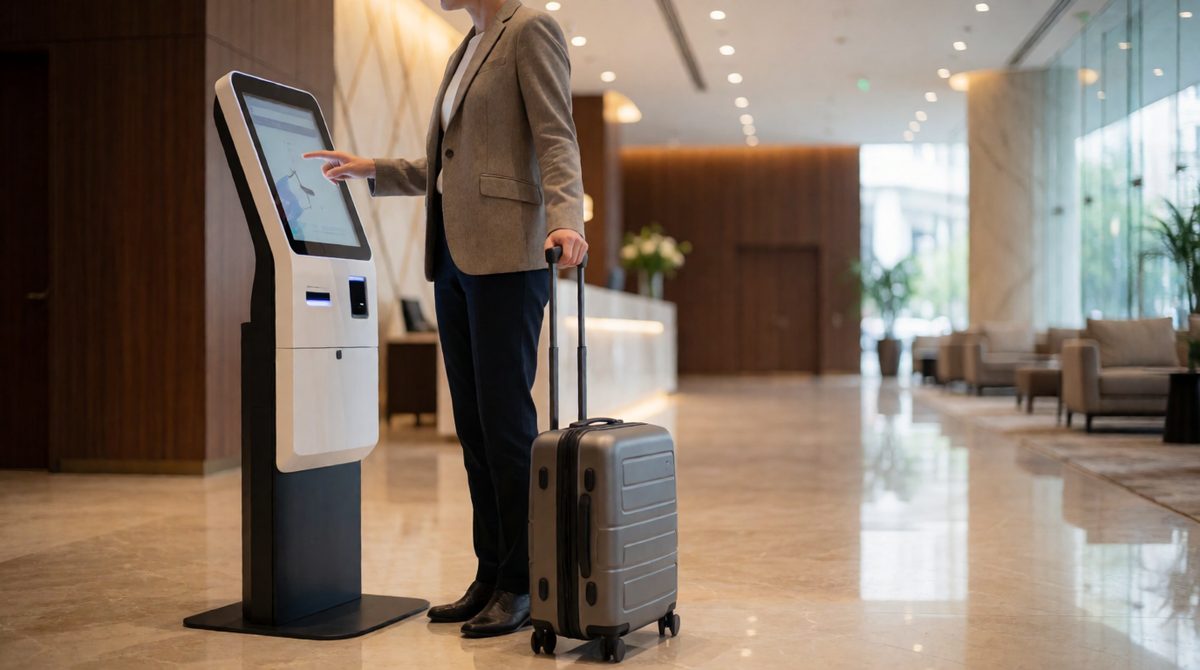
Technology has transformed tourism
One of the biggest forces reshaping tourism is technology. The internet didn't just make booking easier it completely changed who has power in the tourism industry. Travellers can now research, compare, book and review without ever speaking to a travel agent.
📱 How Technology Has Changed Tourism
Think about how your family books a holiday. Chances are, it involves a smartphone, a comparison website and maybe a YouTube video of the destination. That's a massive shift from 30 years ago when most people relied on high street travel agents and printed brochures.
🔍 Online Research
Sites like TripAdvisor, Google Maps and travel blogs let tourists read real reviews and see photos before they book. This gives travellers far more power and information than ever before.
💳 Online Booking
Platforms like Booking.com, Expedia and Skyscanner allow instant price comparison and booking. Traditional travel agents have declined sharply as a result many high street agencies have closed.
📷 Social Media
Instagram, TikTok and YouTube now heavily influence where people want to go. A single viral post can put a previously unknown destination on the map for better or worse (overtourism risk!).
🌍 Case Study: Airbnb The Sharing Economy Disrupts Tourism
Founded: 2008, San Francisco, USA
Airbnb is a brilliant example of how technology created an entirely new type of tourism accommodation. Instead of booking a hotel, tourists can rent a spare room or entire home from a local person. By 2023, Airbnb had over 7 million listings in more than 220 countries.
Positives: Gives tourists a more authentic, local experience. Provides extra income for homeowners. Opens up accommodation in areas without hotels.
Negatives: In cities like Barcelona and Amsterdam, Airbnb has been blamed for pushing up rents for local residents, reducing housing supply and increasing overtourism in residential areas. Some cities have introduced strict regulations or outright bans on short-term lets.
Exam link: Airbnb is a great example of the sharing economy and the uneven impacts of tourism technology use it to discuss both economic benefits and social costs.
🏠 Transnational Corporations (TNCs) in Tourism
TNCs are giant companies that operate across many countries. In tourism, they include hotel chains, airlines, cruise companies and tour operators. They are incredibly powerful and their influence on destinations can be both positive and negative.
Examples of Tourism TNCs:
- 🏘 Marriott International over 8,000 hotels in 139 countries
- ✈ Emirates Airlines connects 150+ destinations globally, based in Dubai
- 🚢 Royal Caribbean one of the world's largest cruise companies
- 💻 Booking Holdings owns Booking.com, Kayak and Priceline
👍 Benefits of TNCs in Tourism
- Bring investment and infrastructure to developing countries
- Create jobs (though often low-paid)
- Raise international awareness of a destination
- Provide reliable, consistent quality for tourists
- Help develop airports, roads and services
👎 Problems with TNCs in Tourism
- Leakage: Profits flow back to the TNC's home country, not the destination
- Local businesses struggle to compete with big chains
- Jobs are often seasonal and low-skilled
- TNCs can put pressure on governments to reduce environmental regulations
- Cultural homogenisation destinations start to look the same
🌍 Case Study: Thomas Cook When a Tourism Giant Falls
Founded: 1841 | Collapsed: September 2019
Thomas Cook was one of the oldest and most famous travel companies in the world it practically invented package tourism. At its peak, it carried 19 million passengers a year and employed 22,000 people in the UK alone.
In September 2019, Thomas Cook collapsed overnight, stranding 600,000 tourists abroad. The UK government had to launch the biggest peacetime repatriation operation in history to bring British tourists home.
Why did it collapse?
- Failed to adapt to online booking customers moved to Booking.com and budget airlines
- Huge debts built up from buying other companies
- Competition from low-cost carriers like easyJet and Ryanair
- A series of hot summers in the UK reduced demand for Mediterranean package holidays
- Uncertainty caused by Brexit affected consumer confidence
Impact on destinations: Hotels in Spain, Greece and Turkey were left unpaid. Some small resorts lost their main source of tourists overnight. This shows how over-dependence on a single TNC can be devastating for a destination.
Exam link: Use Thomas Cook to discuss the vulnerability of destinations dependent on TNCs, the impact of technology on traditional tourism businesses and economic leakage.
✈ Low-Cost Carriers and the Budget Travel Revolution
One of the most significant changes in global tourism has been the rise of low-cost carriers (LCCs) airlines like Ryanair, easyJet and AirAsia. By stripping out extras (no free meals, no allocated seats, charges for luggage), they dramatically cut the price of flying.
- Ryanair carried over 168 million passengers in 2023 more than any other European airline
- LCCs opened up new routes to previously overlooked destinations
- They made short city breaks affordable for ordinary families
- But they also contribute significantly to carbon emissions and overtourism
📌 Exam Tip: Discussing LCCs
If asked about factors that have increased tourism, always mention low-cost airlines and be ready to discuss the environmental trade-off. Cheap flights = more tourists = more carbon emissions. The examiner loves to see you consider both sides.
🌿 Sustainable Tourism and the Future
As tourism has grown, so have its problems. Theme 5 also looks at how the industry is trying to become more sustainable balancing the needs of tourists, local communities and the environment for the long term.
🌎 Ecotourism and Responsible Travel
Ecotourism is small-scale, low-impact tourism that benefits local communities and protects the environment. It's the opposite of mass tourism. Countries like Costa Rica have built their entire tourism brand around ecotourism rainforests, wildlife and sustainability.
🌿 Ecotourism
Small-scale tourism focused on nature. Visitors pay to see wildlife and habitats, with money going directly to conservation and local communities. Example: gorilla trekking in Rwanda.
🏠 Community Tourism
Tourism managed and owned by local communities. Profits stay local. Tourists get an authentic experience. Example: homestay programmes in rural Nepal or Tanzania.
♻ Carbon Offsetting
Airlines and tourists can pay to offset their carbon emissions for example, by funding tree planting. Critics say it's not a real solution, but it raises awareness of tourism's environmental footprint.
📈 Future Trends in Global Tourism
The tourism industry never stands still. Here are the key trends you need to know for your exam these show you understand where tourism is heading, not just where it's been.
- 🤖 Space tourism: Companies like SpaceX and Virgin Galactic are developing tourist trips to space. Currently only for the ultra-wealthy, but it signals a new frontier.
- 🌞 Climate change impacts: Rising sea levels threaten coastal resorts. Melting glaciers reduce mountain tourism. Coral bleaching damages reef destinations. Tourism must adapt.
- 📱 Virtual reality (VR) tourism: Could people "visit" destinations digitally? VR tours already exist for museums and heritage sites could reduce physical visitor pressure.
- ✈ Sustainable aviation fuels (SAF): Airlines are investing in greener fuels to reduce emissions essential if aviation is to survive tighter environmental regulations.
- 🌎 Growth of Asian tourism: China, India and Southeast Asia are producing millions of new middle-class tourists. The centre of gravity in global tourism is shifting eastward.
🌍 Case Study: Dubai Building a Tourism Destination from Scratch
Dubai is one of the most remarkable tourism success stories of the 21st century. With almost no natural tourist attractions, the UAE invested massively in artificial attractions the Burj Khalifa (world's tallest building), Palm Jumeirah (artificial island) and world-class shopping malls.
Dubai welcomed 17 million international tourists in 2023, making it one of the most visited cities on Earth. It has positioned itself as a global hub Emirates Airlines connects it to virtually every major city.
Key issues: Dubai's tourism is heavily dependent on cheap migrant labour (often poorly treated). Its carbon footprint is enormous. And it relies on oil wealth to subsidise tourism infrastructure raising questions about long-term sustainability.
Exam link: Use Dubai to discuss manufactured tourism destinations, the role of TNCs and government investment and the tension between economic growth and sustainability.
✍ Top Exam Tips for Theme 5
📌 Theme 5 Exam Essentials
- Always define globalisation clearly it's a key term
- Know what leakage means and give an example
- Be able to discuss TNCs both positives AND negatives
- Use specific case studies: Airbnb, Thomas Cook, Dubai
- Link technology to changes in tourist behaviour
- Discuss sustainability examiners love balanced answers
✍ Command Word Reminders
- "Describe" say what something is like, use data
- "Explain" give reasons, use "because" and "therefore"
- "Assess" weigh up positives and negatives, reach a conclusion
- "To what extent" argue a case, consider counter-arguments, conclude
- "Suggest" use your knowledge to make a reasoned point
📚 Final Revision Checklist Theme 5
- ✅ I can define globalisation and explain its link to tourism growth
- ✅ I can explain what a TNC is and give tourism examples
- ✅ I can describe the concept of leakage and why it matters
- ✅ I can explain how technology (internet, social media, LCCs) has changed tourism
- ✅ I can discuss the Airbnb case study benefits and problems
- ✅ I can explain why Thomas Cook collapsed and what this shows about tourism vulnerability
- ✅ I can describe Dubai as a manufactured tourism destination
- ✅ I can discuss ecotourism, community tourism and sustainable travel
- ✅ I can identify future trends in global tourism
- ✅ I can write balanced exam answers using command words correctly
🌟 Final Exam Motivation
You've covered all five themes that's the whole course! Theme 5 ties everything together by showing how tourism operates as a global system. In your exam, the best answers will connect ideas across themes for example, linking globalisation (Theme 5) to sustainable management (Theme 2) or impacts on local communities (Theme 4). You've got this. Good luck! 🎉