🏈 What Are Beach, Coastal and Island Destinations?
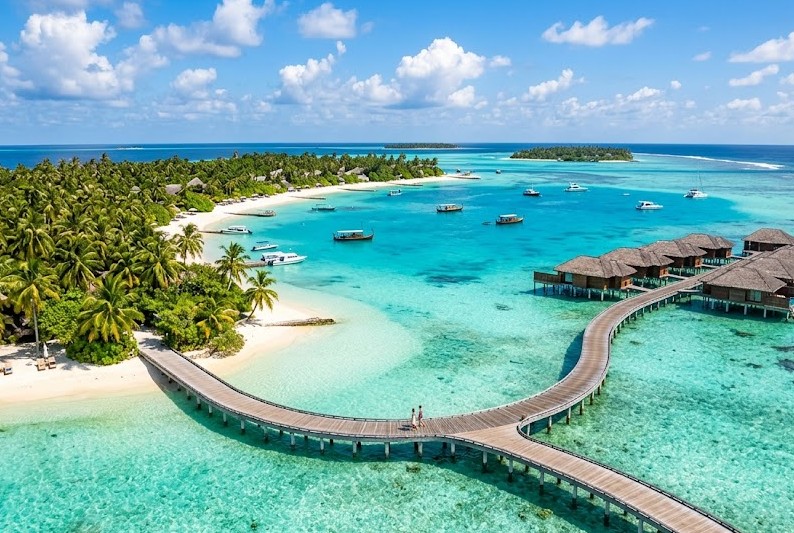
Beach, coastal and island destinations are among the most visited places on Earth. Think of the turquoise waters of the Maldives, the busy promenades of Brighton, or the dramatic cliffs of the Algarve in Portugal. These places attract hundreds of millions of tourists every year and it's easy to see why. Sun, sea, sand and a sense of escape make coastal tourism one of the world's biggest industries.
But coastal destinations are not all the same. They range from quiet fishing villages to massive resort complexes, from wild surf beaches to calm tropical lagoons. Understanding the differences and what makes each type tick is essential for your iGCSE exam.
Key Definitions:
- Coastal destination: A place located on or near the sea that attracts tourists primarily because of its coastal environment.
- Beach tourism: Tourism focused on activities related to the beach and sea, such as swimming, sunbathing and watersports.
- Littoral zone: The area between the land and the sea the zone most used by beach tourists.
- Seaside resort: A town or settlement that has developed specifically to serve tourists visiting the coast.
- Blue economy: Economic activity linked to the ocean, including tourism, fishing and marine transport.
🌊 Natural Coastal Features
Coastal destinations are shaped by their physical geography. Sandy beaches, coral reefs, sea caves, cliffs, lagoons and estuaries all create different types of tourism appeal. Warm, calm, shallow waters are especially attractive for family tourism, while rugged cliff coastlines appeal to hikers and photographers. The natural environment is the core product of coastal tourism.
🏠 Built Coastal Environments
Many coastal destinations have developed significant built infrastructure around the natural environment. Promenades, piers, hotels, restaurants, water parks and marinas are all part of the coastal tourism product. In some cases like Benidorm or Cancún the built environment now dominates the landscape, changing the character of the destination significantly.
🌍 Types of Coastal Destinations
Not all coastal destinations are the same. The iGCSE syllabus asks you to understand the variety of coastal tourism environments and what makes each one distinctive.
🏖 Traditional Seaside Resorts
These are towns that grew up specifically to serve beach tourists, often during the 19th and early 20th centuries. In the UK, places like Blackpool, Brighton and Scarborough developed when railways made the coast accessible to working-class families for the first time. Traditional seaside resorts typically feature a promenade, pier, amusement arcades, fish and chip shops and a wide sandy beach.
📍 Case Study: Blackpool, UK
Location: Lancashire, northwest England, on the Irish Sea coast.
History: Blackpool became Britain's first working-class holiday resort in the 1840s when the railway arrived. By the 1930s, it was receiving 7 million visitors a year. The famous Blackpool Tower (built 1894) and Illuminations (started 1879) became iconic attractions.
Current situation: Blackpool now attracts around 18 million visitors per year, making it the UK's most visited seaside resort. However, it faces serious challenges: poverty, unemployment and competition from cheap overseas package holidays have left parts of the town in decline.
Regeneration efforts: The council has invested in new attractions including the Blackpool Pleasure Beach, conference facilities and the tram network. The aim is to attract a wider range of tourists beyond the traditional day-tripper market.
Exam tip: Blackpool is a great example of a destination in the decline or rejuvenation stage of Butler's Tourism Area Lifecycle.
🏖 Tropical Beach Destinations
These are found in warm, sunny regions close to the equator. They offer year-round sunshine, warm seas, coral reefs and exotic wildlife. The Caribbean, Southeast Asia, the Indian Ocean and the Pacific are all home to major tropical beach destinations. These places often rely almost entirely on tourism for their income, which creates both opportunities and risks.
🌴 Push Factors
Tourists are pushed towards tropical beach destinations by cold, grey weather at home, stress from work and a desire for relaxation and escape. The contrast between a rainy November in Manchester and a sunny beach in Barbados is a powerful motivator.
☀️ Pull Factors
Tropical destinations pull tourists with their warm climate, clear blue water, white sand beaches, coral reefs for snorkelling, exotic food and vibrant local culture. Good air links, all-inclusive resorts and competitive pricing also attract visitors.
🏖 Coastal National Parks and Protected Areas
Some coastal areas are protected because of their outstanding natural beauty or ecological importance. These destinations attract tourists who want to experience nature rather than a resort. Examples include the Pembrokeshire Coast National Park in Wales, the Cinque Terre in Italy and the Florida Everglades in the USA. Tourism must be carefully managed in these areas to prevent damage to fragile ecosystems.
📈 The Development of Coastal Tourism
Coastal tourism didn't just appear overnight. It has developed over centuries, driven by changes in transport, technology, wealth and social attitudes. Understanding this development helps you explain why coastal destinations look the way they do today.
A Brief History of Beach Tourism
🕐 18th Century
Sea bathing became fashionable among the wealthy. Doctors recommended it for health. Brighton became popular with the English aristocracy. Bathing machines (wooden huts on wheels) allowed modest entry into the sea.
🕐 19th Century
Railways made the coast accessible to ordinary working people for the first time. Bank Holidays Act (1871) gave workers time off. Seaside resorts boomed across Britain, France and the USA. Piers, promenades and hotels were built.
🕐 20th–21st Century
Mass air travel from the 1960s opened up Mediterranean and tropical destinations. Package holidays made overseas beach tourism affordable. The internet allowed independent travel booking. Climate change now threatens many coastal destinations.
🌍 The 3S Model: Sun, Sea, Sand
The "3S" model is a simple but useful way to describe the core appeal of beach and coastal destinations. Most mass-market coastal tourism is built around these three elements. However, modern coastal tourism is increasingly moving beyond the 3S model to offer more diverse experiences.
💡 Beyond the 3Ss
Modern coastal tourists often want more than just a beach. The tourism industry now talks about 4S (adding "Sustainability"), 5S (adding "Sustainability" and "Safety"), or even 7S models. Coastal destinations are developing cultural tourism, adventure tourism, ecotourism and wellness tourism to attract a wider range of visitors and reduce dependence on the traditional beach holiday market.
🌎 Tourist Types at Coastal Destinations
Different types of tourists visit coastal destinations for different reasons. Understanding tourist typologies helps you analyse who visits, what they want and how they behave all important for exam questions.
Plog's Psychographic Model Applied to Coastal Tourism
Stanley Plog's model divides tourists into allocentrics (adventurous, independent travellers) and psychocentrics (cautious, comfort-seeking tourists who prefer familiar environments). Most coastal tourists fall somewhere in the middle called midcentrics.
- Psychocentrics prefer well-developed resorts like Benidorm or Magaluf, with familiar food, English-speaking staff and all-inclusive packages.
- Midcentrics might choose a destination like Crete or Tenerife developed enough to be comfortable, but with some authentic local character.
- Allocentrics seek out undiscovered coastal gems remote beaches in Albania, the wild coasts of Mozambique, or isolated atolls in the Pacific.
⚠️ Environmental Impacts of Coastal Tourism
Coastal environments are fragile. They support some of the world's most biodiverse ecosystems coral reefs, mangrove forests, seagrass beds and dune systems. Mass tourism puts enormous pressure on these environments. This is one of the most important topics for your iGCSE exam.
🔴 Negative Environmental Impacts
- Coral reef damage: Snorkellers and divers touching or standing on coral, boat anchors and sunscreen chemicals all damage reefs.
- Beach erosion: Removal of vegetation for hotels, increased foot traffic and coastal construction all accelerate erosion.
- Water pollution: Sewage, boat fuel and litter contaminate coastal waters, harming marine life and putting tourists off.
- Habitat loss: Mangrove forests are often cleared to build hotels and marinas, destroying nursery habitats for fish.
- Overcrowding: Too many tourists on a beach disturbs nesting sea turtles, birds and other wildlife.
🟢 Positive Environmental Management
- Marine Protected Areas (MPAs): Zones where fishing and tourist activities are restricted to allow ecosystems to recover.
- Beach cleaning programmes: Regular organised clean-ups remove litter and plastic waste from beaches.
- Reef restoration: Coral gardening projects grow new coral fragments to replant on damaged reefs.
- Visitor limits: Capping the number of tourists allowed on sensitive beaches or reefs at any one time.
- Blue Flag scheme: An international award for beaches that meet high standards of water quality, safety and environmental management.
📍 Case Study: The Great Barrier Reef, Australia
Location: Off the northeast coast of Queensland, Australia. It is the world's largest coral reef system, stretching over 2,300 km.
Tourism value: The reef generates approximately AUD $6.4 billion per year for the Australian economy and supports around 64,000 jobs. Around 2 million tourists visit each year.
Threats: The reef faces severe threats from climate change (coral bleaching caused by warming seas), agricultural runoff (fertilisers cause algal blooms), crown-of-thorns starfish outbreaks and direct tourist damage.
Coral bleaching: In 2016, 2017, 2020, 2022 and 2024, mass bleaching events killed large sections of the reef. Scientists warn that without urgent action on climate change, much of the reef could be lost by 2050.
Management responses: The Great Barrier Reef Marine Park Authority (GBRMPA) manages the reef. Strategies include zoning (different areas for different uses), strict limits on tourist numbers in sensitive areas, banning certain types of sunscreen and a AUD $1 billion government investment in reef restoration and water quality improvement.
Exam angle: This case study is perfect for questions about the tension between economic benefits of tourism and environmental sustainability.
🌎 Economic and Social Impacts of Coastal Tourism
Coastal tourism brings significant economic benefits to destinations, but it also creates social and cultural challenges. A balanced understanding of both sides is essential for exam success.
Economic Impacts
💰 Positive Economic
- Creates jobs in hotels, restaurants and watersports
- Generates foreign exchange earnings
- Stimulates local businesses (multiplier effect)
- Funds infrastructure improvements
🔴 Negative Economic
- Leakage: profits go to foreign-owned hotel chains
- Seasonal employment jobs only in summer
- Rising house prices price out local people
- Over-dependence on tourism makes economies vulnerable
👥 Social Impacts
- Improved facilities benefit local residents
- Cultural exchange and understanding
- Overcrowding and noise frustrate locals
- Alcohol tourism can cause antisocial behaviour
📍 Case Study: Overtourism in Dubrovnik, Croatia
Location: A historic walled city on the Adriatic coast of Croatia, a UNESCO World Heritage Site.
The problem: Dubrovnik's popularity boosted by its use as a filming location for Game of Thrones led to severe overtourism. On some days, up to 10,000 cruise ship passengers arrive in a city with a resident population of only 42,000. The old town's narrow streets become impossibly crowded.
Impacts: Local residents have been forced out by rising rents (many homes converted to Airbnb). Noise, litter and congestion have damaged quality of life. The historic buildings and streets suffer physical wear and tear.
Management responses: The city introduced a cap of 4,000 tourists in the old town at any one time. Cruise ship numbers have been limited. A "Respect the City" campaign asks tourists to behave responsibly. Some streets are now one-way to manage pedestrian flow.
Key lesson: Even beautiful, desirable destinations can suffer from too much tourism. Managing visitor numbers is just as important as attracting them.
🌿 Sustainable Coastal Tourism
Sustainable tourism at coastal destinations means meeting the needs of today's tourists without damaging the environment or local communities for future generations. This is a core concept in iGCSE Travel and Tourism.
Key Sustainable Management Strategies
- Carrying capacity management: Setting limits on the number of tourists a beach or reef can handle without being damaged.
- Eco-certification: Awarding quality marks (like Green Globe or Blue Flag) to hotels and beaches that meet environmental standards.
- Community involvement: Ensuring local people benefit from tourism and have a say in how it is managed.
- Visitor education: Teaching tourists how to behave responsibly not touching coral, not feeding wildlife, taking litter home.
- Coastal zone management: Integrated planning that balances tourism, fishing, conservation and residential needs along the coastline.
- Renewable energy: Coastal resorts switching to solar and wind power to reduce their carbon footprint.
📍 Case Study: Palawan, Philippines Sustainable Island Tourism
Location: An island province in the western Philippines, regularly voted one of the world's most beautiful islands.
Approach: Palawan has taken a deliberately cautious approach to tourism development. El Nido and Coron its two main tourist areas have strict limits on hotel development and new buildings must use traditional materials and styles. The Tubbataha Reef Natural Park (a UNESCO World Heritage Site) has strict visitor quotas.
Community tourism: Local fishing communities have been trained as tour guides and boat operators, ensuring tourism income stays in the local economy rather than leaking to outside investors.
Results: Palawan has maintained its natural beauty while developing a thriving tourism economy. It demonstrates that sustainable tourism can be both environmentally responsible and economically successful.
📊 Challenges and Future Trends in Coastal Tourism
Current Challenges
- Climate change: Rising sea levels threaten low-lying coastal resorts and islands. More frequent and intense storms damage coastal infrastructure. Coral bleaching destroys reef-based tourism attractions.
- Plastic pollution: The oceans contain an estimated 150 million tonnes of plastic. Plastic waste on beaches is a major deterrent to tourists and a serious threat to marine life.
- Overtourism: Popular coastal destinations face the challenge of too many visitors, leading to environmental damage and reduced quality of life for residents.
- Economic leakage: In many developing coastal destinations, a large proportion of tourist spending leaks out of the local economy to foreign-owned companies.
Future Trends
- Slow tourism: Tourists staying longer in one place rather than rushing between destinations reducing carbon footprint and benefiting local economies.
- Regenerative tourism: Going beyond sustainability to actively improve destinations planting mangroves, cleaning reefs, restoring dunes.
- Digital detox tourism: Coastal destinations marketing themselves as places to disconnect from technology and reconnect with nature.
- Climate refugees: As some tropical destinations become too hot or are threatened by sea-level rise, tourists may shift to cooler coastal destinations in northern Europe.
📚 Key Vocabulary Revision
Make sure you can define and use these terms confidently in your exam answers:
- Littoral zone: The coastal strip between land and sea where most beach tourism takes place.
- Carrying capacity: The maximum number of tourists a destination can handle without suffering unacceptable damage.
- Leakage: Tourist spending that leaves the local economy, typically to foreign-owned businesses.
- Coral bleaching: When coral expels its algae due to stress (usually heat), turning white and potentially dying.
- Blue Flag: An international eco-label awarded to beaches and marinas meeting high environmental and safety standards.
- Overtourism: When a destination receives more tourists than it can sustainably manage.
- Multiplier effect: When tourist spending circulates through the local economy, creating additional income and jobs.
- Marine Protected Area (MPA): A designated zone where human activities are restricted to protect marine ecosystems.
✅ Exam Technique: Answering Coastal Tourism Questions
For "describe" questions: Name the feature and give a specific detail or example. Don't just say "the beach is nice" say "the white sand beach and clear warm water attract sun-seeking tourists."
For "explain" questions: Use connective words like "because," "therefore," and "this means that" to show cause and effect.
For "assess" or "evaluate" questions: Always give both sides of the argument before reaching a conclusion. Use your case studies as evidence.
Top tip: Examiners love specific place names, statistics and named management strategies. Learn at least two coastal case studies in detail one from a developed country and one from a developing country.